
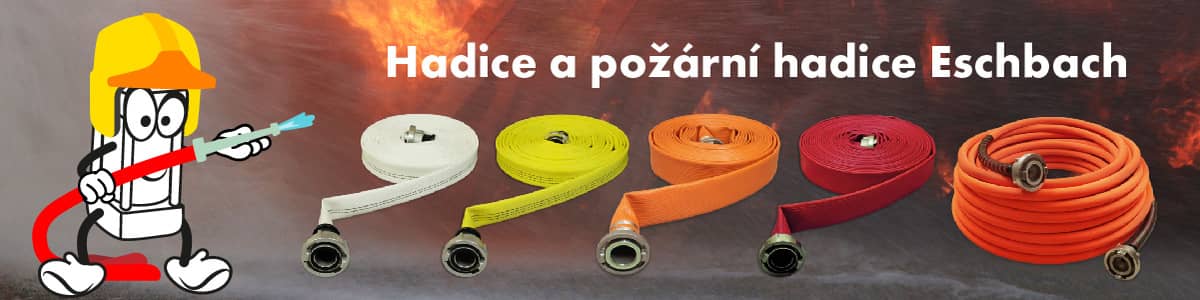
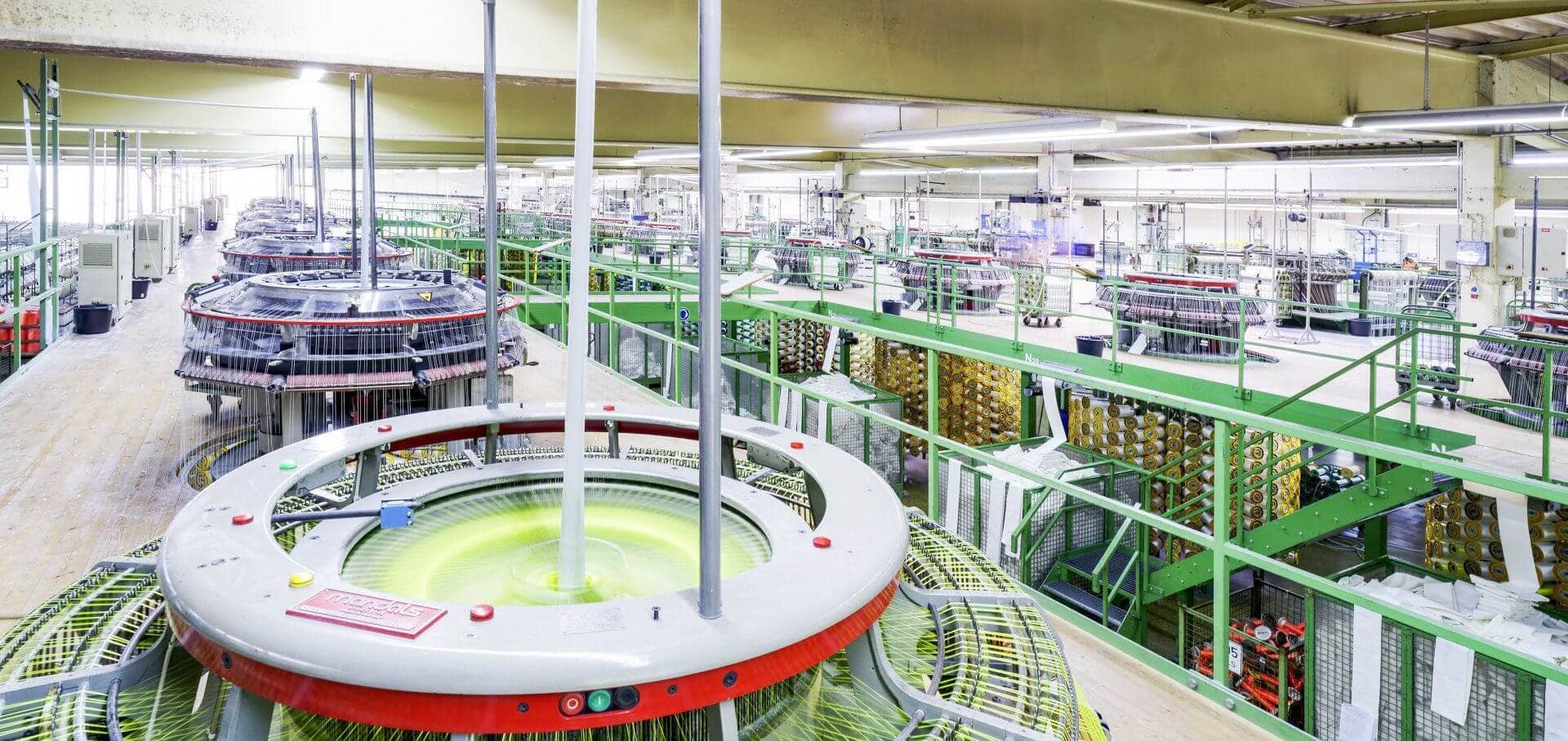
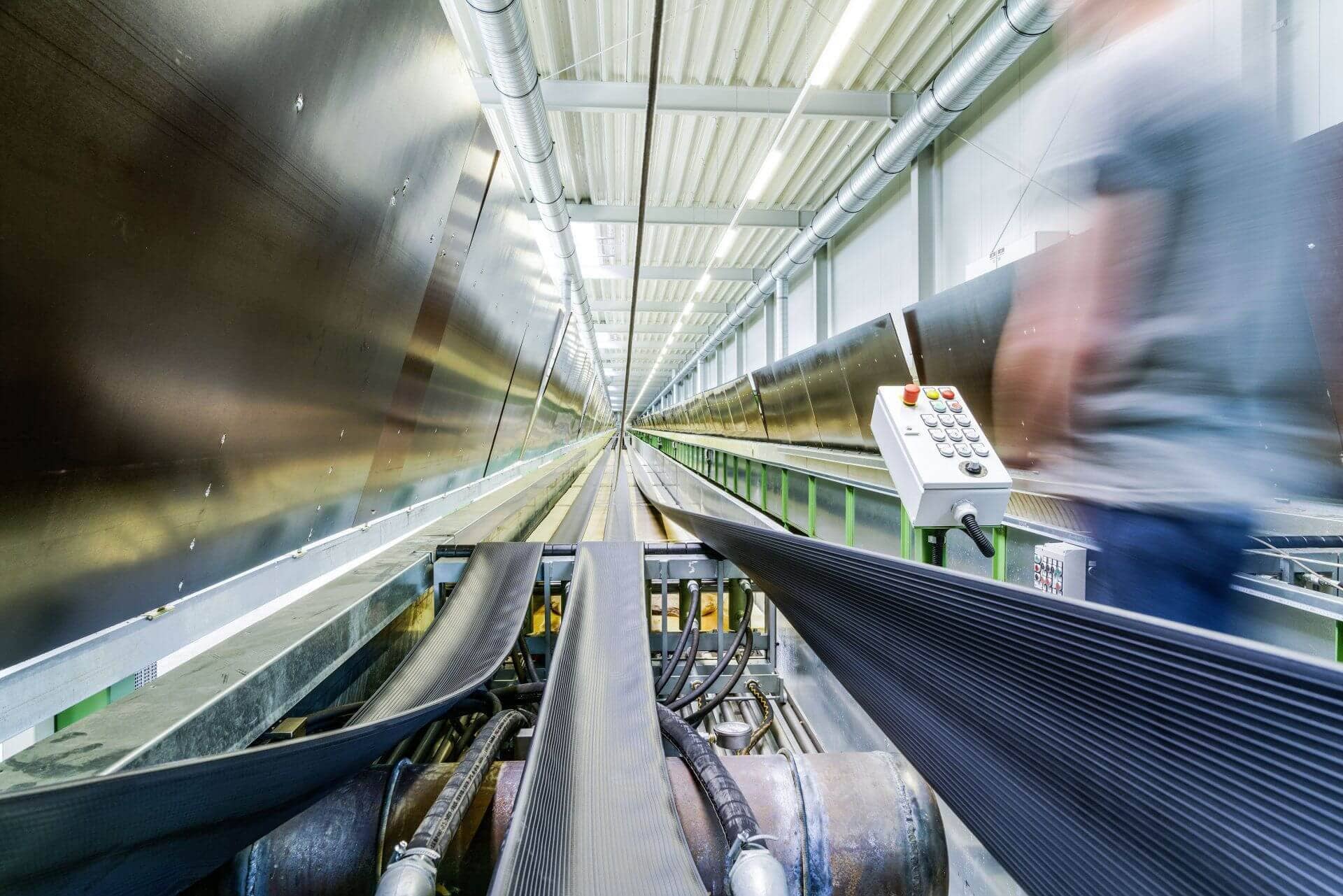
Among hose manufacturers you will hardly find a similarly prestigious company as JAKOB ESCHBACH. We are not talking about numbers of products or sales figures, but about the care with which the new hoses of the German firm are designed. Eschbach namely prides itself on making its hoses as light as possible for handling, and therefore includes in the production highly advanced materials that are hard to find elsewhere.
Although the most symbolic are without doubt fire hoses, Eschbach also develops and subsequently produces hoses for industry from special synthetic materials, hoses for agriculture, construction and last but not least also classic water hoses. The novelties in our e-shop concern above all the first, most extensive category, that is fire hoses of various ranges, which we will introduce in more detail.
The individual ranges of Eschbach hoses for fire-fighting equipment:
- EL (basic design for firefighters in three different versions)
- ESL (reflective design suitable for operations with top visibility in smoke and darkness)
- X2000 (lightweight design using polyurethane inside the hose)
- ESPU (specially designed hoses with top abrasion-resistant properties)
- POLR (operational hoses for pumping aggressive chemicals with rubberising)
- EDG (extremely resistant hoses that endure not only fire and chemicals)
- ESFS (a very high-quality design of hydrant hoses for the wall)
- MNFX (completely shape-stable hoses for reels on fire vehicles)
- ADR (top-class hoses of food-safe rubber for drinking water)
@KATEGORIE@(/pozarni-hadice-eschbach--ploche-hadice-pro-hasice/)(15,random)(slider)
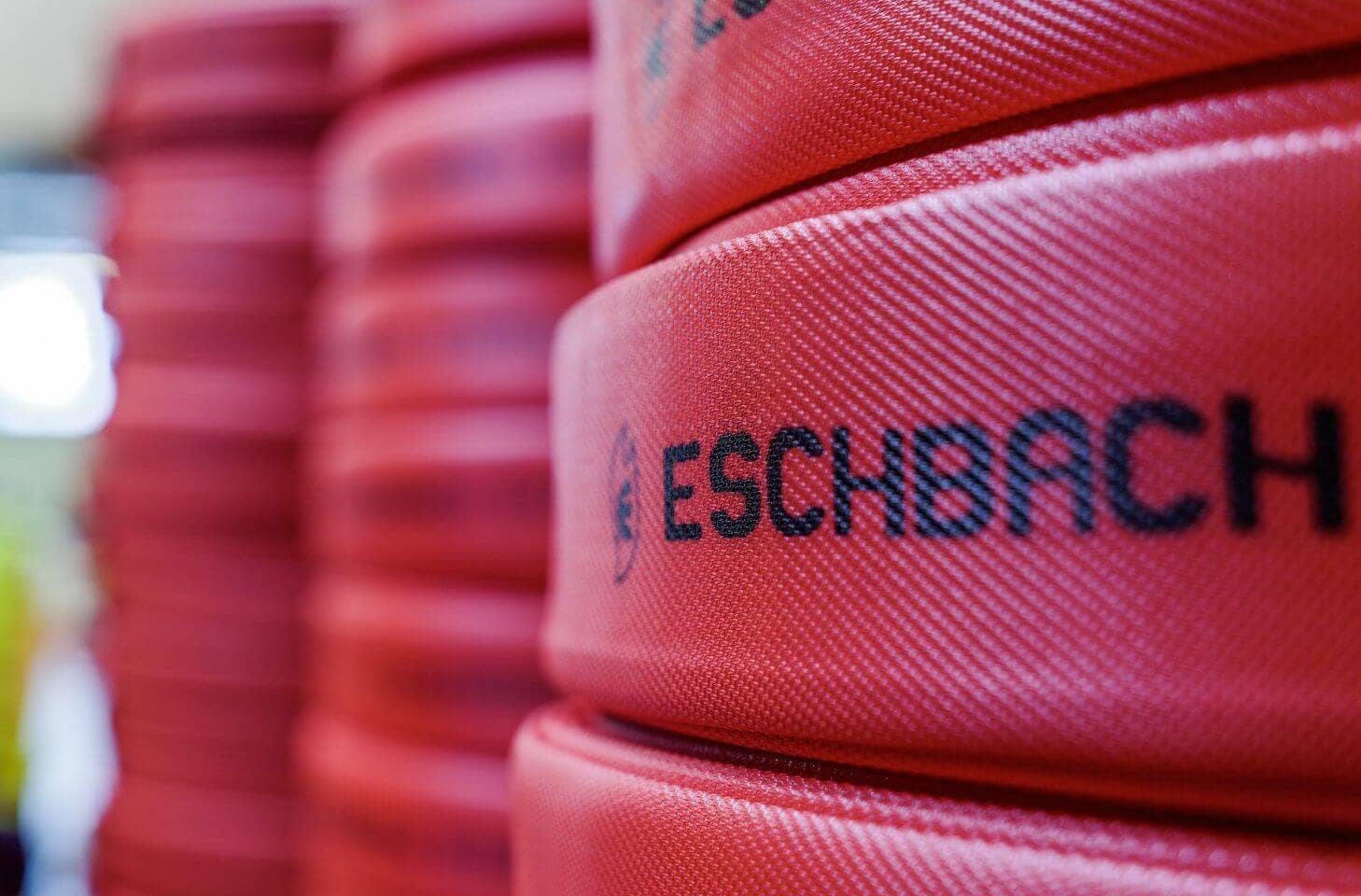
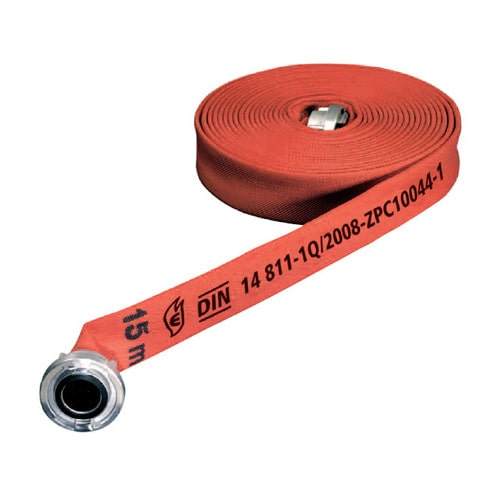
For example, even the basic design of the operational hoses EL uses 100 % synthetic polyester yarn with an inner lining of black EPDM. This combination, although it is the basis, offers above-average abrasion resistance and at the same time great flexibility. The lightness of the whole is provided by couplings of forged aluminium and thanks to the favourable price of the EL range these qualities can be used by volunteer firefighters as well.
Another chapter for really extreme deployment are the fire-resistant fire hoses certified according to DIN 18411 class 3 with high abrasion resistance and resistance to alkalis, acids, oils, petrol and flammable substances – that is the EDG category. These are tested at a temperature of 940 °C for longer than 1 hour in flames. The EDG hoses are made of synthetic yarn with PVC and special additives to achieve the required properties.
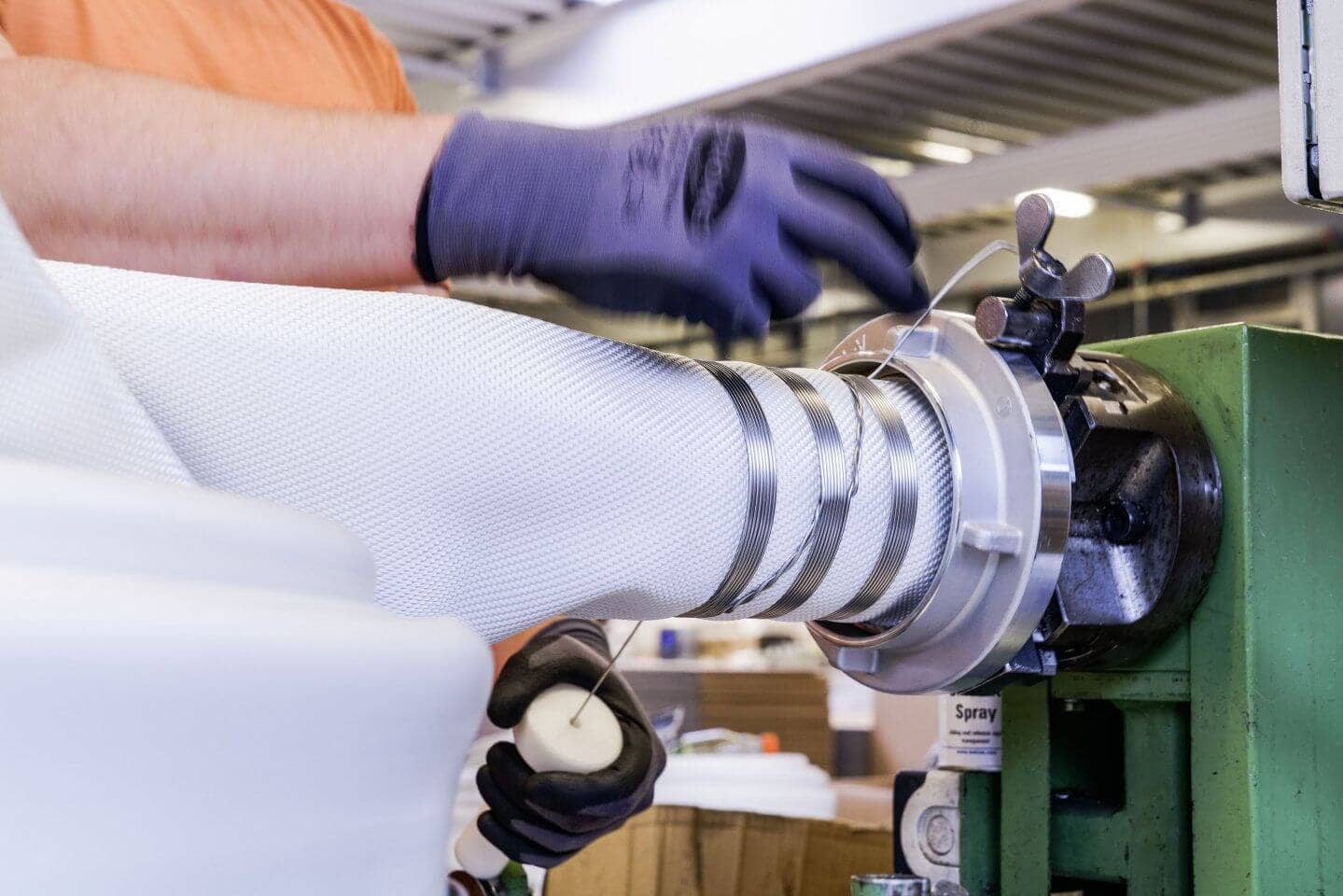
Special additives and polymers also had to be used in the hoses for pumping, namely in the POLR or OLRB ranges. In the second-named range a copper wire is moreover woven in for leading away the electrostatic charge. In the use of such clever solutions the Eschbach brand is a real specialist. It moreover offers an individual approach – beyond the basic offer all hoses can be individualised, of course by the overall length, but also by the material (aluminium/stainless steel/copper) and the sealing of the end fittings (NBR/silicone/FKM/EPDM) or by your own, original print, so that the hoses match your fire brigade.
 |
 |
 |
 |
What parameters can you come across when choosing Eschbach fire hoses?
The Eschbach fire hoses are supplied in various performance classes according to the category. Commonly, regardless of which category the hose is from, we come across diameters from as little as 25 mm up to 110 mm. Most commonly the range lies in the „golden standard“ of 42 mm to 75 mm. It is similar with lengths. Commonly one starts with 5 m long hoses, up to the value of 30 m. Longer hoses are on request, the packaging usually has a full 100 m. An important value is also the working temperature. With Eschbach hoses we come across values of -40/+100 °C, the operational class EDG however ends only at an extreme +940 °C. The working pressure of most fire hoses is then from 12 to 17 bar and the bursting pressure in most cases 60 bar.
In conclusion we add that all Eschbach hoses are approved for the market of the Czech Republic by the Technical Institute of Fire Protection in Prague.
Overview of ESCHBACH fire hoses |
|||||||||||
 |
 |
 |
 |
 |
|||||||
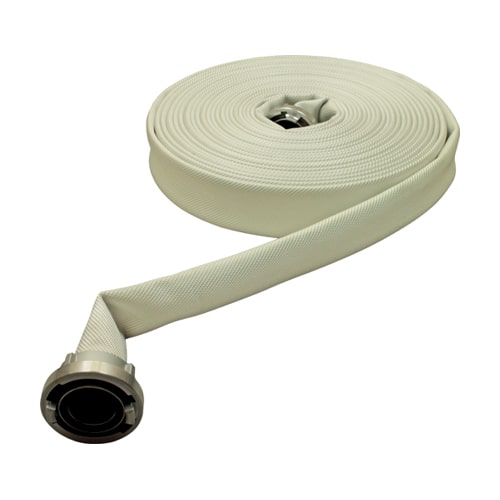
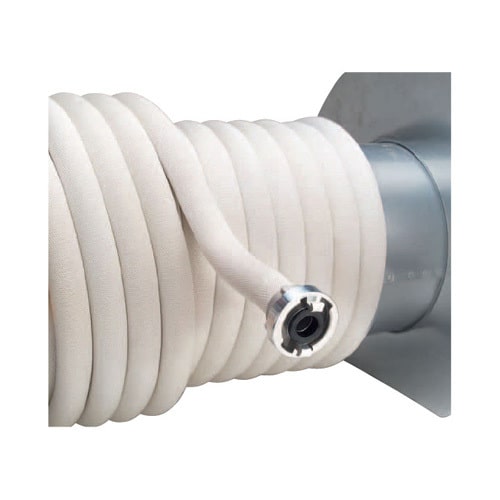
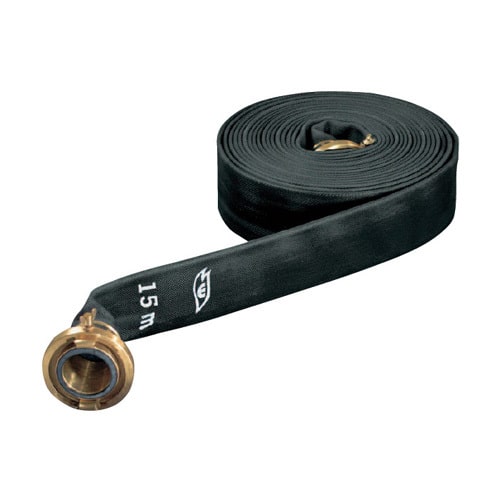
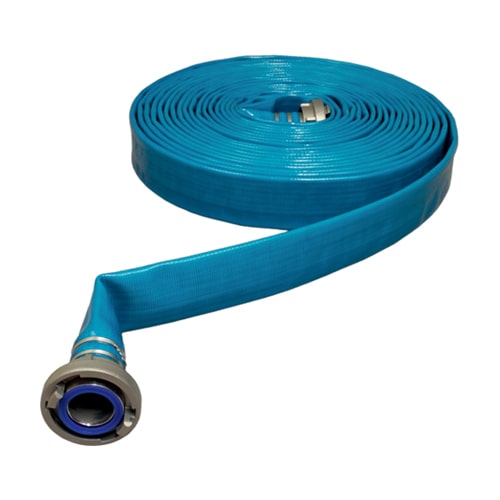
| range EL standard hoses common fire hoses supplied in 3 quality versions divided by performance according to the standard DIN 14811 class 1 L1 to L3 |
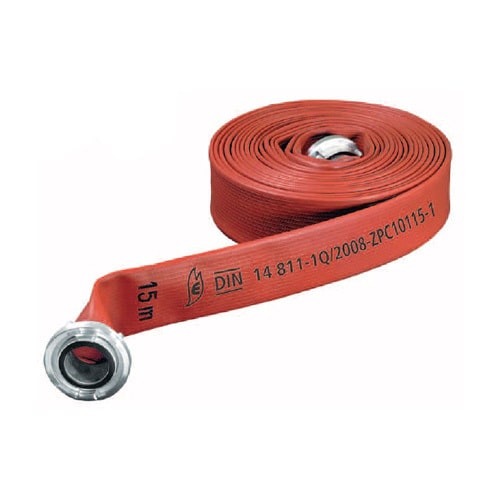
range ESL reflective operational hoses the main advantage is visibility in the dark and in smoke during an operation; supplied in 3 quality versions according to the standard DIN 14811 class 1 L1 to L3 |
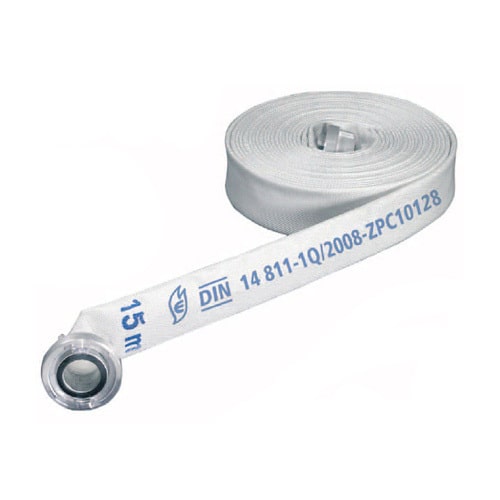
range X2000 lightweight hoses the inner core is formed by polyurethane, which reduces the weight, decreases the dimensions after rolling up and significantly increases the resistance to cutting of the hose; they comply with the standard DIN 14811 class 1 |
range ESPU abrasion-resistant hoses operational hoses with an outer abrasion-resistant PU layer, which significantly extends the service life of the hose; they comply with the standard DIN 14811 class 2 |
range POLR chemically resistant hoses operational hoses with inner and outer rubberising, suitable for pumping aggressive chemicals and highly resistant to abrasion; they comply with the standard DIN 14811 class 3 |
|||||||
 |
 |
 |
 |
 |
|||||||
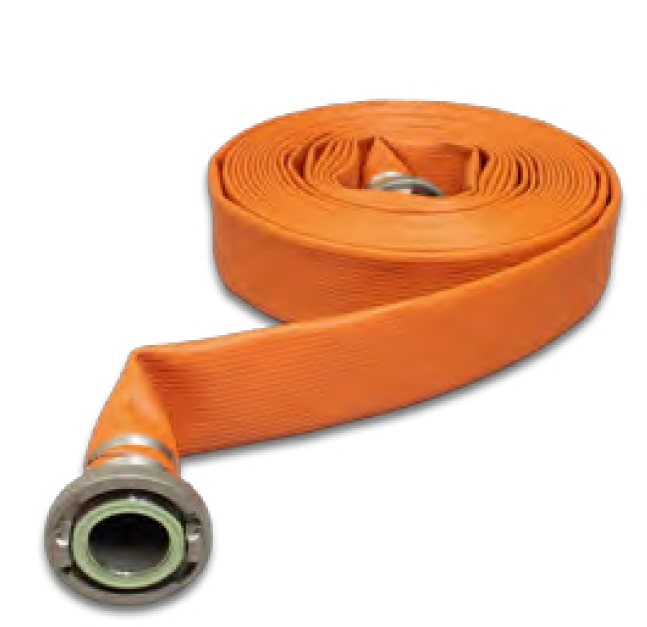
| range EDG fire-resistant hoses an extremely fire-resistant design enduring more than 1 hour in fire with a temperature of 940 °C; at the same time resistant to chemicals and abrasion; they comply with the standard DIN 14811 class 3 |
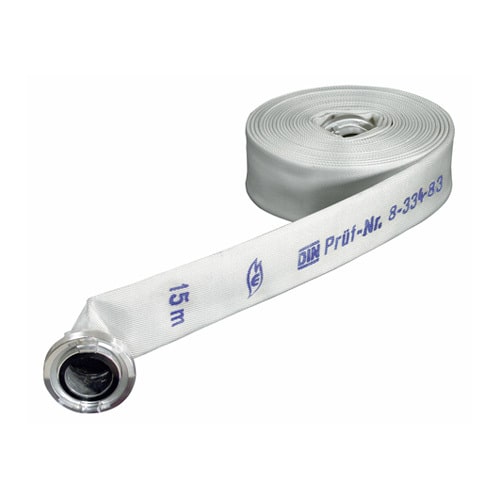
range ESFS hydrant hoses common fire hoses in the version for placing in wall hydrants; they comply with the standard DIN EN 14540 |
range MNFX hoses for reels shape-stable hoses for placing in the winding drums of fire vehicles; they comply with the standard DIN EN 694 |
range OLRB antistatic hoses operational hoses with an inner layer of antistatic rubber and with a copper wire and end fittings for leading away the electrostatic charge; intended for pumping flammable substances - petrol, diesel, oils, petroleum products |
range ADR hoses for drinking water made of food-safe rubber and with stainless steel end fittings with silicone sealing; intended for securing supplies of drinking water e.g. during natural disasters, they comply with the directives KTW, WRAS and DVGW |
|||||||