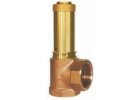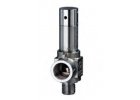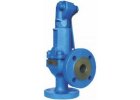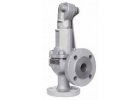

Safety valves for steam
Steam as a pressure medium – areas of use
Steam is one of the traditional working media in energy and industry. It is used in steam boilers to produce heat and electricity, in heating plants and heating systems for district heating, and in industrial heat exchangers. We also meet it in sterilisers (autoclaves) in healthcare and food production, where hot steam sterilises instruments or raw materials. Further examples are process technologies in the chemical industry, steam turbines and machine drives – in all these applications steam serves as an effective carrier of heat and pressure, which must nevertheless be safely controlled.
The importance and function of safety valves in steam applications
Wherever steam is used, high pressures arise that must be kept within safe limits. A safety valve performs a key safety function: when the set pressure is exceeded it opens automatically and releases the excess steam away from the protected equipment. It thereby immediately reduces the system pressure and prevents a dangerous rise (in a boiler, for instance) that could lead to damage or even explosion. Once the pressure falls back below the set limit, the valve closes and the system can continue operating. Safety valves are therefore essential equipment on steam boilers, pressure vessels, pipework and other devices, where they protect property and operators from the consequences of overpressure. In many cases there are legislative requirements too – larger steam boilers, for example, must have two independent safety valves to provide redundancy and sufficient capacity.
#ShowMore#
Materials and construction
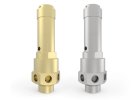
Safety valves intended for steam are built from durable materials that withstand high temperatures and pressures. For smaller threaded valves (typically up to 1") bronze or a brass alloy is often used, which suffices for medium pressures up to roughly 10–15 bar. In larger, more demanding applications cast iron or ductile iron is used – common on European valves and coping with pressures around 17 to 25 bar. For higher pressures still (tens of bar), steel valves are intended; these often have a robust cast-steel body and stainless internal parts to extend service life. The most demanding versions (for food plants or aggressive media, for instance) use stainless steel, providing top corrosion resistance and environmental cleanliness. In every case the moving parts of the valve (the spring and spindle above all) must be of materials resistant to corrosion and wear so that the valve works reliably even after years of service.
In construction, safety valves for steam may be threaded (with a male or female thread) or flanged. Threaded types are used on smaller equipment (sterilisers, smaller boilers) where the pipe diameter is not large. For large boilers and steam lines, flanged valves are preferred, allowing firm attachment to the vessel or pipe and better joint tightness even at high pressures. Valve bodies are designed to withstand thermal stress – often with sufficiently thick walls and ribs that eliminate distortion from heat. On spring safety valves for steam the spring may be enclosed in a cover or, on some designs, partly open to the surroundings for better cooling (so that the high steam temperature does not affect the spring's properties too much). Overall the construction of these valves is robust and adapted to the demanding conditions of steam systems.
Temperature resistance and pressure ranges
Steam safety valves must work reliably at the high temperatures steam reaches. Saturated steam in ordinary boilers has a temperature according to pressure – at 10 bar it reaches about 180 °C, at 20 bar over 210 °C. Valve design therefore allows for temperatures often around 200 °C and above. Ordinary models of bronze or cast iron have a maximum working temperature of about 180–225 °C, covering the needs of most boilers and heating systems. For superheated steam (above the saturation temperature) or specific industrial applications, special valves rated even for temperatures around 300 °C and higher exist – usually of heat-resistant steels and with adapted internals (graphite seals, special springs).
The pressure ranges of setting for steam safety valves also cover a wide spectrum. The range includes small safety valves from 0.5 bar (for low-pressure steam generators or vacuum protection) up to roughly 25 bar on standard types. High-capacity steel safety valves can be built for pressures of 40–50 bar and more. It is important that every valve has a defined maximum working pressure (the highest pressure the design withstands long term) and an adjustable set pressure (the range of values to which the valve can be set for opening). These values must be respected – a valve set outside its range might not work correctly. Manufacturers usually also state the valve's discharge capacity (the quantity of steam it can release per unit of time at a given pressure), so that it is clear how large a system the valve suits. Correct temperature and pressure resistance is fundamental to safe use of the valve in a particular steam application.
Seals and reliability of closing
A difference between safety valves for steam and those for water, for example, is the seat sealing arrangement. Because of the high temperatures, steam valves most often use a metal seal (metal to metal) – the disc and valve seat are precisely machined from metal and bear against each other without a soft insert. This ensures that even prolonged exposure to hot steam does not degrade the sealing element (as could happen with rubber seals). Soft sealing inserts of materials such as Viton (FKM) or PTFE are used in steam safety valves only on smaller valves and up to limited temperatures – generally, soft seals are not ideal for steam and a metal seat is preferred. Quality metal seats often have a hardened surface or a hard-facing overlay (stellite, for example) so that they resist erosion by flowing steam and keep their tightness long term.
To verify reliable function, safety valves for steam are often equipped with a manual lever (a test lever). This allows the valve to be lifted mechanically now and then and a small amount of steam released at working pressure, which serves two purposes: it tests that the valve is free and not stuck, and it cleans the seat of any dirt. Many standards and regulations for boilers require a safety valve to be fitted with a lever, particularly on steam and high-temperature water systems. The lever increases operating safety – operators can check the valve's condition regularly and open it manually in an emergency. The lever design is of course arranged so that under ordinary circumstances it cannot turn by itself and release steam unintentionally.
Certification and safety requirements
Safety valves fall under pressure equipment legislation and are therefore subject to strict standards. All quality safety valves for steam must meet the requirements of the European PED 2014/68/EU directive for pressure equipment and carry CE marking. That is the basic guarantee that the product has passed conformity assessment and is safe for use in the EU. These valves often hold further certifications as well – the TÜV mark is very common, meaning the valve has been independently tested by an authorised test house (TÜV SÜD, for example) for the given pressure ranges. TÜV certification typically confirms that the valve opens at the correct pressure and has the appropriate discharge capacity per the technical standards. Every safety valve is usually set to the required opening pressure at the works and fitted with a lead seal that prevents the setting being changed improperly – guaranteeing that in service it acts only at the specified pressure.
Operators of steam boilers and pressure systems must also observe regular checks and inspections of safety valves under the applicable regulations. A safety valve is the last line of protection – if it failed, a serious accident could follow. It is therefore recommended to have the valve checked or tested professionally at least once a year (sometimes by a test house directly). In industrial plants a record card is often kept for every safety valve with the dates of setting, inspections and any repairs. With correct certification, professional installation and maintenance, you can rely on safety valves for steam to provide dependable protection of equipment and operators in all circumstances.
Recommendations for choosing a safety valve for steam
Several key aspects must be considered when choosing a suitable safety valve for a steam system:
-
Opening pressure setting: Choose a valve with the appropriate opening (set) pressure for your system. This value must be lower than the maximum allowable pressure of the least resistant part of the system (boiler, pipe, exchanger and so on), yet higher than the normal working pressure so that the valve does not trip needlessly often. For each device (a boiler, say) the maker or a standard specifies the maximum working pressure – the safety valve is usually set somewhat above it while still below that limit. We supply our safety valves for steam set to the required pressure to within tenths of a bar and sealed, so there is no need to calibrate on installation. When ordering it is enough to state the required opening pressure, or the type of application.
-
Size and capacity: Check the connection size and the flow capacity of the valve. The thread or flange diameter should match the pipe on which you install the valve (usually the same or the next larger size is chosen). The discharge capacity matters too – the valve must be able to release as much steam as can be generated or flow into the protected equipment at most in an emergency. For a steam boiler that means the combined capacity of the safety valves covers the boiler output when the pressure is exceeded. Manufacturers give performance curves or tables for steam valves (in kg of steam per hour at a particular pressure, for example) from which the right size can be chosen. For small sterilisers or heating exchangers a valve with a 1/2" or 3/4" connection usually suffices, while large boilers may require several flanged valves of DN50 and larger.
-
Medium temperature and compatibility: Make sure the valve you choose can handle the maximum steam temperature in your system. For saturated steam up to about 200 °C most standard models will do; if you work with superheated steam (above 220 °C) or a special high-temperature application, verify the valve's maximum temperature resistance with the maker (some types may be limited to 250 °C, for instance). Consider also the nature of the medium: pure steam is not chemically aggressive and standard materials such as brass, cast iron or steel are suitable. But in an environment where the steam might contain admixtures (chemicals from the process, or wet steam carrying water droplets and dirt), it is advisable to choose a valve of corrosion-resistant materials and possibly with a drain hole for condensate. For food and pharmaceutical plants (clean steam), stainless safety valves can be chosen to ensure hygienic safety.
-
Installation and maintenance: Correct installation is fundamental to the safety valve's function. The valve should ideally be mounted vertically on the upper side of the vessel or pipe it protects, as close as possible to the source of pressure (so that there is no long stretch of pipe between boiler and valve where pressure could drop). No closable valve may be placed between the safety valve and the protected equipment – the safety valve must have a permanent connection to the system pressure. Make sure the outlet of the safety valve is led into a safe space or a connecting pipe that carries the steam away from operators (steam escaping on opening is very hot and can scald). For maintenance it is good to blow the valve off by hand occasionally using the test lever (if fitted) or to carry out a function test, so that the seat is flushed and it is verified that the valve is not stuck. Check the valve's condition regularly (once a year, say) – in particular whether the spring shows signs of corrosion, whether the seat is clogged with deposits and whether the setting seal is intact. Replacement or refurbishment of the safety valve is recommended according to operating conditions and the maker's instructions, typically every few years, to maintain reliability.
-
Material and version: Choose the valve material with regard to the environment and the demands of operation. For ordinary boilers and heating systems with saturated steam, brass/bronze or cast iron valves will do. In a corrosive environment or where cleanliness is demanded (food, pharmaceuticals), prefer stainless steel – stainless valves resist corrosion better and release no unwanted substances into the medium. If the valve will be installed outdoors or in a room that can freeze in winter, it must be protected from frost (by thermal insulation, heating, or by ensuring condensate can drain and does not collect in the valve). Watch too what certifications the valve holds – whether it carries the CE marking mentioned and possibly TÜV – so that you are sure of the quality. Not least, consider whether you need a blow-off lever; for boilers and pressure vessels it is usually an advantage to have one for easier function checks. Observing all these aspects will give you a safety valve optimally suited to your steam system and ensure its safe operation.
Use, advantages and limits of safety valves for steam
The use of safety valves in steam systems covers a wide spectrum of equipment – from small laboratory sterilisers and kitchen steam generators to huge industrial boilers in power stations. In all these cases the safety valve acts as an automatic guardian of pressure: it constantly watches the system pressure and reacts immediately in an emergency. The main advantage is that it works entirely on its own – it uses the energy of the medium (steam) itself to open and needs no electrical supply or operator intervention. That guarantees the protection works even in situations where other safety systems might fail (a power cut, for instance, has no effect on the valve's function). Safety valves for steam are generally built to withstand a demanding environment in the long term – quality materials and surface treatments provide a service life of decades. Thanks to testing and certification you can trust that, with correct installation and maintenance, the valve will do its job reliably when needed.
Another advantage of modern safety valves is their minimal maintenance demand. In normal operation they require practically no attention – an occasional check suffices, or a periodic function verification (which can be done with the lever mentioned, or during a shutdown). The valve is closed most of the time and does not affect the system's operation in any way; if correctly set and well made, it does not leak steam (leakage on good valves is negligible, so no medium is lost and no pressure drops). By being constantly ready to act, it significantly increases the safety of the whole system and protects the investment in equipment. At a critical moment it can prevent disaster – releasing the pressure can forestall a boiler explosion, pipe damage or other losses that would mean costly repairs and downtime, not to mention the risk of injury. Investing in a quality safety valve for steam therefore pays off economically too, because it can avert far greater losses.
The limits and conditions for correct function of safety valves must also be mentioned. Every safety valve must be correctly sized and set for the system – if it were undersized (small flow), it might not release enough steam in time and the pressure could keep rising; conversely, an oversized valve can be more prone to unstable opening (valve chattering at low flow). It also holds that the valve must not be isolated from the system: if someone mistakenly closed a valve between the boiler and the safety valve, the protective function would be entirely disabled. Safety valves are therefore usually mounted directly on the top cover of the boiler or tank, and any shut-off cocks nearby must be secured against being closed by mistake (by removing the handwheel, for instance). A safety valve for steam should also not be used for media other than those it is intended for – a safety valve for water, for example, may not withstand the high temperature of steam, and conversely a steam valve with a metal seat may not seal if used for a liquid (it could weep). Every valve is built for a certain medium and conditions, and using it outside those limits can lead to problems.
Another condition of reliable function is regular checking and maintenance. If a valve were left unattended for many years, it could lose sensitivity or seize because of dirt or corrosion. In steam boiler environments especially, limescale can settle or internal parts corrode if small droplets of water from the steam reach the valve. It is therefore recommended to carry out an inspection at least once a year – either by briefly blowing the valve off with the lever (at a working pressure above ~0.75 times the set pressure, so that it opens safely), or by removing the valve during a boiler shutdown and checking the seat and spring. Quality safety valves are designed to open reliably even after long inactivity, but occasional exercise is beneficial. If it is found that the valve does not seal (you notice steam escaping around the seat even at normal pressure) or opens at a different pressure than it should, its servicing or replacement should be arranged. Within its specifications and with the principles mentioned observed, however, a valve for steam performs its role reliably and is an indispensable element of the safety equipment of every steam system.
Related products and other media
Our range covers not only safety valves for steam but also versions for other media and uses. Special safety valves for water serve to protect water and heating systems; they are built for lower operating temperatures, often contain soft seals resistant to limescale and may have hygiene approval for drinking water. Likewise, safety valves for oil are used in hydraulic and lubrication circuits, made of materials and seals resistant to oils and viscous liquids. A complete overview of all types and designs can be found in the main safety valve category. If you are unsure of your choice or need expert advice, do not hesitate to contact us – we will gladly help you choose the optimal safety valve for your steam system.
.jpg)