
Safety valves for water
Water as a pressure medium – areas of use
In many technical systems water serves as the pressure medium that transfers heat energy or pressure. We encounter it in closed heating circuits, where hot water circulates in radiators or underfloor heating. Water under pressure is also used in solar thermal systems (a mixture of water and antifreeze in solar collectors), in domestic hot water cylinders or boilers for heating water, and in drinking and utility water systems downstream of pumps or waterworks. In all these applications, water in a closed device is exposed to changes in pressure – through heating, pumping or closing off the flow, for example.
The importance and function of safety valves in water applications
Every closed system with water carries the danger of overpressure. Water expands when heated, and if it has nowhere to escape (in a heating system when the expansion vessel fails, or in a boiler when the thermostat fails, for example), the pressure rises quickly. Excessive pressure can cause damage to boilers, pipes or tanks and, in the extreme, their bursting or explosion. A safety valve forestalls this risk – on reaching the set opening pressure it opens automatically and releases the water (or the steam that forms) into a drain or a safety discharge pipe. It thereby relieves the overpressure and protects your pressure system from an accident. Once the pressure in the system falls back to a safe level, the valve closes again by itself. Safety valves are therefore key protective elements and are mandatory equipment for pressure devices under applicable standards and regulations.
#ShowMore#
Specific features of safety valves intended for water
Safety valves intended for water media have certain design and material particularities that ensure reliability in contact with water, including hot or aggressive water. Below are the main features of these valves:
Materials and construction
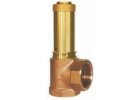
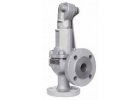
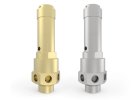
For water applications, safety valves made of durable metals are most often used, such as brass, special alloys (gunmetal, for example) or stainless steel. These materials tolerate long-term contact with water well and resist corrosion. Valves with a brass body are common for smaller sizes (typically domestic and industrial installations up to DN20–DN32) and a cast iron or steel body on larger valves (higher flows or industrial applications). The design is generally an angle type – the inlet is on the underside of the valve and the outlet (discharge) at right angles to the side. This arrangement makes it easier to release hot water or steam safely to the side. The valves have either female threads for connection to pipework (most often 1/2", 3/4", 1" and so on) or, on very large equipment, they may also have a flanged connection.
Temperature resistance and pressure ranges
Water safety valves are designed to work reliably across a wide temperature range from cold water to boiling water. Ordinary models handle working temperatures from roughly -10 °C to +120 °C. For use in solar systems or special applications there are also valves resistant up to about 160 °C (they can briefly release hot steam formed from water). The pressure ranges of adjustment or fixed setting differ by type: most safety valves for water heating and central heating are available in a range of around 2–10 bar. For domestic heating systems, for example, valves with an opening pressure of 3 bar are usually chosen (because the normal working pressure is up to 1.5 bar and the expansion vessel holds to ~2.5 bar). For hot water cylinders (boilers), 6 bar valves are standard (protecting a cylinder connected to a mains supply of ~4–5 bar). Industrial and process systems may need higher values – some valves for water allow settings up to about 16 bar. It is important that every valve has a defined maximum working pressure and flow capacity, so that on opening it safely releases the required quantity of medium and keeps the pressure below the critical limit.
Seals suitable for water
The key internal part of a safety valve is the seal on the valve seat (and possibly a diaphragm separating the spring from the medium). Valves for water use sealing materials that withstand water, hot water and possibly steam over the long term without losing elasticity or wearing quickly. The most common are EPDM (ethylene propylene rubbers) and NBR (nitrile rubbers). EPDM seals resist hot water and high temperatures excellently and are also suitable for drinking water, while NBR is likewise used for water and has excellent resistance to oils (some systems may contain oil residues, or the valve is universal for several media). In solar systems or at higher temperatures a silicone seal is sometimes used at the seat, tolerating temperature extremes and preventing sticking to the seat during long periods closed. Quality safety valves for water have a design preventing the seal sticking or adhering to the seat – so even after a long period of inactivity the valve will open reliably when the pressure is exceeded. Some types are diaphragm safety valves, meaning a rubber diaphragm (of EPDM, for instance) sits between the medium (water) itself and the spring mechanism. That ensures the spring and metal parts are not in contact with water – increasing the valve's service life and improving tightness, particularly at lower opening pressures.
Certification and hygienic design
Because safety valves are safety devices, they are subject to strict standards and certifications. All quality valves for pressure equipment must comply with the European Pressure Equipment Directive PED 2014/68/EU and carry CE marking. Many safety valves in our range also hold independent certification from test houses such as TÜV (the TÜV-SV designation to the relevant standard, for example), which confirms correct function and calibration of the opening pressure. Every valve is usually set to the required pressure at the works and sealed, so that the setting cannot be altered improperly – guaranteeing that the valve really opens at the given pressure.
A specific requirement is the so-called hygienic design of valves where they are used for drinking water or in food production. In that case all parts in contact with water must be of materials approved for drinking water – brass must not release lead (low-lead brasses or bronzes are used), or stainless steel is chosen, and seals must be safe for health (EPDM approved for drinking water and the like). Some manufacturers mark these valves with a blue cap or the wording "Water/Potable", for instance. Safety valves for heating systems need not strictly meet hygiene standards, because they work in a closed circuit outside the drinking water supply – valves for hot water cylinders, on the other hand, should be approved for contact with drinking water so that the quality of the hot water in the cylinder does not deteriorate.
Recommendations for choosing a safety valve for water
Choosing the right safety valve for a particular water application is fundamental to safe, trouble-free operation. When selecting a suitable valve it is worth paying attention to the following aspects:
-
Opening pressure setting: Choose a valve with the appropriate opening (set) pressure for your system. The value must be lower than the maximum allowable pressure of the weakest component in the system (boiler, tank and so on), yet sufficiently above the normal working pressure so that the valve does not trip needlessly often. We supply our safety valves set to the required pressure (accurate to 0.1 bar) and sealed. So state the required opening pressure matching your equipment when ordering.
-
Size and capacity: Take care over the correct valve size (connection diameter and flow capacity). The valve should have the same or a larger bore than the pipe it is installed on, and its design discharge capacity must cover the maximum possible inflow of medium in an emergency. The maker usually gives the valve capacity in tables (in litres per minute or Nm³/h at a given pressure, for example). Small 1/2"–3/4" valves suffice for ordinary boilers and cylinders; larger diameters are chosen for extensive systems or industry.
-
Compatibility of medium and temperature: Make sure the chosen valve can handle the working temperature of your system. Ordinary models (up to ~100 °C) suffice for standard heating and hot water; for solar collectors choose a valve with higher temperature resistance. Check at the same time whether the valve tolerates the medium in your circuit – if it contains glycol (solar fluid or antifreeze in heating), the valve must have a seal compatible with that medium. Most valves for water with EPDM seals are compatible with glycols, but it is always worth verifying in the documentation.
-
Water quality and maintenance: Water hardness and the presence of impurities can affect a safety valve's reliability. Hard water forms limescale that can settle on the valve seat and impair tightness over time (the valve may start to „weep“ – dripping even at normal pressure). If you have hard water, consider regular checks and flushing of the valve, or fitting filters or treating the water in the system. Coarse dirt (rust from pipes, sediment) can clog the valve or scratch the seal – fitting a filter upstream of the safety valve (a strainer on the return, for example) is recommended, particularly in industrial or older systems. Occasionally operate the valve or vent it manually (if it has a test lever) to verify its function and release any deposits.
-
Material and environment: Choose the valve material according to the nature of the operation. In a corrosive environment or for drinking water, stainless steel or quality surface-treated brass is more suitable. For ordinary heating systems in a neutral environment a brass valve suffices. For outdoor installations, consider protecting the valve from frost (a frozen valve does not work – it must either be indoors or have heating / antifreeze added to the system).
Use, advantages and limits of safety valves for water
Safety valves for water are used in all the areas mentioned above – from domestic heating circuits and cylinders to industrial exchangers, pressure washers or cooling systems. Their main advantage is automatic function: they work independently without any operator intervention or power supply. In an emergency they respond immediately and thereby protect your equipment from damage. Quality safety valves have a long service life, resist wear, and thanks to certification and testing you can trust their correct operation. A modern design with a diaphragm and a quality seal minimises the risk of water leaking in normal operation – the valve does not pass anything until it must. Another advantage is undemanding maintenance: apart from an occasional check and keeping the seat clean, they need no special care.
It is worth mentioning the limits or conditions for correct function too. A safety valve must always be installed correctly – as close as possible to the protected equipment, with a free outlet directed into a discharge pipe and with no shut-off fittings between the valve and the system (so that nothing prevents pressure being released). If maintenance were neglected and the valve became clogged with dirt or corrosion, it could stop working – so it is advisable to check the valve from time to time. Safety valves intended for water should not be used for media they are not designed for: steam at a higher temperature or oil media may require different seals or materials (specialised valves for steam or oil serve those purposes). Within its specification, however, a valve for water performs its function reliably and markedly increases the safety of the whole system. Investing in a quality safety valve pays off – in an emergency it can prevent an accident, a shutdown and a risk to people's health.
Related products and other media
Our range covers not only safety valves for water but also versions for other media and uses. To protect steam systems we offer special safety valves for steam, built for higher temperatures and pressures. Similarly, safety valves for oil serve hydraulic and lubrication circuits, made of materials and with seals resistant to oils and viscous liquids. A complete overview of all types and designs can be found in the main safety valve category. If you are unsure of your choice or need expert advice, do not hesitate to contact us – we will gladly help you choose the optimal safety valve for your water system.
.jpg)