

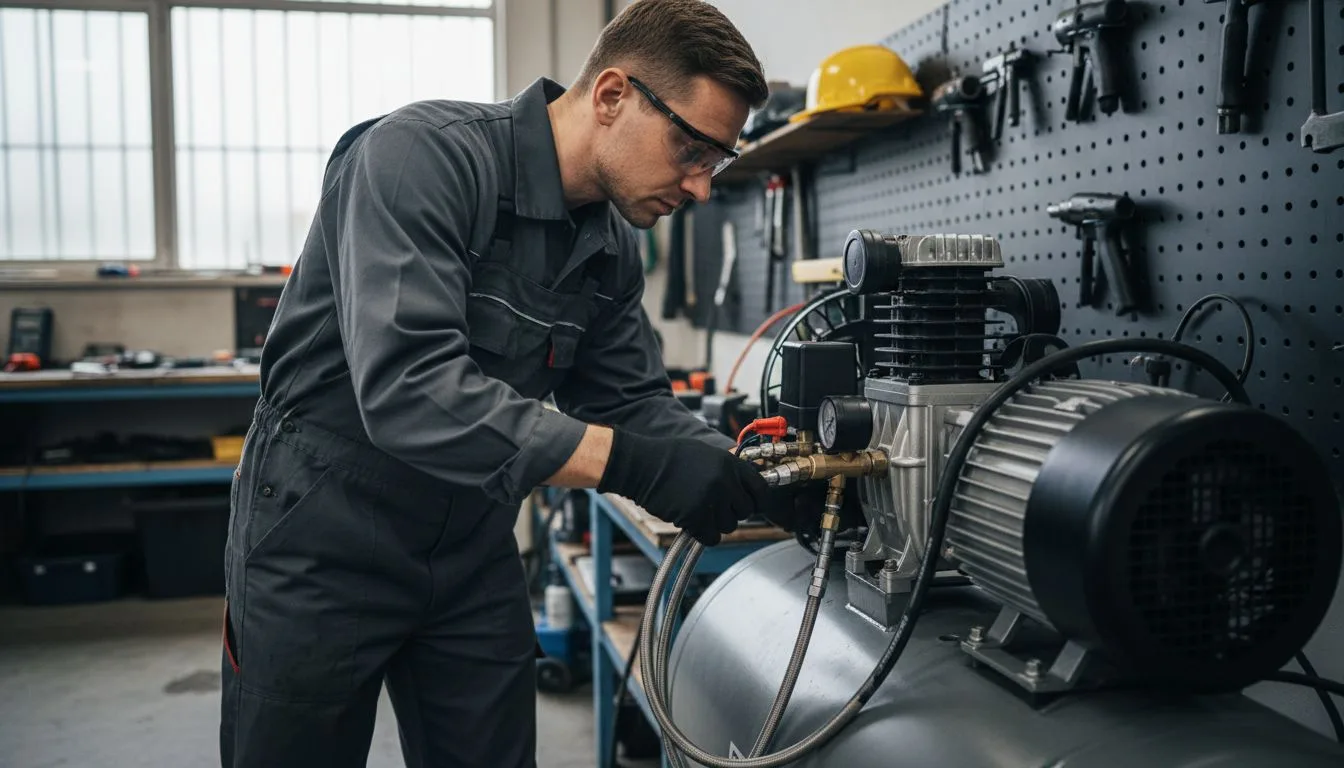
More than 60 percent of compressor users face operating trouble because they underestimate the basic check before starting. Badly set pressure or leaking joints can lead to needless failures and a shorter service life of the equipment. The correct procedure for preparing and setting a compressor increases the safety and reliability of the whole system and helps prevent expensive repairs. In a few steps you will learn how to handle a compressor efficiently and without risk.
Contents
Quick overview
| Key point | Explanation |
|---|---|
| 1. Check the electrical connection | Make sure the compressor is correctly connected and the main switch is off before starting. |
| 2. Set the correct pressure on the regulator | Turn the adjusting knob to set the pressure according to the needs of the connected tools for safe operation. |
| 3. Connect the equipment carefully | Check that the pneumatic tool is firmly connected to the quick coupling with no air escaping. |
| 4. Watch the pressure during operation | Check the pressure on the gauge regularly and adjust it so that it matches the required values. |
| 5. Carry out the final pressure check | Make sure the pressure matches the tool specifications and make any adjustments for maximum performance. |
Step 1: Check the condition and prepare the compressor
Before starting the compressor it is essential to carry out a comprehensive check of its condition and readiness. This step helps prevent potential problems and ensure safe and efficient operation of your equipment.
According to free instruction manuals, the electrical connection must be checked first. Make sure the compressor is plugged into a standard socket and the main switch is in the OFF position. Next, the setting of the pressure regulator and the correct connection of all accessories must be verified.
The next critical step is checking the air components. As the source CDN states, remove the transport plugs before use and replace them with the supplied air filters. Check all joints carefully to see whether they are tight and no air is escaping.
A few key recommendations for preparing the compressor:
-
Check the electrical connection
-
Verify the setting of the pressure regulator
-
Remove the transport plugs
-
Check the tightness of all joints
Once these checks are complete you can be sure that your compressor is fully prepared for safe and reliable operation.
Step 2: Set the required pressure on the regulator
Setting the correct pressure in the compressor is a key step in ensuring optimum performance of your pneumatic tools and equipment. Precise pressure setting guarantees efficient and safe operation.
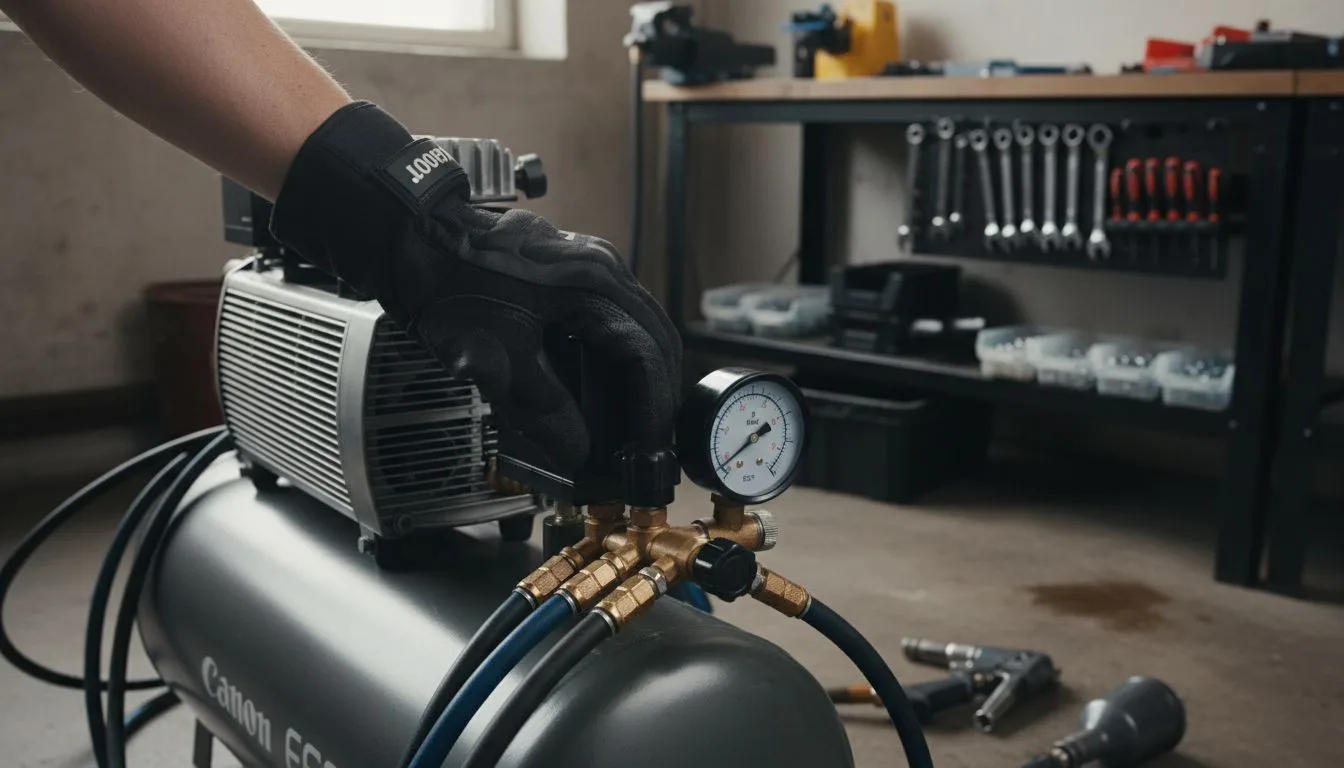
According to the Doc documentation, the pressure can be set by turning the knob of the reducing valve. To increase the pressure turn the knob clockwise, and to reduce the pressure turn it anticlockwise. You can watch the current outlet pressure directly on the gauge.
Pantermax stresses how important it is to take the specific requirements of the connected tools into account. Every tool may require a different optimum pressure for maximum performance, so the setting must be adapted carefully.
Key points when setting the pressure:
-
Watch the pressure gauge
-
Turn the adjusting knob gradually
-
Respect the recommendations of the tool manufacturer
-
Do not exceed the maximum permitted pressure
Correct pressure setting guarantees reliable and efficient operation of your compressor and the connected equipment.
Step 3: Connect the equipment to the compressor outlet
Connecting the equipment to the compressor outlet is a critical step that requires precise attention and the correct procedure. A correct connection ensures safe and efficient operation of your pneumatic tool.
According to the Doc documentation the pneumatic tool must be connect to the quick coupling on the compressor. Make sure the connection is firm and tight and no air escapes. A correctly made connection is essential for the optimum functioning of the equipment.
Pantermax recommends paying attention to the choice of the right hoses and couplings. They must match the required pressure and air flow so that safe and efficient use of your pneumatic equipment is guaranteed.
Key points when connecting the equipment:
-
Check the compatibility of the quick coupling
-
Make sure the joint is tight
-
Use a suitable seal
-
Do not exceed the maximum permitted pressure
By following these steps carefully you will ensure reliable and safe operation of the compressor and the connected equipment.
Step 4: Verify and adjust the pressure during operation
Ongoing checking and adjustment of the pressure while the compressor runs is essential to ensure optimum performance and reliability of your pneumatic equipment. This step helps prevent damage to the tools and guarantees consistent working performance.
According to the Doc documentation, the pressure must be watched continuously on the gauge during operation. If deviations are found, the pressure must be adjusted immediately using the rotary regulator on the reducing valve. The aim is to maintain a constant and correct pressure for all connected tools.
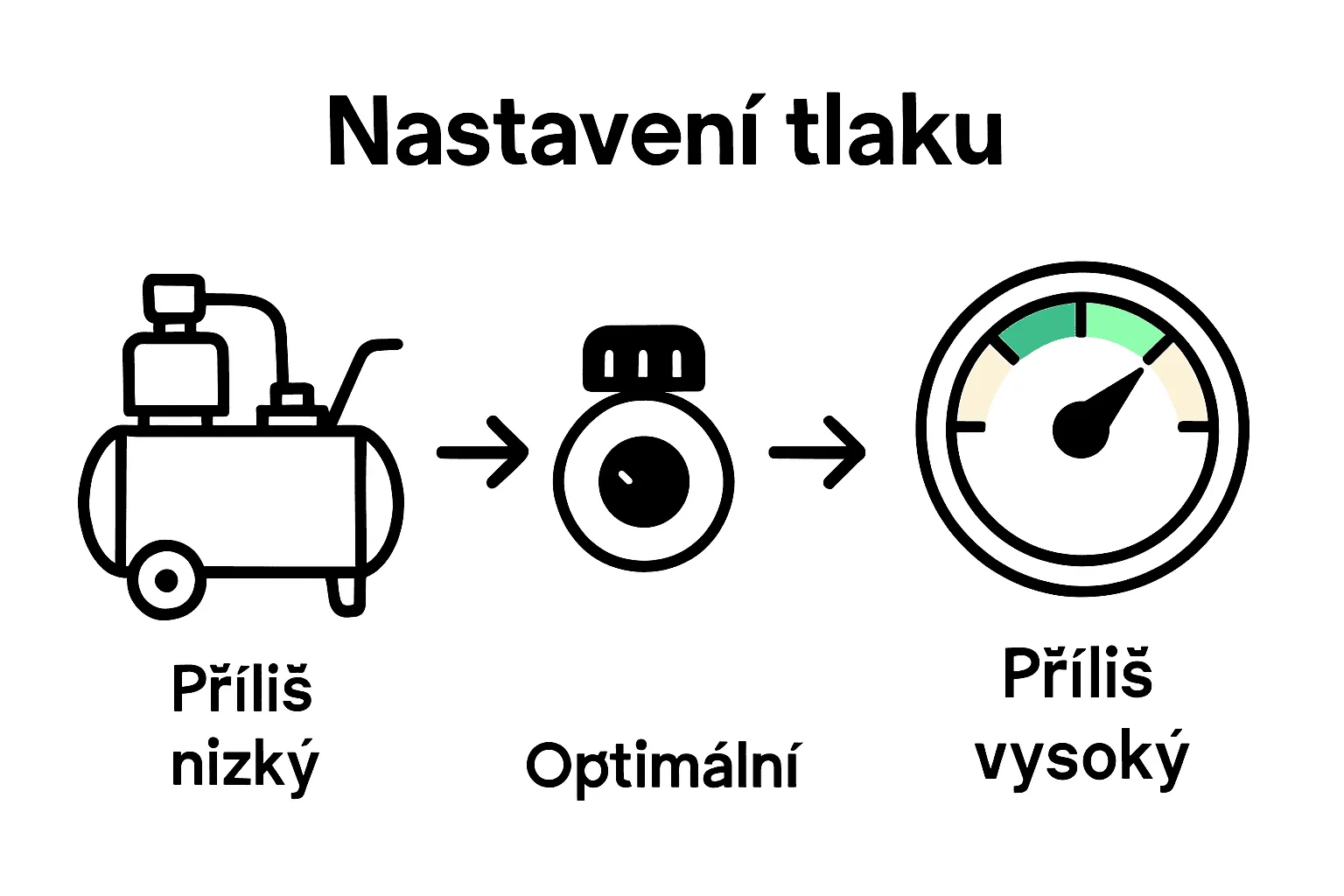
Pantermax stresses that regular checking of the pressure is key to ensuring optimum tool performance. If there is any deviation, the pressure must be adjusted to the required value without delay.
Key points for checking the pressure:
-
Watch the pressure gauge regularly
-
React to any pressure deviation
-
Maintain a constant working pressure
-
Protect the tools from overload
By monitoring carefully and adjusting the pressure in time you will ensure long-term reliability and performance of your compressor and the connected equipment.
Step 5: Carry out the final check of the correct pressure
The final check of the correct pressure is a decisive step that determines the safety and efficiency of your pneumatic equipment. A careful check ensures optimum performance and protects your tools from possible damage.
According to the Doc documentation it is necessary to check the pressure on the gauge regularly and verify whether it matches the required values for the particular connected tool. This step is key to ensuring the correct functioning of all pneumatic equipment.
Pantermax stresses that the final check of the correct pressure is essential for safe and efficient operation. It is necessary to make sure the pressure matches the specifications of the connected tools exactly and, in the case of any deviations, to make immediate adjustments.
Key points of the final pressure check:
-
Check the accuracy of the pressure gauge
-
Verify that the pressure matches the tool specifications
-
Carry out fine adjustment of the pressure
-
Record the final setting
With a careful check and any adjustments to the pressure you will ensure maximum performance and reliability of your compressor and the connected equipment.
Get perfect pressure in your compressor with equipment from the specialists
Setting the correct pressure in a compressor is the basis of accurate and efficient results when working with pneumatic tools. If you want to prevent problems such as pressure fluctuations or damage to the equipment, it is essential to invest in a quality compressor and accessories that let you easily set and maintain the ideal pressure exactly to your needs. Key items such as the pressure gauge, the reducing valve or the quick coupling play a role not only in the setting but also in safe operation.

Do not hesitate and choose from the wide range of professional and home compressors, pneumatic tools and accessories at Kompresory Vzduchotechnika, where you will find detailed descriptions, prices and stock availability. Secure stable and accurate operation thanks to our specialist products and always stay a step ahead.
For detailed advice and a quick purchase visit https://kompresory-vzduchotechnika.cz and get everything you need for setting the pressure in your compressor correctly today.
Frequently asked questions
How do I find the correct pressure for my pneumatic tools?
The correct pressure depends on the specifications of the individual tools. Check the documentation of your tool and set the pressure according to the manufacturer recommendation.
How do I adjust the pressure if it changes during operation?
While watching the gauge, look for deviations. When you notice a change, immediately turn the adjusting knob on the reducing valve depending on whether the pressure needs to be raised or lowered.
What to do if air escapes when connecting the equipment?
If you notice air escaping, check whether the connection is firm and tight. Make sure the correct hoses and couplings are used and replace them if they are not compatible.
How often should I check the correct pressure in the compressor?
It is recommended to check the pressure during operation regularly, ideally every 10-15 minutes. In this way you can react in time to any deviation and maintain constant performance.
How do I check whether the pressure gauge works correctly?
To verify the accuracy of a gauge it is good to compare the values with a calibrated measuring instrument. If you find that the values differ, consider calibration or replacement of the gauge.
How do I set the pressure on a compressor correctly before first use?
Before first use it is key to set the pressure according to the tool manual. Turn the adjusting knob on the reducing valve and watch the gauge until you reach the required value.