

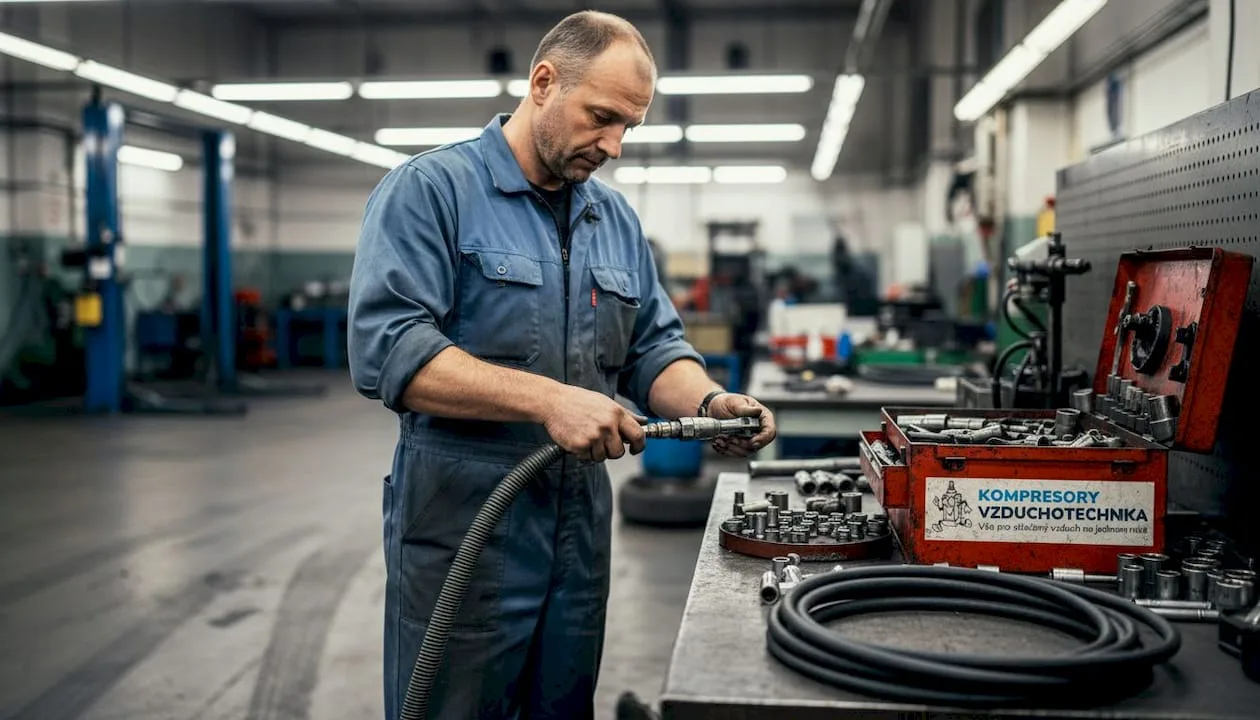
The choice of a pneumatic hose fundamentally influences the efficiency and safety of work in a car service. It is not only about the material, but above all about the specific application and the operating conditions. A badly chosen hose causes pressure leaks, reduces the performance of tools and shortens the life of the whole system. This article offers an overview of practical uses, a comparison of the options and specific recommendations for professionals.
Key findings
| Point | Details |
|---|---|
| Selection criteria | It is key to take into account the internal diameter, the material and the operating pressure for the specific application. |
| Main use | Most commonly a hose finds use in driving tools and in systems of air suspension. |
| Materials | Different materials (rubber, PU, PVC) have a different service life and suitability for specific environments. |
| Maintenance | Regular checks of hoses and couplings will prevent most faults and energy losses. |
Criteria for choosing a pneumatic hose for professional use
Length, internal diameter and pressure resistance determine whether the hose will manage the required performance. The material decides the resistance to the environment. For professional deployment in automotive a hose with an internal diameter of 3/8" (approx. 10 mm) is recommended, which ensures an optimal air flow without excessive pressure losses.
The materials differ in key properties:
- Rubber hoses: High resistance to abrasion and temperatures, but a higher weight.
- Polyurethane (PU) hoses: Light, flexible and resistant to cracking, ideal for mobile use.
- PVC hoses: The economical variant for lighter operating conditions.
In a car service a hose must withstand oil, fuels and temperature fluctuations. A quality hose with tight joints saves operating costs and extends the life of the compressor. The response speed of pneumatic systems in automation depends on the correct configuration of the whole distribution system.
Use of pneumatic hoses in supplying tools
Pneumatic hoses are used primarily to supply impact wrenches, grinders, spray guns or blow nozzles. The importance of a stable pressure cannot be underestimated – fluctuations cause unstable performance of the tool, which leads to poor-quality work.
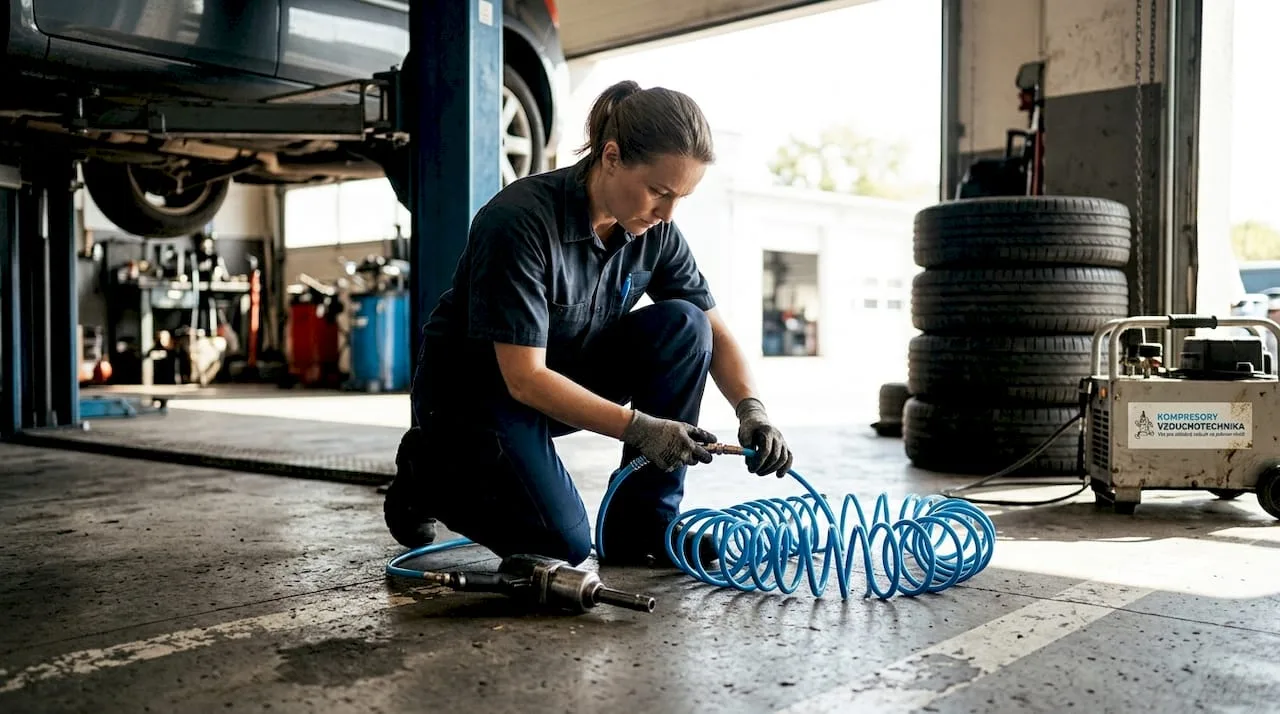
The fast response of the system depends on the diameter of the hose and on the quality of the quick couplings. A narrow hose limits the flow and slows the reaction of the tool. The right configuration of hoses moreover postpones excessive wear of the tool, because the motor does not have to work at the limit of its possibilities because of a lack of air.
Pneumatic hoses in the air suspension of vehicles
In air suspension systems hoses serve to transfer compressed air between the compressor, the valve block and the air springs. Here the requirement for reliability is critical – failure of a hose can lead to a sudden loss of suspension and a dangerous situation on the road.
Special hoses of EPDM rubber or polyamide (PA12) with high resistance to salts, oils and mechanical damage are used. Small leaks in these systems cause frequent starting of the compressor, which increases noise and energy consumption.
Special use in automotive production
Automotive production places extreme demands on hoses, for example in the extraction of hot exhaust gases (temperatures up to +1100 °C), where silicone hoses with metal braiding are used. PTFE hoses in turn are essential in paint shops thanks to their chemical resistance.
| Application | Recommended material | Temperature range |
|---|---|---|
| Extraction of exhaust gases | Silicone with metal | -50 to +1100 °C |
| Painting | PTFE | -200 to +260 °C |
| Braking systems | Polyamide PA12 | -40 to +100 °C |
Comparison of the main types of pneumatic hoses
| Type of hose | Main advantages | Pressure resistance | Suitable applications |
|---|---|---|---|
| Rubber | Resistance to abrasion | approx. 20 bar | Workshops, heavy operation |
| Polyurethane | Excellent flexibility | approx. 15 bar | Mobile tools |
| PVC | Low price | approx. 10 bar | Hobby use |
| Spiral PU | Saving of space | approx. 12 bar | Work benches |
Tips for correct maintenance and prevention
Regular maintenance extends the service life and ensures safe operation. Watch for visual signs of material fatigue such as cracks, abrasion or a change of colour. UV radiation degrades most materials, which is why you should store hoses out of direct sunlight.
Professional tip: Hoses in automotive must withstand oil and dirt. Regular cleaning of the outer surface with a mild detergent extends the service life by up to 30 %. Never exceed the maximum working pressure and always release the pressure in the system first before disconnecting.
Quality equipment for your car service
For professional results choose from a proven range. At Kompresory-vzduchotechnika.cz you will find a complete offer of hoses, tools and compressors.
We offer SCR screw compressors for a stable pressure, M7 pneumatic tools and complete air distribution. Our technicians will advise you on the dimensioning of the system and the choice of the optimal hoses for your specific project.
Most frequent questions
What diameter of hose is recommended for a car service?
Most often an internal diameter of 3/8" (9,5 mm) is chosen. It ensures a sufficient flow for impact wrenches and grinders while retaining good handling.
How often should the condition of the hoses be checked?
In professional operation we recommend a visual check and a tightness test of the couplings at least once a month.
How to extend the life of hoses?
Protect them from sharp edges and UV radiation and regularly clean the surface of oils and aggressive operating fluids.