
 Moisture in the air can inconspicuously cause corrosion and expensive breakdowns of machines not only in the Czech Republic, but in the whole of Europe. For professional craftsmen from the fields of construction and industry the reliable removal of moisture is therefore fundamental for safe and efficient work. You will find out how a correctly chosen air dryer can significantly extend the life of the equipment and bring savings even in the most demanding operating conditions.
Contents
Main summary
| Point | Details |
|---|---|
| An air dryer is important for industry | It effectively removes moisture and protects the machinery from damage. |
| Various types of dryers | Every type has its specific use and is suitable for various sectors and conditions. |
| Regular maintenance is key | It ensures optimal performance and extends the life of the equipment. |
| Mistakes in the choice can have serious consequences | An incorrect choice of parameters and the neglect of maintenance can lead to faults and inefficiency. |
What an air dryer is and why it is key
An air dryer is a specialised technical device intended for the effective removal of moisture from flowing air in industrial and technological processes. It is a critical tool which helps protect sensitive machinery, ensures optimal operating conditions and prevents potential damage caused by excessive moisture.
In industrial use air dryers fulfil several key functions. Primarily they remove moisture which could cause corrosion, degradation of materials or disrupt precise technological processes. The principles of operation of air dryers are based on several basic methods:
-
Condensation drying
-
Adsorption technology
-
Membrane methods of drying
Each of these methods has a specific use depending on the specific industrial requirements. Dryers contribute significantly to preserving the quality of materials in fields such as woodworking, the food industry or mechanical engineering, where cleanliness and dryness of the air represent a critical parameter.
Pro tip: Before choosing an air dryer always carefully evaluate the specific humidity conditions of your plant and consult the parameters with a specialist.
The main types of air dryers and their differences
In industrial practice there are four basic types of air dryers which differ in the principle of operation and in specific application requirements. Every type has its unique characteristics and is suitable for different operating conditions.
The main categories of air dryers include:
-
Adsorption dryers: They use highly absorbent materials to capture moisture. They are ideal for environments requiring extremely low humidity, for example in the pharmaceutical or electronics industry.
-
Refrigeration dryers: They collect the condensed water in a container and do not need additional venting. They are energy-saving and suitable for standard industrial plants.
-
Membrane dryers: They work on the principle of special semi-permeable membranes which separate the water molecules from the air. They stand out with a low energy demand and minimal maintenance.
-
Absorption dryers: They use chemical substances to absorb moisture; they are suitable for specific industrial applications with high demands on the cleanliness of the air.
Pro tip: Before choosing an air dryer always carry out a thorough analysis of the humidity parameters of your specific plant and consult the technical requirements with a specialist.
The following table summarises the main differences between the basic types of air dryers:
| Type of dryer | Typical energy consumption | Required maintenance | Suitability for sectors |
|---|---|---|---|
| Adsorption | Medium | Replacement of the sorbent | Pharmacy, electrical engineering |
| Condensation | Low | Cleaning of the condensate | Mechanical engineering, food industry |
| Membrane | Very low | Rarely changed membranes | Laboratories, sensitive processes |
| Absorption | Higher | Topping up chemicals | Ceramics, special production |
How air dryers work in practice
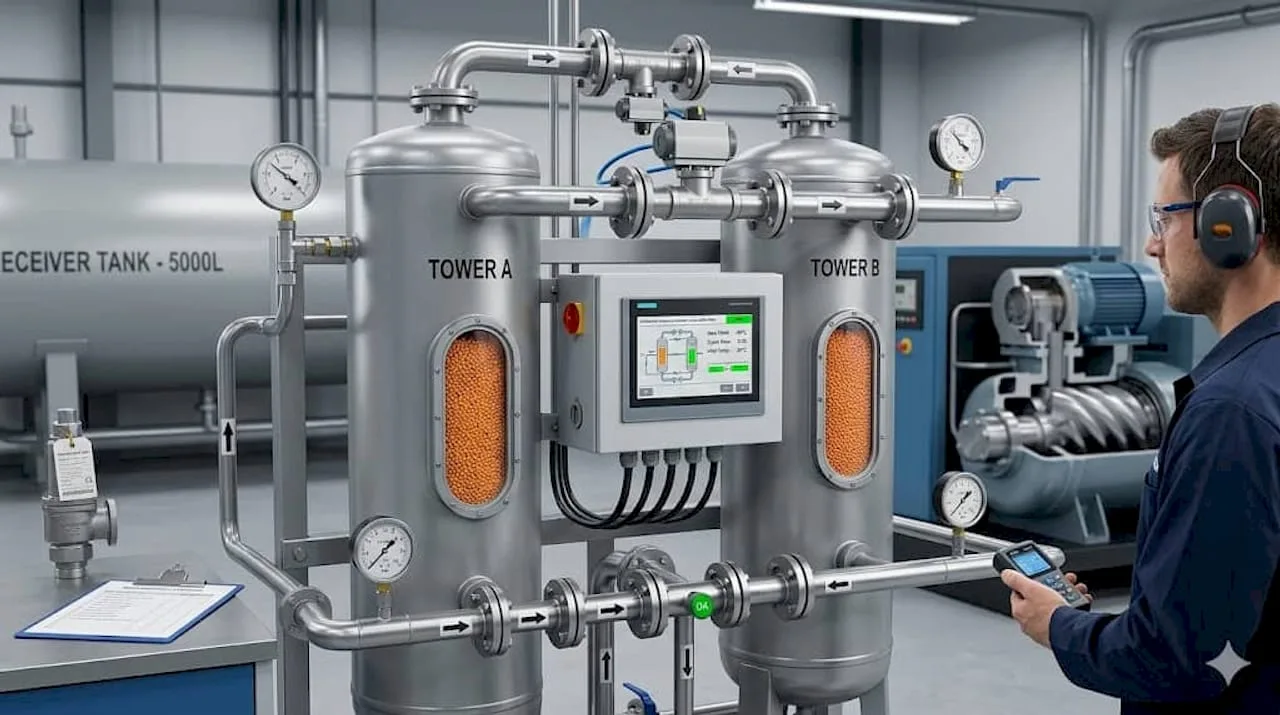
Air dryers represent complex technological devices which ensure the effective removal of moisture from flowing air using various technological methods. In principle they work on the basis of several key physical processes which make it possible to reduce the amount of water vapour and condensate to the maximum.
The main mechanisms of the function of air dryers include:
-
Cooling of the air: By reducing the temperature the water vapours condense and are subsequently captured and led away
-
Compression: By compressing the air its physical properties change, which makes the separation of moisture easier
-
Filtration: Special membranes and filters capture the water molecules
Every type of dryer uses specific technological procedures for eliminating moisture, while the key goal is to prevent corrosion, oxidation and degradation of the machinery. Industrial dryers can reduce the humidity of the air down to a dew point of -40 °C, which guarantees maximum cleanliness and dryness.
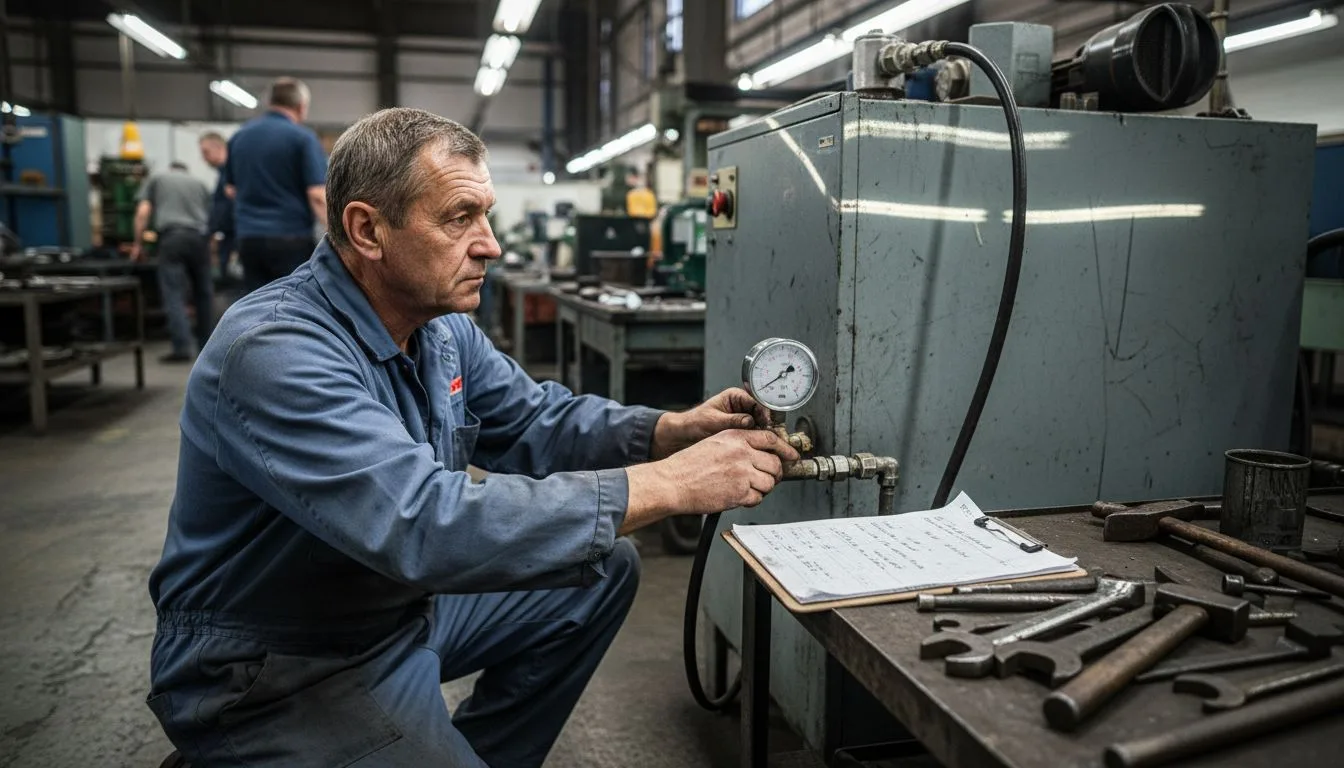
Pro tip: Regularly check the filtration systems of the dryer and carry out the replacement of the moisture traps in time to ensure optimal performance.
Advantages in industrial and construction plants
The use of air dryers in industrial plants brings fundamental advantages for the overall efficiency and reliability of the technological processes. Modern industrial plants increasingly appreciate the strategic importance of quality drying of air for preserving the maximum operability of the machinery.
The key benefits of air dryers include:
-
Protection of the machinery: The elimination of moisture prevents corrosion and premature wear of the machines
-
Increase of reliability: A constant quality of the air minimises faults of pneumatic systems
-
Energy saving: Effective drying reduces the costs of operation and maintenance
Industrial dryers contribute significantly to increasing the quality of production processes in strategic sectors such as woodworking, the food industry and the pharmaceutical and ceramic industries. Their use makes it possible to achieve consistent results and minimise the risks connected with excessive moisture.

Pro tip: Have the air dryers checked and calibrated professionally on a regular basis so as to maximise their performance and prevent potential operating problems.
For quick orientation we give a comparison of the key benefits of air dryers in various plants:
| Sector | Main benefit | Typical requirements for humidity |
|---|---|---|
| Woodworking | Prevention of warping | Medium |
| Food industry | Protection of hygiene | Low |
| Pharmaceutical industry | Stability of substances | Very low |
| Construction | Minimisation of damage | Medium to higher |
The most frequent mistakes in choice and operation
In operating air dryers professional craftsmen and industrial users often face a number of critical mistakes which can significantly influence their overall performance and the reliability of the technological equipment.
The most serious operating mistakes include:
-
An incorrect choice of parameters: Underestimating the specific requirements of the particular plant
-
Neglect of regular maintenance: Omitting the cleaning and checking of the filters
-
Underestimating the humidity conditions: The absence of a thorough analysis of the environment
Critical shortcomings in the installation of air dryers can cause serious operating complications, such as leaks of condensate, ineffective drying or premature wear of the equipment. Among the most frequent technical problems are incorrectly routed ventilation ducting, clogged exhaust systems and unsuitable spatial installation.
Pro tip: Before choosing an air dryer always carry out a thorough survey of the specific humidity and operating conditions of your workplace.
Choose the right solution for effective drying of air
The right choice of air dryer is a key step to preventing corrosion and faults in your plant. If you need reliable equipment and accessories for the optimal drying and compression of air, we offer a wide range of quality compressors and pneumatics at https://kompresory-vzduchotechnika.cz. Take advantage of products which will meet demanding requirements for humidity and the protection of machinery.
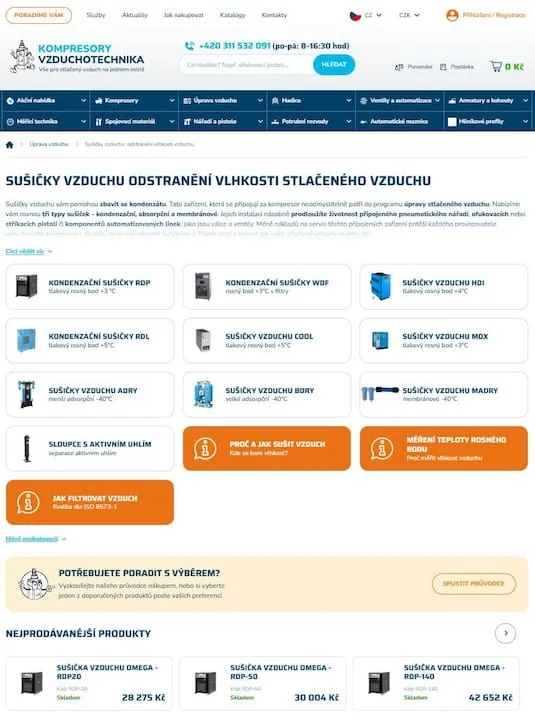
Do not wait for problems with moisture to arise. Visit our website, where you will find a complete offer of compressors suitable for combining with air dryers. Choose products with a low energy consumption and reliable maintenance. Take a look at our range and get a solution which will increase the efficiency and life of your equipment today.
Frequently asked questions
What is an air dryer and what is it for?
An air dryer is a device intended for the effective removal of moisture from flowing air, which helps protect machinery and ensures optimal operating conditions.
What are the main types of air dryers and how do they differ?
The main types of air dryers include adsorption, condensation, membrane and absorption ones. Every type has specific properties and is suitable for various industrial sectors.
How do air dryers work in practice?
Air dryers work on the principle of various technological methods such as cooling of the air, compression and filtration, which effectively remove moisture and minimise condensation.
What are the advantages of using air dryers in industry?
The use of air dryers in industry brings protection of the machinery, an increase in the reliability of the technologies and energy saving, which leads to more efficient production processes.