

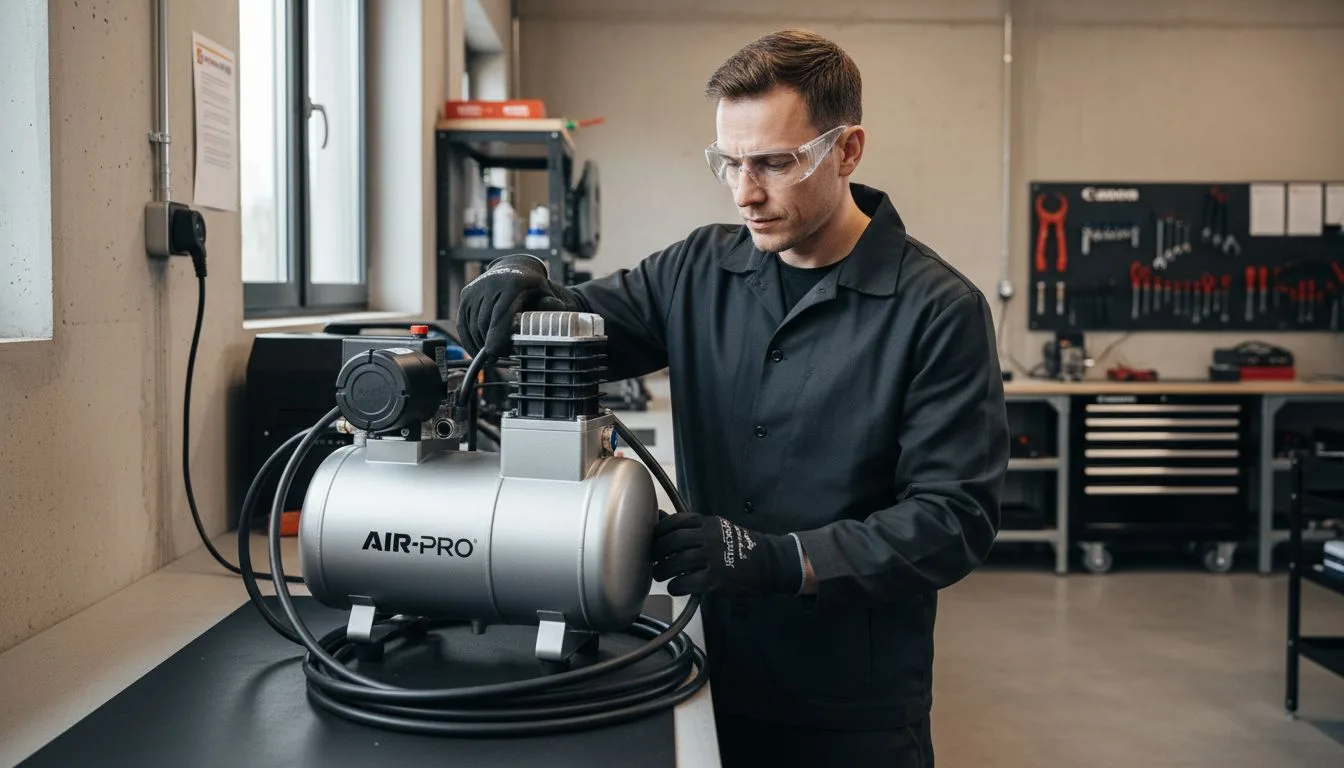
Correct preparation and setting of the compressor decides the whole result of the work. Many users overlook the fact that even a small leak can reduce the efficiency of the equipment by up to 30 percent, which leads to higher costs and a risk of failures. If you want to extend the service life of the compressor and use its maximum output, you need to pay special attention to the correct checks and procedure before every start. This procedure will guide you through the key steps to safe and efficient operation of your equipment.
Contents
- Step 1: Prepare the compressor and the working area
- Step 2: Check the pressure and safety elements
- Step 3: Set the required working pressure
- Step 4: Lock the setting and make the system tight
- Step 5: Verify correct function and pressure accuracy
Quick overview
| Key point | Explanation |
|---|---|
| 1. Carry out a visual inspection of the compressor | Check the equipment for damage and leaks to ensure safe operation. |
| 2. Check the pressure and safety elements | Verify the correct function of the pressure gauge and the safety valve for maximum protection of the equipment. |
| 3. Set the correct working pressure | Observe the recommended working pressure values for your tools so that they are not damaged. |
| 4. Tighten all connections | Secure the tightness of the system by tightening the connecting elements, which increases efficiency and safety. |
| 5. Verify pressure stability in operation | Carry out a test run and watch for any deviations to ensure trouble-free operation of the compressor. |
Step 1: Prepare the compressor and the working area
Before starting work with the compressor it is essential to prepare both the equipment itself and the working area correctly. The aim is to create a safe and efficient environment for reliable operation of the pneumatic equipment.
First carry out a complete visual inspection of the compressor. Focus on any mechanical damage, leaks or signs of wear on the hose, the air receiver and the connecting elements. Check the oil level if it is an oil-lubricated compressor and top up to the prescribed level if needed. On compressors without lubrication, check the condition of the diaphragms and seals.
The working area must meet several basic requirements. Ensure sufficient ventilation to prevent the equipment overheating. Place the compressor on a level, stable surface with a minimum distance of 50 cm from the walls, which allows proper cooling. Remove flammable materials from the surroundings and make sure a socket of the appropriate voltage is within reach.
It is also important to have basic safety equipment at hand, including protective goggles and gloves. Before starting, check the setting of the safety valves and make sure all controls are in their basic position. That will prevent any trouble when the equipment starts.
Step 2: Check the pressure and safety elements
Now we turn to a thorough check of the pressure and safety elements of the compressor, which is key to its reliable and safe operation. The aim of this check is to reveal any shortcomings or risks that could threaten the function of the equipment.
The first step consists in a careful inspection of the pressure gauge. For accurate measurement we recommend pressure gauges with a 50 mm dial, which offer a reliable display of the current pressure. Check whether the gauge shows the correct values and whether it is not mechanically damaged. Focus on the tightness of the connection and the legibility of the scale.
Next carry out the inspection of the safety elements including the safety valve. This critical element protects the compressor from excessive pressure. Make sure the valve is clean, undamaged and correctly set. On compressors with a pressure vessel it is also important to check the condition of the pressure vessel, including any signs of corrosion or mechanical damage.
The last step is to verify the functionality of all safety elements. Carry out a trial start of the compressor and watch the behaviour of the pressure and safety mechanisms. If you notice any non-standard behaviour, such as unusual noises, leaks or pressure fluctuations, we recommend contacting a specialist service.
Step 3: Set the required working pressure
Setting the correct working pressure is a key step for efficient and safe operation of the compressor. This process requires precision and care so that you secure the optimum performance of your equipment.
Start by identifying the specific requirements of your pneumatic tools or equipment. Every tool has a recommended working pressure, which you will find in its technical documentation. For accurate measurement and setting we recommend glycerine pressure gauges with accuracy 1.0, which provide a stable and accurate display of pressure.
Proceed as follows: first release the adjusting screw on the pressure regulator of the compressor. Then slowly turn the adjusting knob clockwise or anticlockwise depending on whether you need to raise or lower the pressure. Watch the gauge and stop at the moment you reach the required value. We recommend setting the pressure a little higher than the minimum pressure required by your tools so that their reliable operation is assured.
Beware of exceeding the maximum permitted pressure for your compressor or the connected tools. Any excess can cause serious damage to the equipment or even endanger the safety of the operator.
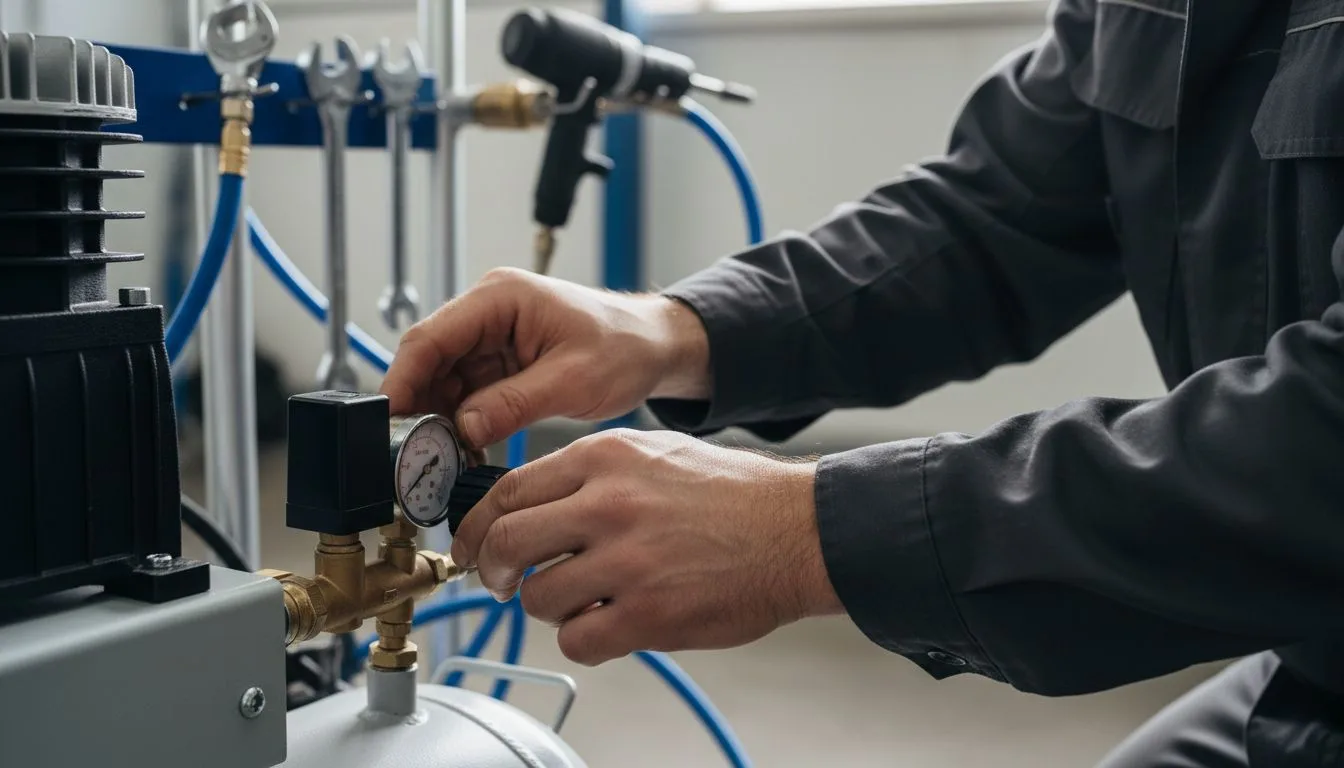
Step 4: Lock the setting and make the system tight
After setting the working pressure it is necessary to secure the stability of the whole compression system and check its tightness. This step is essential for the long-term reliability and safe operation of your equipment.
Proceed systematically. First tighten all connecting elements and joints. For optimum sealing we recommend using fittings with a push-in stem, which allow a reliable and tight connection of the individual components. Check the tightness of all hoses, the valves and the connection points using soapy water or a special leak detection solution.
Carry out a test run of the compressor without connected tools. Watch the gauge and listen for any non-standard noises that could indicate leaks or mechanical problems. If you notice any sign of escaping air or instability of the system, stop operation immediately and carry out a detailed check.
The final step is to secure the set parameters. Tighten the locking nuts and screws on the pressure regulators to prevent the setting changing by itself during operation. Remember the regular checks and maintenance, which are the key to long-term reliable operation of your compressor.
Step 5: Verify correct function and pressure accuracy
The final step involves a comprehensive verification of the functionality of the compressor and the accuracy of its pressure setting. This process is key to reliable and safe operation of your equipment.
For accurate measurement of pressure we recommend stainless steel pressure gauges 63 mm with accuracy 1.6, which provide a highly accurate display of the pressure parameters. Connect the pneumatic tools and carry out a test operation. Watch the stability of the pressure under different loads and verify that it matches the original setting.
During the test, note any fluctuations or instabilities. If you find significant deviations, it may signal the need to adjust the regulator or to check the technical condition of the compressor. It is also important to watch the behaviour of the safety valves and the overall dynamics of the system under different working conditions.
After completing the test, carry out a final check of all parameters. Make sure the compressor runs quietly, without vibration and with consistent pressure. Regular verification of functionality is the key to long-term reliability and to preventing possible failures.

Set the compressor pressure correctly and without compromise
Setting the working pressure of a compressor correctly is often an essential challenge for anyone who needs reliable and safe running of pneumatic equipment. It often starts with problems in the accuracy of the gauges or with leaks that limit performance and increase the risk of failures. In the article we went through in detail how to proceed with checking, setting and locking the pressure, but if you are looking for a complete solution for equipping your machine with accurate and durable components, we have the answer for you.
Discover in our e-shop a wide choice of specialist products, from glycerine pressure gauges with accuracy 1.0 through fittings with a push-in stem to complete compressors with a pressure vessel intended for demanding use.

Leave nothing to chance and equip your working area with quality components that will ensure accurate setting and long-term reliability. Visit https://kompresory-vzduchotechnika.cz today and take advantage of the special offer that will help you achieve optimum performance without compromise. Start with the right pressure and increase the efficiency of your working equipment right now.
Frequently asked questions
What is the correct pressure for individual pneumatic tools?
The correct pressure for pneumatics depends on the type of tool you are using. It is usually recommended to check the specifications in the technical documentation of each tool and to set the pressure within the range recommended by the manufacturer.
How can I check whether the compressor gauge is accurate?
To verify the accuracy of a gauge you can compare its values with another gauge you know to be accurate. If you find differences, we recommend calibration or replacement of the gauge for correct pressure measurement.
How is the working pressure set on a compressor?
When setting the working pressure, release the adjusting screw and turn the adjusting knob clockwise or anticlockwise until you reach the required value. Watch the gauge and make sure the pressure is set correctly before starting the equipment.
What to do if the compressor leaks after setting the pressure?
If the compressor shows signs of leaks, check all hoses and connecting elements for damage or looseness. Tighten all joints and carry out a trial run without connected tools to verify the tightness of the system.
How often should I check the pressure and functionality of the compressor?
It is recommended to check the pressure and functionality of the compressor regularly, at least once a month. Ongoing maintenance helps to ensure reliable operation and to prevent failures.