

Diesel, oil and petrol hoses TU25
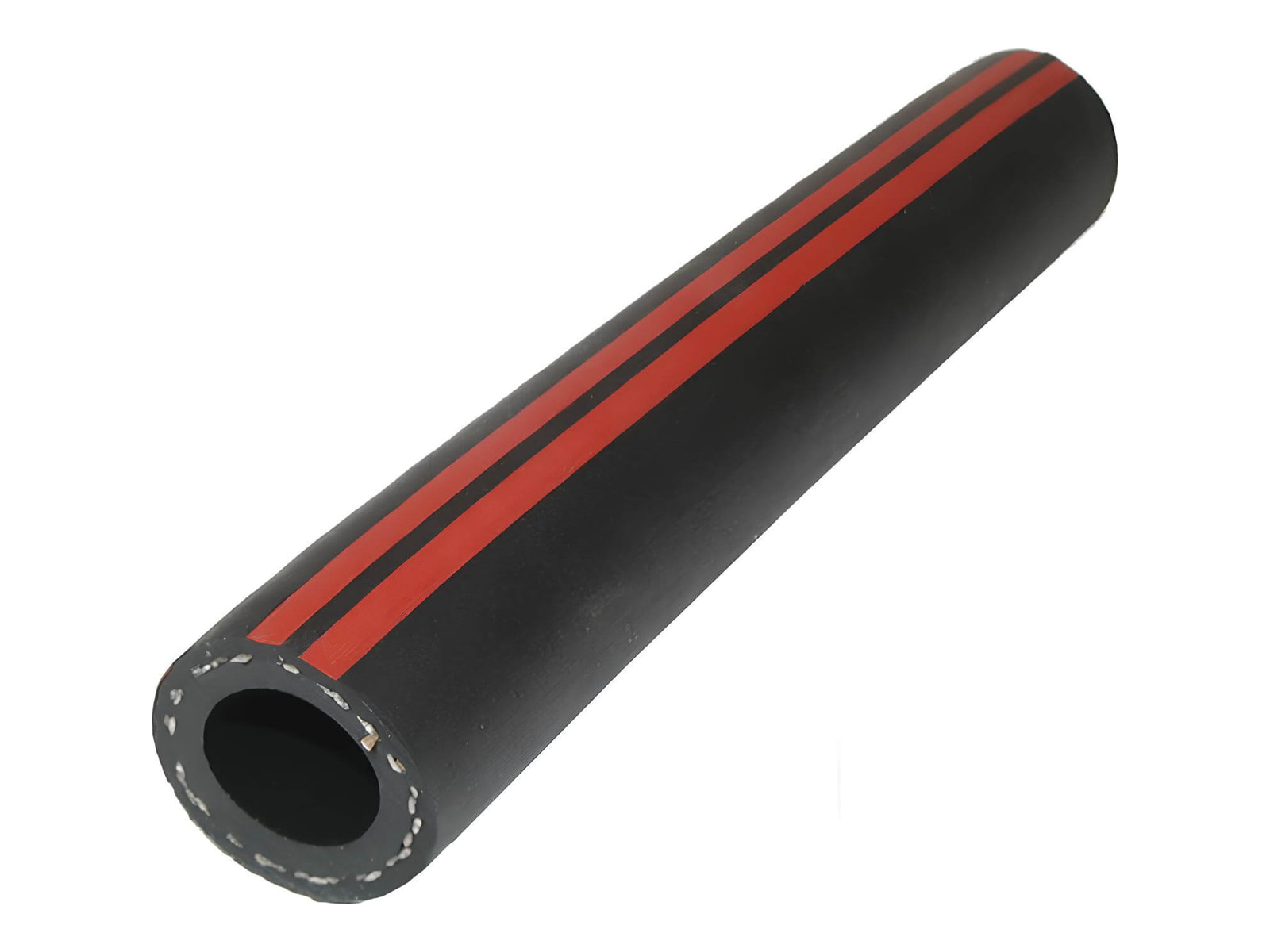
TU25 hoses carry diesel, unleaded petrol, heating oil, industrial oils and compressed air. They withstand a working pressure of 25 bar and temperatures from −40 to +80 °C and suit industry, workshops, garages and filling stations.
The smooth nitrile rubber lining is electrically conductive and dissipates static charge. The pressure is carried by a textile reinforcement with two plies, and the black cover with red stripes resists oils, abrasion and weathering. The series has seven diameters from 6 to 25 mm and is sold by the metre.
Sizes and order numbers
We give the size as outer / inner diameter in millimetres, so 18/10 mm is a hose with an inner diameter of 10 mm. The working pressure of 25 bar and the temperature range of −40 to +80 °C apply to all diameters. Each order number is sold by the metre, in whole metres. Click an order number to open the hose page.
| TU25 — all 7 sizes in one place | |||||||
|---|---|---|---|---|---|---|---|
| Order number | Size D/d | Wall | Working pressure | Temperature | Bend radius | Weight | Coil |
| TU25-06 | 14/6 mm | 4 mm | 25 bar | −40 to +80 °C | 40 mm | 0.15 kg/m | 100 m, 15 kg |
| TU25-08 | 16/8 mm | 4 mm | 25 bar | −40 to +80 °C | 50 mm | 0.20 kg/m | 100 m, 20 kg |
| TU25-10 | 18/10 mm | 4 mm | 25 bar | −40 to +80 °C | 60 mm | 0.25 kg/m | 50 m, 12.5 kg |
| TU25-13 | 21/13 mm | 4 mm | 25 bar | −40 to +80 °C | 80 mm | 0.30 kg/m | 50 m, 15 kg |
| TU25-16 | 25/16 mm | 4.5 mm | 25 bar | −40 to +80 °C | 100 mm | 0.40 kg/m | 50 m, 20 kg |
| TU25-19 | 29/19 mm | 5 mm | 25 bar | −40 to +80 °C | 120 mm | 0.50 kg/m | 50 m, 25 kg |
| TU25-25 | 36/25 mm | 5.5 mm | 25 bar | −40 to +80 °C | 150 mm | 0.70 kg/m | 50 m, 35 kg |
#showmore#
What you can use the hose for
- Diesel: diesel fuel to EN 590
- Unleaded petrol: to EN 228, but not as a fuel dispenser hose
- Heating oils: to DIN 51603, parts 1 to 5
- Industrial oils: mineral oils in the workshop and in production
- Compressed air: the same hose also handles air up to 25 bar
The hose is designed to transfer fuels and oils in industry, workshops, garages and filling stations. It must not be used as a fuel dispenser hose, though.
Cross-sections to the same scale
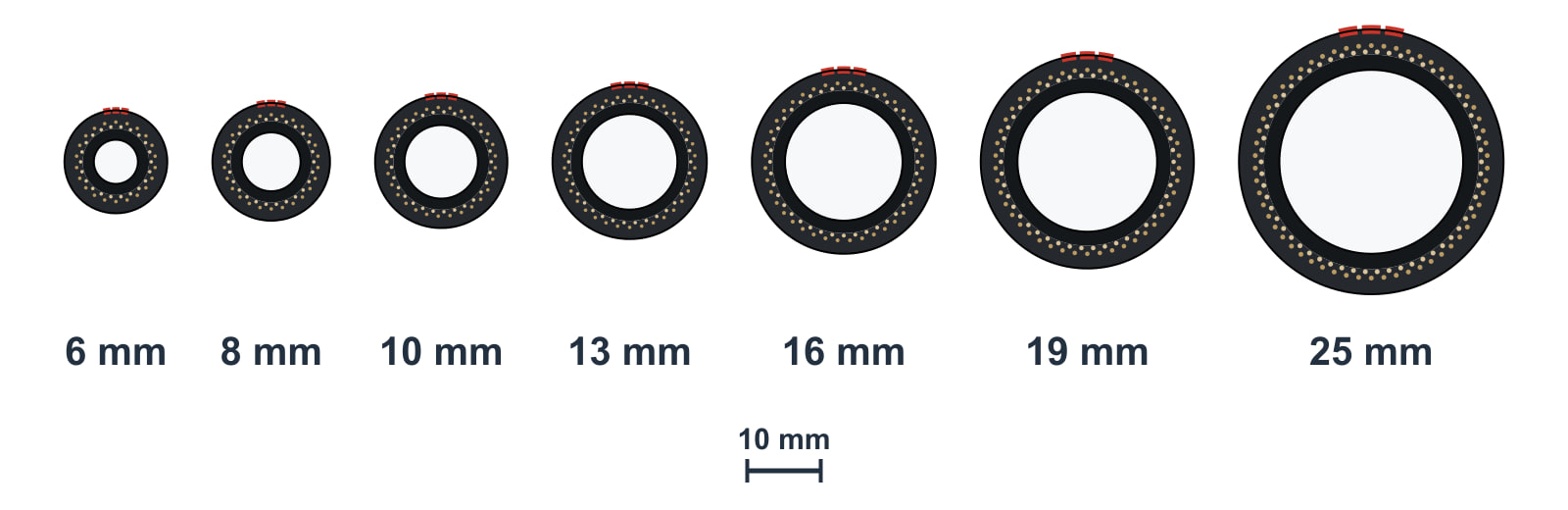
The wall is 4 mm thick for diameters from 6 to 13 mm and gradually increases to 5.5 mm on the larger diameters. Flow grows with the diameter, and so does the length of run the hose can cover without a large pressure loss.
How the hose is built
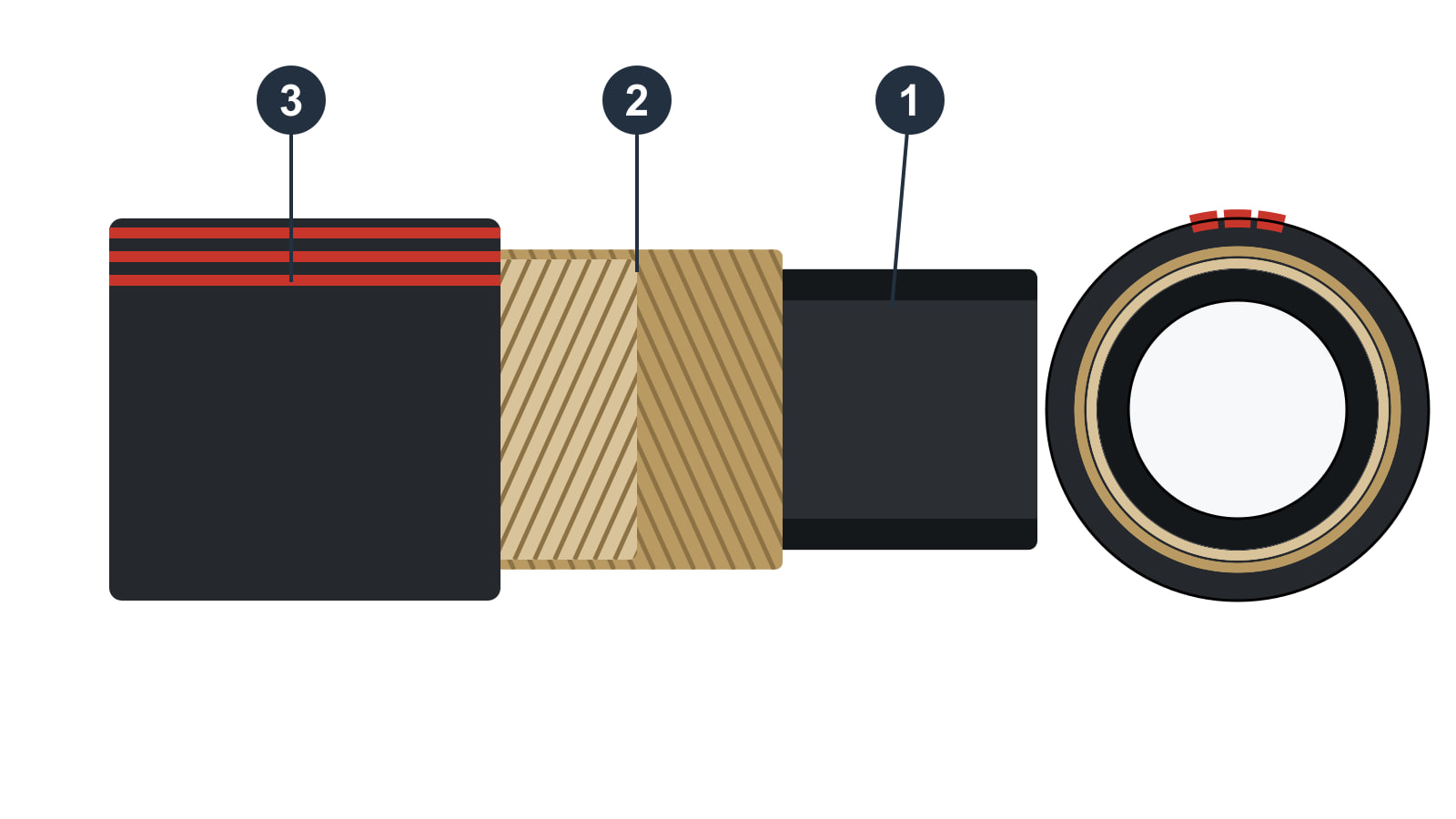
- Lining: smooth black nitrile rubber (NBR), resistant to oils and fuels, electrically conductive
- Reinforcement: textile, two plies, carries the pressure
- Cover: smooth black rubber with red longitudinal stripes, resistant to oils, abrasion and weathering
The conductive lining dissipates the static charge that builds up as fuel flows. The resistance is below 10⁶ Ω per metre according to EN ISO 8031.
The safety factor of the hose is 3.15 : 1, so it withstands more than three times the working pressure. Operate it at no more than the working pressure of 25 bar.
Minimum bend radius
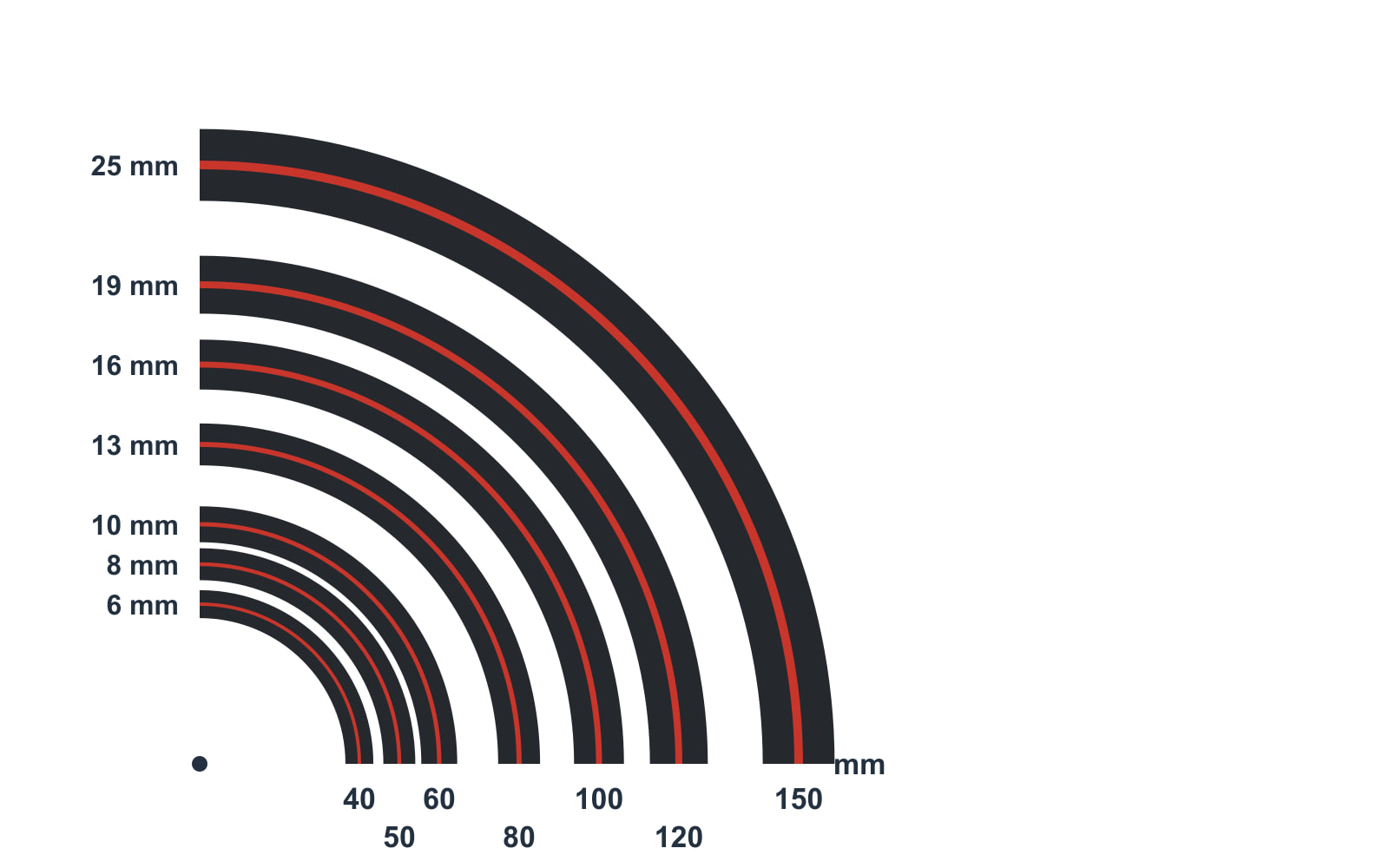
The hose is flexible, but do not bend it more tightly than the minimum bend radius. The smallest 6 mm diameter bends to a 40 mm radius, the largest 25 mm diameter to 150 mm.
A bend that is too tight narrows the flow and strains the reinforcement, especially just behind the fitting.
Fittings and clamps
The hose is pushed onto the barb of a fitting and secured with a clamp. We have brass hose barb fittings for all seven diameters, but on our product pages they are rated for compressed air up to 10 bar. Stainless steel hose barb fittings and stainless steel double barb connectors rated at 50 bar are available for diameters 6, 13, 19 and 25 mm. Choose the clamp by the outer diameter of the hose, which you will find in the table.
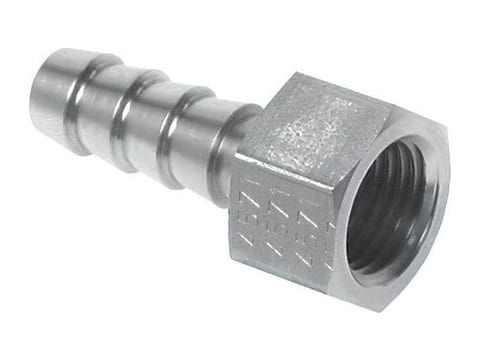
Stainless steel hose barb fittings
Barb 6, 13, 19 and 25 mm, female thread, pressure 50 bar.
Show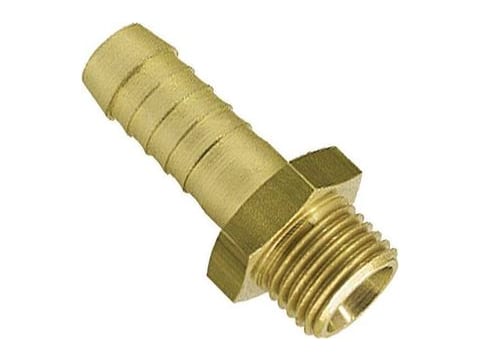
Brass hose barb fittings
Barb 6 to 25 mm, male thread G, for compressed air up to 10 bar.
Show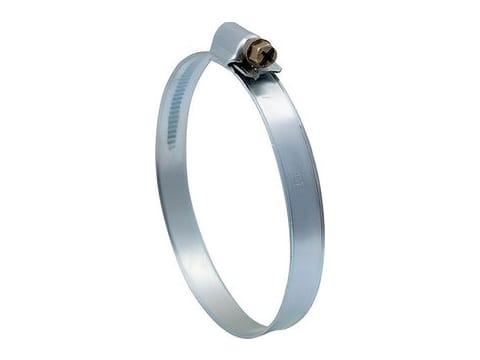
Worm-drive clamps
Stainless or galvanised, range by the outer diameter of the hose.
ShowWhen to choose a different hose

Petrol lines
FUP pressure hoses made of NBR for petrol, pressure 10 bar.
Show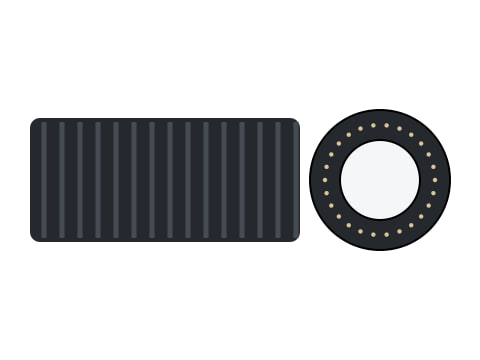
Oils and abrasion
PLE braided hose resistant to oils and abrasion, pressure 15 bar.
Show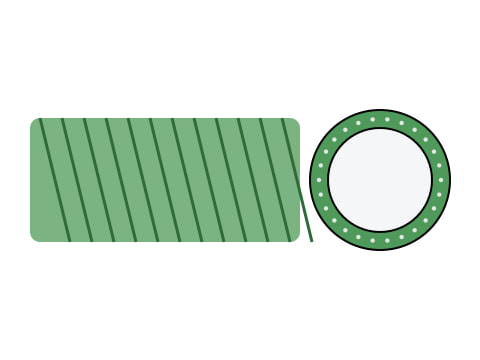
Unpressurised fuel transfer
Green Fuel Profi hoses made of soft PVC for fuel without pressure.
ShowVentilek’s tip
TU25 does not belong on a fuel dispenser. It is a hose for transferring fuels and oils on site and in the workshop. A fuel dispenser has different requirements, so use a hose made specifically for that purpose there.
- Is the TU25 hose suitable for diesel?
- Yes. It is designed for diesel fuel to EN 590 as well as for heating oils and industrial oils.
- Can I use it for petrol?
- Yes, for unleaded petrol to EN 228. It must not be used as a fuel dispenser hose, though.
- Is the hose electrically conductive?
- Yes. The lining dissipates static charge, and the resistance is below 10⁶ Ω per metre according to EN ISO 8031.
- What pressure can the hose take?
- The working pressure is 25 bar for all seven diameters. The safety factor of the hose is 3.15 : 1.
- What temperature range can it be used in?
- From −40 to +80 °C, so it also copes with outdoor work in winter.
- Can I use it for compressed air too?
- Yes, the hose is also designed for compressed air up to 25 bar.
- How is the hose sold?
- In whole metres. Diameters 6 and 8 mm come from 100 m coils, diameters 10 to 25 mm from 50 m coils.
Data from the TU25 series catalogue sheet: inner and outer diameter, working pressure 25 bar, working temperature −40 to +80 °C, weight per metre, coil length, NBR lining, textile pressure braid, electrical conductivity, use for unleaded fuels, heating oil and compressed air. Fuel standards, lining resistance, safety factor 3.15 : 1, two reinforcement plies and minimum bend radius from the technical data sheet. Wall thickness and the weight of a full coil are calculated from the diameters and the weight per metre.
Bestsellers


Product sorting
List of products

Diesel and oil hose TU25 16/8 mm, working pressure 25 bar, −40 to +80 °C, conductive NBR lining, also for unleaded petrol and air. By the metre.

TU25 hose 18/10 mm for diesel, oil and unleaded petrol, 25 bar, −40 to +80 °C, electrically conductive, bend radius 60 mm. Sold by the metre.

Diesel and oil hose TU25 21/13 mm (1/2"), working pressure 25 bar, −40 to +80 °C, conductive lining, also for petrol and compressed air. By the metre.

The largest TU25 hose 36/25 mm (1") for diesel, oil and unleaded petrol, working pressure 25 bar, −40 to +80 °C, electrically conductive. By the metre.

Diesel and oil hose TU25 29/19 mm (3/4"), working pressure 25 bar, −40 to +80 °C, conductive NBR lining, also for petrol and air. By the metre.

TU25 hose 25/16 mm for diesel, heating oil and unleaded petrol, working pressure 25 bar, −40 to +80 °C, electrically conductive. Sold by the metre.

TU25 hose 14/6 mm for diesel, unleaded petrol, heating oil and compressed air, working pressure 25 bar, −40 to +80 °C, electrically conductive. By the metre.