
HVSE flexible compressed air hoses of soft PVC
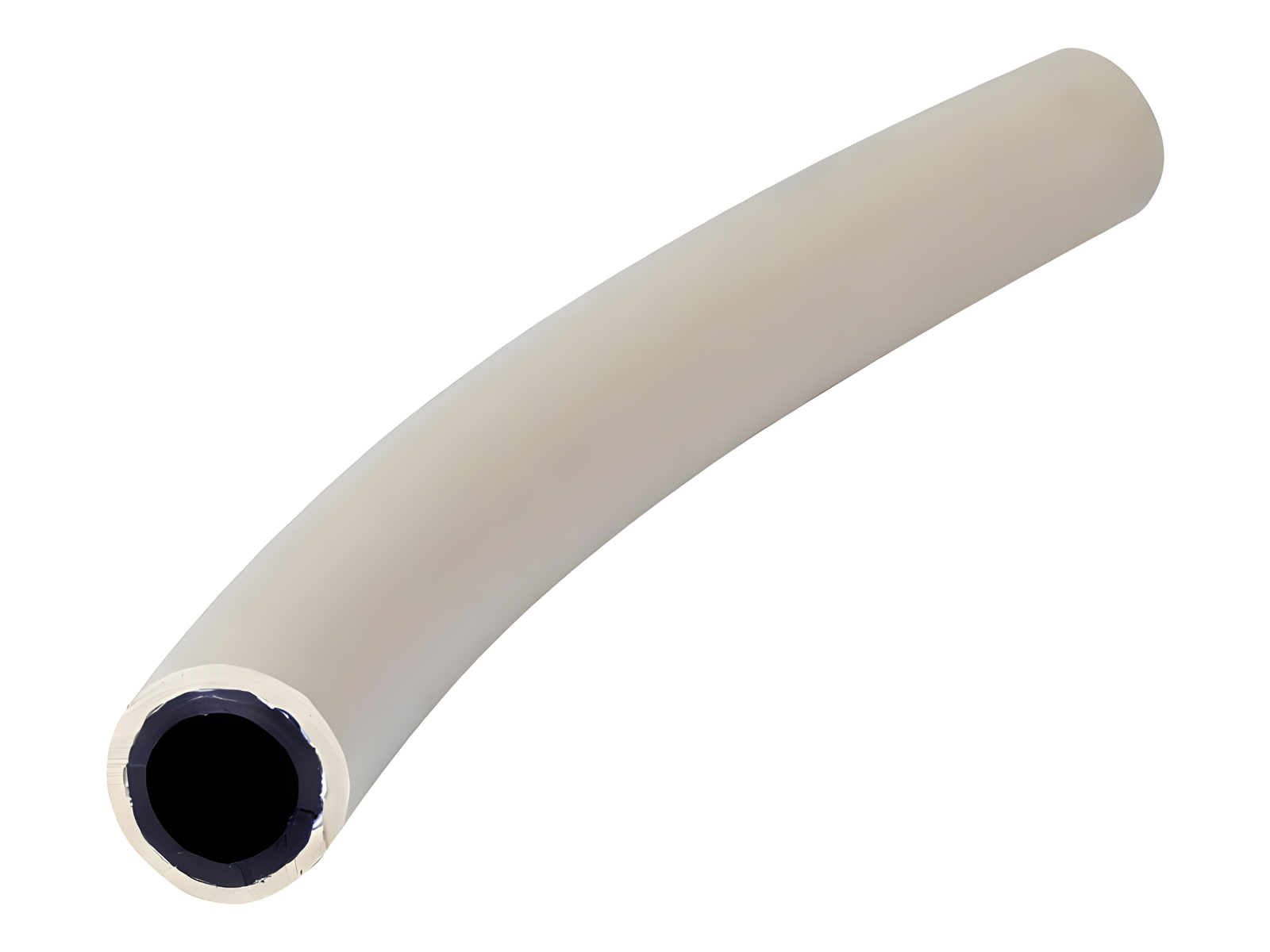
HVSE hoses carry compressed air where the hose bends a lot. They are made of soft PVC with special plasticisers, have a high-tenacity polyester braid between the inner tube and the cover and resist condensate. They withstand a working pressure of 16 bar and temperatures from −5 to +60 °C.
The cover is grey, the inner tube black. The series has three diameters of 6, 9 and 13 mm and is sold by the metre or in full 50 m coils.
Sizes and order codes
We give the size as outer / inner diameter in millimetres, so 12/6 mm is a hose with an inner diameter of 6 mm. The temperature range of −5 to +60 °C applies to all diameters. Each order code covers the hose sold by the metre (in whole metres) and the full 50 m coil. Click an order code to open the hose page.
| HVSE — all 3 sizes in one place | |||||||
|---|---|---|---|---|---|---|---|
| Order code | Size D/d | Wall | Working pressure | Burst pressure | Working temperature | Weight | Coil |
| HVSE — black inner tube, grey cover | |||||||
| HVSE-6 | 12/6 mm | 3 mm | 16 bar | 64 bar | −5 to +60 °C | 114 g/m | 50 m, full coil 5.7 kg |
| HVSE-9 | 15/9 mm | 3 mm | 16 bar | 64 bar | −5 to +60 °C | 151 g/m | 50 m, full coil 7.55 kg |
| HVSE-13 | 19/13 mm | 3 mm | 16 bar | 64 bar | −5 to +60 °C | 202 g/m | 50 m, full coil 10.1 kg |
#showmore#
What to use the hose for
- Industrial plants: workplaces with high demands on bending and hose flexibility
- Moving supply lines: compressed air lines that often bend and change position during work
- Humid air: lines in which condensate forms
The hose is designed for compressed air. For higher pressure choose the HV hose, for work in frost below −5 °C the HVPU hose.
HVSE, HVPU or HV?
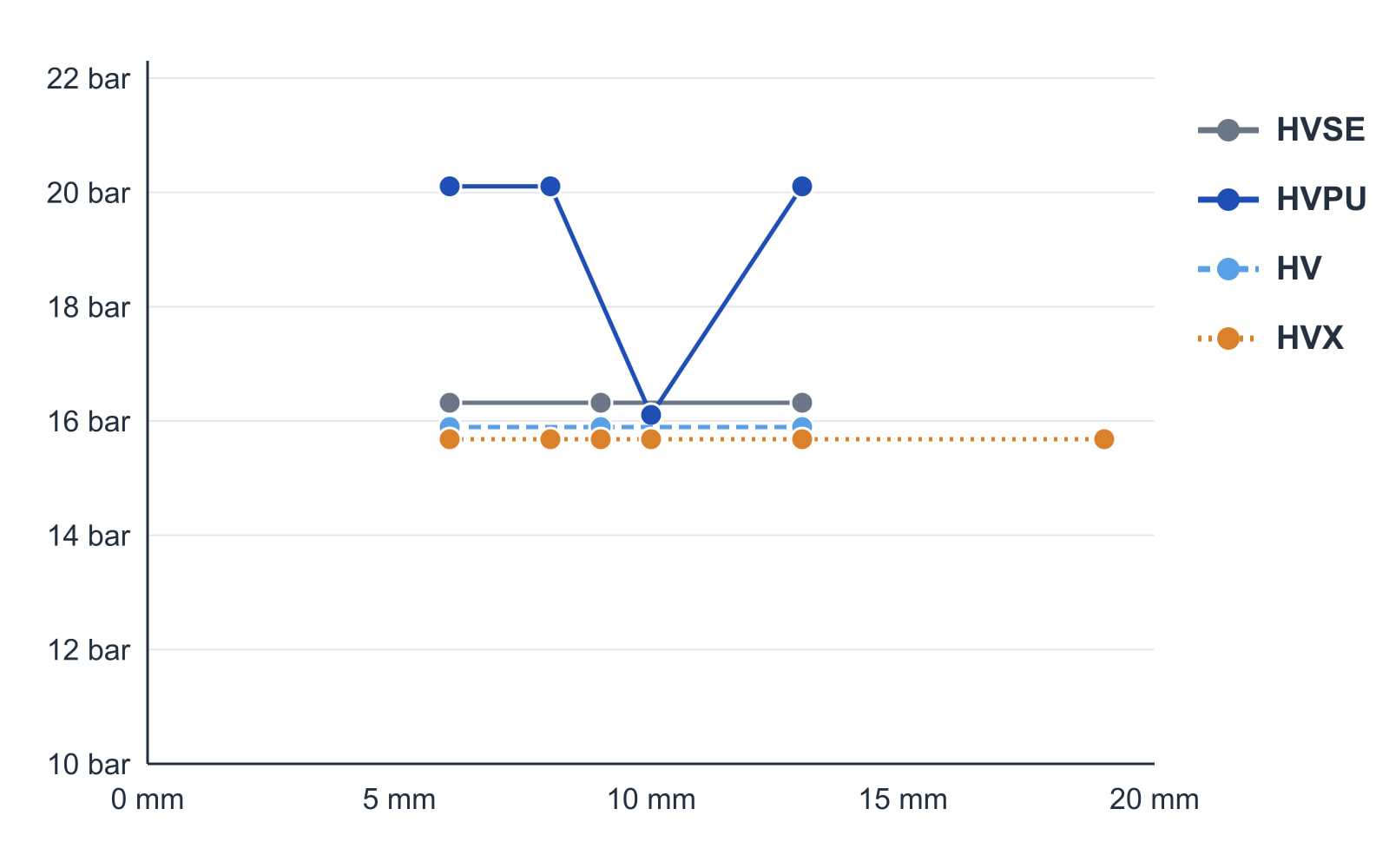
HVSE is made of soft PVC with special plasticisers, which is why it bends easily. It withstands a working pressure of 16 bar in all three diameters.
HVPU made of a PU/PVC blend is lighter, resistant to abrasion and the only one of these series that works from −25 °C. One metre of HVPU 10/6 mm weighs 62 g, one metre of HVSE 12/6 mm 114 g.
HV and HVX are PVC hoses for 16 bar, the HV hose also in versions for 20, 40 and 80 bar.
Cross-sections to the same scale
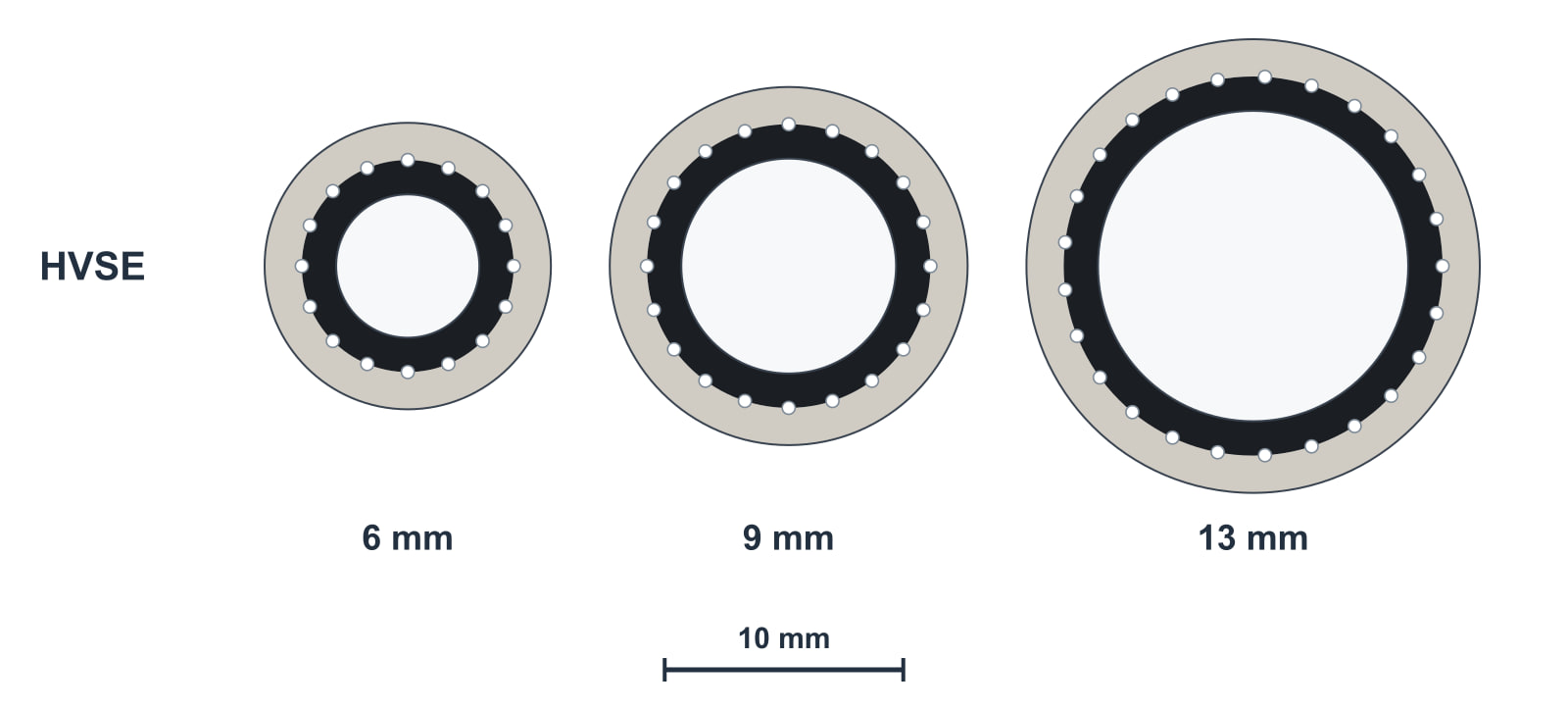
The wall is 3 mm in all three diameters and the working pressure is 16 bar in all of them. A larger diameter delivers more air.
How the hose is built
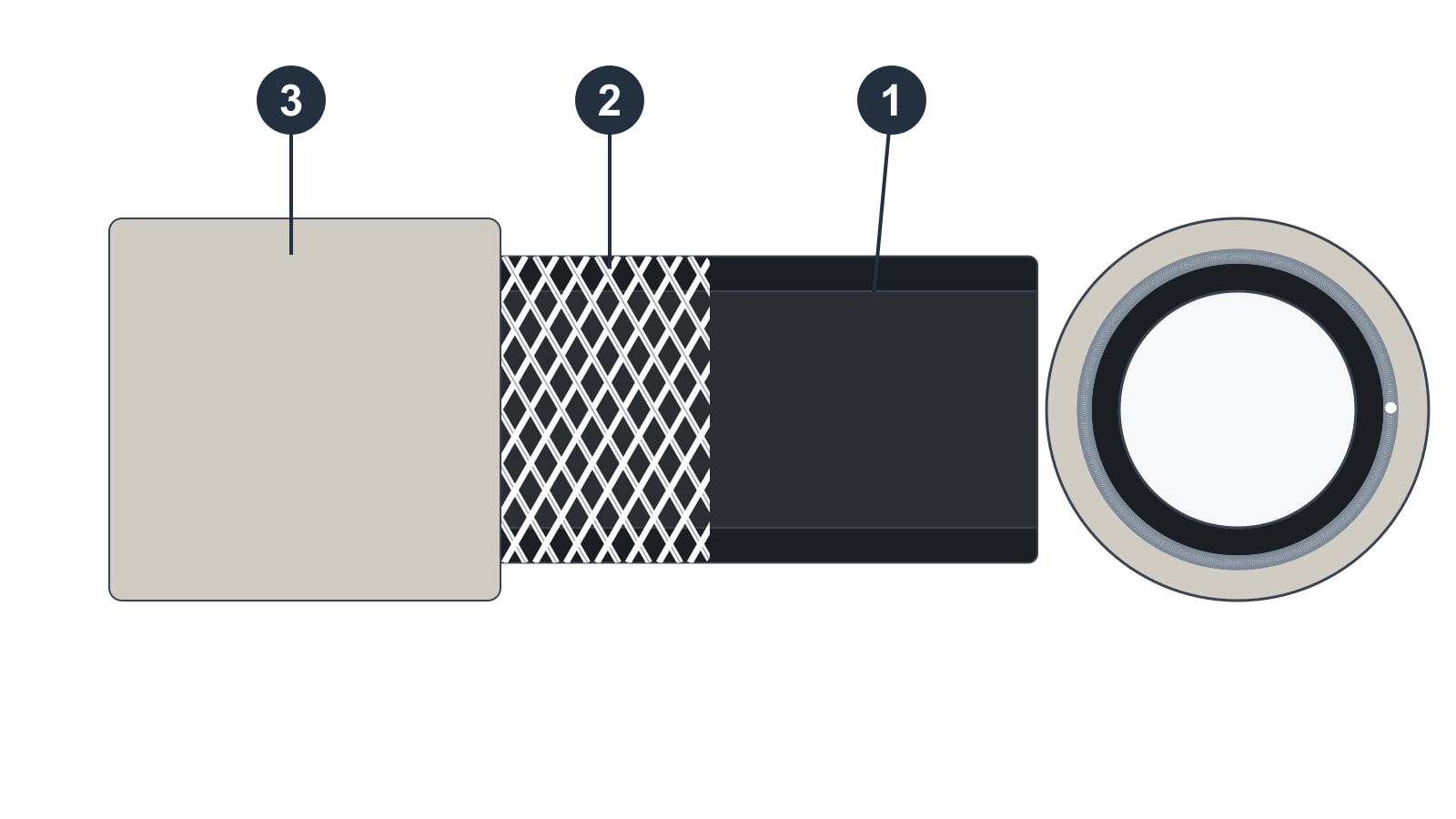
- Inner tube: soft PVC with special plasticisers, black
- Braid: textile, high-tenacity polyester fibre, carries the pressure
- Cover: soft PVC with special plasticisers, grey
The hose has two layers: the braid lies between the inner tube and the cover. The burst pressure is 64 bar, but never operate the hose above the working pressure of 16 bar.
Fittings and clamps
The hose is pushed onto the barb of a fitting and secured with a clamp. Choose the barb by the inner diameter of the hose and the clamp by the outer diameter in the table. The ES DN 7.2 quick couplings with 6, 9 and 13 mm barbs in our range withstand 35 bar, more than the hose. Join two pieces of hose with a stainless double hose barb connector rated for 50 bar.
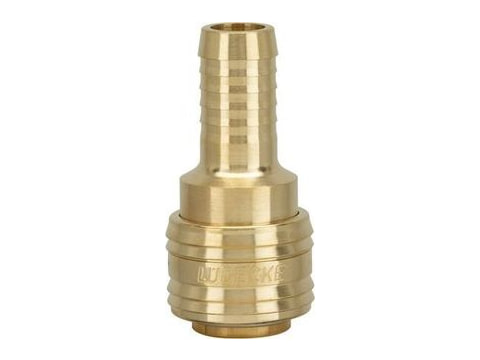
Quick couplings with hose barb
ES DN 7.2 quick couplings, barb 6 to 13 mm, up to 35 bar.
View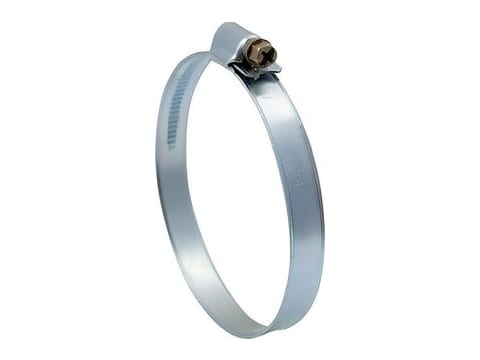
Worm-drive clamps
Secure the hose on the barb, range by outer diameter.
View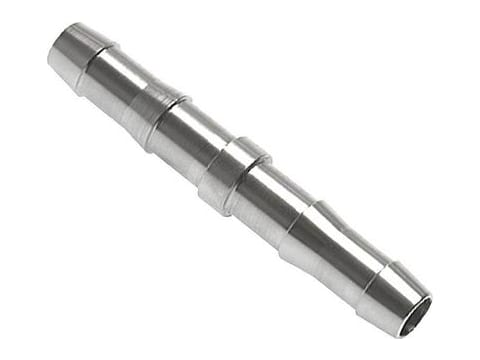
Hose connectors
Stainless connectors with 6 to 25 mm barbs, up to 50 bar.
ViewWhen to choose another hose
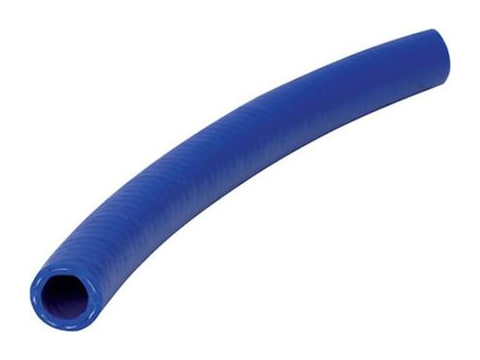
Abrasion resistance
Blue HVPU hose of a PU/PVC blend, works from −25 °C.
View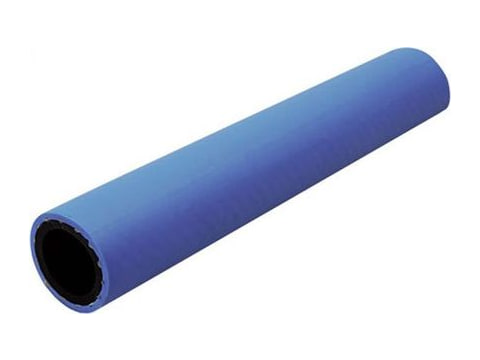
Higher pressure
HV PVC hose for 16 to 80 bar.
View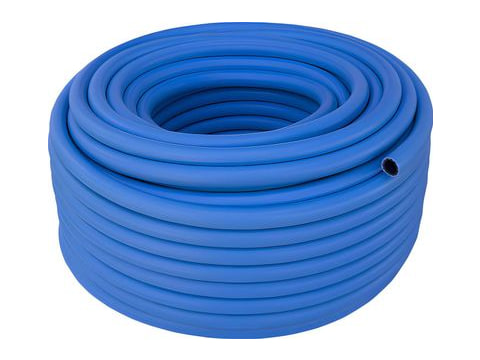
Compressor hose
HVX series for 16 bar, also in ready-made sets with a quick coupling.
ViewVentilek’s tip
Pressure is held by the weakest part. A quick coupling with hose barb withstands 35 bar, the HVSE hose only 16 bar. So set the pressure in the line according to the hose.
- Why is HVSE so flexible?
- It is made of soft PVC with special plasticisers. It is designed for use with high demands on bending and hose flexibility.
- What pressure does the hose withstand?
- A working pressure of 16 bar in all three diameters. The burst pressure is 64 bar.
- Does condensate harm it?
- No, the hose is resistant to condensate, which commonly forms in compressed air.
- Up to what temperature?
- From −5 to +60 °C. For work in frost choose the HVPU hose, which works from −25 °C.
- Which fittings should I use?
- An ES DN 7.2 quick coupling with a 6, 9 or 13 mm barb according to the inner diameter and a worm-drive clamp according to the outer diameter. The quick couplings withstand 35 bar.
- How is the hose sold?
- In whole metres or as a full 50 m coil.
Data according to the current catalogue sheet of the HVSE series: inner and outer diameter, colour, working and burst pressure, temperature −5 to +60 °C, weight per metre, 50 m packaging, soft PVC with special plasticisers, polyester braid and resistance to condensate. The wall and the weight of a full coil are calculated from the diameters and the weight per metre.


