
In our range we offer electromagnetic valves with the functions 3/2, 5/2, 5/3 with various coils and connectors. Solenoid valves 2/2 for various media. Further then pneumatically operated ones in the versions 3/2, 5/2, 5/3 with accessories for mounting. Manually and mechanically operated by human force, for example by a button, pedals, or operated mechanically for example by pressing a plunger or a roller. Finally then special control valves such as: counters, timers, safety blocks and the like.
The function of valves for automation technology
The function of a valve is as a rule marked with two numbers separated by a slash. In the chapter with valves you will thus find markings such as 3/2, 5/3 and similar markings. What do these numbers basically mean?
The first number (before the slash)
It indicates the number of so-called ways. Into this number all outlets, exhausts and the inlet are counted. Not counted into it are possible pneumatic control signals.
| Example of the first number | |
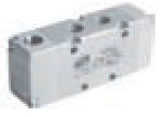 |
On the upper side of the valve we see 3 threads, the outermost is for operating the valve, the others are outlets (we therefore count 2 ways), from the lower side we would see 3 threads, the outermost are exhaust chambers, the middle one is the inlet (we therefore count all 3 ways). The total number thus makes the number 5 and it is a five-way valve |
The second number (after the slash)
The numerical marking alone is, however, not enough to describe the valve. It is still necessary to add the manner of switching between the individual positions. In that case we also speak of a monostable or bistable valve. What do these terms mean?
| Example of the second number | |
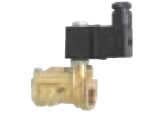 |
The solenoid valve is closed without voltage (the first position); if an electrical signal comes into the coil, the valve switches over and is open (the second position). It is therefore a two-position valve. Now you already know that for example 5/3 is a five-way, three-position valve. |
Monostable valves (valves with spring return)
These are valves with an independent return. Without a signal they are in the basic position. When a signal comes (electrical, pneumatic etc.) the valve switches over and for the duration of the signal remains outside the basic position. As soon as the signal disappears, the valve returns automatically (mostly by a spring) to its basic position.
Bistable valves (impulse valves)
These are valves that the 1st signal switches over and which even after the 1st signal has faded remain in the position brought about by the first signal. They do not return to the basic position. They remain in the position until a second signal comes, which returns the valve to the original basic position. Such valves are called bistable.
In our e-shop you will also encounter with monostable valves with the function 3/2 the marking NC and NO. What do these abbreviations mean ?
NC (from Eng. normally closed)
- means that the valve is in the basic position, without a signal, closed, i.e. the inlet is not connected with the outlet.
NO (from Eng. normally open)
- Indicates that the valve is in the basic position, without a signal, open, i.e. the inlet is connected with the input
Schematic symbols of valves for automation
- Every position of the valve is symbolised by its own square, in which the connection of the inputs, outputs and exhausts in the given position is drawn
(so if the symbol contains 2 squares, it is a valve with 2 positions, if it contains 3 squares, it is a valve with 3 positions etc.) - The numbering or letter marking of the ports is always by the square symbolising the basic position
- The arrows connecting the ports indicate the direction of the air flow; in the event that the arrows are on both sides, the valve can be used also for flow in both directions
- On the lower side of the square the air supply and the exhausts are as a rule placed, on the upper side of the square the outlets from the valves are placed
- On the side of the square the symbols indicating the manner of switching between the individual positions are placed, with the square by which they are drawn becoming active on the arrival of the signal (as if it moved into the place of the square of the basic position)
Ways of switching between valve positions |
|||
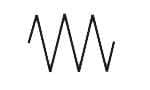 |
return of the valve by a spring | 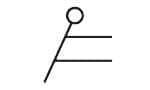 |
lever |
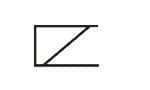 |
coil, electrical operation | 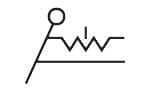 |
lever with detent |
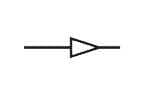 |
pneumatic signal |
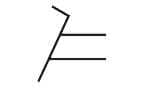 |
pedal |
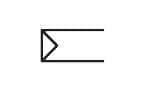 |
pneumatic signal |
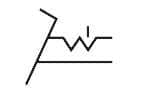 |
pedal with detent |
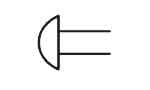 |
mushroom button | 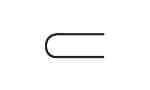 |
plunger |
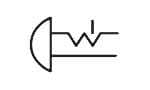 |
mushroom button with detent | 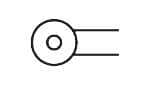 |
roller |
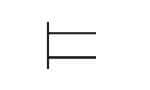 |
button | 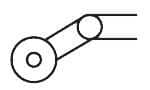 |
one-way roller |