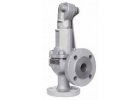

Safety valves for nitrogen
Introduction to the use of nitrogen
Nitrogen (chemical symbol N₂) is a colourless inert gas making up about 78 % of the earth's atmosphere. Thanks to its non-flammability and chemical inertness it is widely used in many branches of industry. It serves, for example, as a protective atmosphere – displacing oxygen from tanks and packaging and thereby preventing oxidation or the danger of explosion. In the food industry nitrogen is used for modified-atmosphere packaging (keeping products fresh and preventing microbial growth) and also as a cryogenic medium for rapid freezing. In the chemical and technical industries it is used to inert processes (preventing unwanted reactions with oxygen), to purge apparatus and as a carrier gas. In laser technologies (laser cutting of metals, for instance) nitrogen flows as an assist gas that improves cut quality and prevents oxidation of the cut edge. Nitrogen is also encountered in pressure vessels and tanks – from large industrial tanks of liquid nitrogen to smaller cylinders of gaseous nitrogen used to drive equipment or as a source of inert gas for laboratory and other purposes.
In all these applications nitrogen is a valuable helper, but working with it requires safety measures to be observed. One of the most important is protecting systems against overpressure. Pressure vessels and pipework filled with nitrogen must be fitted with safety elements that automatically release some of the gas when a dangerous pressure is reached. Safety valves for nitrogen serve this purpose; they are designed to keep the pressure reliably within safe limits and protect both equipment and operators.
#ShowMore#
The importance and function of safety valves in nitrogen systems
Every pressure system containing nitrogen (a compressor system, storage pressure vessel, pipe network, cryogenic tank and so on) must be protected against a dangerous rise in pressure. A safety valve is a safety device that opens automatically as soon as the system pressure reaches a preset value. Excess nitrogen is then released from the circuit – the gas escapes into the open or into a discharge pipe until the pressure falls back into the safe range. The valve then closes by itself. This mechanism prevents any further rise in pressure and thereby protects your process equipment from damage or from the vessel bursting.
It is important to stress that even an inert, non-flammable gas such as nitrogen can cause a serious accident during a sudden pressure rise (the mechanical rupture of a vessel, for instance). A safety valve forestalls this risk – it acts as the last line of protection should control and monitoring systems fail. In many sectors (chemicals, food, healthcare and so on) strict standards and legal regulations moreover directly require a safety valve to be installed on pressure equipment with nitrogen. A correctly sized and set safety valve is therefore an essential part of every nitrogen system, so that operation is safe and compliant with the regulations.
Specific features of safety valves intended for nitrogen
Safety valves intended for nitrogen systems work on the same principle as valves for other media – they watch the pressure and release excess gas when needed. To work reliably with nitrogen, however, they have certain adaptations in materials and construction. Nitrogen has specific properties (gaseous state, very low temperature in liquid form, inertness) to which the valve must be adapted. Below are the main particularities of safety valves designed for nitrogen:
-
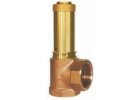
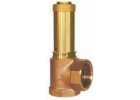
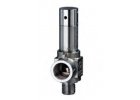
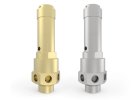
Valve body material (brass, stainless steel): Valves of brass or stainless steel are used above all for nitrogen applications. Brass safety valves are common in applications with gaseous nitrogen at ambient temperatures – brass is strong enough, resists corrosion in dry inert gas and is cost-effective. For more demanding conditions, high pressures or requirements for environmental cleanliness, stainless valves are chosen. Stainless steel provides high corrosion resistance and allows the valve to be used across a wide temperature range (including very low temperatures below freezing). In some specific cases (nitrogen combined with high temperature, or the presence of hot steam) other materials such as bronze or cast iron also find use. In practice, however, brass and stainless versions dominate for nitrogen, or combinations of the two.
-
Construction and tightness: Safety valves for gases (nitrogen included) are usually spring valves with a precisely set spring that keeps the valve closed until the opening pressure is reached. Tightness of the closed valve is crucial – because nitrogen, as a gas, has low viscosity and could escape through even a tiny gap. The valves therefore have a precisely machined seat and use a soft seal on the sealing faces. A PTFE ring or elastomer O-rings (of FKM/Viton and the like) are often applied to ensure perfect sealing. As a result, the closed valve passes practically no gas until the pressure reaches the set limit. Good tightness matters not only for safety but also for the economics of operation – it prevents the slow losses of expensive gas that a leaking valve would cause.
-
Sealing materials and temperature resistance: The sealing materials used must withstand the temperature conditions in which the nitrogen system works. PTFE (Teflon) retains its properties across a wide temperature range from deep cold to higher temperatures and is moreover chemically inert, so it suits nitrogen (it does not affect the quality of the medium). In many safety valves for gaseous media, PTFE serves as a sealing ring or seat insert. FKM (Viton) is a fluorinated elastomer used for seals particularly where resistance to higher temperatures is required (typically to about 150–200 °C) and to oils or other substances – in nitrogen valves it may appear in piston O-rings, for instance. Generally, PTFE or special polymers intended for frost suit cryogenic temperatures, while elastomer seals can be used for the ordinary temperature range (-20 °C to +80 °C, say). Every valve has a manufacturer-specified operating temperature range – -30 °C to +150 °C, for example – and it must be checked that this range covers the intended conditions in your application. Likewise, the valve's working pressure range and adjustable opening values must match the pressure of the nitrogen system (most safety valves for nitrogen typically cover single-digit to tens of bar, special designs even hundreds of bar).
-
Cleanliness of the medium and valve preparation: In many sectors where nitrogen is used (food, pharmaceuticals, electronics manufacturing and others), emphasis is placed on the cleanliness of the gaseous medium. Safety valves are adapted to this – quality valves for inert gases are supplied degreased and cleaned from the factory so that they release no impurities or production oil residues into the flowing nitrogen. That prevents contamination of the nitrogen in tanks of food-grade gas, for example, or the introduction of particles into sensitive processes. A clean valve design also matters for cryogenic applications – at extremely low temperatures even a tiny amount of moisture or dirt could freeze and impair the valve's function. It is therefore standard to supply safety valves for nitrogen perfectly clean and ready for immediate use in environments with high demands on medium cleanliness.
Cryogenic use – safety valves for liquid nitrogen
Safety valves for cryogenic use, where nitrogen is stored in liquid form at an extremely low temperature, form a separate category. Liquid nitrogen has a temperature of about –196 °C, which places special demands on the valve's material and construction. Only cryogenic safety valves of stainless steel are used for this purpose – brass would become brittle and crack in such deep cold. The valve's internal components (spring, guide elements) are made of stainless steel or special alloys with high toughness at low temperatures (Inconel, for example). Seals are of materials that retain elasticity in cryogenic conditions – typically PTFE or polymers developed for cryogenics (or a metal-PTFE combination for the seat).
In construction, a cryogenic safety valve can often be recognised by an extended „neck“ or extension between the valve body and its operating mechanism. This extended piece distances the sensitive parts (spring, adjusting screw) from the immediate vicinity of the extremely cold medium. The spring thereby retains its function and does not freeze or lose elasticity when the valve opens. Naturally, a cryogenic valve must also seal perfectly when closed – a small amount of gas is constantly evaporating in a vessel of liquid nitrogen, and if the valve did not seal, gas would escape continuously. Special cryogenic models meet these demands and allow overpressure to be released safely from cryogenic tanks (typically a valve for the evaporating nitrogen). You will find these valves in our range in the separate safety valves for cryogenic gases section – always choose this type of valve for applications with liquefied nitrogen.
Recommendations for choosing a safety valve for nitrogen
Several important parameters must be taken into account when choosing a suitable safety valve for a nitrogen application. Every system may have specific requirements, but in general it is advisable to focus on the following criteria:
-
Version according to medium and temperature: Decide in what conditions the valve will work – whether it will be compressed gas at ambient temperature or liquid nitrogen in a cryogenic environment. For ordinary gaseous nitrogen a standard brass or stainless valve suffices (according to the quality and pressure required). For liquid nitrogen only a stainless cryogenic valve with the appropriate temperature resistance may be used. Check that the valve's declared working temperature range covers the temperatures in your process.
-
Set pressure: Safety valves are supplied set to a specific opening pressure (a valve calibrated to 10 bar gauge, for example). This value should correspond to the maximum allowable pressure of your system or pressure vessel. Make sure the valve type you choose allows setting to the required pressure – valves have a certain range of adjustable pressures (5–16 bar, 20–40 bar and so on, depending on the type). It is always advisable to order the safety valve already set by the manufacturer or supplier. We supply our valves with a test report and a seal that prevents the setting being changed improperly – so you have the certainty of correct adjustment and function.
-
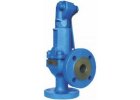
Flow capacity and size: Another important criterion is the quantity of nitrogen the valve must release when it opens. Choose a valve with the appropriate flow capacity according to the system volume and how fast the pressure could rise. Manufacturers state flow figures for safety valves (in Nm³/h or kg/h for the given medium and pressure, for example), or a discharge coefficient. Generally, a larger valve (with a larger bore) can release more gas per second. The connection size must likewise match your system – smaller equipment uses threaded valves (typically G 1/4", 1/2", 3/4" threads and so on), while large tanks or pipework use safety valves with a flanged connection (DN20, DN50 and so on). Make sure the valve you choose has the right size and type of connection for the pipe or vessel, and that its bore (DN) provides sufficient flow to release the pressure safely.
-
Material and seal vs. medium cleanliness: As mentioned above, the choice of body material (brass vs. stainless) and sealing elements depends on the particular application. For ordinary use with nitrogen at room temperature a standard brass valve with a PTFE or NBR/FKM seal usually suffices. If, however, you work in a clean environment (food-grade or medical nitrogen, laboratories) or require high gas purity, consider a stainless valve supplied degreased. For liquid nitrogen or very low temperatures the choice is clear – a stainless cryogenic valve with a PTFE seal. When choosing, verify that the valve is certified by the maker for use with nitrogen (or inert gases) and that it meets any cleanliness standards (valves intended for oxygen are usually degreased, which is an advantage for nitrogen too if you require absolute purity free of hydrocarbon residues).
-
Certification and documentation: A safety valve is a safety element and as such should be supplied with the appropriate certification (CE, and possibly TÜV) and documentation. From reputable suppliers (such as ourselves) you receive complete papers with every valve – a declaration of conformity, a certificate and a setting report for the safety pressure. These documents matter for regular inspections of pressure equipment and for your peace of mind that the valve has been tested and really will open at the specified pressure.
Tip: If you are unsure of the right valve choice for your nitrogen system, study our detailed advice article How to choose the right safety valve. It gives an overview of all the important parameters and steps worth considering. You can also contact us at any time – we will gladly help you choose in person. The complete range of all types of safety valve (for various gases, steam, water and others) is in the main category Safety valves – all designs in our e-shop.
Advantages and limits of using safety valves for nitrogen
Advantages:
-
Reliable protection and safety: Quality safety valves intended for nitrogen (from the reputable Herose brand, for example) provide effective protection against overpressure. They are distinguished by a precise opening pressure setting and fast response, minimising the risk of an accident with no operator intervention needed. Your pressure equipment will thus be protected from destructive overpressure in all circumstances.
-
Optimised for inert gas: Valves for nitrogen are built with gaseous media in mind – they have a tuned seat and suitable sealing elements so that not even a minimal volume of gas escapes in normal operation. Compared with valves for liquids they tend to have more finely calibrated springs and softer seals, ensuring tightness right up to the moment of opening. No needless losses of nitrogen occur at normal pressure.
-
Long service life and low maintenance: Nitrogen is an inert, dry gas that causes neither corrosion nor deposits. Safety valves for nitrogen therefore work in a relatively benign environment – no rusting or clogging occurs as it might with more aggressive media. That shows in the valve's service life. It is enough to observe periodic inspections and function checks (to the statutory intervals for pressure equipment); between inspections the valve usually requires no special maintenance.
-
A wide choice of variants: A wide range of safety valves for nitrogen is available from various manufacturers and in various designs. You will easily find a suitable model for the particular pressure, flow and connection method – from small threaded valves for laboratory cylinders or compressors to robust industrial valves with flanges for large tanks. Many valves moreover cover several media: a safety valve set and certified for nitrogen can usually be used for other inert gases (argon, helium…) or compressed air, which increases the versatility of the solution.
-
Safety of the working environment: Unlike flammable or toxic gases, escaping nitrogen presents no risk of fire or poisoning – it is an inert gas. With correctly designed routing of the released gas (into a ventilated outdoor space, for example), emergency blow-off of nitrogen is therefore relatively safe for the surroundings. Modern safety valves can moreover be fitted with silencers, so that even the loud discharge of a large volume of gas can be damped partly and not endanger staff hearing.
Limits:
-
Intended for a specific medium: Safety valves in this category are designed and certified primarily for inert gases, nitrogen above all (manufacturers often group them with valves for air and other non-flammable gases). They must not be used for aggressive or flammable media they are not intended for. For pure oxygen, for instance, a special valve that is degreased and made of materials suitable for O₂ must be used – a standard nitrogen valve would be a safety risk in oxygen service. Always follow the manufacturer's recommendation about which gases the valve is approved for.
-
Temperature limits of materials: Every valve has a limited temperature range in which it guarantees correct function. Brass valves suit neither very low nor extremely high temperatures – in frost they can become brittle and above about 100 °C they lose strength. For cryogenic conditions a stainless cryogenic valve is therefore essential (as mentioned above). Conversely, some cryogenic valves may not be built for higher temperatures (above 120 °C, say). Make sure the temperatures in your process do not exceed the valve's limits at either extreme.
-
The need for regular inspections: A safety valve is a mechanical device exposed to pressure and therefore requires regular checks and maintenance. Although nitrogen itself does not damage the valve, the spring can fatigue over time or the sealing materials age. Safety valves are therefore tested during periodic inspections of pressure vessels and, where needed, refurbished or replaced. This obligation must be included in the maintenance plan – only then can you be sure the valve will work reliably even after years of service.
-
Precautions during gas discharge: When the safety valve opens and a larger quantity of gaseous nitrogen is released, the gas expands very rapidly, causing sharp cooling of the valve and its surroundings (the Joule-Thomson expansion effect). The valve or discharge pipe may frost over because of the extreme cold of the escaping gas. At the same time the escaping nitrogen creates strong noise and can displace the air from the surrounding space. These phenomena must be reckoned with – the valve must be installed so that it discharges gas into a safe, well-ventilated space (ideally outdoors) where there is no danger of staff being deprived of oxygen. Where necessary, a silencer can be fitted to the valve outlet or the discharge directed upwards through a pipe. These limits are not a fault of the valve but a natural consequence of nitrogen's physical properties and of rapid pressure release – correct system design, however, handles them safely.
Taken as a whole, safety valves for nitrogen are a fundamental element of safety in every pressure system using this gas. A correctly chosen and installed valve gives you calm, safe operation without fear of an uncontrolled rise in pressure. You can concentrate fully on using nitrogen effectively in your process (whether as a protective atmosphere, in production, or in laser cutting), while the safety of the pressure system is reliably taken care of. For related applications with other inert gases (argon, helium, CO₂ and so on) you can also visit our safety valves for inert gases category – the principle and benefits are similar to nitrogen. With safety valves from proven manufacturers your nitrogen system will be safe in all circumstances.
-
 Safety valves 06C02; standard for compressed air
-
Relief valves 6217; full lift for compressed air
-
Safety valves 6370; for water, oil and diesel
-
Relief valves 6380-95; for saturated steam and nitrogen
-
Relief valves 6383-6012; in stainless steel with thread
-
Relief valves 6121; flanged cast iron
-
Safety valves 6127; flanged stainless steel
.jpg)