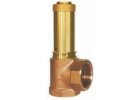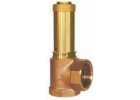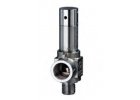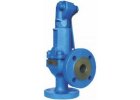

Safety valves for cryogenic gases
Introduction to cryogenic gases
What are cryogenic gases? Cryogenic refers to gases liquefied at extremely low temperatures – typically below -150 °C. The most common cryogenic liquids include liquid nitrogen (LIN) with a boiling point of around -196 °C, liquid oxygen (LOX) at -183 °C, liquid argon (LAR) at -186 °C, or liquefied natural gas (LNG) (mostly methane) at around -162 °C. These substances are kept in thermally insulated vessels that maintain such low temperatures and prevent premature evaporation.
Physical properties and risks: Cryogenic liquids share certain unique properties and at the same time present specific risks. They are extremely cold – contact causes instant frostbite of living tissue, and materials become brittle at these temperatures (ordinary steel or plastic can crack at -196 °C). Another characteristic is the enormous expansion on warming: a small volume of liquid turns into a hundredfold greater volume of gas. One litre of liquid nitrogen, for example, produces about 700 litres of gaseous nitrogen at room temperature. So if a cryogenic liquid is enclosed in a vessel with no way for the vapour to escape, the pressure rises quickly. That can lead to the vessel rupturing (an explosive release) – even a tiny amount of evaporated liquid creates extreme overpressure. Further risks include the danger of asphyxiation (inert gases such as nitrogen and argon displace oxygen from the surrounding air) or, conversely, support of combustion (oxygen markedly increases the flammability of materials). With LNG the key concern is the threat of fire or explosion, because it is a highly flammable liquid producing explosive gas mixtures. In every case, therefore, safe handling is essential and systems must be secured against uncontrolled release or overpressure.
#ShowMore#
Where cryogenic gases are used: Thanks to their properties, cryogenic liquids have found use in many fields. The main areas of use include:
-
Industry: Liquid nitrogen is used for rapid freezing of food, in the heat treatment of metals (cryogenic hardening, shrink fitting of parts) and to inert an environment (displacing oxygen). Liquid oxygen is key in metallurgy (enriching air in steelmaking) and in the chemical industry. Liquid argon serves as a protective atmosphere in welding and in semiconductor manufacture.
-
Healthcare: Cryogenic gases help preserve biological samples and medical preparations – sperm banks and tissue banks use liquid nitrogen for long-term freezing. Liquid nitrogen also enables cryosurgery and cryotherapy (treatment with extreme cold). Liquid oxygen supplies hospitals and patients with breathing oxygen (stored as LOX in tanks and vaporised into gas for breathing).
-
Laboratories and science: In laboratory and university settings, liquid nitrogen is an everyday „working tool“ – it cools superconducting magnets (liquid helium is also used in MRI scanners), allows materials to be studied at low temperatures and various cryostats to run. Liquid argon is used in physics experiments (in particle detectors, for instance).
-
Energy: Liquefied natural gas (LNG) is an important fuel source – it is stored in cryogenic tanks at terminals and filling stations or in the fuel tanks of LNG vehicles. Large quantities of gas are thus transported in compact liquid form. Cryogenic technologies for hydrogen are being developed similarly within clean energy (liquid hydrogen as a fuel). All these systems need a safe way to handle the overpressure caused by the fuel evaporating.
The need for safety valves in cryogenic systems
Wherever cryogenic liquids are handled, the potential for dangerous overpressure arises. As soon as warming occurs (however slight) or heat simply penetrates from the surroundings, part of the liquid evaporates and the system pressure begins to rise. A cryogenic tank or pipeline must therefore never lack a safety valve – the safety element that, on reaching the set pressure, automatically releases (blows off) the excess medium. It thereby protects the whole system from the vessel or pipe bursting. Without safety valves, storing and using cryogenic liquids would be highly risky and practically impossible. Historical accidents include many cases where a closed vessel of liquid nitrogen without a relief valve exploded after the pressure rose – the safety valve literally saves the day in every cryogenic system.
Besides the mere presence of a relief device, its correct design also matters. An ordinary safety valve not built for extremely low temperatures might not work reliably in a cryogenic environment: its spring could stiffen or its seal freeze and harden, making it impossible to open when needed. That is why special cryogenic safety valves are used, designed directly for these very low temperatures. These valves ensure that even at -196 °C they will work exactly as they should – opening at the given pressure and releasing the excess gas or liquid, then closing reliably again once the pressure falls.
Specific features of cryogenic safety valves
Cryogenic safety valves differ from ordinary types in material and construction. They must resist the cold while performing their function without hesitation. The main particularities of these valves include:
-
Frost-resistant materials: Both the body and the internal parts of a cryogenic valve are made of materials that stay tough and strong far below zero. Stainless steel is used most often (austenitic 304/316 steel and its variants), because unlike ordinary carbon steel it does not become brittle even at around -200 °C. Stainless also tolerates contact with liquid oxygen well (it is degreased and contains no elements that would burn in oxygen). On smaller valves or special versions, copper-based alloys (bronze, for example) with sufficient frost resistance may also be encountered – in industrial practice, however, stainless steel prevails. Ordinary brass, plastic or cast iron are unsuitable for cryogenic temperatures (they would become brittle or crack). In this category, therefore, you will find almost exclusively valve fittings of stainless steel.
-
Seals and seats: Sealing a safety valve is critical to its correct function – it must seal during operation yet release and open when needed. Cryogenic valves do not use classic rubber sealing rings, because rubber loses elasticity in the cold and would not seal. Special sealing materials are applied instead, such as PTFE (polytetrafluoroethylene, known as Teflon) or similar polymers that retain at least partial elasticity and impermeability even at -200 °C. A PTFE seal resists frost and chemically aggressive media and is also suitable for pure oxygen (it is non-flammable). In some cases (at very high or, conversely, very low set pressures, or for oxygen compatibility) a metal seal is used – the valve's sealing faces are machined metal to metal and seal by fine contact. A metal seat withstands extreme temperature changes and cannot crack from frost, but it tends to have a slightly higher rate of seepage (minimal leakage) than soft PTFE. Some cryogenic valves combine both advantages – a metal seat with a PTFE insert, achieving both tightness and durability.
-
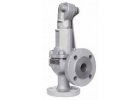
Construction with an extended neck: A typical feature of cryogenic fittings (not only safety valves but also shut-off valves or cocks) is the so-called extended neck, or long valve extension. This means the spring, sealing chamber and operating mechanism of the valve are positioned higher above the valve body by means of an extended connection. The purpose is to distance these sensitive parts from direct contact with the cryogenic liquid. The lower part of the valve (the body itself, where the medium flows) is of course very cold, but the extended neck increases the temperature gradient towards the upper part of the valve – it is somewhat warmer at the top. This protects the spring and seal from freezing through and also limits the formation of ice from the surrounding air. A valve with a long neck can therefore open and close more reliably, because its spring does not lose elasticity and the moving parts do not freeze. This design element is obvious at a glance – cryogenic safety valves look „taller“.
-
Operating temperatures and pressures: Cryogenic safety valves are certified to work at temperatures near the boiling point of liquefied gases. The typical range of use is from about -270 °C (cryogenic helium) to +60 °C (ordinary ambient temperature). The valve must therefore work not only in deep cold but also if it warms to ambient temperature (during a shutdown, for instance). As for pressure ranges, cryogenic systems usually work at low to medium pressures – liquid nitrogen tanks are typically designed for 1–10 bar, LNG tanks similarly. Safety valves for cryogens therefore cover mainly the range from tenths of a bar to tens of bar. The range includes valves adjustable from as little as 0.5 bar up to 25 bar or more, depending on the application. It is important that the valve holds its tightness across the whole temperature spectrum – no spontaneous escape (weeping) of medium may occur at -196 °C or at ordinary temperature.
-
The ability to discharge gas as well as liquid: When a safety valve opens in cryogenic service, both the gaseous and the liquid phase of the medium may be released. If the pressure in a vessel of liquid nitrogen rises and the valve opens, for example, gaseous nitrogen will chiefly escape. It can happen, however, that fine droplets of liquid flow with it or that the liquid evaporates rapidly as it passes through the valve. Cryogenic safety valves are built to cope with such two-phase flow. The valve's internal cross-sections and passages are generously sized so that any escaping liquid does not cause blockage or freeze inside the valve. Materials such as stainless steel and PTFE moreover tolerate contact with the liquid phase well. The valves are often oriented so that escaping liquid can drip or drain away freely and does not remain inside. The valve can therefore safely discharge both cold vapours and a small amount of liquid without being damaged or freezing in the open position.
Choosing the right valve, certification and installation
-
How to choose the right safety valve: Several factors must be considered when choosing a safety valve for a cryogenic application. First of all the type of medium – for liquid oxygen, for instance, the valve must be absolutely clean and degreased, made of materials suitable for contact with O₂ (some metals and lubricants can cause fire or explosion in pure oxygen). For inert gases such as nitrogen or argon the materials are less critical in terms of reaction, but stainless is still used as standard so that they resist the cold. With flammable gases (LNG) the valve must have safety certification for flammable media and its outlet pipework must be arranged so that escaping gas cannot cause a fire (discharge to a safe zone, spark-protected environment and so on). Another consideration is the size and capacity of the valve – you will use a different valve for a small laboratory vessel of a few litres than for a large storage tank holding tens of cubic metres of liquid. The valve must have the appropriate set opening pressure (5 bar, say) and sufficient flow capacity to release the necessary quantity of medium when the pressure is exceeded so that it does not keep rising. Important parameters such as bore (DN) and connection (threaded vs. flanged) must match the equipment in question. If you are unsure, expert guidance helps – our article How to choose the right safety valve, for example, can help you find your way through the general principles of selection. It always holds that a safety valve is the last line of protection, so you must be able to rely on it – choosing an unproven or undersized solution is certainly not worth it.
-
Certification and standards: As with other pressure equipment, strict standards and legal requirements apply to safety valves. When choosing a cryogenic safety valve, make sure it carries CE marking and meets the requirements of the Pressure Equipment Directive (PED 2014/68/EU). Quality manufacturers (HEROSE, which we prefer in our range, for example) supply valves with an outgoing certificate of setting and testing. That means you receive with every valve a report or plate giving the set opening pressure and confirmation of function from the works or a test house (often TÜV in our case). TÜV certification or an equivalent test house guarantees the valve has been tested to the stated parameters. Special certificates may also be required for cryogenic use – for use in medicine or food production, material attestation and material cleanliness matter. For valves in oxygen systems the certificate of degreasing for oxygen service is fundamental, confirming that the valve contains no oils or other contaminants that could react in oxygen. Not least, it is advisable to verify that the valve complies with the relevant standards (EN) for cryogenic equipment – standards exist specifically for the safety devices of cryogenic tanks. Choosing a certified valve from a proven manufacturer gives you the certainty that it meets quality and safety requirements.
-
Installation recommendations: Correct installation of the safety valve is key to its function. First of all the valve should be mounted as close as possible to the protected vessel or pipe, ideally directly on the vessel at its highest point (where gas collects). It is usually installed vertically (valve upwards) – this allows the valve disc to close freely and any liquid to drip back into the tank. No shut-off fitting may be placed between the vessel and the safety valve that could be left closed by mistake and cut the valve off from the pressurised space. (If the valve must be isolated for operational reasons, special changeover stations with two safety valves are used, at least one of which is always active – but that is a solution for large industrial installations.) The discharge (outlet) from the safety valve should be led into a safe space: very cold gas emerges during blow-off, possibly with liquid that can cause frostbite or thermal shock to surroundings. An outdoor discharge usually has a small hood or cover so that rain and dirt cannot enter the valve – water would freeze inside and could prevent opening. If the valve releases inert gas (nitrogen, argon) into an enclosed space, sufficient ventilation must be ensured so that people are not asphyxiated by falling oxygen levels. With oxygen, conversely, the discharged gas must not accumulate in a space containing flammable substances – a raised O₂ concentration increases fire risk. Regular testing or inspection of the safety valve at the intervals recommended by the maker is also advisable – it verifies that the valve is not clogged and still opens at the correct pressure. A correctly installed and maintained cryogenic safety valve then performs its role reliably and you can rely fully on the safety of the system.
Advantages and limits of cryogenic safety valves
Advantages:
-
Operational safety: The main advantage is of course protection of equipment and operators from the danger of explosion through overpressure. The safety valve releases the pressure automatically and prevents an accident. In cryogenic systems, where evaporation is inevitable, it is an entirely indispensable element that makes safe storage and handling of the liquid possible.
-
Reliable function in an extreme environment: Cryogenic safety valves are designed to work even at extreme temperatures far below freezing. Special materials and construction ensure the valve neither freezes nor disintegrates in the cold. That is a fundamental advantage over standard valves, which would fail in such conditions.
-
Versatile use (broad compatibility): Valves for cryogenic media are made of high-quality stainless steel and PTFE, which guarantees resistance to most chemicals and gases. One valve can therefore often serve several different media (nitrogen, argon, oxygen) with no risk of corrosion or reaction with the medium. They moreover cover a wide pressure range – from very low for micro-systems to tens of bar for large tanks.
-
Certified quality: Most cryogenic safety valves from reputable manufacturers undergo strict testing and carry international certifications (TÜV, ASME, CE). The user has documentation confirming their function and setting. That increases confidence in the equipment and makes meeting legislative requirements easier.
Limits:
-
The unavoidable loss of medium during discharge: Every safety valve works by releasing some of the medium into the surroundings in a critical situation. That reduces the pressure and protects the system, but with expensive cryogenic liquids it means a loss of product (nitrogen, oxygen and so on escaping into the atmosphere). In practice this is allowed for and tanks are sized so that occasional blow-off is no great economic problem – but it is a limit that cannot be avoided, since safety takes precedence over saving.
-
Higher cost and maintenance demands: The cryogenic version of a valve tends to be more demanding in construction and made of more expensive materials (stainless steel, special seals), which shows in a higher purchase price than ordinary valves. It is also advisable to check them regularly – the cleanliness of the seat and function especially – because ice or dirt can cause leakage or delayed opening. Maintenance, however, requires expert handling (the valve cannot simply be dismantled without losing the warranty or certification).
-
The need for correct installation: A safety valve's performance can be limited if it is not installed correctly. Long inlet pipework to the valve, or even a shut-off ahead of it, can jeopardise its function. A cryogenic valve must also have a free outlet to safety – a restriction in the discharge (the outlet blocked by ice or dirt, for instance) can reduce its effectiveness. These are not drawbacks of the valve itself but rather limits to bear in mind when designing the system.
-
Specific operating conditions: A cryogenic safety valve suits only situations where very low temperatures genuinely occur. At ordinary temperatures (a safety valve on an air compressor, for instance) the cryogenic version is not needed and would be needlessly expensive. Moreover, some cryogenic valves have slightly lower tightness (metal seats especially) or may have restricted flow because of their more robust construction. They should therefore be used purposefully where their strengths shine – in cryogenic applications.
Further tips and information: The complete range of safety valves for every purpose (standard and special versions alike) can be found in our main category Safety valves – all designs. If you are looking for safety valves for a specific cryogenic medium, look into the relevant subcategories as well – the nitrogen safety valve section, for instance, clearly presents models suitable for nitrogen and similar inert gases. Do not hesitate to contact us for further advice; we will gladly help you choose the optimal solution so that your cryogenic system is safe and reliable.
-
 Safety valves 06C02; standard for compressed air
-
Relief valves 6217; full lift for compressed air
-
Safety valves 6370; for water, oil and diesel
-
Relief valves 6380-95; for saturated steam and nitrogen
-
Relief valves 6383-6012; in stainless steel with thread
-
Relief valves 6121; flanged cast iron
-
Safety valves 6127; flanged stainless steel
.jpg)