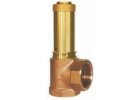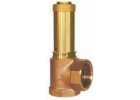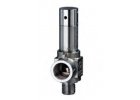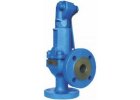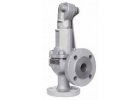

Safety valves for diesel
Diesel as a pressure medium
Diesel (diesel fuel) and related fuel oils, such as light heating oil, belong among the commonly used liquid fuels in transport, industry, storage and heating. In many of these applications diesel is conveyed or kept under pressure – for example in the fuel systems of diesel engines, in heating oil lines to burners, in tankers or in fuel storage vessels exposed to solar heating, etc. Unlike gases, liquid diesel is almost incompressible, so even a slight increase in volume or temperature in a closed space can cause a significant rise in pressure. At the same time it is a flammable liquid, so any uncontrolled leak or destruction of equipment due to overpressure represents a considerable risk of fire or explosion. For these reasons safety valves able to release excess pressure safely are used in pressure-tight diesel systems. (It is worth mentioning that the renowned manufacturer HEROSE specialises in safety valves – in our range you will find a number of its products intended precisely for diesel and liquid fuels.)
Overpressure risks and the need for a safety valve
In every system where diesel is under pressure there is a risk of overpressure – i.e. exceeding the maximum allowable system pressure. Overpressure can arise for various reasons: for example heating of a closed tank (diesel expands with heat), failure of the fuel pump control, a blocked pipe or a valve closed downstream of a running pump. The consequences of excessive pressure can be serious – from damaged piping, a burst seal or vessel, right up to a sudden rupture and escape of flammable diesel into the surroundings. In an enclosed space the pressure wave or the resulting fuel mist could even lead to an explosion.
A safety valve (also called a pressure relief valve) is a safety component that protects the entire system against the consequences of excessive pressure. As soon as the pressure in the system reaches the set opening pressure of the safety valve, the valve opens automatically and releases part of the medium. This stabilises and limits the pressure in the system to a safe level and prevents destruction of the equipment. Once the pressure drops the valve closes again and the system can continue operating. Without a safety valve even a relatively small pressure surge could cause an accident – installing a safety valve is therefore often required by standards and is an essential measure for safe operation. (Larger fuel pressure vessels, for example, must have an emergency vent or a safety valve according to the applicable regulations.) In practice safety valves are used both in stationary equipment (boiler rooms, storage tanks, industrial diesel distribution) and in mobile applications – typically tanker vehicles for transporting fuels have safety and venting valves that prevent the tank from bursting in a collision or fire. A properly selected safety valve thus reliably protects your diesel system against sudden overpressure and minimises the risk of an accident.
Specifics of safety valves for diesel
Safety valves intended for liquid fuels have certain design and material particularities that ensure their flawless function precisely with diesel, heating oils and similar media. What matters most in these valves?
-
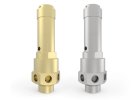
Valve body material: You will commonly encounter brass or stainless steel safety valves. Brass (or bronze) is strong enough and resistant to diesel and heating oils, is non-sparking and affordable – brass valves are therefore used across a wider range of fuel applications. Stainless steel offers higher mechanical and thermal resistance, withstands corrosion excellently and tolerates even more aggressive substances in the fuel (e.g. bio components or additives). The stainless design suits more demanding operations (higher temperatures, outdoor environments, long service life) or wherever regulations require it. With small and medium diesel valves, however, stainless steel is chosen only exceptionally – a brass body is usually entirely sufficient up to pressures around 16 bar and temperatures up to approx. 80 °C. Manufacturers such as HEROSE offer both variants; the choice of material therefore depends mainly on the specific conditions of your application.
-
Seat sealing (material of the sealing elements): For liquid fuels soft seals are used above all, providing perfect tightness right up to the moment the valve opens. The most frequent choice is NBR, i.e. nitrile rubber – this material resists diesel fuel, heating oils and other petroleum substances well and works reliably roughly in the range from -30 °C to +80 °C. At higher temperatures (or if the medium contains more aggressive chemicals) it is advisable to choose a seal made of FKM (fluoroelastomer, known under the trade name Viton). FKM seals permanently withstand temperatures around 150 °C and resist various chemical additives in fuels, but are more expensive. For diesel and light heating oil, where temperatures usually stay up to ~80 °C, NBR is sufficient; if the valve sits close to a heat source (e.g. an engine or boiler) or hot oil flows through it, consider a Viton seal. By contrast, EPDM seals (ethylene propylene rubber) are unsuitable for hydrocarbon fuels – fuel oils attack this material and would cause the seal to swell. Some safety valves also come with a PTFE seat (a Teflon ring); PTFE is inert and heat resistant, but is used rather in valves for gaseous media or very aggressive chemicals. For diesel, therefore, clearly choose a valve with an oil-resistant seal (NBR/FKM) according to the operating temperature. The manufacturer's catalogue usually states the medium temperature range precisely as a function of the seal type.
-
Design for flammable liquids: Safety valves for diesel are designed so that the discharged liquid can be led away safely. Typically they have an angle body – inlet from below and outlet to the side – with a female thread at the outlet. A pipe or hose can be connected to the side outlet and the blown-off diesel taken away to a collecting tank or back into the upper part of the tanker. This matters for hazard prevention: when the valve opens the diesel does not spray freely into the room but is led away from the equipment in a controlled manner, where there is no risk of ignition. The safety valves themselves are usually open to the atmosphere (spring-loaded valves with an open spring bonnet) – meaning that their spring and internal mechanism are not sealed against the surroundings. This open design eliminates the risk of released fuel building up pressure under the cap and makes it easier to vent any vapours. With flammable liquids a version with a closed spring bonnet and these vapours led into a safe area is sometimes used, but with ordinary diesel valves this is generally not necessary. It is more important that all parts of the valve are made of materials that do not create sparks in normal operation and are compatible with the fuel – which both brass and stainless steel satisfy. For special purposes valves may also be fitted with a hand lever for manual release (a function test) or, for example, with a diaphragm separating the spring from the medium (it prevents diesel from reaching the spring and protects it against corrosion or sticking). These features are not essential in standard fuel valves, however – they serve rather specific professional applications.
-
Resistance to deposits and coking: Diesel and heating oils can form deposits over time (e.g. varnish or resinous residues), especially when exposed to higher temperatures or longer storage. Near engines or burners coking of fuel residues can also occur – that is, carbonisation of small amounts of diesel due to intense heat. Over time these contaminants could clog narrow gaps or the seat of the safety valve. The design of valves for liquid fuels is therefore as simple and robust as possible, so that it withstands possible fouling. Direct spring-loaded valves (without pilot control) have a minimum of internal recesses where diesel could accumulate, and the strong spring is able to „clean” the seat of small particles as it closes. If the fuel is more contaminated (e.g. lower-quality heating oils or long-stored diesel), it is advisable to release the valve manually from time to time and blow the interior through – this prevents dirt from settling. On heavily loaded valves the mentioned diaphragm protecting the spring can help, preventing dirt from reaching the spring and mechanism. Overall, however, safety valves for diesel are designed to cope even with a less than perfectly clean medium and not to seize up even after a long period of inactivity.
-
Viscosity and temperature effects: Diesel and light heating oils have a relatively low viscosity (they are thinner), so they normally flow easily through the valve when it blows off. At low temperatures, however, diesel can thicken or wax up (forming paraffin crystals at temperatures below the pour point of winter diesel, roughly below -10 °C). Cold light heating oil also increases its viscosity. The safety valve should be able to open even under these conditions – quality valves have a precisely dimensioned spring that overcomes a certain increase in friction caused by the thicker medium. Extremely supercooled or congealed diesel can nevertheless affect the valve's function (for example slow down the onset of blow-off), which is why it is important to choose the valve with regard to the operating temperature range as well. If your system works in frost, make sure the seal used does not lose its elasticity (NBR is usable roughly down to -30 °C, special compounds even lower). For most applications this is not a problem, but with standby diesel generators installed outdoors, for instance, it is advisable to keep the fuel warmed. As for pressures, diesel systems usually operate in the range of single to low double-digit bar – typical safety valves for diesel therefore cover ranges such as 1–16 bar, 10–25 bar, etc. (For comparison: in hydraulics pressures can reach as much as 300 bar, and there the valve design is different.) Full-lift safety valves for liquids are designed to open quickly enough when the set pressure is exceeded and to pass the required flow of the medium. Make sure the valve you choose can handle the maximum possible diesel flow in your system – every manufacturer states this value (relief capacity as a function of pressure) in the catalogue. A correctly chosen valve orifice size ensures that even thicker oil manages to flow through the valve and the pressure drops quickly.
Recommendations for choosing a safety valve for diesel
When selecting a specific safety valve for a diesel application, several key parameters have to be taken into account:
-
Set opening pressure: Choose a valve with a matching opening pressure (the set overpressure at which the valve starts to discharge diesel). This value should be somewhat higher than the normal operating pressure in the system, yet lower than the maximum allowable pressure of the weakest component in the system. For example, if the pump normally produces 5 bar and the piping is rated for 10 bar, the safety valve may open at around ~7–8 bar so that it protects with a reserve below the piping limit. Most safety valves are supplied preset from the factory – the required pressure is stated when ordering and the manufacturer (or supplier) sets the valve and seals it. We can arrange delivery of a valve set to the required pressure including a calibration certificate (so you do not have to adjust the pressure yourself).
-
Flow capacity (valve size): For the valve to limit pressure effectively it must be able to release a sufficient quantity of the medium in the necessary time. Every safety valve has a certain flow capacity (stated e.g. in litres per minute or kg/h at a given pressure). It follows from the orifice diameter and the valve design. Calculate or estimate the largest flow that could pass through the valve in an emergency – e.g. the pump output, the thermal expansion of the tank contents, etc. Choose the valve size and orifice accordingly. Manufacturers (such as HEROSE) usually provide tables or graphs of flow versus pressure for each valve model. Do not underestimate the size selection – too small a valve will not manage to release enough diesel and the pressure could keep rising even with the valve open. Conversely, an oversized valve may „blow off abruptly” unnecessarily early. In practice, smaller to medium valve sizes (orifices of a few millimetres) are used for common diesel lines, because the liquid is incompressible and even a small volume of released fuel quickly reduces the pressure.
-
Material compatibility: Make sure the valve construction (body, internal parts and seals) is compatible with the medium – in our case with diesel or heating oil – and with the environment in which the valve will be installed. As mentioned above, a brass body and NBR seals cover most standard fuel applications. If, however, you expect higher temperatures, aggressive components or a damp outdoor environment, consider a stainless steel valve and/or FKM seals for greater resistance. For explosive atmospheres (hazardous zones, e.g. in oil facilities) choose valves in line with ATEX requirements – a purely mechanical safety valve does not usually represent an ignition source, but it is wise to discuss the specific design in terms of static electricity and the like. It always holds that the material used must not react with the medium or contaminate it, and the valve must withstand the operating conditions in the long term.
-
Tightness and reliability in operation: A quality safety valve should seal firmly when closed – i.e. not let any fuel through until the opening pressure is reached. With liquids this is usually ensured by a soft seat (see NBR/FKM seals). Cheaper valves with imprecise machining or an unsuitable material may start to „weep” (leak fuel) after some time even below the set pressure, which is undesirable from both a safety and an economic point of view. Prefer proven brands and valves with good references. It is also worth checking whether the valve allows visual inspection or regular testing – some models have the mentioned hand lever for opening the valve occasionally and flushing the seat. This is useful above all in systems that have not released a single drop for a long time (an emergency valve on a fuel tank may wait years for a critical situation). The ability to release a little medium as a test and verify that the valve moves increases the confidence that everything will work when needed. If your application allows it, choose a valve with this function or plan regular inspections and cleaning of the valve.
-
Certification and standards: Safety valves are pressure safety devices, so they should comply with the relevant standards and certifications. Within the EU the valve must meet the requirements of the PED 2014/68/EU directive (Pressure Equipment Directive) for pressure equipment – such products carry the CE marking. Quality valves also often hold certificates from independent test houses; the German TÜV, for example, verifies function and capacity (with HEROSE products you will find a TÜV certificate for every valve series). When choosing a safety valve for diesel, therefore, check that it is supplied with the appropriate documents – in particular the report on setting the opening pressure (from the factory or a test house) and the declaration of conformity with the PED. These documents are also important for any approvals, inspections or insurance companies. Every valve should also have clearly marked parameters on its nameplate (set pressure, temperature range, material, CE mark, etc.), which tells you about its quality and intended use. Buy only from proven suppliers who supply all the necessary certificates with the valves – this avoids the risk of using an unapproved or non-functional component. (You will also find further general advice on selection in our advice article How to choose the right safety valve.)
Advantages and limitations of use
Advantages of using safety valves for diesel:
-
Safety and accident prevention: The main benefit is of course the protection of the equipment and the operator against dangerous overpressure. At the critical moment the safety valve can automatically blow off the pressure and thereby prevent a pipe or vessel from bursting. This prevents not only damage to property but also potential injury to people or the outbreak of a fire.
-
Reliability and automatic operation: Quality safety valves work purely mechanically, without any need for electrical power or control – they operate continuously and autonomously. That is a great advantage particularly for safety components that must act even during a power failure or when human operators cannot react in time. Modern spring valves have a fast response and are set with high accuracy, so they open exactly at the specified pressure.
-
Protection of equipment and continuity of operation: Thanks to the safety valve you avoid sudden and expensive failures – it protects pumps, fittings, hoses and tanks against exceeding their limits. This extends the service life of the whole system. Moreover, once the overpressure situation subsides the valve closes and operation can continue (you do not have to replace a burst diaphragm as with other protective devices). The safety valve thus minimises downtime.
-
Simple installation and small dimensions: Compared with complex electronic pressure protection systems, safety valves are very compact devices. They are easy to install (typically they are simply screwed into a branch on the pipe or on the vessel) and require no special maintenance. For diesel applications they are available in various sizes and threaded connections, so they can be fitted without difficulty even into the cramped spaces of fuel lines.
Possible limitations and pitfalls:
-
The need for correct sizing and setting: A safety valve fulfils its function only if it is correctly selected and set. A badly sized valve (e.g. too high an opening pressure, too small a flow) may fail to protect the system. It is therefore necessary to devote time to the calculations and, if need be, to discuss the choice with specialists. Incorrect setting of the valve (e.g. a higher pressure than is safe) can lead to failure of the protection.
-
Risk of fuel escaping when the valve opens: When the safety valve acts, it deliberately releases medium – in our case diesel or oil. That reduces the pressure, but it also means the fuel leaves the normal pipework. It is therefore necessary to resolve where the diesel from the valve will be discharged. If it were to spray freely into an engine compartment or a boiler room, that would create a fire hazard. In practice the safety valve must be connected by piping to a return tank or to a safe collecting vessel. The valve itself solves the overpressure problem, but it is up to the operator to ensure the released liquid is safely captured. With small mobile devices (e.g. portable pumps) the solution is often a short hose leading into a canister when the valve activates.
-
The need for maintenance and inspection: Although safety valves do not require frequent servicing, they should not be neglected entirely. Especially in diesel systems, where a valve may not open for a long time, dirt can settle in the seat or the seal can harden over time. It is therefore recommended to carry out regular inspections – check the valve at least once a year and, where possible, release it manually to verify its function. For some valves the manufacturer recommends having them retested or re-sealed after a certain period. All of this is, however, ordinary expenditure necessary to maintain safety. Anyone who leaves a safety component entirely unattended risks it not working properly at the critical moment.
-
Limitations in very specific conditions: There are applications where a classic spring safety valve may not be ideal – for example the extremely high-pressure injection circuits of diesel engines (with pressures over 1 000 bar) use different types of protective mechanisms, because ordinary valves would not cope with such pressures. Similarly, for very viscous or contaminated liquids (heavy fuel oils, bitumen) safety valves are designed individually or other means of protection are chosen (rupture discs, etc.). For the vast majority of common fuel systems, however, the spring safety valve represents the optimal and proven solution – you just have to bear in mind that one universal design will not suit everywhere, and always select the valve according to the specific parameters of the system.
In conclusion: Safety valves for diesel and fuel oils are an essential part of the safety equipment wherever pressure can build up in a closed fuel circuit. A properly selected valve protects the equipment against overpressure without disturbing normal operation. Thanks to a robust design, suitable materials and certified quality (e.g. from the manufacturer HEROSE) you can be sure of reliable function even in demanding conditions. Safety valves in diesel systems thus bring peace of mind to every operator – potential pressure problems can be literally let off. For other types of media there are of course specialised solutions – for example safety valves for inert gases (nitrogen, argon etc. in industrial gas systems) or for various oil hydraulic and lubrication circuits. It is always important to choose the valve according to the specific medium and conditions, which our clear product categories and expert advice on the website will make easier for you. If you have any questions we will be glad to help – the safety of your equipment comes first for us!
Browse the complete range in the category safety valves – all designs, where you will find safety valves for various media, pressures and uses.
-
 Safety valves 06C02; standard for compressed air
-
Relief valves 6217; full lift for compressed air
-
Safety valves 6370; for water, oil and diesel
-
Relief valves 6380-95; for saturated steam and nitrogen
-
Relief valves 6383-6012; in stainless steel with thread
-
Relief valves 6121; flanged cast iron
-
Safety valves 6127; flanged stainless steel
.jpg)