
Silicon free
Silicone-free (Silicon Free) spray guns are specially prepared painting guns that contain no silicone parts or lubricants. As a result they do not contaminate the paint with silicone during painting, which prevents surface defects (such as craters or „fish eyes“) and ensures a perfectly clean finish. These guns are essential in environments with the highest demands on painting cleanliness, in car paint shops for instance, or when painting sensitive plastic parts.
#ShowMore#
What does the Silicon Free version of a spray gun mean?
Silicon Free, or the silicone-free version of a spray gun, means that no silicone materials or preparations were used in the gun's manufacture and construction. That covers seals, oils and lubricants above all – all these components are replaced by silicone-free alternatives. The aim is to exclude even the smallest trace of silicone that could be released into the surroundings or into the paint being applied. Silicone is known in the painting trade as the „enemy“ of a perfect surface: even slight silicone contamination can cause adhesion problems and create defects such as craters or so-called fish eyes on the painted layer – small round defects where the paint has „recoiled“ from the substrate. A silicone-free gun eliminates such contamination and minimises the risk of a ruined finish.
Which components must be silicone-free, and why?
For a version to be genuinely silicon-free, the manufacturer must replace or exclude every part containing silicone. Typically this means:
-
Seals and O-rings: Instead of ordinary silicone seals, materials such as PTFE (Teflon), Viton or other special polymers containing no silicone oils are used. Such seals prevent silicones from getting into the flowing air or the paint.
-
Lubricants and oils: All moving parts of the gun (needle, trigger, threads) are lubricated with a special silicone-free lubricant. Ordinary silicone oils or greases are replaced by PTFE-based or other non-silicone lubricants. This prevents microscopic droplets of silicone oil being released into the paint while the gun is used.
-
The production process and cleaning: Cleanliness is observed during the gun's manufacture and assembly too – no silicone sealants, polishes or release agents are used. The manufacturer often degreases and cleans all parts thoroughly before assembly. This gives the customer certainty that the gun has not come into contact with silicone even before delivery.
Where and when must silicon-free guns be used? (Target users)
Silicone-free spray guns are used wherever even a slight trace of silicone can mean trouble. Typical examples are:
-
Car painting and body shops: When painting cars (above all topcoats and clearcoats), cleanliness is crucial. Silicone can enter the paint shop from polishing products, cosmetics or unsuitable lubricants and cause defects in the car's finish. Professional car painters therefore require their equipment – including spray guns – to be entirely free of silicones. Only then can they be sure the finish will contain no fish eyes, craters or mapping, and achieve a perfect glossy surface.
-
Painting plastics: In industry and repair work, plastic parts are often painted (bumpers, mirrors and other automotive components, plastic instrument covers and the like). Plastics tend to be sensitive to silicone contamination – partly because paint adheres worse afterwards, partly because defects show up markedly on them. On top of that, the manufacture of plastic parts (injection moulding) may itself involve silicone release agents, so any further silicone must be excluded during painting. That is why guns in the silicone-free version are often required for painting plastic parts.
-
Clean operations and industrial paint shops: Wherever there is extreme emphasis on environmental cleanliness, silicon-free guns are a necessity. This includes paint shops in the electrical or aerospace industries, specialised workplaces for coating optical components, or powder coating shops with strict air cleanliness control. Such operations often apply a rule of absolute silicone prohibition – employees use no products containing silicone (not even cosmetics) and, of course, tools must not be a source of contamination either. A spray gun in the silicon-free version is the only right choice here if the required quality and cleanliness of surfaces is to be maintained.
Why choose a gun in the silicone-free version? (Benefits for the customer)
Choosing a silicone-free spray gun gives the painter or paint shop operator several significant advantages:
-
Guaranteed painting quality: The greatest benefit is the certainty that the gun itself will not cause paint defects. You can rely on adding no invisible contaminants to the paint. The resulting coat will be smooth and coherent, without unwanted craters or separated spots. That means fewer rejects, fewer repairs and savings of time and material.
-
Meeting strict standards and requirements: Many sectors (automotive above all) have strict requirements for the painting process. Using silicon-free equipment, you easily satisfy internal quality standards or the demands of customers who insist on a completely clean environment. A silicone-free gun automatically qualifies you for jobs where ordinary tools would not do.
-
Higher reliability and service life: Quality guns in the silicone-free version tend to be better made overall. The PTFE or Viton seals used often have higher resistance to solvents and wear than ordinary silicone parts. Special lubricants reduce the wear of mechanical parts. All this contributes to a longer gun life and steady performance without fluctuations.
-
Customer trust and a professional image: If a customer knows you use top equipment and pay attention to every detail (including eliminating silicones), it strengthens your reputation as a specialist who does first-rate work. For a quality-oriented paint shop or workshop, „silicon free“ equipment is a mark of professionalism.
When choosing a spray gun, then, consider whether you will be working in conditions that demand absolute cleanliness. If so, investing in the silicone-free variant pays off. In our Spray guns range you will find a whole series of models in the Silicon Free version that meet the demanding requirements of painting operations. Not sure which gun to choose? Read our detailed guide How to choose a spray gun, where you will learn more about the various technologies and parameters of spray guns. With a silicone-free spray gun you will then be certain that your work always has a top-class finish without compromise.
-
 HVLP SGH2000 small spray gun; smaller areas and decorative spraying
-
SG990H spray gun; for less demanding use
-
SG990S spray gun; for less demanding use
-
Spray Gun SGH827; HVLP professional spraying in the paint industry
-
Minipaint SGMP; HVLP decorative spray gun
-
Smartpaint SGSP; HVLP decorative spray gun
-
Profipaint SGPP; HVLP decorative spray gun
-
SGH1002 spray gun; extremely economical LVLP
-
SGH1000 spray gun; top of the range decorative spray gun
-
Spray Gun SGH501; HVLP for medium and large areas
-
SGHX100 spray gun; APS for the most demanding universal applications
-
Spray gun SGM502 ; HVLP large area spraying
-
SGH2007R spray gun; HVLP for high transfer efficiency
-
Airbrush sets; with accessories in case
-
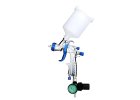
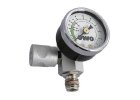
Accessories for spray guns; controls, filters, cartridges

.jpg)
Product sorting
List of products

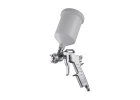
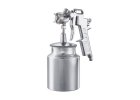
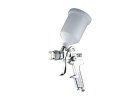
The SGM502 spray gun is a low pressure HVLP model for spraying large areas in craft and industrial production. It has a connection to an external paint container via a G1/4"...

The SGHX100 spray gun is a highly durable professional spray gun with APS technology, designed for priming and finishing in the automotive and furniture industries. It has a...

The SGH1000 spray gun is a high-end HVLP spray gun designed for decorative spraying in the craft and industrial markets. It has a 250 ml container, stainless steel nozzle, 65%...

The SGH501 spray gun is a high-end model for industrial use equipped with HVLP technology with a 65% transfer efficiency. It has a stainless steel nozzle and needle, 500ml...