
Compressed Air Moisture Removal Air Dryers
Compressed air dryers help you get rid of condensate. These units, connected downstream of the compressor, are an inseparable part of the compressed air treatment range. We offer you three types of dryer – refrigeration, adsorption and membrane. Installing one will multiply the service life of the connected pneumatic tools, blow guns or spray guns and components of automated lines such as cylinders and valves. Lower service costs for these connected devices will please every air compressor operator. The differences between the individual dryers and an article on why and, above all, how to dry compressed air can be found here.
#ShowMore#
How to choose the right type of air dryer?
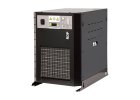
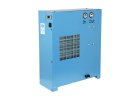
Refrigeration dryers
The most sought-after type for drying compressed air in workshops and in most areas of industry. Well-known manufacturers include, for example, Hanksion or the international Mark Compressors and Omega Air. In a refrigeration dryer the compressed air is first cooled to a temperature below the pressure dew point. The water vapour in the air then condenses and turns into water, which is drained from the air by a condensate drain.
Advantages of refrigeration dryers
- they are inexpensive
- they work with no loss of compressed air
Disadvantages of refrigeration dryers
- the dew point can only be lowered to +5 °C or +3 °C
- electricity consumption for the fan, the control system and the refrigerant compressor.
- effective ventilation must be ensured
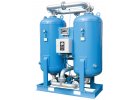
Adsorption dryers
Somewhat more expensive, but highly efficient dryers for industrial plants with high demands on air quality. Their hallmark is a pair of towers filled with desiccant. The desiccant has to be highly porous; activated aluminium oxide – alumogel (Al2O3) – or silica gel (SiO2) is used most often. Adsorption dryers for compressed air are made, for example, by Omega Air.
Advantages of adsorption dryers
- the dew point can be lowered to a much lower temperature, depending on the desiccant used commonly to –25°C, –40 °C or even –75 °C
Disadvantages of adsorption dryers
- adsorption dryers consume up to 20 % of the compressed air supplied
- the desiccant charges have to be replaced regularly
Membrane dryers
This type of dryer resembles a test tube with a stopper at each end. Membrane dryers are made up of a bundle of hollow fibres (membranes) through which moist compressed air flows from top to bottom. As it passes through, the moisture is forced out through the membranes and the air leaves the fibre dry. They are intended for supplying compressed air with a low dew point at a low flow rate. Leading manufacturers also include Omega Air.
Advantages of membrane dryers
- minimal installation dimensions
Disadvantages of membrane dryers
- membrane dryers consume 10 - 30 % of the compressed air supplied
*Does buying a quality dryer for your compressor seem expensive? The truth is that all these units always pay for themselves in time. They protect every part of the compressed air system, which can then work reliably, without service intervention, for a long time and above all extremely efficiently.
Do not forget the other air treatment accessories either:
-
 RDP condensation dryers; pressure dew point +3 °C
-
Condensation dryers WDF; dew point +3°C with filters
-
HDI air dryers; pressure dew point +4°C
-
RDL condensing dryers; pressure dew point +5°C
-
ADRY air dryers; smaller adsorption -40°C
-
BDRY air dryers; large adsorption -40°C
-
MADRY air dryers; membrane -40°C
-
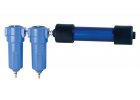
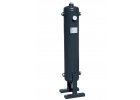
Activated carbon columns; activated carbon separation
.jpg)
-hankison-susicka-vzduch-kompresor-tllak-kondenzace-rosny-bod.jpg)
.jpg)


Product sorting
List of products

The TAC-1000 dry separator is designed to separate oil vapour from compressed air using activated carbon from the compressor up to a flow rate of 16,667 l/min at a maximum...

Dry separation TAC-110 designed for separation of oil vapours from compressed air by activated carbon from the compressor up to a flow rate of 1 833 l/min at a maximum pressure...

Dry separation TAC-150 designed for separation of oil vapours from compressed air by activated carbon from the compressor up to a flow rate of 2 500 l/min at a maximum pressure...

The TAC-200 dry separator is designed to separate oil vapours from compressed air using activated carbon from the compressor up to a flow rate of 3,333 l/min at a maximum...

Dry separation TAC-250 designed for separation of oil vapours from compressed air by activated carbon from the compressor up to a flow rate of 5 333 l/min at a maximum pressure...

Dry separation TAC-300 designed for separation of oil vapours from compressed air by activated carbon from the compressor up to a flow rate of 5 333 l/min at a maximum pressure...

Dry separation TAC-400 designed for separation of oil vapours from compressed air by activated carbon from the compressor up to a flow rate of 6 833 l/min at a maximum pressure...

The TAC-600 dry separator is designed to separate oil vapours from compressed air using activated carbon from the compressor up to a flow rate of 9,833 l/min at a maximum...

The TAC-800 dry separator is designed to separate oil vapours from compressed air using activated carbon from the compressor up to a flow rate of 12,833 l/min at a maximum...

The TACM-105 small dry separator is designed to separate oil vapours from compressed air using activated carbon from the compressor up to a flow rate of 1,950 l/min at a maximum...

The TACM-12 small dry separator is designed to separate oil vapours from compressed air using activated carbon from the compressor up to a flow rate of 200 l/min at a maximum...

The TACM-150 small dry separator is designed for separation of oil vapours from compressed air using activated carbon from the compressor up to a flow rate of 2,500 l/min at a...

The TACM-200 small dry separator is designed to separate oil vapours from compressed air using activated carbon from the compressor up to a flow rate of 3,333 l/min at a maximum...

The TACM-23 small dry separator is designed to separate oil vapours from compressed air using activated carbon from the compressor up to a flow rate of 400 l/min at a maximum...

The TACM-35 small dry separator is designed to separate oil vapours from compressed air using activated carbon from the compressor up to a flow rate of 600 l/min at a maximum...

The TACM-56 small dry separator is designed to separate oil vapours from compressed air using activated carbon from the compressor up to a flow rate of 1,250 l/min at a maximum...

The TACM-6 small dry separator is designed to separate oil vapours from compressed air using activated carbon from the compressor up to a flow rate of 100 l/min at a maximum...

The TACM-70 small dry separator is designed to separate oil vapours from compressed air using activated carbon from the compressor up to a flow rate of 1,250 l/min at a maximum...

Service kit for the TAC-1000 activated carbon column. Activated carbon is a material in the form of small pellets designed to purify compressed air and gases in adsorption...

Service kit for TAC-110 activated carbon column. Activated carbon is a material in the form of small pellets designed to purify compressed air and gases in adsorption processes.

Service kit for the TAC-150 activated carbon column. Activated carbon is a material in the form of small pellets designed to purify compressed air and gases in adsorption...

Service kit for the TAC-200 activated carbon column. Activated carbon is a material in the form of small pellets designed to purify compressed air and gases in adsorption...

Service kit for the TAC-250 activated carbon column. Activated carbon is a material in the form of small pellets designed to purify compressed air and gases in adsorption...

Service kit for the TAC-300 activated carbon column. Activated carbon is a material in the form of small pellets designed to purify compressed air and gases in adsorption...

Service kit for the TAC-400 activated carbon column. Activated carbon is a material in the form of small pellets designed to purify compressed air and gases in adsorption...

Service kit for the TAC-600 activated carbon column. Activated carbon is a material in the form of small pellets designed to purify compressed air and gases in adsorption...

Service kit for the TAC-800 activated carbon column. Activated carbon is a material in the form of small pellets designed to purify compressed air and gases in adsorption...

Service kit for activated carbon column TACM-105. Activated carbon is a material in the form of small pellets designed to purify compressed air and gases in adsorption processes.

Service kit for the TACM-12 activated carbon column. Activated carbon is a material in the form of small pellets designed to purify compressed air and gases in adsorption...

Service kit for the TACM-150 activated carbon column. Activated carbon is a material in the form of small pellets designed to purify compressed air and gases in adsorption...

Service kit for the TACM-200 activated carbon column. Activated carbon is a material in the form of small pellets designed to purify compressed air and gases in adsorption...

Service kit for the TACM-23 activated carbon column. Activated carbon is a material in the form of small pellets designed to purify compressed air and gases in adsorption...

Service kit for the TACM-35 activated carbon column. Activated carbon is a material in the form of small pellets designed to purify compressed air and gases in adsorption...

Service kit for the TACM-56 activated carbon column. Activated carbon is a material in the form of small pellets designed to purify compressed air and gases in adsorption...

Service kit for the TACM-6 activated carbon column. Activated carbon is a material in the form of small pellets designed to purify compressed air and gases in adsorption processes.

Service kit for the TACM-70 activated carbon column. Activated carbon is a material in the form of small pellets designed to purify compressed air and gases in adsorption...