

Sušičky vzduchu tlakový rosný bod +5 °C
What a +5 °C dew point means and why it matters
A pressure dew point of +5 °C is a slightly higher (moister) dew point value found on simpler compressed air dryers. It means water vapour begins to condense at +5 °C at the given pressure. In practice, air with a +5 °C dew point holds somewhat more moisture than air dried to +3 °C, but it still holds that under ordinary conditions above that temperature it does not condense. A +5 °C dew point matters above all because it represents sufficient air quality for a range of applications while allowing very simple, inexpensive drying equipment to be used. Essentially it is the basic threshold guaranteeing that at room temperatures, and with mild cooling of the air, no water precipitates. This value often appears on smaller or economical models of refrigeration dryer that do not have as much cooling capacity as industrial units but still do good service in less demanding operations.
#ShowMore#
Suitable applications and use in practice
A +5 °C dew point finds use where most condensation in the air system must be prevented but conditions are not extreme and the requirements for absolute dryness are not strict. Typical examples are smaller workshops, garages and service operations where compressed air is used for blowing off, driving basic pneumatic tools, inflating tyres and so on. In such an environment, where the air temperature does not fall below about +10 °C, a +5 °C dew point is generally sufficient. A compressor in a car workshop with a simple dryer reaching +5 °C, for instance, removes most of the moisture from the air – mechanics then have no trouble with droplets of water spraying from the blow gun or with tools corroding quickly. Smaller industrial firms or tradespeople who want to protect their pneumatic tools and do not have extreme air consumption often choose dryers with a dew point around +5 °C precisely because they are an affordable solution. Where a compressor runs only occasionally but you do not want to drain litres of condensate from the tank after every use, a +5 °C dryer can also help reduce the amount of water without a large investment. Another field of use is, for example, a car service painting smaller parts – if you paint in an environment of around 20 °C, air with a +5 °C dew point will cause you no trouble (it will not condense in the line) and will ensure adequate surface quality. Generally speaking, +5 °C suits indoor installations in heated buildings and technologies that are not extremely sensitive to trace moisture. Bear in mind, though, that +5 °C no longer provides much reserve – at around +5 °C and below, condensation could occur. So if there is a risk that the air or equipment will cool to that threshold, it is better to choose the standard +3 °C.
Which types of dryer reach a +5 °C dew point
The typical device for reaching a +5 °C dew point is a refrigeration (cooling) dryer in the basic version. Many smaller refrigeration dryers on the market are built to hold a pressure dew point of around +5 °C at the rated air flow. These dryers may have a somewhat simpler cooling system or work without sophisticated control, so they do not cool the air all the way to +3 °C like top models but „only“ to about +5 °C. In practice, for the given use, you will hardly notice the difference. Refrigeration dryers therefore play the main role – they are available in small sizes suitable for, say, a 2 kW workshop compressor, up to larger units for more industrial machines. There are also combined piston compressors with an integrated dryer, which often have their capacity set to a dew point of around +5 °C, entirely sufficient for mobile or hobby use. As for other dryer types: adsorption and membrane dryers can of course reach +5 °C too (an easy task for them), but deploying them primarily for +5 °C would be uneconomical. Even so, you may encounter a membrane dryer set to a smaller purge and supplying air at a dew point of +10 °C or +5 °C, where only protection against slight humidity is needed. Usually, though, the refrigeration option is chosen directly, since it is cheaper and more effective for that humidity. Deliquescent (absorption) dryers with tablets are also worth mentioning – in winter, with cooler inlet air, they can reach an outlet of around +5 °C, but again, this is rarely used in industry where electricity for a refrigeration dryer is available. In short, for +5 °C we choose refrigeration dryers, which are among the most widespread and simplest air treatment devices.
Advantages and disadvantages of a +5 °C dew point
Advantages: The main advantage is the low purchase price and simplicity of the dryers that provide +5 °C. These refrigeration dryers have less powerful cooling than +3 °C models, so they tend to be cheaper and sometimes more compact. For the customer that means savings on purchase and simpler integration into the system (less space needed, often lower noise as well). Air with a +5 °C dew point is dry enough for ordinary conditions, so you gain the benefits of dried air (less condensate, protection of machines) at minimal running cost. A cooling dryer set to +5 °C will use marginally less electricity than one set to +3 °C (because the refrigeration compressor need not reach such a low evaporation temperature). The service life of components is also somewhat extended, as lower load on the compressor and fan means less wear. Another advantage is that at a +5 °C dew point the relative humidity in the air stays at a few tens of per cent (at an ambient temperature of ~20 °C), which may be entirely satisfactory for some processes with no need to „over-dry“ the air. The operator gains protection against condensate in most situations while saving cost – compared with adsorption dryers the energy consumption is far lower and there are no air losses, and even against more powerful refrigeration dryers there can be a saving (albeit small).
Disadvantages: The disadvantage of a +5 °C dew point is the smaller reserve against ambient temperature. If the air temperature in the pipework fell to, say, +5 °C (in an unheated store early in the morning, for instance), the system is already close to the condensation threshold. It is generally recommended to keep the dew point at least ~10 °C below the lowest ambient temperature, which +5 °C satisfies only if the environment does not fall below about +15 °C. Air at +5 °C must therefore not be routed into cold spaces – if it cools slightly further, water begins to form. That restricts use exclusively to heated spaces. Another disadvantage is that compared with +3 °C you have roughly twice as much residual water vapour in the air (per the saturation curve). These are still small quantities, but for sensitive applications (top-quality painting, precision mechanics, electronics) even that can be a risk. Such fields therefore usually opt for the certainty of +3 °C or drier air. Refrigeration dryers for +5 °C are usually of simpler construction – they may lack capacity control by load, may have only timed condensate drains (rather than intelligent ones) and so on. That can lead to marginally higher losses (condensate drains even when there is none) and less convenience. These drawbacks are, however, to be expected in the context of the lower purchase price. If it turned out that +5 °C is not enough after all – because the workplace sometimes cools down, say – you can consider upgrading to a +3 °C dryer (the technology difference is not great; it is often a higher model from the same maker) or supplementing the system with a membrane dryer for the part of the air that goes into the cold. Where +5 °C is too „moist“, an adsorption dryer with a dew point of -20 °C to -40 °C is another alternative, or the golden middle way of a +3 °C dew point. It is therefore worth assessing whether +5 °C will cover your needs or whether to reach for slightly better drying.
Links to further useful information
Besides the +5 °C category you can explore related drying parameters on our website. For slightly drier air there is the dew point +3 °C category, which is the industry standard. If, on the contrary, you needed even drier air because of frost or specific requirements, adsorption dryers with -25 °C or –40 °C are also available. The pages also carry general information about compressed air treatment and the individual types of dryer, which can help you choose the right technology. Choosing the right dew point ensures you do not pay needlessly for „over-dried“ air while still protecting your system from the harmful effects of excess moisture.
All compressed air dryers and more information about air drying and the dew point are in this article from our advice centre: Measuring the dew point temperature and Why and how to dry air
.jpg)
-hankison-susicka-vzduch-kompresor-tllak-kondenzace-rosny-bod.jpg)
.jpg)
Product sorting
List of products

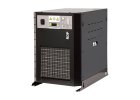
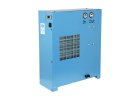
Condensing compressed air dryer for dew point +5°C. Maximum inlet pressure is 13 bar with a flow rate of up to 75 m³/hr (1,250 l/min) and connection via G 3/4" male thread. The...

Condensing compressed air dryer for dew point +5°C. The maximum inlet pressure is 13 bar with a flow rate of up to 100 m³/hr (1,666 l/min) and connection via a G 1" male thread....

Refrigerant compressed air dryer with a dew point of +5°C. The maximum inlet pressure is 13 bar with a flow rate of up to 35 m³/h (583 l/min) and connection via a G 1/2" male...

Refrigerant compressed air dryer with a +5°C pressure dew point. Maximum inlet pressure is 13 bar with a flow rate of up to 180 m³/h (3,000 l/min) and connection via a G 1" male...

Refrigerant compressed air dryer with a pressure dew point of +5°C. Maximum inlet pressure is 13 bar with a flow rate of up to 235 m³/h (3,916 l/min) and connection via G 1"...