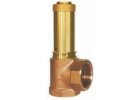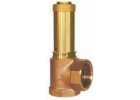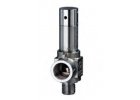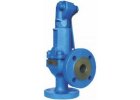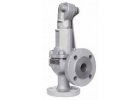

Safety valves certified TÜV-SV749D/G
Safety valves certified to TÜV-SV749D/G are a versatile solution for protecting pressure systems. This certification confirms that the valve has been thoroughly tested by the independent TÜV test house and is approved for use with gaseous and liquid media alike. We always supply the valves set to the required opening pressure and secured with a seal, so they are ready to install on your equipment immediately, with no further adjustment. The combination of precise calibration and proven construction means you can rely on them in any situation.
What the TÜV-SV749D/G certification means
The designation TÜV-SV749D/G means the safety valve has passed a type test and meets the strict requirements for safe use in systems with steam (D) and gases (G). In other words, a single valve with this certification works reliably both under compressed gases and in an environment of liquids and vapours. That brings a marked advantage of versatility – the valve can be deployed in a range of applications without worrying whether it will cope with the medium. TÜV certification also guarantees that every valve complies with European safety standards for pressure equipment (it carries valid CE marking and documentation). Every valve is stamped with its certification marking, which covers the TÜV type test, the smallest flow diameter ahead of the seat and the guaranteed discharge coefficient. For you that means the certainty that the valve will open at the set pressure and protect the equipment from dangerous overpressure.
#ShowMore#
Construction, materials and seals
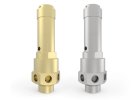
These safety valves usually have an angle design (inlet from below, outlet at the side), which makes it easier to discharge the medium into the space or a pipe. The valve body is usually made of durable brass or bronze, materials proven for their strength and resistance to corrosion and high temperatures. The internal mechanical parts (such as the disc and spring) are of quality steel or stainless steel, so that the valve works reliably in the long term and the spring does not lose its characteristic.
The valve seal is chosen according to the type of medium and the temperature. In practice the following are used, for example:
- Viton (FKM/FPM) – a fluoroelastomer seal suitable for compressed air, oils and generally for higher temperatures (it commonly withstands about 180 °C).
- EPDM – a rubber seal ideal for water and steam up to about 150 °C, resistant to hot water and free of silicones (unsuitable for petroleum substances).
- PTFE (Teflon) – a plastic seal with excellent chemical and thermal resistance, used for very hot steam up to 185 °C or for more aggressive media.
With the right choice of sealing material the valve seals reliably at rest and at the same time opens quickly under overpressure. The working pressure ranges of these valves usually start at very low values around 0.2 bar and reach higher figures of the order of 16–20 bar (depending on the model and size). That covers most ordinary situations, from low-pressure systems to high-pressure compressors or boilers. The operating temperatures of the valves generally range from -10 °C (minimum ambient or medium temperature) to roughly +185 °C (according to the seal used). The valve therefore copes with a freezing environment and hot steam from the system without difficulty.
Use in practice – versatile application
The advantage of certified TÜV-SV749D/G safety valves is their genuinely wide field of use. One valve type serves across various media and sectors, which simplifies both selection and maintenance. Typical areas and systems where these safety valves find use:
- Industrial pressure vessels and compressor stations – protection against overpressure of compressed air or technical gases in receivers, compressors and pipe systems.
- Steam boilers and heating systems – protecting boilers, heat exchangers and pipes from a dangerous rise in steam pressure (in steam generators or central heating, for example).
- Hot water and solar circuits – protecting cylinders, closed hot water circuits or solar systems with heat transfer fluid (water/glycol) against exceeding the set pressure.
- Hydraulic and oil systems – safety protection of hydraulic units, oil tanks and lubrication systems where high pressure could burst a pipe or joint.
As you can see, one quality safety valve with this certification covers compressors, boiler rooms and solar panels – sectors that would otherwise call for various specialised valves. That means simpler selection of spare parts and less bother with compatibility.
Recommendations for selection and installation
When choosing a safety valve, always take the parameters of your system into account. The required opening (set) pressure is crucial – it should correspond to the maximum allowable pressure of the equipment you want to protect (usually somewhat lower than the design limit of the vessel or boiler). On our website we state each valve's pressure range and the media it is certified for. Thanks to the D/G certification you need not worry whether valves in this category will handle gas or liquid – they handle both. Even so, take care over the seal material with regard to the medium: for pure steam or water prefer the EPDM or PTFE variant, while for oil systems and air Viton is better. The connection size (thread) of the valve also matters – it must match the port on your pressure vessel or pipe. Larger valves (with a higher DN) also have greater flow capacity, which is essential in large systems where a large quantity of medium must be discharged quickly when overpressure is released.
Installation of a safety valve should be carried out with safety and function in mind. The valve is usually installed vertically on the upper part of the pressure vessel or pipe – at the place where overpressure will accumulate (on the top cover of a compressor, boiler or receiver, for instance). No shut-off valve or other obstruction that could prevent the overpressure being released may be placed between the safety valve and the protected vessel. Direct the outlet (discharge) from the safety valve into a safe space: for steam and gases usually into the open air out of reach of operators, for liquids into a collecting vessel or drain pipe, so that the escaping medium causes no damage. Every safety valve we supply is set and sealed, so do not carry out any additional adjustment of the opening pressure yourself – interfering with the setting can affect correct function and invalidates the certification. For long-term reliability we recommend inspecting the valve visually from time to time and, during regular inspections of pressure equipment, verifying that no medium has leaked and that there is no dirt in the valve seat.
Tip: If you are unsure which type of safety valve to choose, visit our advice centre and the article How to choose the right safety valve. It contains a detailed guide that will help you weigh all the important factors. You are of course also welcome to contact us for individual advice.
Other available safety valve certifications
Besides versatile valves certified to 749D/G we also offer safety valves designed for specific purposes. For applications purely with liquids (heating and water systems, for example) our range includes valves certified to TÜV-SV581-F – the „F“ denotes approval for liquid media. If you need a safety valve of stainless steel or for very high pressures in the gaseous phase, a valve certified to TÜV-SV1090-S/G might suit (intended for vapours and gases in specific industrial applications). You will find the complete range of all types and designs in the main safety valve category, where you can choose a valve to suit your needs.
-
 Safety valves 06C02; standard for compressed air
-
Relief valves 6217; full lift for compressed air
-
Safety valves 6370; for water, oil and diesel
-
Relief valves 6380-95; for saturated steam and nitrogen
-
Relief valves 6383-6012; in stainless steel with thread
-
Relief valves 6121; flanged cast iron
-
Safety valves 6127; flanged stainless steel
.jpg)