
Oil-free screw compressors SCR-G/GV
 Class 0 · ISO 8573-1
A screw compressor with no oil in it. Here the air is compressed by two screw blocks in two stages — the first to roughly 2 bar, then an intercooler, then the second stage up to the outlet pressure. The rotors are not lubricated: they run dry, with a coating based on molybdenum disulphide and with their space separated from the gearbox by a double seal. So no oil ends up in the outlet air, not even the kind a filter would have to clean up elsewhere. The SCR-G series covers 37 to 280 kW and is certified to class 0 under ISO 8573-1. Altogether that is 32 machines, each in three pressure versions.
How to read the designation
The designation is not one name but four independent choices written one after another. The first number is the motor power in kilowatts, the number after the slash is the outlet pressure and the letters at the end say how the machine is cooled and whether it can vary its speed. Answer four questions in this order and you are left with a single machine and its order code.
1 · How much air do you need?
This picks the number in the designation. Add up the consumption of everything that can run at once and add a reserve. The series runs from 276 Nm³/h on the smallest machine to 2,820 Nm³/h on the largest. The FAD output is measured to ISO 1217, so it can be compared with figures from other manufacturers.
2 · Do you have cooling water?
This decides the W at the start of the suffix. Without a W the machine is air-cooled — it needs nothing extra, but it heats the compressor room and calls for ventilation. With a W the heat goes into water through an exchanger: the machine is quieter, two to five hundred kilos lighter and does not load the room, but you have to have a cooling water circuit. Above 160 kW water cooling is the only option.
3 · What pressure do you really need?
This picks the number after the slash. Every machine comes in three versions — 7, 8 or 10 bar — and it is a choice made when ordering, not a switch on the machine. A higher pressure is always paid for in air: the same machine gives a fifth to a quarter less air at ten bar than at seven, and it draws the same power doing it. Seven bar is enough for most compressed air systems; choose ten only when some end use demands it.
4 · Does your demand fluctuate during the day?
This decides the V at the end. Without a V the machine runs at fixed speed and switches to idle running at lower demand — the motor keeps turning the block, but no air is produced. With a V the variable-speed drive matches the speed to the current demand and idle running largely disappears. The more the demand fluctuates, the sooner the drive pays for itself.
Four combinations, one series
Together that gives four suffixes, and each of them comes in three pressures. The designation then reads like this: SCR-110/8GV is 110 kW, 8 bar, air cooling, variable-speed drive. The machine itself is always the same — what differs is the cooling and the control, not the compression technology.
| Four combinations, one series | ||||
|---|---|---|---|---|
| Suffix | Cooling | Control | Range | When to choose it |
| G | air | fixed speed | 55–160 kW | The simplest version. It needs neither water nor a drive, but it heats the room and runs idle at low demand. |
| WG | water | fixed speed | 55–280 kW | The heat goes into water, the machine is lighter and quieter. The only route above 160 kW. |
| GV | air | variable-speed drive | 37–160 kW | The speed follows the demand. The two smallest machines also have an IE4 class permanent-magnet motor, which is why the manufacturer marks them GPM — SCR 37 GPM and SCR 45 GPM. |
| WGV | water | variable-speed drive | 55–280 kW | Both together — for large plants with fluctuating demand and cooling water available. |
Technical data of the SCR-G series
| Oil-free screw compressors SCR-G — all 32 machines | |||||||||
|---|---|---|---|---|---|---|---|---|---|
| Machine model | Motor power | Max. output l/min | 7 bar | 8 bar | 10 bar | Outlet | Dimensions L × W × H (mm) | Weight | Noise dB(A) |
| SCR G — air-cooled, fixed speed | |||||||||
| SCR-55 G | 55 kW | 9,200 | 552 | 540 | 462 | DN 50 | 2,380 × 1,580 × 1,880 | 2,750 kg | 77 ± 3 |
| SCR-75 G | 75 kW | 12,200 | 732 | 720 | 642 | DN 50 | 2,380 × 1,580 × 1,880 | 2,800 kg | 79 ± 3 |
| SCR-90 G | 90 kW | 16,000 | 960 | 816 | 780 | DN 65 | 2,880 × 1,960 × 2,110 | 3,400 kg | 80 ± 3 |
| SCR-110 G | 110 kW | 19,500 | 1,170 | 1,092 | 990 | DN 65 | 2,880 × 1,960 × 2,110 | 3,500 kg | 80 ± 3 |
| SCR-132 G | 132 kW | 23,000 | 1,380 | 1,350 | 1,170 | DN 65 | 2,880 × 1,960 × 2,110 | 3,800 kg | 80 ± 3 |
| SCR-160 G | 160 kW | 25,800 | 1,548 | 1,530 | 1,320 | DN 65 | 2,880 × 1,960 × 2,110 | 4,000 kg | 80 ± 3 |
| SCR WG — water-cooled, fixed speed | |||||||||
| SCR-55 WG | 55 kW | 9,200 | 552 | 540 | 462 | DN 50 | 2,380 × 1,580 × 1,880 | 2,280 kg | 77 ± 3 |
| SCR-75 WG | 75 kW | 12,200 | 732 | 720 | 642 | DN 50 | 2,380 × 1,580 × 1,880 | 2,380 kg | 77 ± 3 |
| SCR-90 WG | 90 kW | 16,000 | 960 | 816 | 780 | DN 65 | 2,880 × 1,960 × 2,110 | 3,300 kg | 79 ± 3 |
| SCR-110 WG | 110 kW | 19,500 | 1,170 | 1,092 | 990 | DN 65 | 2,880 × 1,960 × 2,110 | 3,400 kg | 79 ± 3 |
| SCR-132 WG | 132 kW | 23,000 | 1,380 | 1,350 | 1,170 | DN 65 | 2,880 × 1,960 × 2,110 | 3,800 kg | 79 ± 3 |
| SCR-160 WG | 160 kW | 25,800 | 1,548 | 1,530 | 1,320 | DN 65 | 2,880 × 1,960 × 2,110 | 4,000 kg | 79 ± 3 |
| SCR-220 WG | 220 kW | 37,800 | 2,268 | 2,250 | 2,040 | DN 100 | 3,350 × 2,280 × 2,080 | 5,000 kg | 82 ± 3 |
| SCR-250 WG | 250 kW | 45,000 | 2,700 | 2,520 | 2,280 | DN 100 | 3,350 × 2,280 × 2,080 | 5,200 kg | 82 ± 3 |
| SCR-280 WG | 280 kW | 47,000 | 2,820 | 2,790 | 2,460 | DN 100 | 3,350 × 2,280 × 2,080 | 5,500 kg | 82 ± 3 |
| SCR GV — air-cooled, with a variable-speed drive | |||||||||
| SCR-37 GV | 37 kW | 5,700 | 342 | 330 | 276 | DN 50 | 2,468 × 1,250 × 1,980 | 2,400 kg | 76 ± 3 |
| SCR-45 GV | 45 kW | 6,800 | 408 | 396 | 324 | DN 50 | 2,468 × 1,250 × 1,980 | 2,500 kg | 77 ± 3 |
| SCR-55 GV | 55 kW | 9,200 | 552 | 540 | 462 | DN 50 | 2,380 × 1,580 × 1,880 | 2,850 kg | 77 ± 3 |
| SCR-75 GV | 75 kW | 12,200 | 732 | 720 | 642 | DN 50 | 2,380 × 1,580 × 1,880 | 2,900 kg | 77 ± 3 |
| SCR-90 GV | 90 kW | 16,000 | 960 | 816 | 780 | DN 65 | 2,880 × 1,960 × 2,110 | 3,700 kg | 80 ± 3 |
| SCR-110 GV | 110 kW | 19,500 | 1,170 | 1,092 | 990 | DN 65 | 2,880 × 1,960 × 2,110 | 3,800 kg | 80 ± 3 |
| SCR-132 GV | 132 kW | 23,000 | 1,380 | 1,350 | 1,170 | DN 65 | 2,880 × 1,960 × 2,110 | 4,100 kg | 80 ± 3 |
| SCR-160 GV | 160 kW | 25,800 | 1,548 | 1,530 | 1,320 | DN 65 | 2,880 × 1,960 × 2,110 | 4,300 kg | 80 ± 3 |
| SCR WGV — water-cooled, with a variable-speed drive | |||||||||
| SCR-55 WGV | 55 kW | 9,200 | 552 | 540 | 462 | DN 50 | 2,380 × 1,580 × 1,880 | 2,380 kg | 77 ± 3 |
| SCR-75 WGV | 75 kW | 12,200 | 732 | 720 | 642 | DN 50 | 2,380 × 1,580 × 1,880 | 2,480 kg | 77 ± 3 |
| SCR-90 WGV | 90 kW | 16,000 | 960 | 816 | 780 | DN 65 | 2,880 × 1,960 × 2,110 | 3,500 kg | 79 ± 3 |
| SCR-110 WGV | 110 kW | 19,500 | 1,170 | 1,092 | 990 | DN 65 | 2,880 × 1,960 × 2,110 | 3,600 kg | 79 ± 3 |
| SCR-132 WGV | 132 kW | 23,000 | 1,380 | 1,350 | 1,170 | DN 65 | 2,880 × 1,960 × 2,110 | 4,100 kg | 79 ± 3 |
| SCR-160 WGV | 160 kW | 25,800 | 1,548 | 1,530 | 1,320 | DN 65 | 2,880 × 1,960 × 2,110 | 4,300 kg | 79 ± 3 |
| SCR-220 WGV | 220 kW | 37,800 | 2,268 | 2,250 | 2,040 | DN 100 | 3,350 × 2,280 × 2,080 | 5,200 kg | 82 ± 3 |
| SCR-250 WGV | 250 kW | 45,000 | 2,700 | 2,520 | 2,280 | DN 100 | 3,350 × 2,280 × 2,080 | 5,500 kg | 82 ± 3 |
| SCR-280 WGV | 280 kW | 47,000 | 2,820 | 2,790 | 2,460 | DN 100 | 3,350 × 2,280 × 2,080 | 5,800 kg | 82 ± 3 |
The figures in the pressure columns are the FAD output in Nm³/h. Each machine is ordered in one of three pressures and the pressure is chosen on its own page — the order number then looks like SCR-110/8GV, that is 110 kW at 8 bar.
The FAD output is measured to ISO 1217 and is given for each of the three pressures in which the machine is supplied; figures at other frequencies are available from the manufacturer in technical data sheets on request. The noise level is given at a distance of 1 m from the machine with a tolerance of ± 3 dB(A). The air purity class is defined by ISO 8573-1.
#showmore#
What sets the series apart
Two stages, not one
The first stage compresses the air to roughly 2 bar, an intercooler cools it down and the second stage pushes it up to the outlet pressure. Without intercooling the temperature in the block would run away — even as it is, it reaches almost 200 °C there.
Rotors without lubrication
The first stage is carbon steel, the second stainless, both with an MoS₂ coating. The rotor space is separated from the gearbox by a labyrinth seal and a hermetic stainless one.
Three coolers
A gearbox oil cooler, an intercooler between the stages and an aftercooler at the outlet. The air leaves roughly fifteen degrees above ambient temperature.
SKF bearings
Radial and axial, so that the rotors never touch at extreme speeds. Vibration diagnostics watching the bearing condition with sensors is available as an option.
SCR9000 control
The same unit as on the other SCR series — a seven-inch touch display, energy consumption metering, four pressure bands and network control of up to sixteen compressors over Modbus RS485.
How the machine is built
One block, two stages
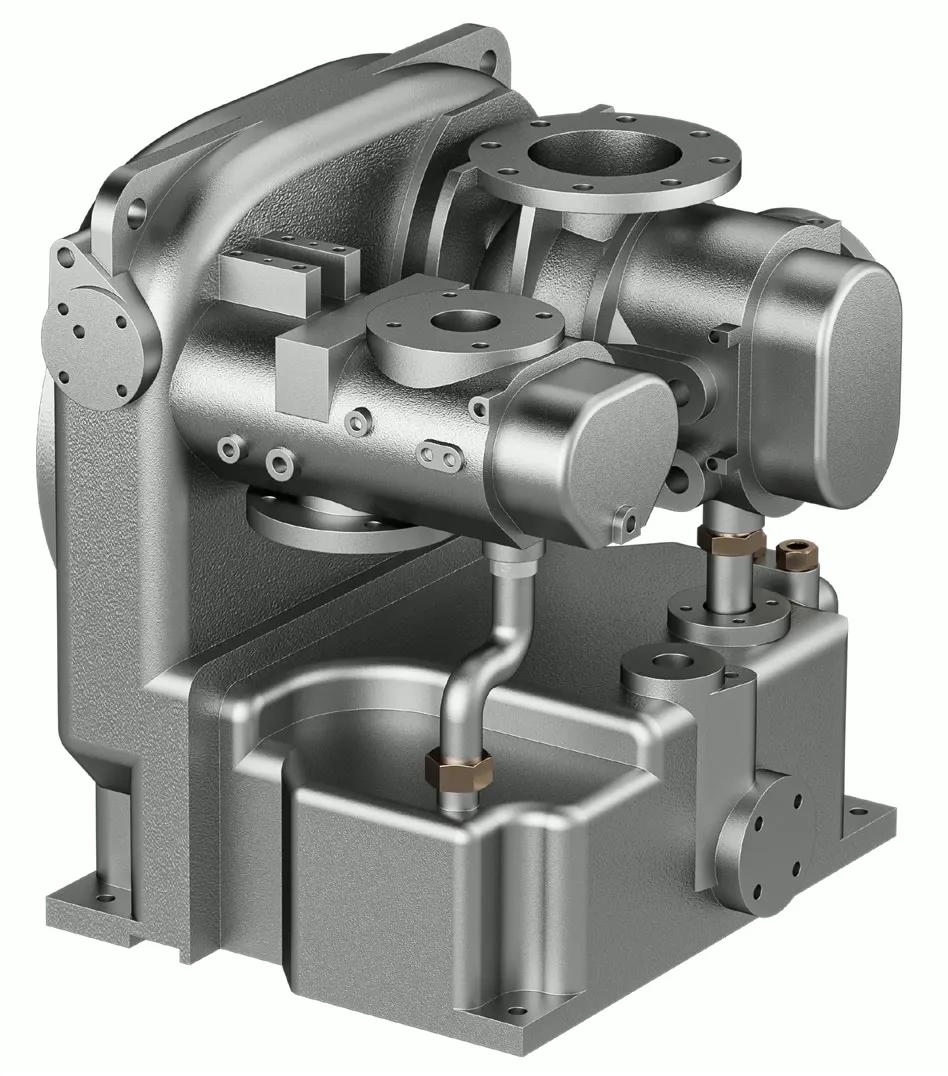
Both stage sections sit on a shared gearbox — the photo shows that this is a single casting, not two separate compressors one after another. In operation the rotors touch neither each other nor the housing; the gap is held by timing gears and SKF bearings, radial and axial. Because there is no oil, there is nothing that could get from the block into the air.
Rotors that are never lubricated
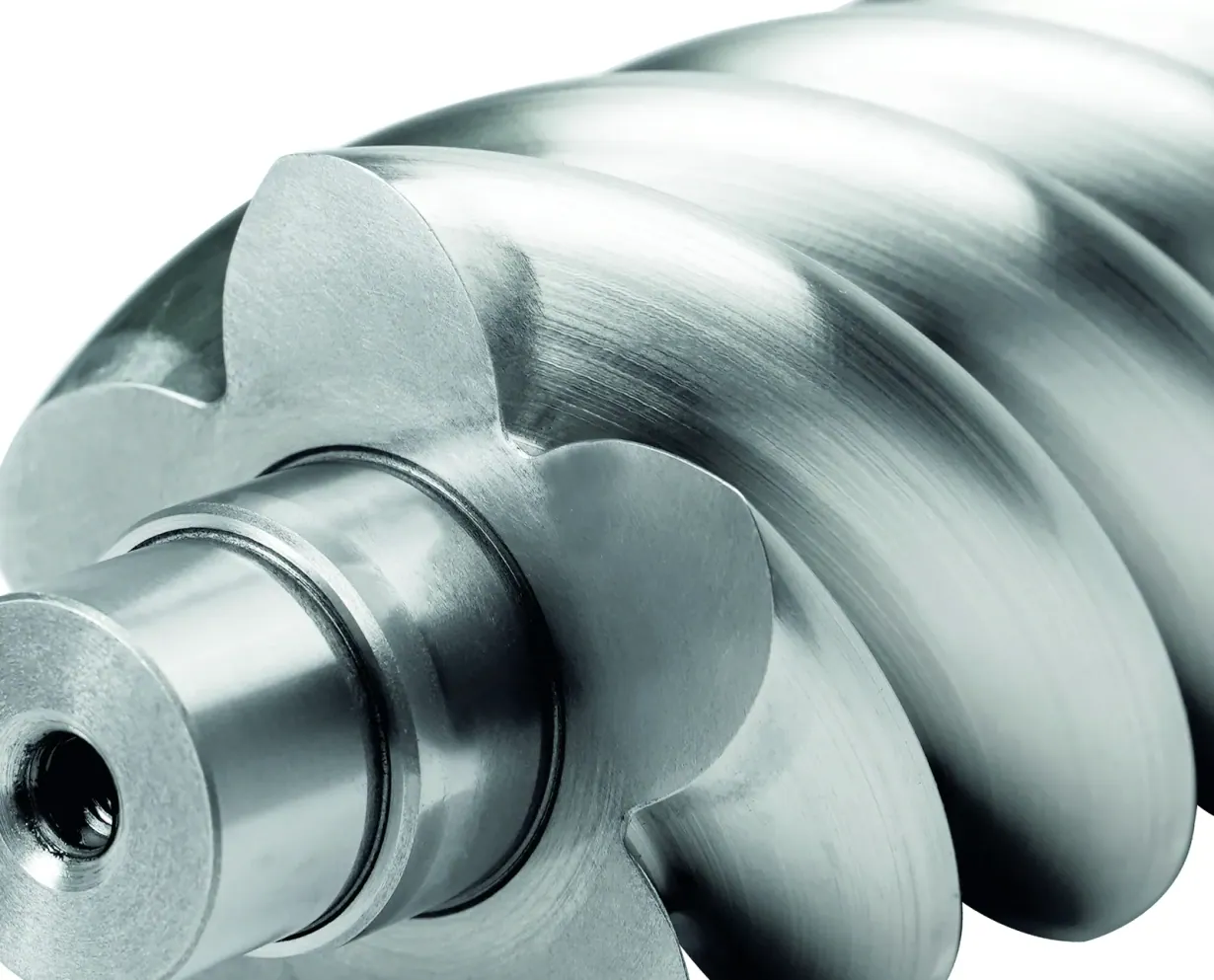
The first-stage rotors are made of high-grade carbon steel, the second-stage ones of stainless steel. Both the rotors and the inner wall of the housing are coated with a molybdenum disulphide based layer. It reduces friction where oil must not be used, and according to the manufacturer it markedly extends the time between overhauls — because on oil-free machines replacing the whole block is the single most expensive item.
Where the heat goes
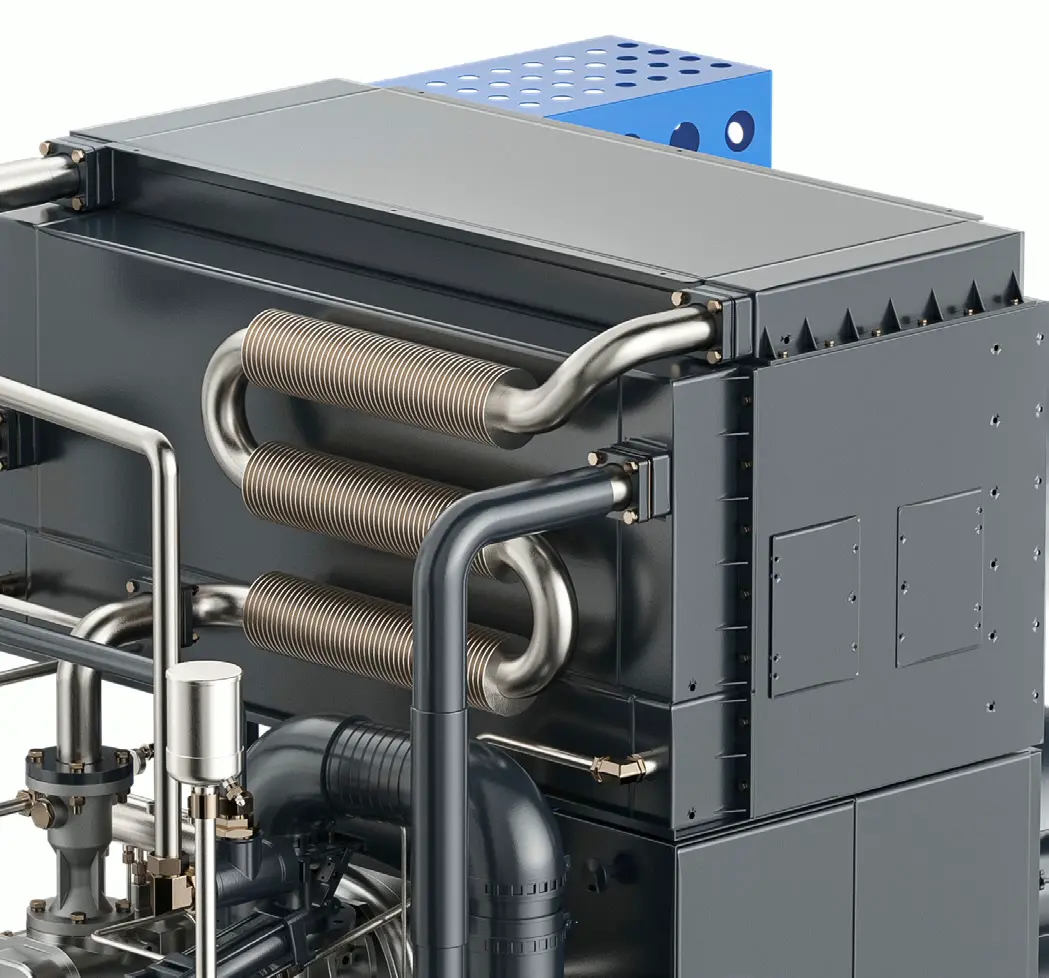
Compressing without oil produces heat that has nothing to carry it away — the block reaches around 200 °C. That is why the machine has three coolers: a gearbox oil cooler, an intercooler between the stages (from 160–180 °C down to 50–60 °C) and an aftercooler at the outlet. From the last one the air leaves roughly fifteen degrees above ambient temperature.
When a drive pays off
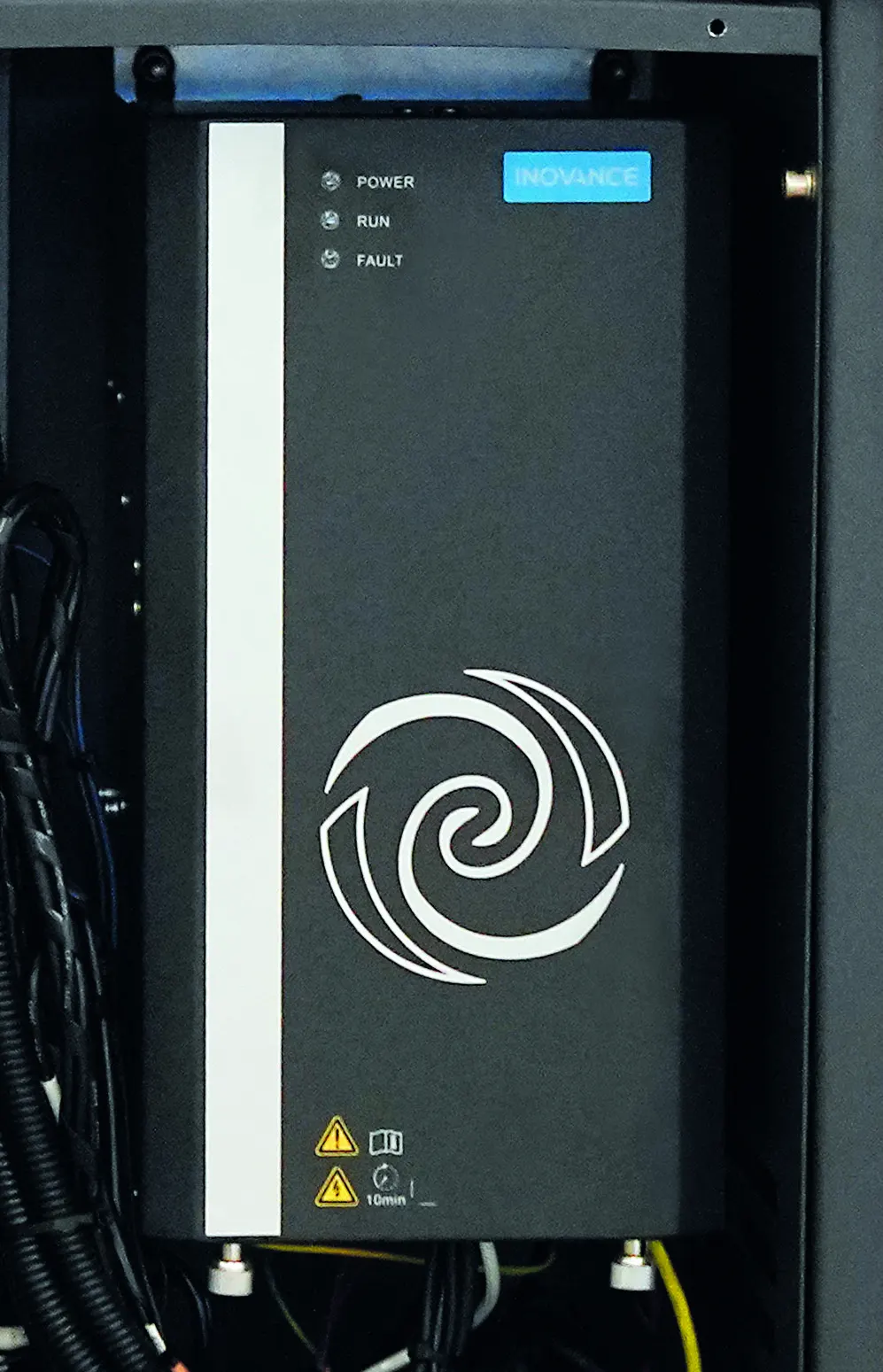
A fixed-speed machine does not switch off once it reaches pressure — it goes into idle running, where the motor still turns the block but no air is produced. With fluctuating demand that is often tens of percent of the total consumption. The GV versions have an INOVANCE drive with vector control that holds high torque from 0.1 Hz; ordinary drives either do not work below 5 Hz or are inefficient in that band. The smallest machine with a drive can go down to 150 Nm³/h — that is its lower control limit, not its rated output.
The SCR9000 controller
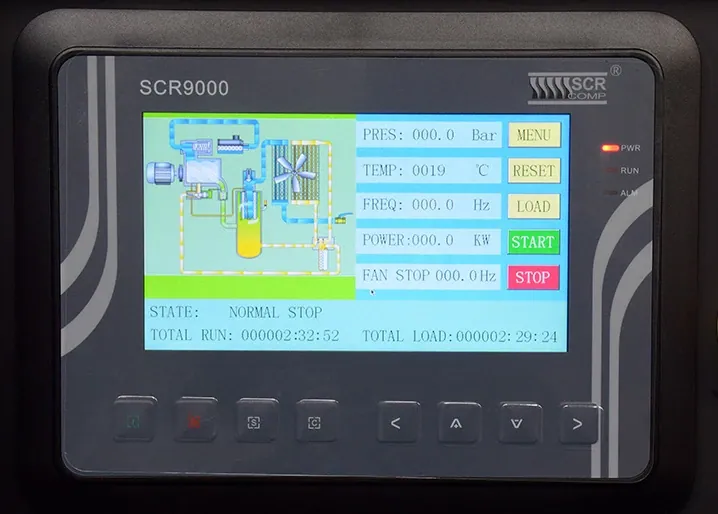
A colour seven-inch touch display or eight navigation buttons. It offers energy consumption metering, four pressure bands, weekly run scheduling and an automatic restart after a power failure. Over Modbus RS485 it can be built into network control of up to sixteen compressors — with machines this size such sets are built routinely.
How the machine is put together
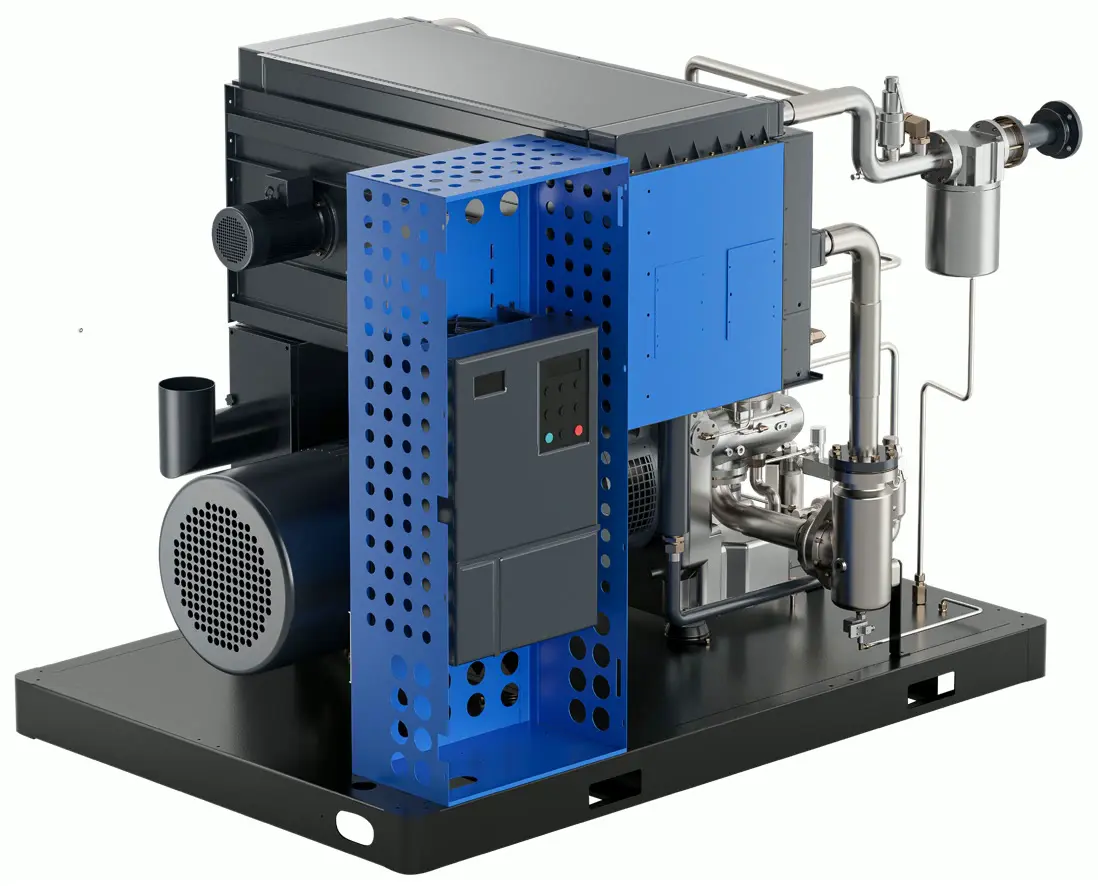
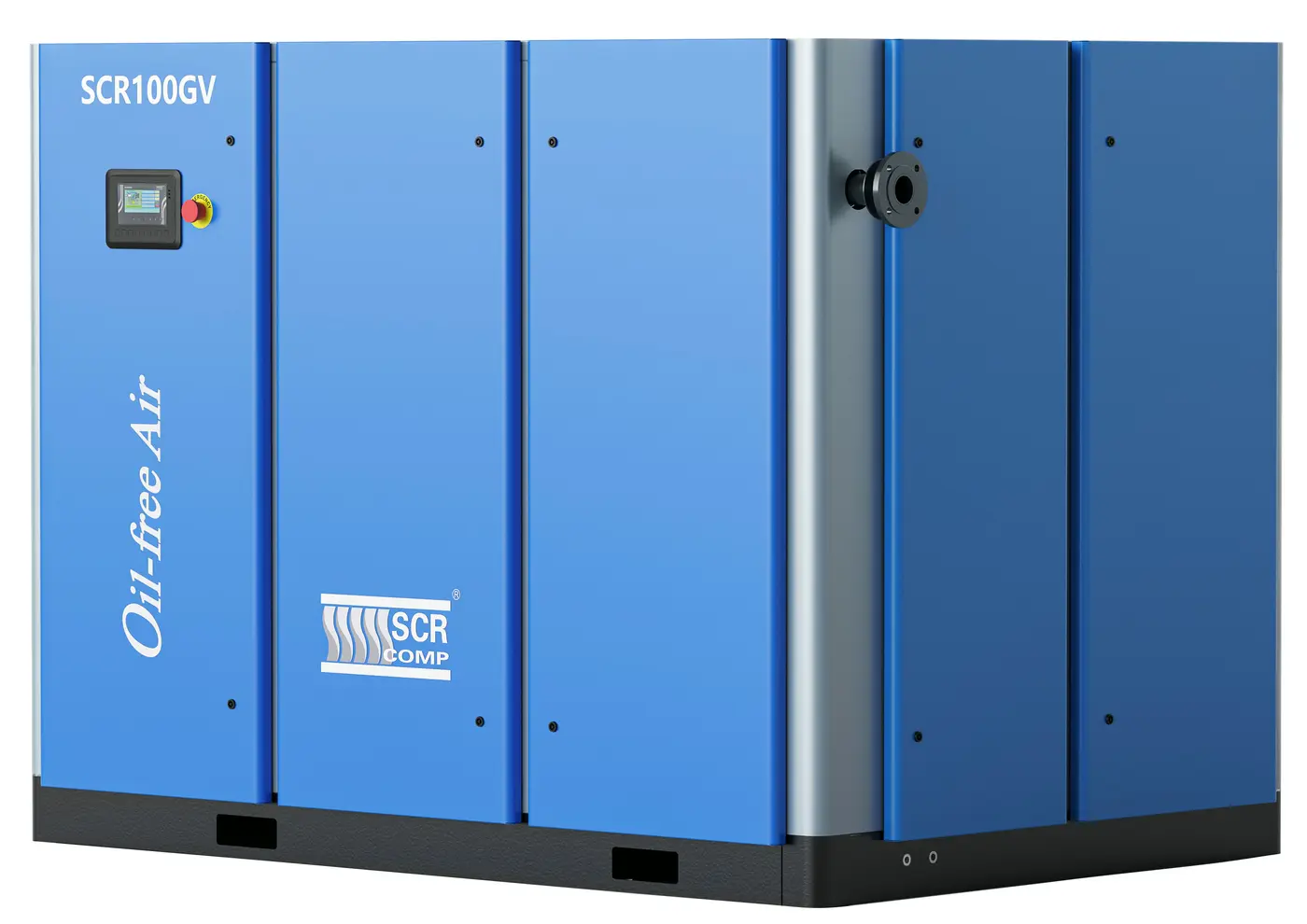
Intake filters, the screw block with its gearbox, a flexible coupling, the electric motor, the inlet valve, the oil cooler, the intercooler, the aftercooler, the fans and, on the GV versions, the variable-speed drive — the blue cabinet on the left of the photo. The layout is laid out so that the inside cools well and so that every serviced part stays accessible.
What can be ordered with the machine
Every machine in the series can be supplied with extra equipment:
- Cyclone separator — Integrated into the machine, it removes water right at the outlet.
- Heat recovery — A water-to-oil exchanger; the heat from the compressor warms service water.
- HOC preparation — For connection to a loss-free heat-regenerated dryer.
- PM motor — A permanent-magnet motor, IE4 efficiency.
- Vibration diagnostics — Sensors watching the condition of the bearings.
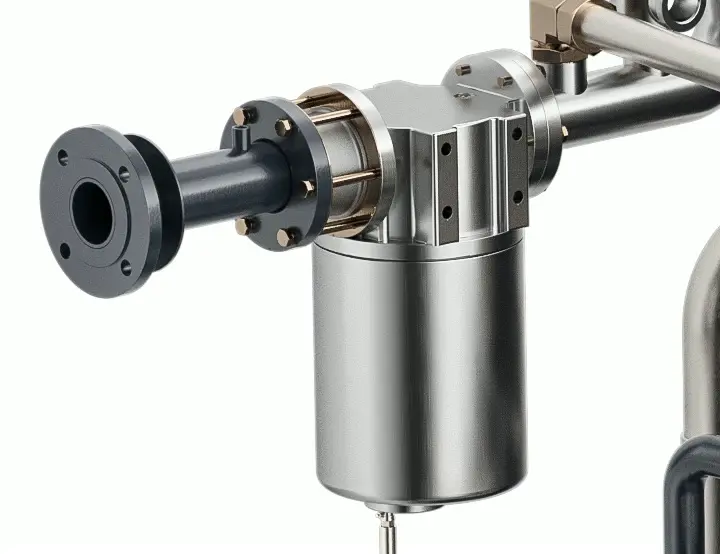
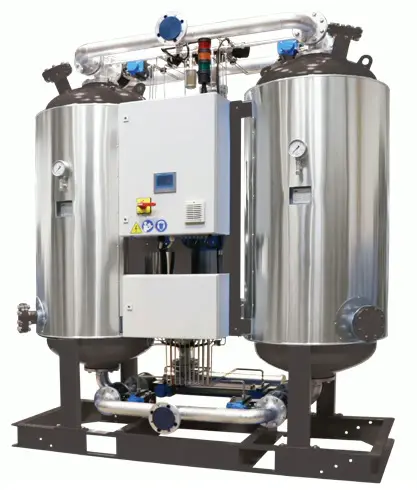
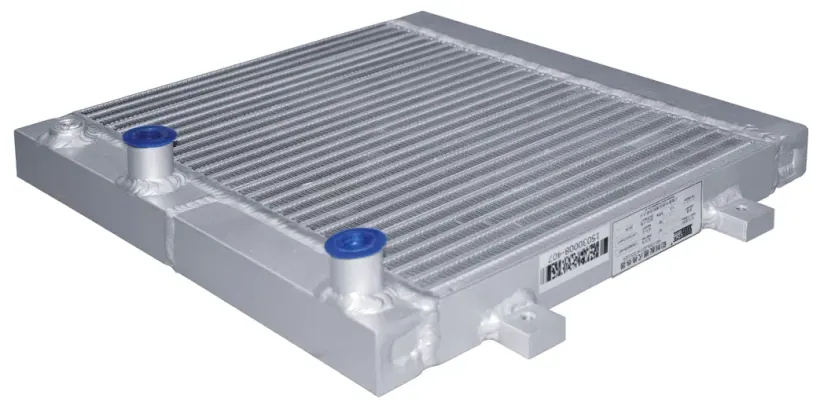
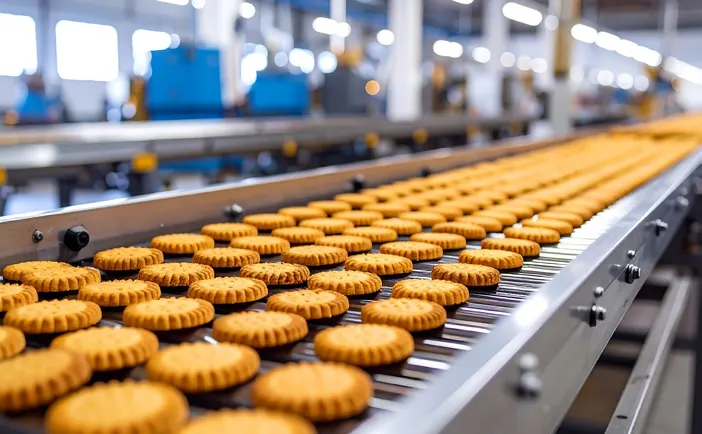
Where oil-free air is used
Fields where a trace of oil will not pass
An oil-free machine is not bought for comfort, but because nothing else will do. The manufacturer names six fields — in every one of them the air touches the product, the packaging or a person.




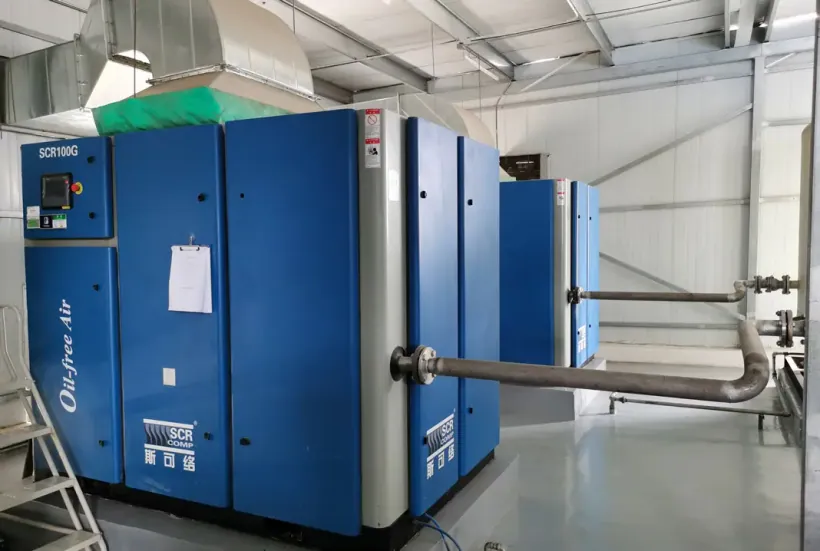
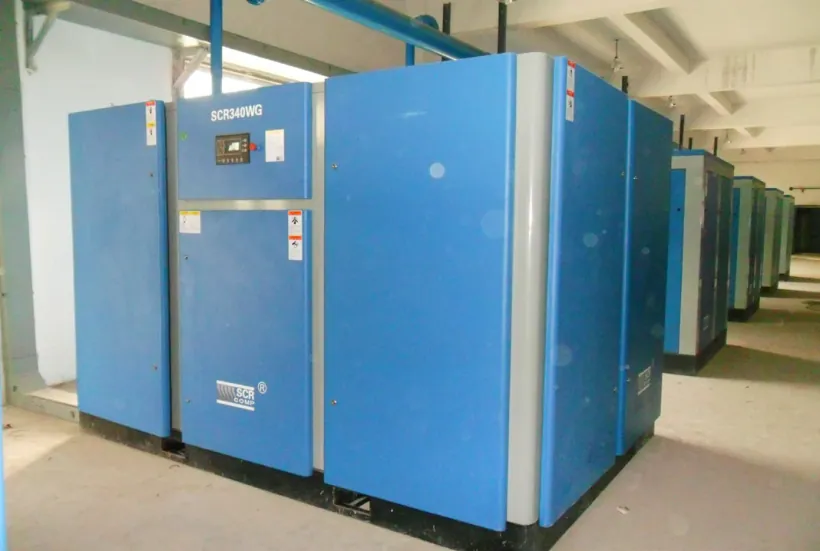
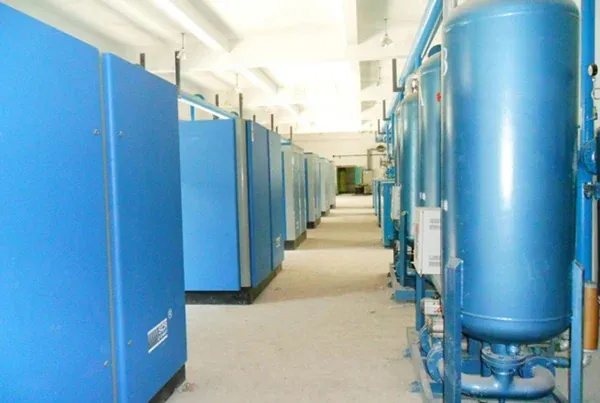
How the machines look in operation
An air-cooled machine needs room around it and ventilation, a water-cooled one a connection to the circuit. At this size there are usually several machines in the compressor room and one controller runs them all.
When this series is not the right one
SCR-G is built for purity at high outputs. Below 37 kW, or wherever a trace of oil does no harm, something else is a better fit.
- SCR-XA scroll compressors — Oil-free class 0 air from 2.2 to 29.6 kW and from 55 dB(A)
- SCR-EPM2 screw compressors — The same 55–160 kW outputs, but oil-lubricated and cheaper
- The whole SCR programme — A guide to all nine series by output and technology
- Compressed air dryers — Class 0 deals with oil, not moisture — that has to be dried out
Ventilek advises
With a machine of a hundred and fifty kilowatts you are not buying a compressor, you are buying the next ten years of electricity. Before you start choosing between G and GV, get hold of a week-long record of your air consumption. If the demand jumps around, the drive pays for itself and the difference in purchase price is small change next to that. If a line runs flat out for eight hours and then stands still, a well-set cascade of two machines saves more than one big machine with a drive.
Frequently asked questions
- What does “oil-free” mean on a screw compressor?
- That there is no lubricant at all in the space where the air is compressed. On lubricated screw machines the oil is injected into the block and then separated out — some of it always gets through. Here the rotors are not lubricated at all: the gap is held by timing gears and the gearbox oil is kept apart by a double seal. The result is class 0 under ISO 8573-1.
- Why is the air compressed in two stages?
- Without oil there is nothing to carry the heat away, and single-stage compression to 8 bar would drive the temperature far too high. Splitting it into two stages with an intercooler keeps the temperature within limits and lowers the energy consumption at the same time.
- Air, or water?
- An air-cooled machine needs nothing extra, but it releases its heat into the compressor room — you have to get it out with ventilation. A water-cooled one is quieter, lighter and does not heat the room, but it needs a cooling water circuit. Above 160 kW we offer water cooling only.
- When does a variable-speed drive pay off?
- When the demand fluctuates. A fixed-speed machine runs idle at low consumption and draws energy while doing so; the share of idle running grows the less air you take. With steady demand close to the rated output a drive makes no sense.
- How loud are these machines?
- From 76 to 82 dB(A) at a distance of one metre. This is industrial machinery — it belongs in a separate compressor room, not next to a workstation. Water-cooled versions tend to be one or two decibels quieter, because they have no large fans.
- Can several machines be combined?
- Yes. The SCR9000 controller can run a network of up to sixteen compressors over Modbus RS485. At this size a set of several machines is more common than one giant one.


