

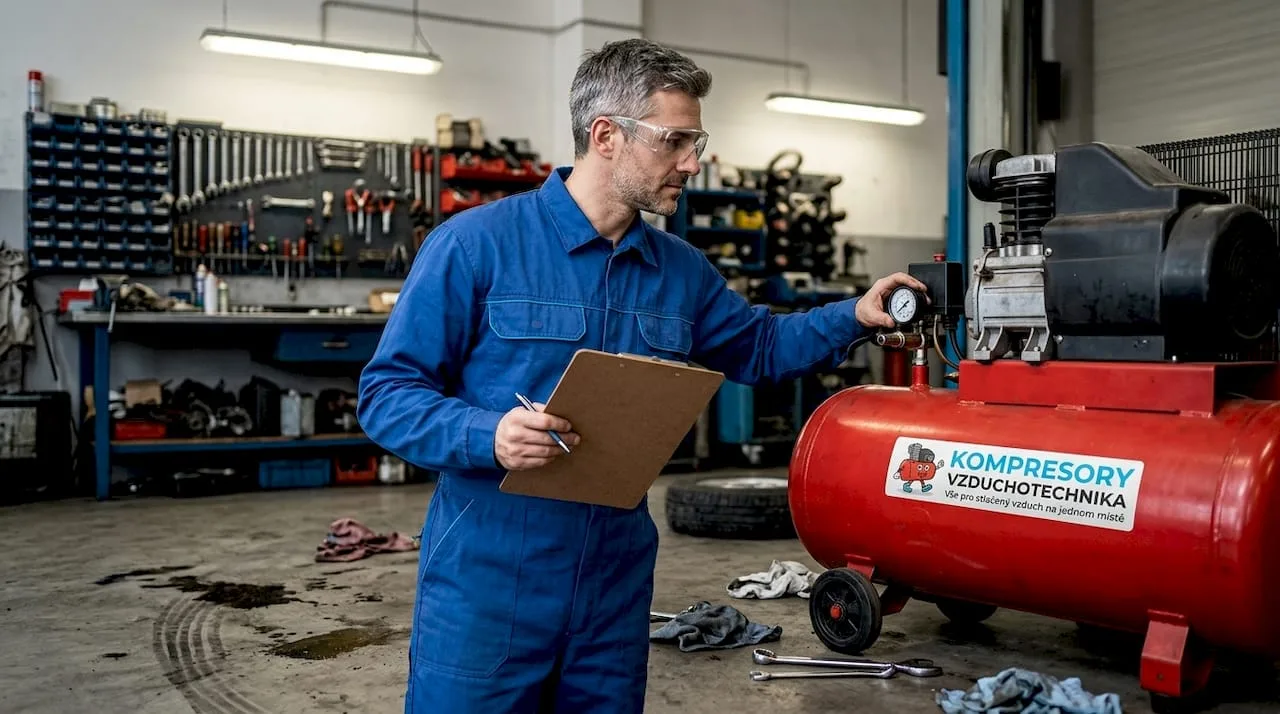
Working with a compressor in the automotive industry brings a number of challenges which can endanger the safety of technicians and the quality of the resulting work. Incorrect operation of pressure equipment leads to serious injuries, downtime and financial losses. Automotive professionals need a clear, structured overview of the safety rules which will guarantee the protection of health and optimal operating conditions. This article provides a complete checklist of safety measures, from the qualification of the operator through pre-operation checks to maintenance, specifically aimed at the needs of car workshops and service centres.
Key points of safety
| Point | Details |
|---|---|
| Qualified operation | Compressors may be operated only by trained workers over 18 years of age with a valid certificate. |
| Pre-operation check | Before every start check the safety valves, the manometers and the tightness of the system. |
| Protective equipment | Always use goggles, hearing protection and gloves when work with pneumatic tools. |
| Pressure limits | Never exceed the maximum permitted pressure of the tools and observe the working cycles. |
| Regular maintenance | Drain the condensate daily and plan the service intervals according to the operating load. |
Criteria for the safe operation of a compressor
The legislation in the Czech Republic clearly stipulates who may operate compressors. Only qualified workers over 18 years of age, medically fit and trained according to NV 192/2022 Coll. and ČSN 69 0012, have the right to work with pressure vessels. This provision protects both the operator and the property from the consequences of unprofessional handling.
Medical fitness is not a formality. Working with compressors requires physical condition, good hearing and sight, because the operator must react to unusual sounds, vibrations or visual indicators of faults. Medical examinations verify that the worker can manage the physical demands and act quickly in crisis situations.
The training covers not only the technical operation, but also the basics of pneumatics, the principles of pressure systems and the safety protocols. Workers learn to recognise warning signals, carry out basic maintenance and react to emergency situations. Without this knowledge there is a risk of misuse of the equipment, for example the use of too high a pressure for cleaning, which can cause serious injuries.
Professional tip: Update the training every two years, even if the legislation does not require it. Compressor technology develops and new safety standards arise continuously. The investment in continuous education reduces the risk of injuries and increases the efficiency of work.
Preparation and checking of the compressor before operation
Professional installation according to ČSN 69 0012 is the basis of safe operation. The standard defines the requirements for placement, ventilation, electrical connection and protective measures. Before the first use a pressure test and a check of all safety elements including the safety valves and manometers must take place.
The checklist before every start includes these steps:
- A visual inspection of the pressure vessel and the pipework for cracks, corrosion or deformation
- Verification of the function of the safety valves by manual opening
- Checking the accuracy of the manometers by comparison with a reference gauge
- A test of the emergency switch and the protective covers of moving parts
- Verification of the tightness of all joints and hoses under pressure using a foam detector
- A check of the oil level in oil-lubricated compressors
- Emptying of the condensate from the previous operation
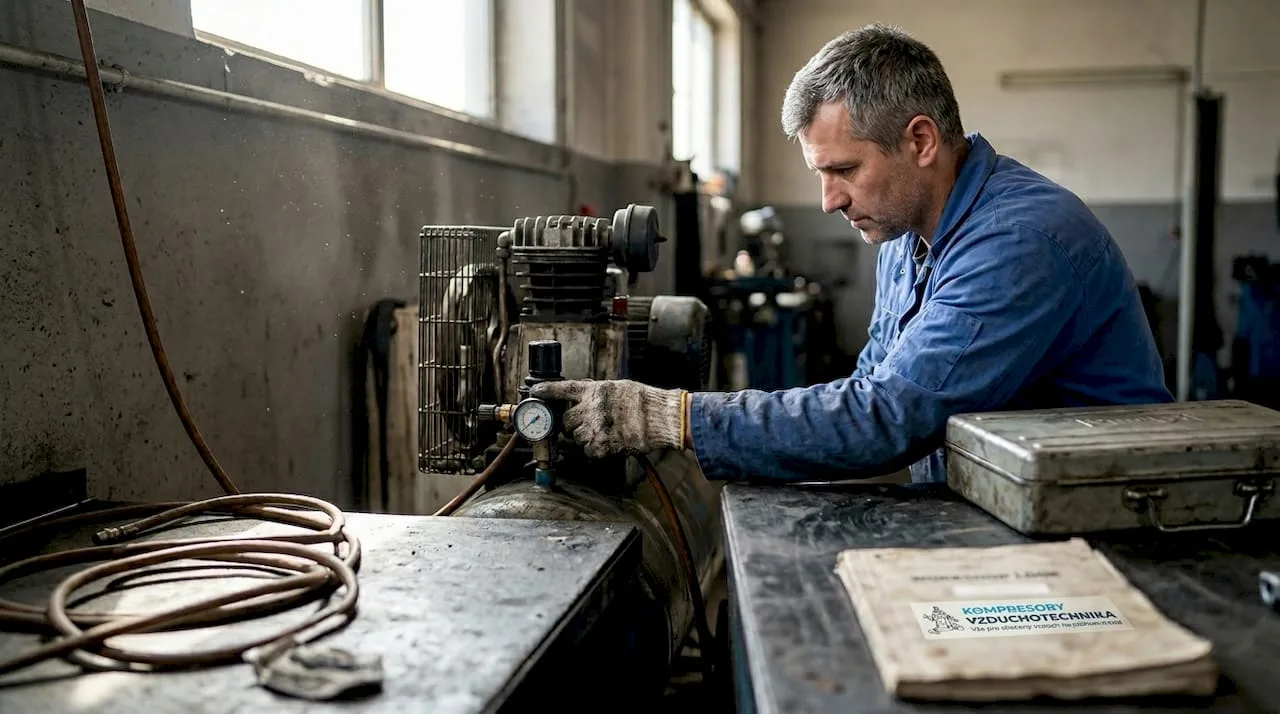
Manometers require special attention. Gauges older than five years or damaged ones must be replaced. An inaccurate manometer can lead to over-pressurising of the system, which endangers the integrity of the pressure vessel and the connected tools. Calibration takes place at least once a year at a certified laboratory. Set the Pressure regulators according to the requirements of the specific pneumatic tools.
Safety measures during operation and maintenance
Personal protective equipment is obligatory for everyone who works with pneumatic systems. Automotive workshops require the protection of eyes, hearing and hands because of specific risks. Flying particles during grinding, compressor noise exceeding 85 dB and the danger of pinching require comprehensive protection.
Protective goggles must meet the EN 166 standard and provide side protection. Ordinary prescription glasses are not enough. Choose hearing protection according to the measured noise level. Gloves combine mechanical resistance with sufficient sensitivity for working with tools.
The maximum permitted pressures protect both the equipment and the operator:
- Spray guns: 2 to 4 bar
- Blow guns: a maximum of 2 bar
- Impact wrenches: 6 to 8 bar
- Grinders and drills: 6 bar
Working cycles extend the life of the compressor and prevent overheating. Piston compressors need a ratio of 3:1, that is three minutes of rest after every minute of running under full load. Screw compressors manage continuous operation, but even they require regular service breaks.
| Operation | Frequency | Reason |
|---|---|---|
| Draining of the condensate | Daily | Prevention of corrosion and contamination |
| Check of the oil level | Weekly | Protection of the moving parts |
| Cleaning of the air filter | Monthly | Optimal performance and efficiency |
| Oil change | 500 operating hours | Lubrication and cooling of the compressor |
Types of compressors and their safety aspects in automotive
Automotive workshops use primarily two types of compressors with different safety profiles. Oil-free compressors supply clean air ideal for painting and spraying, while oil-lubricated ones offer a higher output for demanding applications, but require careful maintenance of the oil circuit.
Oil-free technology eliminates the risk of contamination of the air with oil, which is critical for the quality of the paint. Maintenance is limited to checking the filters and the condensate. Oil-lubricated compressors achieve a higher pressure and a longer service life in intensive operation, but require monitoring of oil leakage, which represents a fire risk on contact with hot surfaces.
| Criterion | Oil-free compressor | Oil-lubricated compressor |
|---|---|---|
| Cleanliness of the air | Excellent, suitable for painting | Requires filtration |
| Fire risk | Minimal | Medium (flammable oil) |
| Maintenance | Simpler | More demanding (oil changes) |
Why choose compressors at Kompresory Vzduchotechnika
Safe and efficient work with compressors begins with the choice of the right equipment from a trustworthy supplier. Kompresory Vzduchotechnika offers a wide range of industrial compressors certified for professional use in the automotive sector.
Our SCR screw compressors provide continuous output for demanding workshops, while piston models cover the needs of smaller service centres. We supply every compressor with complete technical documentation and certificates. Expert advisers will help choose a configuration corresponding to your needs and will ensure professional installation according to the valid standards.
Frequently asked questions
Who may operate compressors in an automotive workshop?
Only workers over 18 years of age with a valid certificate according to NV 192/2022 Coll. and medical fitness confirmed by a doctor. The training must cover the technical operation and the safety protocols.
What protective equipment is obligatory when working with a compressor?
Protective goggles EN 166 with side protection, hearing protection for noise above 85 dB and mechanically resistant gloves. For painting add a respirator and a protective suit.
How often should the safety valves on a compressor be checked?
Test the safety valves by manual opening before every start of the compressor. A certified inspection takes place at least once a year.
Is it safe to repair a compressor under pressure?
Never carry out repairs or maintenance on a compressor under pressure. Before any intervention switch off the equipment, disconnect it from the mains and completely release the pressure from the vessel and the pipework.
How often should the condensate be drained from the compressor?
Drain the condensate daily at the end of the working shift, in intensive operation even several times a day. Automatic condensate drains eliminate the risk of forgetting.