
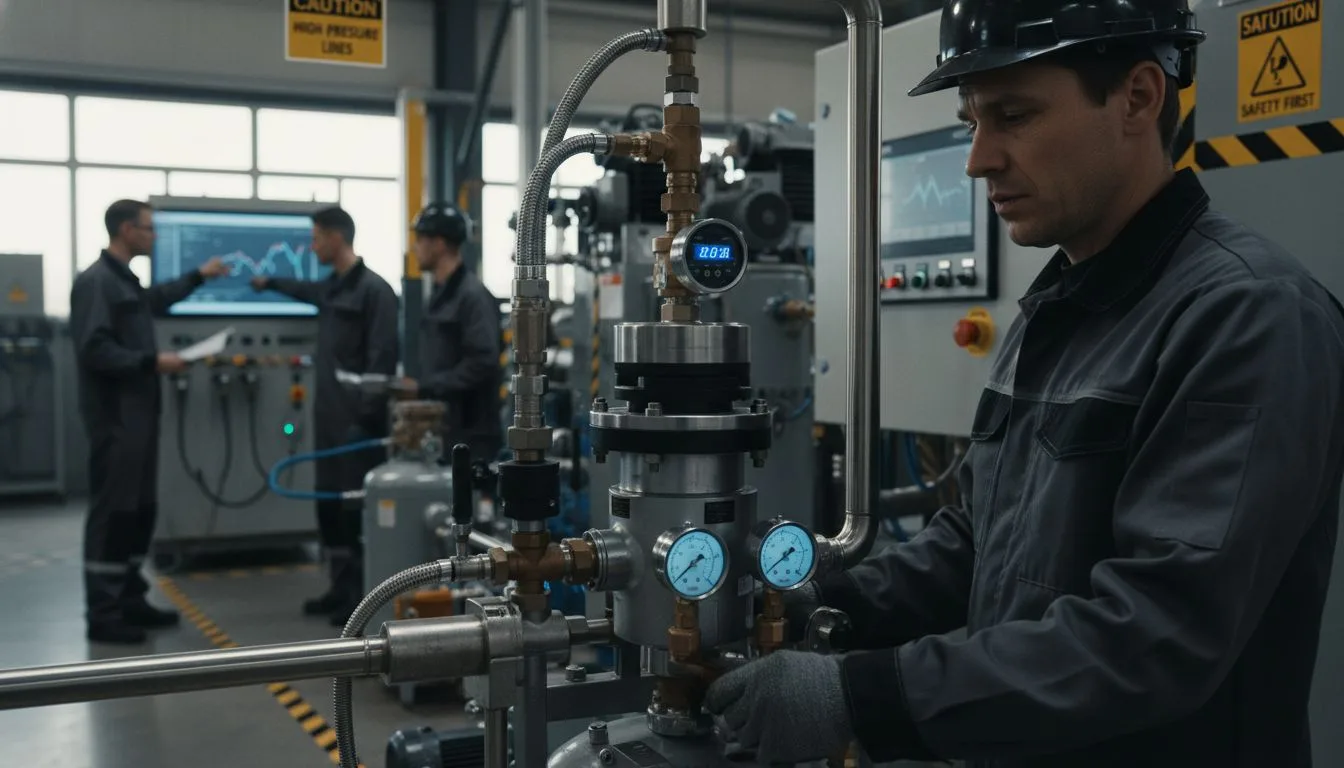
Pressure regulation plays an essential role in industry and in craft workshops alike. Without the correct setting, damage to sensitive equipment or a threat to workplace safety can follow. It is the pressure regulator that keeps the pressure value constant even when the inlet pressure changes. Thanks to this device it is possible to reach up to 40 percent higher operating efficiency and to reduce the risk of errors that often lead to expensive repairs.
Contents
- What a pressure regulator is and what it is for
- Types of pressure regulator and how they differ
- How a pressure regulator works in pneumatics
- The most common uses in industry and workshops
- Common mistakes in use and their consequences
Key takeaways
| Point | Details |
|---|---|
| Main functions of pressure regulators | Pressure regulators provide precise control and stabilisation of the outlet pressure, which protects sensitive components in pneumatic systems. |
| Types of pressure regulator | There are several types of regulator, including mechanical, pneumatic, electrical and hydraulic, each with specific properties for different applications. |
| Use in industry | Pressure regulators play a key role in many sectors, such as engineering, the automotive industry and electronics, where stable pressure regulation is needed. |
| Common mistakes | Incorrect setting, neglected maintenance and the choice of an unsuitable regulator can lead to serious operating problems and damage to the equipment. |
What a pressure regulator is and what it is for
A pressure regulator is a sophisticated device designed for the precise control and stabilisation of pressure in pneumatic systems. According to balistas, its primary purpose is to maintain a constant outlet pressure regardless of fluctuations in the inlet pressure, which ensures stable performance of the equipment.
The key functions of a pressure regulator include:
- Precise control of pressure
- Stabilisation of the outlet pressure
- Protection of sensitive pneumatic systems
- Prevention of excessive stress on components
In technical practice the pressure regulator acts as an important mechanism that automatically adapts the pressure values to the required range. It thus allows professional users, such as technicians in industry or tradespeople, to achieve maximum precision and efficiency when working with pneumatic equipment.
For precise monitoring of pressure it is often accompanied by a pressure gauge, which gives a visual indication of the current pressure in the system. This instrument is indispensable in many industrial applications where constant and controlled pressure is required.
Types of pressure regulator and how they differ
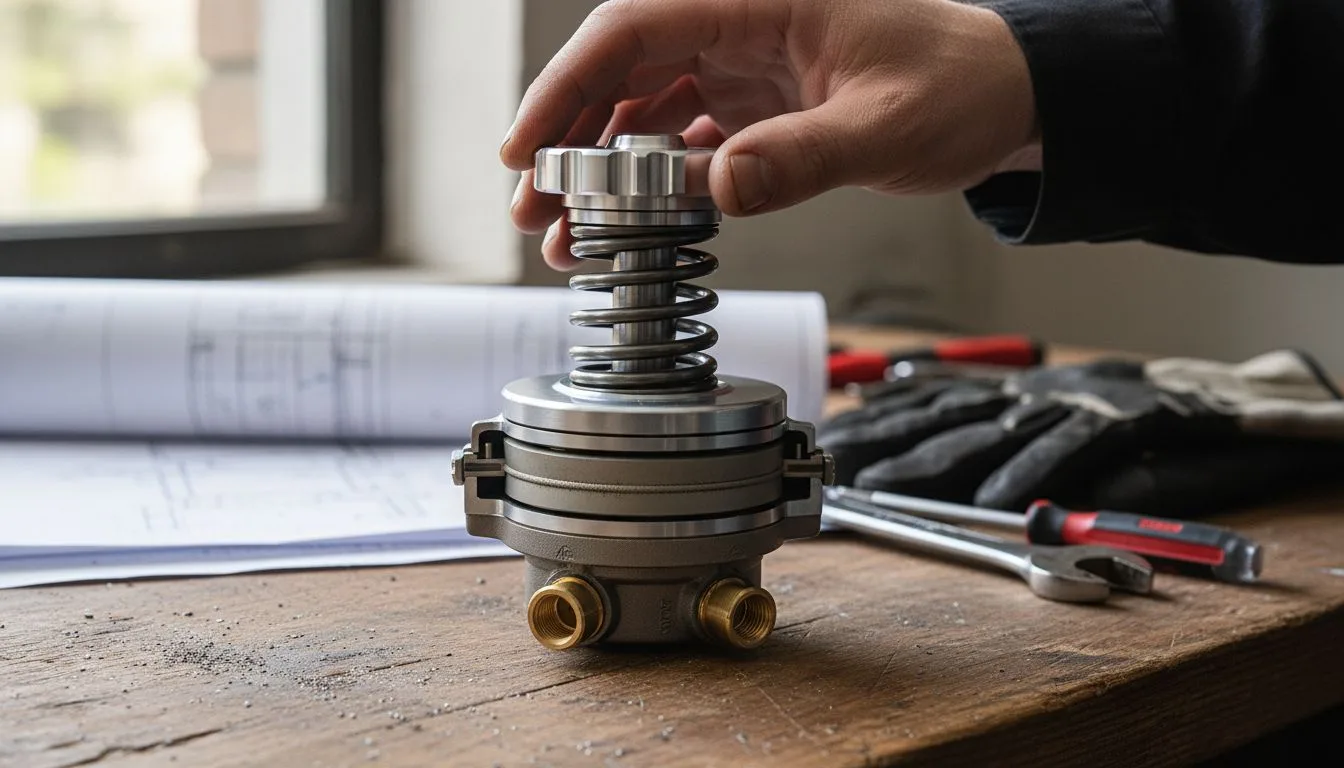
The pressure regulator is not a single universal tool; there are several specific types intended for different industrial applications. According to homel, pressure regulators can be divided into four basic categories: mechanical, pneumatic, electrical and hydraulic.
As for specific design solutions, gridservices distinguishes three main variants:
- Diaphragm regulators: simple and reliable devices
- Piston regulators: offering high capacity and precise regulation
- Electronic regulators: allowing precise setting with a wide range of functions
Each type of regulator has its specific properties and suits a different industrial or technical use.
 Mechanical regulators are often mechanically simple, pneumatic ones work directly with air pressure, electrical ones process electrical signals and hydraulic regulators are intended for work with the pressure of liquids.
Professional screw compressors with 20 bar pressure may require a specific type of regulator able to hold the required pressure level precisely in demanding industrial conditions.
How a pressure regulator works in pneumatics
In pneumatic systems the pressure regulator plays a key role in ensuring stable and consistent pressure parameters. According to balistas, the regulator works by maintaining a constant outlet pressure, dynamically adjusting the high inlet pressure to a more stable and predictable level.
The working principle of a pressure regulator can be divided into several basic steps:
- Entry of high-pressure air
- Passage of the air through the reducing mechanism
- Setting the required pressure level
- Stabilisation of the outlet pressure
- Continuous automatic correction of pressure fluctuations
The key part of the regulator is a diaphragm or piston mechanism that reacts precisely to changes in the inlet pressure and keeps the outlet pressure value constant. This mechanism works as a kind of pneumatic ‘filter’ that prevents sudden pressure fluctuations which could damage sensitive pneumatic components.
Compressors with pressure vessels are an ideal example of equipment where precise pressure regulation plays an essential role in the safe and efficient operation of industrial systems.
The most common uses in industry and workshops
Pressure regulators are indispensable equipment in a range of industrial and craft applications where precise and stable control of pressure is needed. According to gridservices they are key to ensuring safe and reliable operating processes in industrial installations.
The most common areas of use for pressure regulators include:
- Engineering: precise control of pneumatic tools
- Automotive industry: pressure control in braking and air handling systems
- Food industry: pressure regulation in packaging and food processing
- Construction: pressure control for compressors and pneumatic tools
- Electronics industry: fine pressure regulation in the production of electronic components
In professional workshops and production plants, pressure regulators are critical to ensuring consistent performance and protecting sensitive equipment. They allow technicians and workers to set and maintain the optimum pressure conditions precisely for various working processes.
Compressors without an air dryer are a typical example of equipment where precise pressure regulation is an essential factor in efficient and reliable operation.
Common mistakes in use and their consequences
Pressure regulators require careful handling and correct setting, otherwise they can cause serious operating problems. According to balistas, an incorrect setting can lead to inconsistent performance and a loss of precision, which applies not only to special applications but also to ordinary industrial use.
The most common mistakes when working with pressure regulators include:
- Incorrect initial setting: pressure too high or too low
- Neglected regular maintenance: inspection and cleaning left undone
- Ignoring pressure fluctuations: failing to watch changes in the outlet pressure
- Use of an unsuitable regulator: choosing a device that does not match the application
- Neglected calibration: irregular verification of measurement accuracy
The consequences of these mistakes can be far more serious than they seem at first sight. An incorrectly set pressure regulator can damage sensitive equipment, reduce machine performance, increase wear on pneumatic components and, in extreme cases, cause the complete failure of the technological process.
Compressors without an air dryer are an area where precise pressure regulation plays a key role in preventing potential technical complications.
Secure perfect control of pressure with quality solutions
If you are looking for a reliable way to regulate the pressure in your pneumatic systems precisely and thus avoid problems caused by pressure fluctuations, we offer a wide choice of top-class compressors and accessories that will help you achieve maximum efficiency and safety. Our products are ideal not only for industrial operations but also for workshops and home workshops.

Discover professional compressors with pressure vessels or compressors without an air dryer, which work excellently together with quality pressure regulators. Do not wait for the equipment to fail; visit our e-shop at https://kompresory-vzduchotechnika.cz, where we will help you find exactly what your pneumatics needs. Solve the trouble with pressure today and take your operation to a new level!
Frequently asked questions
What is the main purpose of a pressure regulator?
A pressure regulator is designed for the precise control and stabilisation of pressure in pneumatic systems so that a constant outlet pressure is maintained, which ensures stable performance of the equipment.
What types of pressure regulator are there and how do they differ?
There are four basic types of pressure regulator: mechanical, pneumatic, electrical and hydraulic, each intended for specific industrial applications and with different design properties.
How does a pressure regulator work in pneumatic systems?
A pressure regulator maintains a constant outlet pressure by dynamically adjusting the high inlet pressure to a more stable level, which involves processes such as the passage of air through the reducing mechanism and the stabilisation of pressure.
What are the common mistakes when using a pressure regulator?
Common mistakes include an incorrect initial setting, neglected regular maintenance, ignoring pressure fluctuations, using an unsuitable regulator and neglected calibration, which can lead to operating problems and damage to the equipment.