
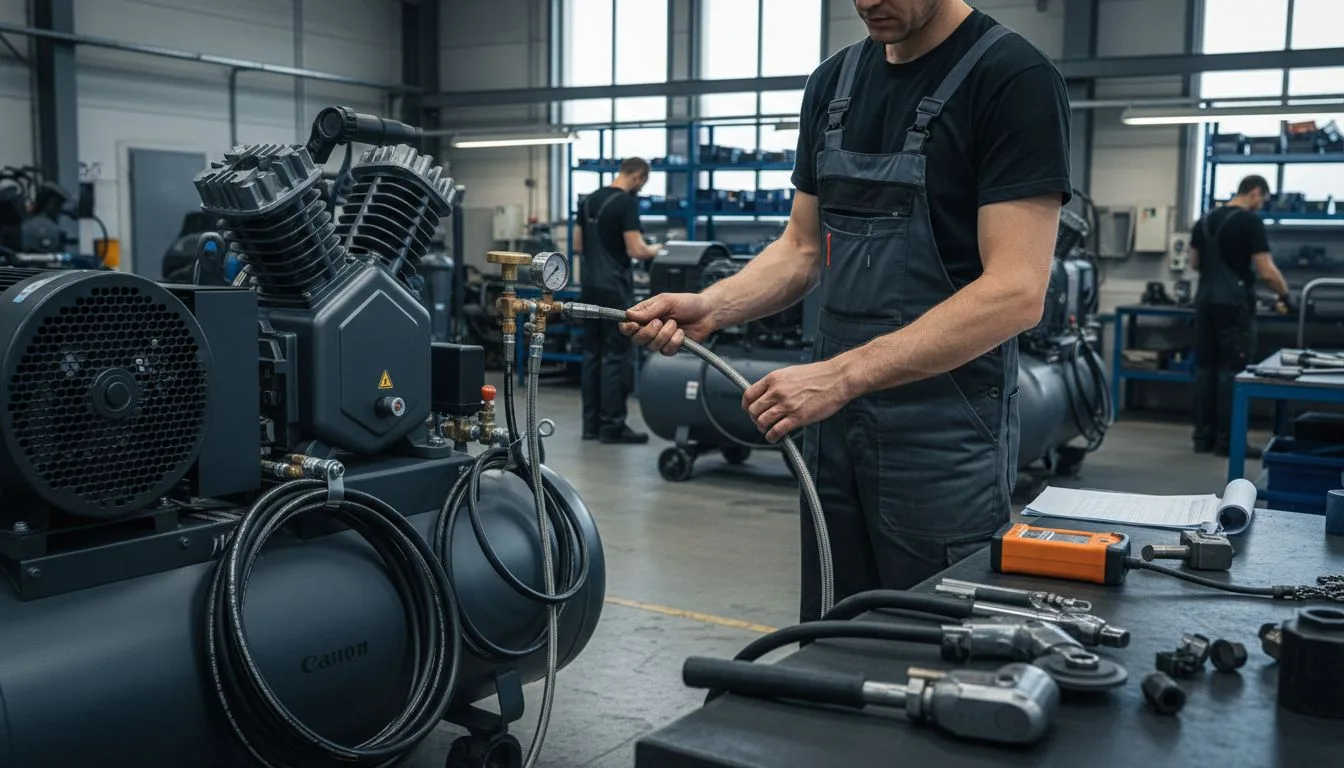
Choosing the right hose for a compressor decides how reliably and efficiently your pneumatic system will work. A single wrong choice is enough and you can lose up to 25 percent of the output through unsuitable flow or pressure losses. In today’s range of materials, sizes and accessories it is not easy to find the optimum solution. An overview of clear steps will help you save time, money and nerves and choose a hose that exactly matches your needs.
Contents
- Step 1: Assess the requirements for pressure and air flow
- Step 2: Choose the right material and type of hose
- Step 3: Set the optimum length and diameter of the hose
- Step 4: Check compatibility with the compressor and accessories
- Step 5: Test the correct function and safety of the connection
Quick summary
| Key point | Explanation |
|---|---|
| 1. Establish the pressure requirements | Determine the maximum and minimum pressure for your equipment to ensure the right choice of hose. |
| 2. Choose the right hose material | The hose material should meet the specific operating conditions and demands of your use. |
| 3. Optimise the length and diameter of the hose | Keep the hose length short and choose the right diameter to reduce pressure losses. |
| 4. Check compatibility with the compressor | Make sure the hose and accessories match the type and specifications of your compressor. |
| 5. Test the function of the connections | Carry out visual checks and pressure tests regularly to ensure safe operation of the system. |
Step 1: Assess the requirements for pressure and air flow
When choosing hoses for a compressor it is absolutely essential to understand exactly the pressure and air flow parameters for your particular application. This first step will help you avoid needless purchases and ensure maximum efficiency of your pneumatic system.
First map out your exact operating requirements. You will need to establish the maximum working pressure your equipment requires. This parameter is measured in bar or pascals and affects the choice of the right type of hose. Professional pneumatic tools often need a higher pressure rating than hobby equipment. I recommend measuring the minimum and maximum pressure of your existing tools and choosing a hose with matching pressure resistance accordingly.
The second key parameter is the air flow measured in m³/min or litres per minute. Find out the flow characteristics of your tools and compressor. The hose must be able to carry a sufficient amount of air without significant losses or restrictions. Industrial compressors offer various flow capacities, so it is necessary to choose a hose compatible with your specific model.
Beware of the most common mistake: do not confuse the nominal and maximum pressure values. Always allow a safety reserve and choose hoses with a higher pressure rating than your operating requirements.
Step 2: Choose the right material and type of hose
Choosing the right material and type of hose is a key step in ensuring reliable, long-term operation of your pneumatic system. The hose material must withstand the specific operating conditions and demands of your particular use.
There are several basic material options for air hoses. Rubber hoses are very popular for their flexibility and resistance to wear. Polyurethane hoses offer excellent resistance to mechanical damage and are lighter. Compressed air pipework can also be made of PVC or special synthetic materials intended for heavy-duty industrial applications.
When choosing, consider the ambient temperature, chemicals in the surroundings and mechanical stress. Professional users often choose multi-layer reinforced hoses that guarantee higher strength and a longer service life. Remember that a cheaper solution need not pay off because of faster wear and the need for more frequent replacement.
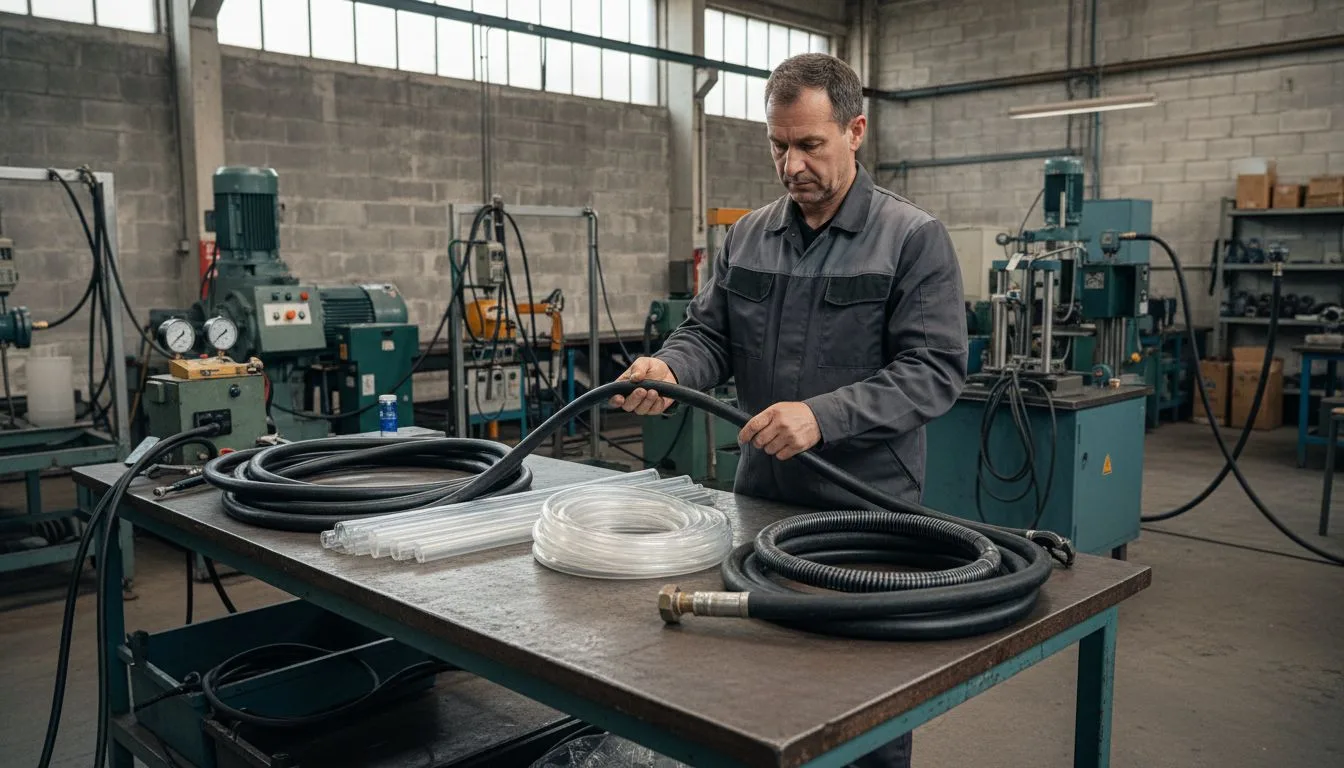
Always check the manufacturer specifications and choose a hose with parameters exactly matching your compressor and the planned use.
Step 3: Set the optimum length and diameter of the hose
Managing the length and diameter of the hose for the compressor significantly affects the overall output and efficiency of the pneumatic system. This step requires careful consideration of several key factors that directly determine the quality and reliability of your compressed air distribution.
The length of the hose must be optimised with regard to the distance between the compressor and the point of use. Hoses that are too long cause a significant drop in pressure and reduce the efficiency of air transfer. Professional compressed air pipework suggests minimising the length of the runs and eliminating needless bends that increase flow resistance.
As for the diameter, a simple rule applies: a larger diameter means a lower pressure loss and a higher air flow. For common professional applications, hoses with an internal diameter of 8 to 13 millimetres prove themselves. For more demanding industrial equipment, choose diameters of 15 to 20 millimetres. Always take into account the specific requirements of your pneumatic tools and the particular characteristics of the compressor.
Beware of the most common mistake: do not confuse the nominal and the actual diameter of the hose. Always measure the internal diameter and allow for pressure losses over longer runs.
Step 4: Check compatibility with the compressor and accessories
Compatibility between the hose, the compressor and the accessories is a key factor for safe and efficient operation of the pneumatic system. Connecting all components correctly guarantees optimum performance and minimises the risk of damage to the equipment.
First check the types of connectors. Different compressors use specific quick couplings and adapters. Compressors without an air dryer often require special seals and connection mechanisms. Verify the thread parameters by measuring or by consulting the manufacturer of your particular compressor.
It is also important to check the pressure ranges of the individual components. The hose must have a higher pressure rating than the maximum working pressure of your compressor. For industrial equipment I recommend adding at least a 30 % safety reserve. Always prefer original accessories or components recommended directly by the compressor manufacturer.
Beware of the most common mistake: do not buy hoses and accessories on price alone. Investing in quality, compatible components always pays off in the long run.
Step 5: Test the correct function and safety of the connection
The final step in choosing a hose for a compressor is a thorough check of the function and safety of all connections. This process will help you prevent potential problems and ensure reliable operation of your pneumatic system.
Proceed systematically. First carry out a visual check of all connections and joints. Look for signs of damage such as micro-cracks, wear or deformation. Reinforced suction and transfer hoses require special attention because of their particular structure. Check the tightness with soapy water or a leak detection spray.
Then carry out a pressure test. Connect the hose to the pressure test and slowly raise the pressure to the maximum working value. Watch for any sign of leakage or instability of the connection. For industrial applications I recommend carrying out this test regularly and documenting the results. Remember that every connection must withstand at least 1.5 times the maximum working pressure without signs of deformation or leakage.
Beware of the most common mistake: do not underestimate the importance of regular checks. Detecting small defects in time can prevent serious system failures.
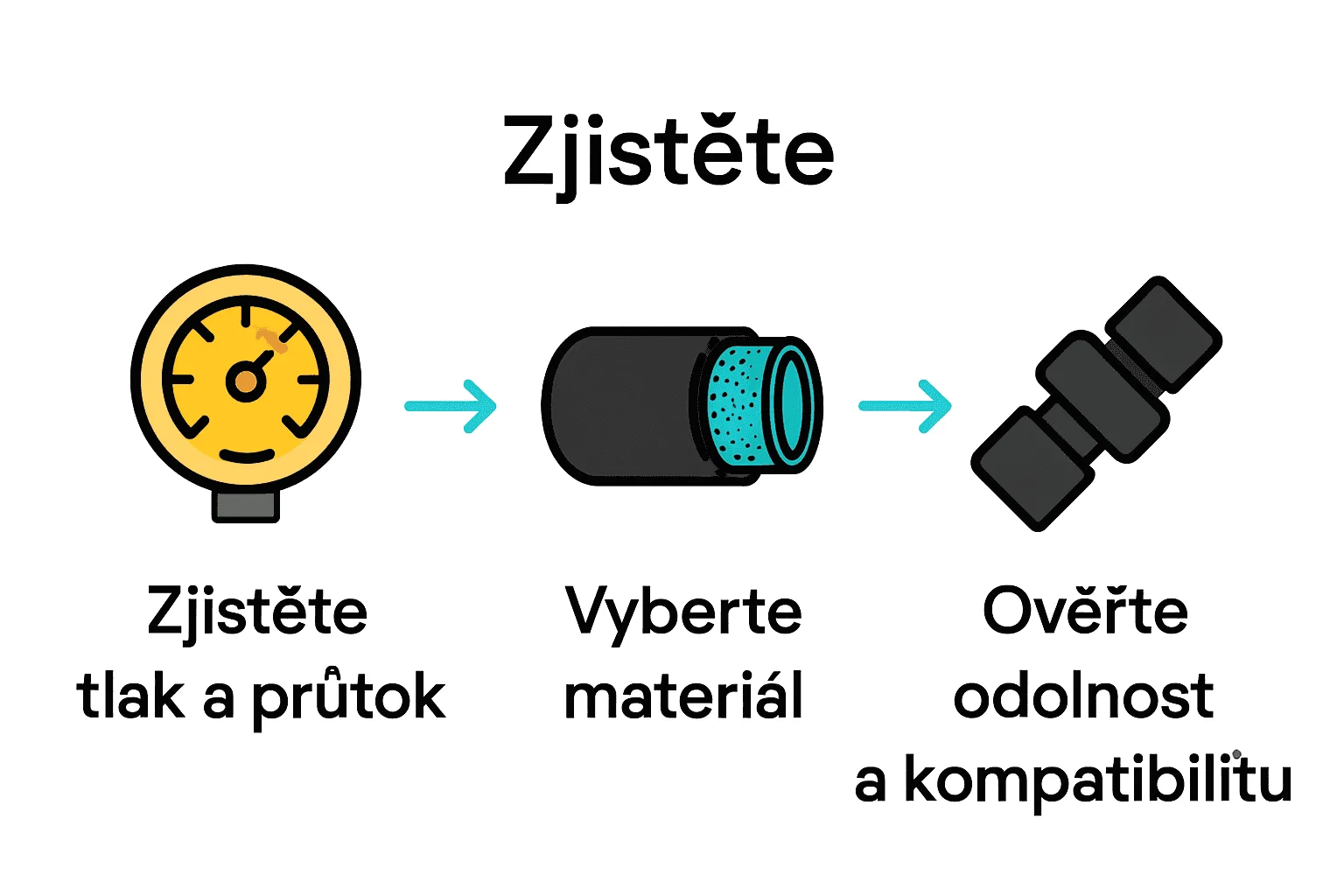
Find the right hose for your compressor and increase the performance of your pneumatic system
The right choice of hose is key to optimum pressure, air flow and a long service life. If you want to avoid needless complications such as leaks or a drop in output, you must choose with regard to the pressure rating, the material and the right hose diameter. Exactly these parameters are what the choice of hoses for a compressor and the professional range of compressors and accessories on our e-shop will help you manage.

Do not wait for the problems to announce themselves. Choose from a wide range of quality hoses and accessories designed to fit your equipment perfectly. Explore our range of compressors without an air dryer or reinforced suction and transfer hoses. Your pneumatic system deserves the best. Visit https://kompresory-vzduchotechnika.cz and order a hose exactly to your needs today.
Frequently asked questions
How do I find out the required pressure and air flow for my compressor?
Before choosing a hose for a compressor, map out the maximum and minimum pressure and air flow of your tools. For the right choice of hose, measure these parameters and choose a hose with matching pressure and flow specifications.
How do I choose the right hose material for my application?
When choosing the material, consider the operating conditions such as temperature and chemical influences. We recommend choosing hoses made of rubber for flexibility or polyurethane for high mechanical resistance.
What is the optimum hose length for my compressor?
The hose length should be kept to a minimum so that a drop in pressure is avoided. Keep the hose as short as possible and eliminate needless bends; a length of up to 10 metres is ideal for common applications, for example.
How do I ensure compatibility of the hose with the compressor and accessories?
Check whether your hose matches the type of connectors and the pressure ranges of your compressor. Verify the manufacturer specifications directly to ensure a safe and efficient connection.
How can I verify the function and safety of the hose connection?
Carry out a visual check and a pressure test of the connections. For example, raising the pressure to the maximum working value and watching for any signs of leakage can reveal potential problems in time.
What to do if the hose fails or shows signs of wear?
If you find problems with the hose, replace it immediately with a new one. Focus on regular checks and maintenance to prevent more serious failures in the pneumatic system.