
More than 60 percent of industrial companies now prefer pneumatic tools for their reliability and safety. Working with compressed air makes it possible to achieve high force together with precision, which is crucial in many operations. If you want to know how pneumatic tools work, when they are worth using and how to choose them correctly, you will find practical answers here as well as useful tips for safe and efficient operation.
Contents
Key takeaways
| Point | Details |
|---|---|
| Working principle | Pneumatic tools use compressed air to convert pressure energy into mechanical motion, which provides high force and precision in various applications. |
| Advantages over electric tools | Pneumatic tools offer higher safety, reliability and resistance in demanding conditions, with lower maintenance requirements. |
| Maintenance requirements | Regular maintenance and monitoring of the air system are key to ensuring efficient operation and minimising risks. |
| Considering alternatives | When choosing pneumatic tools it is important to assess the specific requirements of the working environment and the type of operation in order to optimise performance and cost. |
What pneumatic tools are and how they work
Pneumatic tools are devices that use compressed air as the main source of energy for mechanical motion and work. souepl.cz states that these tools work on the principle of converting the pressure energy of air into mechanical work.
The basic working principle of pneumatic tools is fairly simple. The system starts with the compressor, which compresses the air to the required pressure. eluc.ikap.cz describes how this compressed air is then led through a series of control elements, such as:
-
Lubricating devices to reduce friction
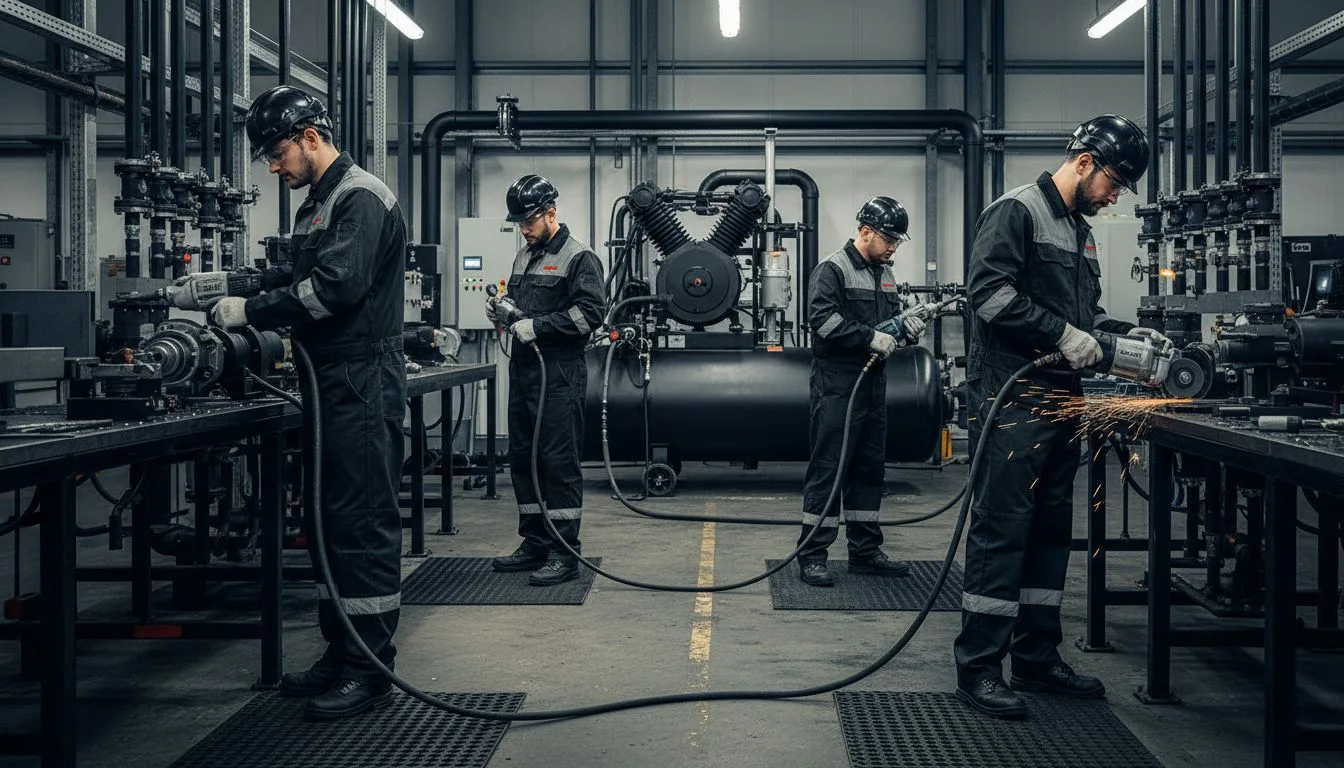
The actual work of the tool takes place through pneumatic motors or cylinders, which convert the pressure energy of the air into mechanical motion. Thanks to this principle, pneumatic tools can develop considerable force and precision, which makes them extremely useful in industry, vehicle repair and craft workshops.
Types of pneumatic tool and their use
Pneumatic tools cover a wide range of devices intended for various industrial and craft applications. mepac.cz lists several key categories of pneumatic tool:
-
Rotary pneumatic tools: intended for drilling, grinding and polishing
-
Impact tools: used in assembly and construction work
-
Cutting pneumatic tools: for precise cutting and shaping of materials
core.ac.uk further analyses the technical parameters of pneumatic motors, which are key to choosing the right tool. The main factors include:
-
Motor speed
-
Air consumption
-
Maximum output
-
Weight of the tool
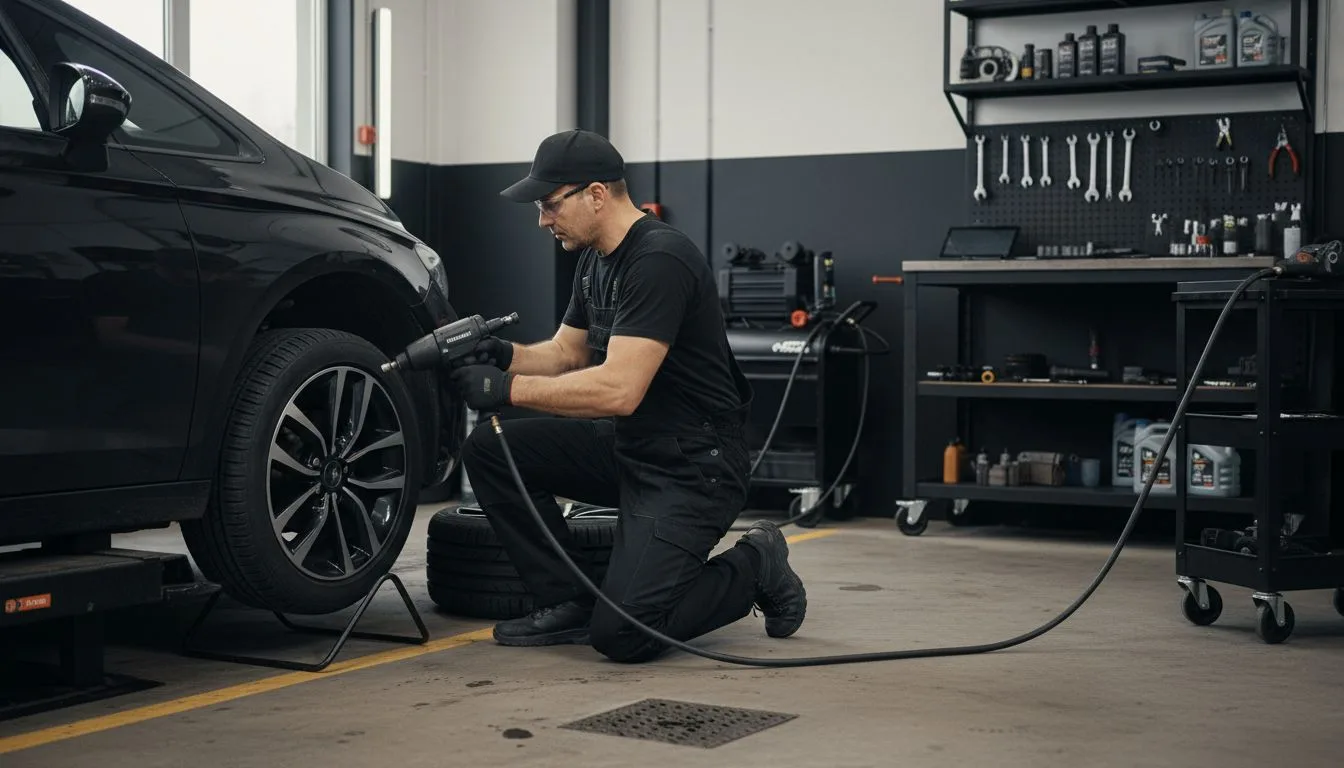
Every type of pneumatic tool has a specific use in different industrial sectors. For example, pneumatic drills are common in the automotive industry, while pneumatic impact wrenches find their use mainly in assembly lines and service workshops.
Advantages of pneumatic tools over electric ones
souepl.cz identifies several fundamental advantages of pneumatic tools over electric ones. Safety is one of the key differences - pneumatic tools are far safer in environments with a high risk of explosion or fire.
Other significant strengths include:
-
Reliability: pneumatic tools have fewer moving parts
-
Resistance: they work reliably even at extreme temperatures and in demanding industrial conditions
-
Simplicity of maintenance: compared with electric tools they require minimal service work
eluc.ikap.cz stresses the economic advantage of pneumatic mechanisms, which have lower production costs and achieve higher operating efficiency. The flexibility of pneumatic tools allows them to be used across a wide spectrum of industrial applications where electric tools fail.
In addition, pneumatic tools deliver constant output without a drop in speed, have lower weight and allow more accurate control of force and speed. That makes them the preferred choice in precise assembly processes, in engineering and in other technical fields requiring maximum accuracy and reliability.
Requirements for running and maintaining an air system
kvalifikace-validace.cz stresses that regular maintenance is the key to long-term efficient operation of air systems. Every operator should pay attention to several essential aspects that ensure maximum performance and reliability of the equipment.
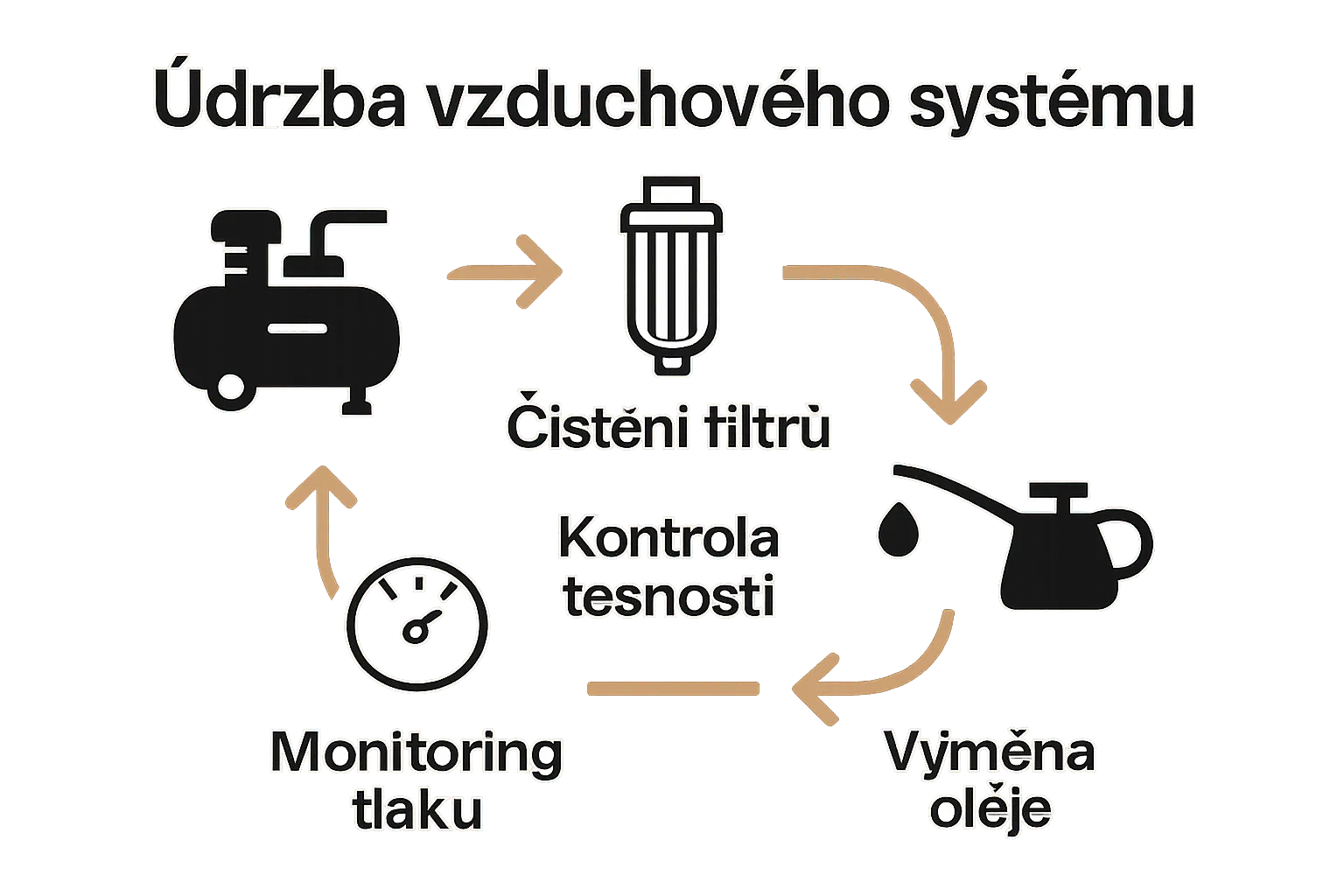
The basic maintenance requirements include:
-
Regular cleaning of the filters: prevents contamination of the system
-
Checking the tightness of the pipework: minimises losses of compressed air
-
Changing oil and lubricants: ensures smooth running of the compressor
-
Pressure monitoring: early detection of possible faults
Systematic maintenance covers several key steps. It is recommended to carry out:
-
A daily visual inspection of the compressor
-
Weekly cleaning of the air filters
-
Monthly inspection of all moving parts
-
An annual complete service inspection
An important part of operation is also the correct storage and distribution of compressed air. That means keeping an optimum temperature in the room, protecting the distribution lines from mechanical damage and ensuring sufficient air circulation around the compressor.
Risks, costs and limits of deployment
fs.vsb.cz states that the reliability of pneumatic systems is a key factor in assessing their deployment. Every industrial project must allow for possible technical and economic risks that can significantly affect overall efficiency.
The main economic limits include:
-
Initial investment costs: a higher purchase price for the complete system
-
Operating demands: regular costs for maintenance and energy consumption
-
Wear of components: the need to replace seals and moving parts continually
-
Consumption of compressed air: a significant operating cost
The technical risks mainly include:
-
Pressure fluctuations in the system
-
The possibility of moisture condensing
-
The risk of air leaks
-
Limits in extreme temperature conditions
fs.vsb.cz stresses that reliability analysis is an essential step before implementing pneumatic systems. A professional evaluation of the mean time between failures and the failure rate helps to minimise unexpected operating complications and to prevent needless economic losses.
Alternatives and choosing the right tool
fs.vsb.cz stresses the importance of a systematic approach when choosing the right industrial tool. The key to the correct decision is a thorough analysis of the specific requirements of the particular workplace and technological process.
When assessing alternatives, several essential criteria need to be considered:
-
Type of operation performed: drilling, cutting, grinding
-
Material of the surface being worked: metal, wood, plastic
-
Required accuracy: standard or ultra-precise machining
-
Operating environment: temperature, humidity, dust
The most important comparison factors include:
-
Output of the tool
-
Air consumption
-
Weight and ergonomics
-
Service life and reliability
fs.vsb.cz recommends using software simulation and modelling for an accurate evaluation of the parameters. Professional analysis helps eliminate the risks of a poor choice and optimise the cost of purchasing and running industrial tools.
Discover the power of pneumatic tools with our solutions
If the article has shown you the importance of reliability, maintenance and choosing the right pneumatic tool for your working processes, you surely know how critical it is to have quality, proven equipment at hand. Problems with fluctuating pressure, air leaks or increased air consumption can markedly slow production and raise operating costs. That is exactly why it is essential to choose equipment that gives you maximum performance with minimum failure.

We offer you a wide choice of functional and well documented products directly at kompresory-vzduchotechnika.cz, where you will find everything from oil-lubricated and small portable compressors to pneumatic tools and accessories. Choose from our range and secure tools that cope with demanding conditions and allow you to increase the accuracy and efficiency of your work. Do not wait until problems with maintenance or unsuitable equipment stop you. Visit kompresory-vzduchotechnika.cz and equip yourself today for a better tomorrow.
Look through the products, compare the prices and take advantage of the favourable offers if you want to be a step ahead.
Frequently asked questions
What are pneumatic tools and how do they work?
Pneumatic tools are devices that use compressed air for mechanical motion and work. They work on the principle of converting the pressure energy of air into mechanical work through pneumatic motors or cylinders.
What are the advantages of pneumatic tools over electric ones?
Pneumatic tools offer advantages such as higher reliability, resistance in extreme conditions, lower weight and better control of force. They are also safer in environments with a fire risk.
What types of pneumatic tool exist and how are they used?
There are several types of pneumatic tool, including rotary (drilling, grinding), impact (assembly work) and cutting (precise cutting). Each type is used in different industrial sectors according to specific needs.
How do you ensure correct maintenance of pneumatic systems?
Regular maintenance includes cleaning the filters, checking the tightness of the pipework, changing oil and lubricants and monitoring the pressure. It is also important to carry out visual inspections and service checks of the compressors regularly.