
Electronic condensate drain AD20
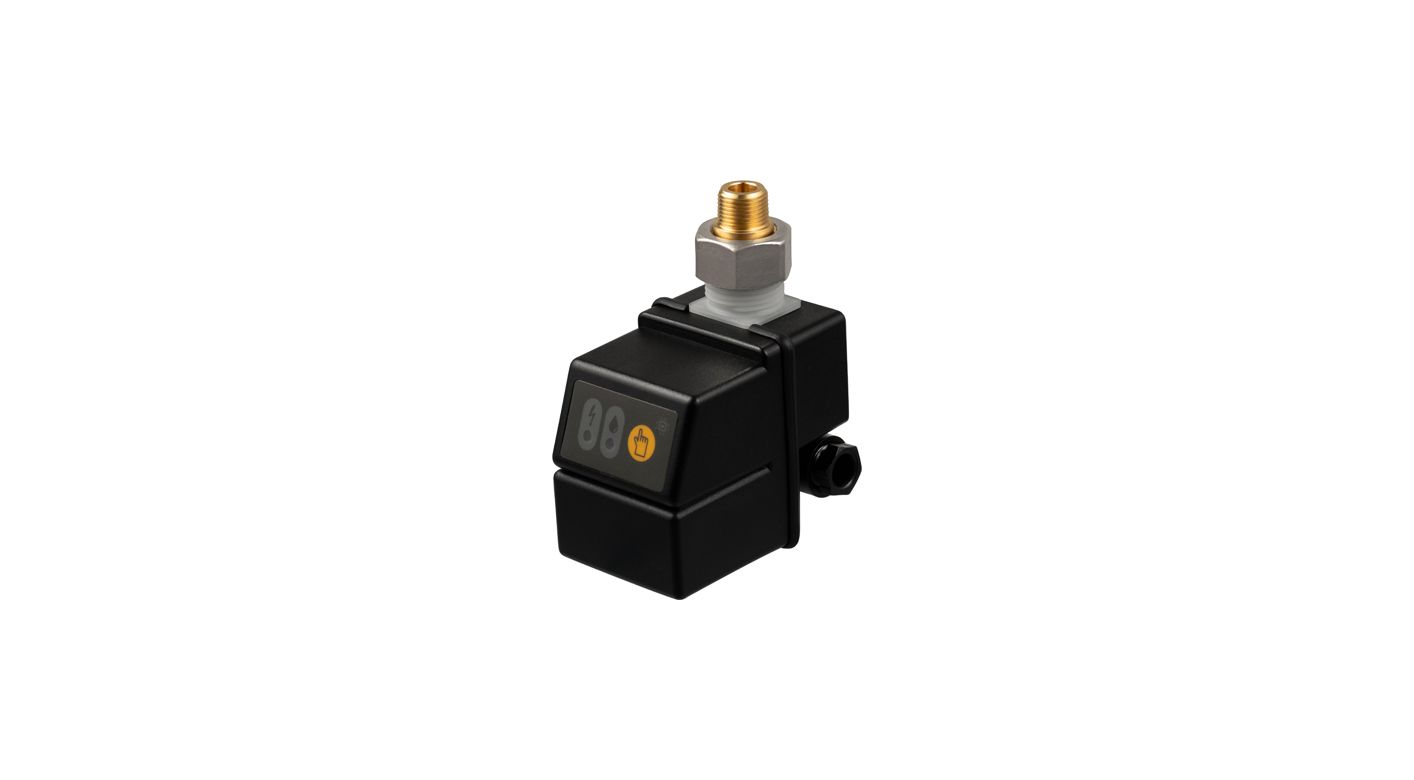
The AD20 is a zero-loss drain with a capacitive sensor made chiefly for filter bowls. Its newer electronics handle both shorter and longer cycles depending on how much condensate is coming in — it calibrates its own opening time from the flow, between two tenths of a second and a minute.
Specifications
One unit for one job — the filter bowl, where the condensed water settles on the bottom.
| Electronic AD20 drain — capacity, connection and pressure | |||||
|---|---|---|---|---|---|
| Order code | Capacity | Connection | Working pressure | Temperature | Power supply |
| AD20 | 210.0 l/h | R 3/8" | 16 bar | +1 – +60 °C | 230 V AC |
#showmore#
How the AD20 works
A capacitive sensor follows the level on the bottom of the bowl. When it reaches the upper mark, the electronics open the valve and let the condensate out; it shuts before air begins to escape. The opening time adapts itself to how much condensate arrives — from 0.2 seconds up to a minute.
The gap between cycles is adaptive, up to thirty minutes. In dry conditions the drain barely works; in damp ones it speeds its own tempo up.
Fitting
It screws in with an R 3/8" thread straight into the filter bowl. Supply 230 V AC. Working temperature +1 to +60 °C.
What to watch
The AD20 is built for filter bowls. For a receiver behind the compressor, where the condensate is many times heavier, the LD series suits better.

Ventilek says
A drain for a filter and a drain for a receiver are not the same thing.
A filter only catches what got through — there is an order of magnitude less condensate there than in the receiver right behind the compressor. The AD20 is built for that and sets its own pace from how much water actually comes. Put it on the receiver of a big machine and it will run non-stop and still not keep up. That is what the LD is for.
Frequently asked questions — electronic ad20
- Where does the AD20 go?
- Mainly into filter bowls, where the condensed water settles. The thread is R 3/8".
- How does it differ from the LD series?
- The principle is the same — a capacitive sensor and zero-loss draining. But the LD comes in more sizes and is built for receivers and dryers too, where the condensate is many times heavier.
- Does it need setting up?
- No. It calibrates both the opening time and the interval itself from the incoming condensate — unlike a timed drain, where you set both by hand.

Product sorting
List of products

A zero-loss electronic condensate drain for filter bowls. A capacitive sensor watches the level and the opening time adapts to the flow. Supply 230 V AC.