
Sušičky vzduchu tlakový rosný bod -25 °C
What a -25 °C dew point means and why it matters
A pressure dew point of -25 °C represents a moderately low moisture level in compressed air. It is the temperature at which water vapour in pressurised air begins to condense, and -25 °C already means substantially dried air, though not as extreme as -40 °C or -70 °C. Why does this value matter? It works as a compromise between cost and air quality. Drying to -25 °C removes enough moisture that no condensation occurs under normal conditions (above freezing), while requiring less energy than reaching -40 °C. For some operations -25 °C may be sufficient, especially if they do not have to meet strict standards or face extreme frost. Compared with the standard -40 °C, a level of -25 °C still provides substantial protection against water, albeit with a smaller reserve. This value can, for instance, satisfy the requirements of class 3 to ISO 8573-1 (which corresponds to a pressure dew point of -20 °C) with a certain safety margin.
#ShowMore#
Suitable applications and practical use
A dew point of -25 °C is used in applications that need dry air but where -40 °C is not required. In practice these may be industrial workshops and plants that are heated or located in a temperate climate where temperatures do not normally fall below -10 to -15 °C. If your pneumatic pipework runs solely inside buildings or in an environment with mild winter frosts, a dew point of -25 °C will ensure that no condensation forms inside the network. A typical example is a production hall or machine room where the ambient temperature drops to around 0 °C in winter – air dried to -25 °C will safely avoid condensing under such conditions (it has a reserve of about 25 °C). Another area is smaller technological units or mobile systems where extreme drying is impractical – for example small containerised compressor sets on building sites, where the air is used immediately and there is no need to hold a strict -40 °C. A dew point of -25 °C can also serve as an economical drying option where more sensitive equipment is present but the operator is looking to save energy and accepts that the air will not be absolutely dry. It still holds true that -25 °C markedly reduces the corrosive effect of moisture in tools and pipework and minimises the amount of condensate that has to be drained.
Which dryer types achieve a -25 °C dew point
Several dryer types can be used to reach a dew point of -25 °C, often as a combination of technologies. Traditionally, adsorption dryers are used for -25 °C as well, although they can be set to a lower drying intensity (shorter cycle times or a different desiccant, for example), which reduces energy consumption while still delivering outlet air at around -25 °C. Some manufacturers of adsorption dryers offer models designed directly for -20 °C to -25 °C as a more economical alternative to the standard -40 °C. A very common solution for mid-range dew points, however, is the membrane dryer. Depending on inlet conditions, a membrane dryer can typically lower the dew point of the air by 20–40 °C. That means that if air enters with a dew point of, say, +15 °C (after prior cooling and water separation), it can leave the membrane at around -5 °C to -25 °C. With suitable sizing and a lower flow rate, membrane dryers can reach values of about -25 °C. Their advantage is that they have no moving parts and need no electrical supply; the drawback is the loss of part of the air (10–20 % goes to purging the membrane) and the limited flow rate. For smaller applications, though, this is a simple way to obtain a -25 °C dew point without large equipment. Refrigeration dryers alone are not enough for -25 °C – as already mentioned, they stop at around +3 °C. But by combining a refrigeration dryer with a downstream membrane dryer, roughly -20 to -25 °C can be achieved effectively at relatively low cost. Another option, though less common today, are chemical absorption dryers (based on soluble salts – deliquescent dryers). They can lower the dew point by about 10–15 °C below ambient temperature, so under certain conditions they too can reach outlet dew points of around -20 °C. In industrial practice this type is encountered less often; adsorption and membrane technologies dominate. So when -25 °C is required, we typically reach either for a smaller adsorption dryer set to that value, or for a membrane dryer, possibly combined with an upstream refrigeration dryer.
Advantages and disadvantages of a -25 °C dew point
Advantages: A dew point of -25 °C offers a reasonable degree of protection against condensation at lower cost. The main advantage is energy savings – drying air to -25 °C requires less regeneration air or heating power than -40 °C. If a membrane dryer is used, electricity consumption disappears altogether and air losses are smaller than they would be at -40 °C (because a smaller purge flow is enough for -25 °C). Lower capital cost is another plus: equipment sized for -25 °C tends to be cheaper than its -40 °C counterparts, whether smaller adsorption towers or membrane modules. Air dried to -25 °C is adequate for a wide range of everyday applications, where it prevents most moisture problems – tools will not “spit” water, filters will not collect condensate to the same extent, and the service life of the pipework increases thanks to reduced corrosion. At the same time you do not pay for extreme dryness you do not need. -25 °C can be an efficient compromise for companies in regions with mild winters, for example, where temperatures only occasionally drop below -10 °C.
Disadvantages: The main disadvantage is that -25 °C does not provide the same reserve as the standard -40 °C. In colder conditions (ambient below -15 °C) there is already a risk that moisture will start to precipitate. An outdoor air line exposed to -20 °C, for instance, may already form condensate with a -25 °C dew point if there is a slight fluctuation in pressure or temperature. The use of -25 °C therefore has to be considered carefully in applications where heavier frost may occur – there it is safer to choose -40 °C. Another disadvantage is that this class is not as common as -40 °C, so not every dryer can be set to it directly. Sometimes a combination of several units is needed. That can complicate the system (more components, more potential failure points). Membrane dryers for -25 °C have limited flow rates, so larger air volumes call for more expensive adsorption units. Compared with +3 °C (refrigeration drying), the running costs at -25 °C are naturally higher – part of the compressed air is lost to purging or regeneration, and adsorption solutions additionally require the desiccant to be replaced from time to time. Air with a dew point of -25 °C may also fail to meet some standards where a minimum of -40 °C is prescribed (e.g. for instrument air in critical sectors or for food applications, where the driest possible air is preferred because of bacteria). In short, -25 °C is a compromise – it offers savings, but you must make sure it really is enough for the given application. Otherwise it is safer to choose the proven -40 °C, or, if the requirement is lower, simply +3 °C. In terms of air quality, -25 °C fits where +3 °C is no longer enough (condensation would threaten) but -40 °C is not necessary.
Links and related information
The choice of dew point depends on the specific operating conditions. The -25 °C class is a useful intermediate step in the dryer range. For comparison, be sure to look at the neighbouring categories as well: the one step stricter dew point of -40 °C or, conversely, the most common values +3 °C and +5 °C (dryers +3 °C, dryers +5 °C). If you are unsure which dryer type to use, we also recommend reading the general guide to compressed air drying and the information on refrigeration, adsorption and membrane dryers. These resources will help you decide correctly whether a dew point of -25 °C is the ideal choice for you, or whether to invest in drier air, or whether wetter air will do. The right choice affects both the reliability of your equipment and the economics of its operation. Compressed air dryers in our e-shop.
More information about air drying and the dew point can be found in this article from our advice centre: Measuring the dew point temperature and Why and how to dry air
.jpg)
-hankison-susicka-vzduch-kompresor-tllak-kondenzace-rosny-bod.jpg)
.jpg)
Product sorting
List of products

The ADRY-12 series adsorption dryer has been designed for continuous separation of water vapour from compressed air at flow rates up to 200 l/min. Reduces the pressure dew point...

The ADRY-105 Series Adsorption Dryer was designed for continuous separation of water vapor from compressed air at flow rates up to 1,750 l/min. Reduces the pressure dew point...

The ADRY-150 Series Adsorption Dryer was designed for continuous separation of water vapor from compressed air at flow rates up to 2,500 l/min. Reduces the pressure dew point...

The FDRY-1200 Adsorption Dryer is designed for continuous separation of water vapour from compressed air with a flow rate of up to 15,600 l/min at a maximum pressure of 16 bar...

Adsorption dryer BDRY-400 designed for permanent separation of water vapour from compressed air with a flow rate of up to 5 358 l/min at a maximum pressure of 16 bar and...

The BDRY-1000 Adsorption Dryer is designed for continuous separation of water vapour from compressed air with a flow rate of up to 13,067 l/min at a maximum pressure of 16 bar...

The ADRY-24 series adsorption dryer was designed for continuous separation of water vapour from compressed air at flow rates up to 400 l/min. Reduces the pressure dew point down...

The FDRY-6500 Adsorption Dryer is designed for continuous separation of water vapour from compressed air with a flow rate of up to 84,500 l/min at a maximum pressure of 16 bar...

The ADRY-200 Series Adsorption Dryer was designed for continuous separation of water vapor from compressed air at flow rates up to 3,333 l/min. Reduces the pressure dew point...

The ADRY-36 series adsorption dryer has been designed for continuous separation of water vapour from compressed air at flow rates up to 600 l/min. Reduces the pressure dew point...

The ADRY-6 series adsorption dryer has been designed for continuous separation of water vapour from compressed air at flow rates up to 100 l/min. Reduces the pressure dew point...

The ADRY-60 series adsorption dryer was designed for continuous separation of water vapour from compressed air at flow rates up to 1,000 l/min. Reduces the pressure dew point...

The ADRY-75 Series Adsorption Dryer was designed for continuous separation of water vapor from compressed air at flow rates up to 1,250 l/min. Reduces the pressure dew point...

Adsorption dryer BDRY-110 designed for permanent separation of water vapour from compressed air with a flow rate of up to 1 433 l/min at a maximum pressure of 16 bar and...

Adsorption dryer BDRY-1200 designed for continuous separation of water vapour from compressed air with a flow rate of up to 15,050 l/min at a maximum pressure of 16 bar and...

Adsorption dryer BDRY-150 designed for permanent separation of water vapour from compressed air with a flow rate of up to 1 958 l/min at a maximum pressure of 16 bar and...

The BDRY-200 adsorption dryer is designed for continuous separation of water vapour from compressed air with a flow rate of up to 2,617 l/min at a maximum pressure of 16 bar and...

The BDRY-250 Adsorption Dryer is designed for continuous separation of water vapour from compressed air with a flow rate of up to 3,400 l/min at a maximum pressure of 16 bar and...

Adsorption dryer BDRY-300 designed for permanent separation of water vapour from compressed air with a flow rate of up to 4,183 l/min at a maximum pressure of 16 bar and...

Adsorption dryer BDRY-600 designed for continuous separation of water vapour from compressed air with a flow rate of up to 7,708 l/min at a maximum pressure of 16 bar and...

Adsorption dryer BDRY-800 designed for permanent separation of water vapour from compressed air with a flow rate of up to 10 058 l/min at a maximum pressure of 16 bar and...

The FDRY-1500 Adsorption Dryer is designed for continuous separation of water vapour from compressed air with a flow rate of up to 19,500 l/min at a maximum pressure of 16 bar...

The FDRY-2000 Adsorption Dryer is designed for continuous separation of water vapour from compressed air with a flow rate of up to 26,000 l/min at a maximum pressure of 16 bar...

The FDRY-2500 Adsorption Dryer is designed for continuous separation of water vapour from compressed air with a flow rate of up to 32,500 l/min at a maximum pressure of 16 bar...

The FDRY-3000 Adsorption Dryer is designed for continuous separation of water vapour from compressed air with a flow rate of up to 39,000 l/min at a maximum pressure of 16 bar...

The FDRY-3750 Adsorption Dryer is designed for continuous separation of water vapour from compressed air with a flow rate of up to 48,750 l/min at a maximum pressure of 16 bar...

The FDRY-5000 Adsorption Dryer is designed for continuous separation of water vapour from compressed air with a flow rate of up to 65,000 l/min at a maximum pressure of 16 bar...

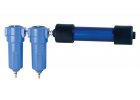
MADRY-12 membrane dryer with compressed air flow up to 12 m³/hr up to 12 bar. Including 2 filters through the dryer and filter cartridge clogging indication. Designed to supply...

MADRY-123 membrane dryer with compressed air flow up to 123 m³/hr up to 12 bar. Including 2 filters through the dryer and filter cartridge clogging indication. Designed to...

MADRY-18 membrane dryer with compressed air flow up to 18 m³/hr up to 12 bar. Including 2 filters through the dryer and filter cartridge clogging indication. Designed to supply...

MADRY-180 membrane dryer with compressed air flow up to 180 m³/hr up to 12 bar. Including 2 filters through the dryer and filter cartridge clogging indication. Designed to...

MADRY-24 membrane dryer with compressed air flow up to 24 m³/hr up to 12 bar. Including 2 filters through the dryer and filter cartridge clogging indication. Designed to supply...

MADRY-3 membrane dryer with compressed air flow up to 3 m³/hr up to 12 bar. Including 2 filters through the dryer and filter cartridge clogging indication. Designed to supply...

MADRY-32 membrane dryer with compressed air flow up to 32 m³/hr up to 12 bar. Including 2 filters through the dryer and filter cartridge clogging indication. Designed to supply...

MADRY-44 membrane dryer with compressed air flow up to 48 m³/hr up to 12 bar. Including 2 filters through the dryer and filter cartridge clogging indication. Designed to supply...

MADRY-6 membrane dryer with compressed air flow up to 6 m³/hr up to 12 bar. Including 2 filters through the dryer and filter cartridge clogging indication. Designed to supply...

MADRY-63 membrane dryer with compressed air flow up to 63 m³/hr up to 12 bar. Including 2 filters through the dryer and filter cartridge clogging indication. Designed to supply...

MADRY-9 membrane dryer with compressed air flow up to 9 m³/hr up to 12 bar. Including 2 filters through the dryer and filter cartridge clogging indication. Designed to supply...

MADRY-90 membrane dryer with compressed air flow up to 90 m³/hr up to 12 bar. Including 2 filters through the dryer and filter cartridge clogging indication. Designed to supply...