

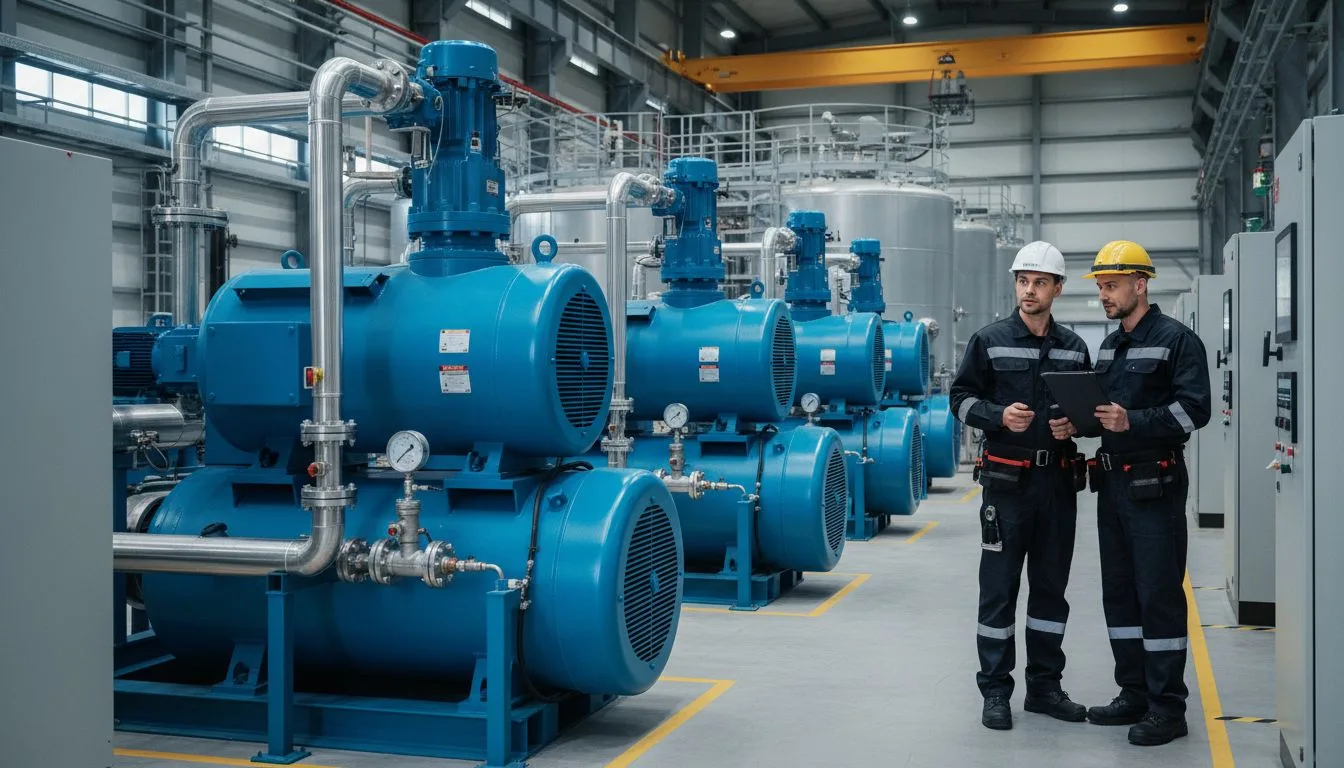
Compressed air drives far more machines and equipment than most people realise. Without compressors, production, painting or even ordinary tyre inflation would not be possible. A correctly chosen compressor saves time and money, but a poor choice can cause needless expense and frequent failures. You will learn how a compressor works, on what principles it operates and how to tell which type suits your operation or home workshop.
Contents
Main points
| Point | Details |
|---|---|
| What a compressor is | A compressor is a device for compressing gases with wide use in industry and technological processes. |
| Types of compressor | The basic types are piston, screw, vane and turbo compressors, each with varied applications. |
| Technical parameters | The key parameters are the capacity and the discharge pressure, which affect the efficiency of the compressor. |
| Choosing a compressor | When choosing, it is important to weigh the output, air quality and operating costs so as to avoid common mistakes. |
What a compressor is and how it works
A compressor is a machine intended for compressing gases, which finds wide use in industry, craft production and many technological processes. According to eluc.ikap.cz it is a key element for handling compressed air and gases.
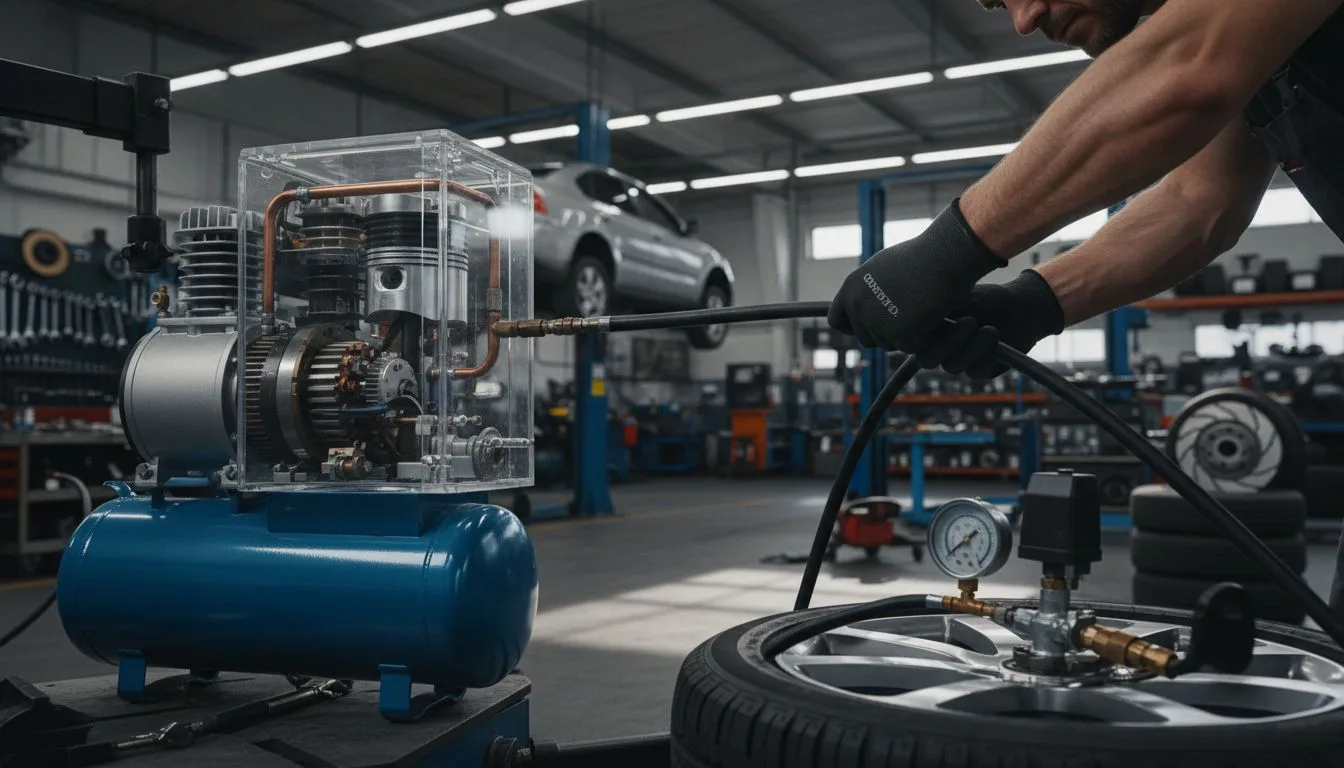
The working principle of a compressor lies in gradually reducing the volume of the gas, which raises its pressure. The most common type is the piston compressor, which works on the principle of the movement of a piston in a cylinder. During the working cycle the following phases occur: the gas is drawn in, then compressed and then discharged into the outlet pipework.
For industrial applications, compressors capable of reaching significant parameters are essential. Projects at VŠB state that large piston compressors can have a capacity of up to 20,000 m³/h and a maximum power input reaching 5 MW. Compressors are divided by the pressure reached into:
-
Low-pressure compressors
-
Medium-pressure compressors
-
High-pressure compressors
Every type of compressor has a specific use in various industrial sectors, from the chemical industry through engineering to the food industry.
The main types of compressor and their uses
Compressors are an essential piece of technology with varied use in industrial and technological applications. eluc.ikap.cz distinguishes four basic types: piston, screw, vane and turbo compressors, with each type having specific characteristics and an area of use.
We will look in more detail at piston compressors, which are among the most widespread. According to dspace.tul.cz they exist in several designs:
-
Vertical compressors
-
Horizontal compressors
-
Boxer compressors
-
Angle compressors
In addition they can be built as single-stage up to seven-stage, with the division into:
-
Single-acting
-
Double-acting
-
With or without a crosshead
-
Air-cooled
-
Water-cooled
-
Lubricated
-
Oil-free
For industrial use, Compressors are key above all in areas where a reliable and uninterrupted supply of compressed air is needed. Screw compressors, for example, are ideal for continuous operation, while piston compressors find their use mainly in smaller operations with single-shift running.

Key properties and technical parameters
The technical parameters of compressors are essential characteristics that determine their performance and usability in various industrial applications. Dspace.tul.cz points out the extraordinary variety of piston compressors, whose properties differ according to the specific operating requirements.
The key technical parameters include the capacity and the discharge pressure. According to the available sources, piston compressors can reach:
-
Capacities from 0.1 to 10,000 m³/h
-
Discharge pressures in the range of 0.1 to 100 MPa
When the discharge pressure is raised above 0.7 MPa, eluc.ikap.cz points out important technical effects: the volumetric efficiency falls and at the same time the temperature of the gas after compression rises.
For precise measurement of the parameters it is suitable to use pressure gauges with a 50 mm dial, which allow accurate monitoring of the pressure characteristics. Other significant parameters include, for example, the cooling system, the method of lubrication, the electrical power input and the noise level of the equipment.
Practical applications in industry and the home
Compressors find wide use across a whole range of industrial and consumer areas where compressed air or gas is needed. Their versatility is evident in many professional and private applications.
Compressors are used in these areas:
-
Automotive: Inflating tyres
-
Sports equipment: Inflating sports items
-
Gastronomy: Pouring beer
-
Surface finishing: Painting
-
Cleaning: High-pressure cleaning
Stationary piston and screw compressors are key above all in industrial operations, where they ensure an uninterrupted supply of compressed air for production technologies. Other significant industrial applications include, for example, the food industry, engineering, construction and the electrical industry, where compressors serve to drive pneumatic tools, to clean, dry or convey bulk materials.
In homes and hobby workshops, compressors find their use in a wide variety of craft and DIY activities, such as painting, grinding, blowing or maintaining garden equipment.
The most common mistakes and advice on choosing
Choosing a compressor is a complex decision that significantly affects efficiency and operating costs. The right choice depends on a range of key factors specific to the particular type of operation and individual requirements.
The most common mistakes when choosing a compressor include:
-
Underestimating the output needed
-
Overlooking the quality of the outlet air
-
Neglecting the costs of operation and maintenance
-
Not taking the noise level of the equipment into account
-
Overlooking future expansion requirements
For the right choice we recommend weighing the following criteria:
-
Precisely determining the required output
-
Assessing the operating conditions
-
Evaluating the quality of air required
-
Calculating the total operating costs
Compressors without an air dryer can be a suitable solution for less demanding operations, but for professional applications the need for compressed air treatment must be weighed carefully. Regular maintenance and monitoring of the technical condition of the equipment, which markedly affect its service life and reliability, are also essential.
Discover the ideal compressor for your needs with https://kompresory-vzduchotechnika.cz
Understanding the differences between the individual types of compressor and their technical parameters opens the way to choosing the right equipment that exactly matches your requirements. You may often face the choice between a piston or a screw compressor, the choice of the right output and taking operating costs into account. These decisions affect the efficiency of your operation and the quality of the work, so it is important to find a reliable and precise solution exactly suited to your focus

Take advantage of the wide range at kompresory-vzduchotechnika.cz, which covers everything from small portable compressors through powerful stationary models to a broad range of pneumatic accessories. To make the choice easier we recommend looking, for example, at the options for stationary piston and screw compressors, which are designed for various operating conditions. Precise monitoring of the state of your equipment is made easier by pressure gauges with a 50 mm dial, which guarantee control over the pressure and ensure faultless operation.
Do not wait until problems with the compressor limit your work. Choose the ideal solution now directly at kompresory-vzduchotechnika.cz and secure the reliability and efficiency of your projects today.
Frequently asked questions
What is a compressor and how does it work?
A compressor is a machine used for compressing gases, its principle lying in reducing the volume of the gas, which raises its pressure.
What are the main types of compressor and their uses?
The main types of compressor are piston, screw, vane and turbo compressors; each type has a specific use in various industrial sectors, such as the automotive industry or the food industry.
Which technical parameters matter when choosing a compressor?
The key technical parameters include the capacity (0.1 to 10,000 m³/h) and the discharge pressure (0.1 to 100 MPa), which affect the efficiency of the compressor.
How do you choose a compressor correctly for your needs?
When choosing a compressor it is important to determine the required output precisely, assess the operating conditions, evaluate the air quality and calculate the total operating costs.