
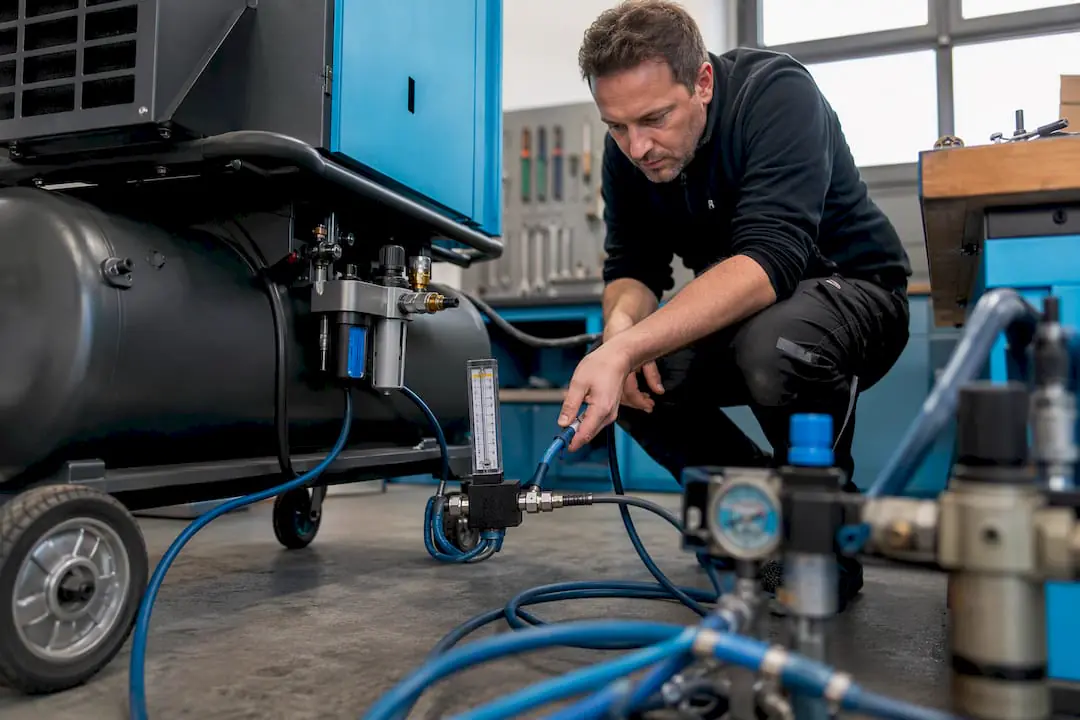
For home and workshop use, choose a portable piston compressor with effective flow matching common workshop tools and an air tank of suitable size. For inflating tyres and minor blowing, a model with lower flow is sufficient; for painting and more demanding tools, higher flow is needed. For field deployment and sandblasting, consider a diesel screw compressor. You can then fine-tune the specific model according to the checklist below.
In brief:
- A transportable piston compressor with a flow of 150–300 l/min and an air tank volume of around 24 litres is suitable for a home workshop or hobby use.
- For longer uninterrupted work or sandblasting, towable diesel compressors with a larger air tank capacity and high flow are more suitable.
- When choosing, you need to monitor the effective flow at the required pressure, a pressure reserve of at least 2 bar, and a corresponding transport system according to the surface and weight of the machine.
- Oil-free compressors are more suitable for painting or medical work, while oil-lubricated ones better handle long-term and demanding operation.
- With electric models, you need to account for limited output and dependence on the electrical grid, or for field deployment, choose a diesel or battery-powered solution.
Contents
- What types of mobile compressors exist
- What flow, pressure, power and air tank volume mean
- Which drive to choose for mobility in the field and in the workshop
- Oil-lubricated or oil-free compressor
- How noise level affects the choice for a workshop or home
- What each compressor type is suited for by task
- How to choose step by step and what to ask the seller
- Personal recommendations for choosing a mobile compressor
- Where to find a suitable mobile compressor and accessories
- Recommended resources for further reading
- Frequently asked questions
What types of mobile compressors exist
A mobile compressor is not a single category, but a group of machines with different designs and purposes. A portable piston compressor, with or without wheels, is the classic choice for a workshop or garage. A weight of 20 to 60 kg allows it to be moved by one person, and power supply is typically 230 V from a standard outlet.
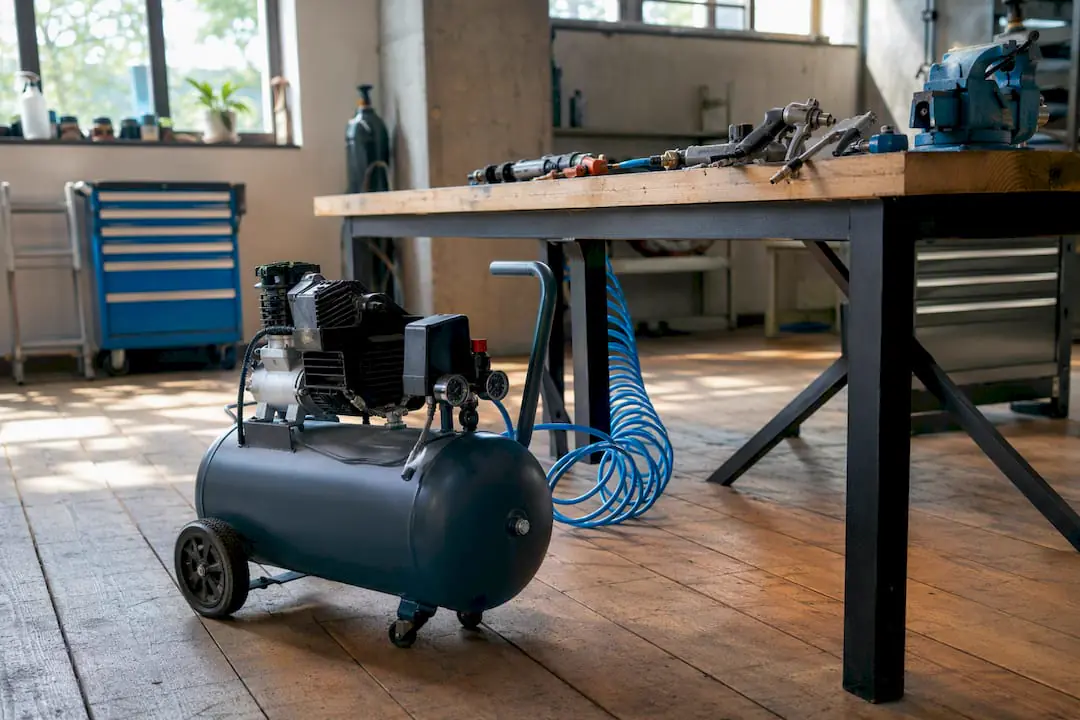
A wheeled compressor on a chassis with larger wheels and a tow bar is intended for construction sites and service shops, where the machine is moved between locations daily, but not on public roads. The air tank volume is usually 50 litres or more.
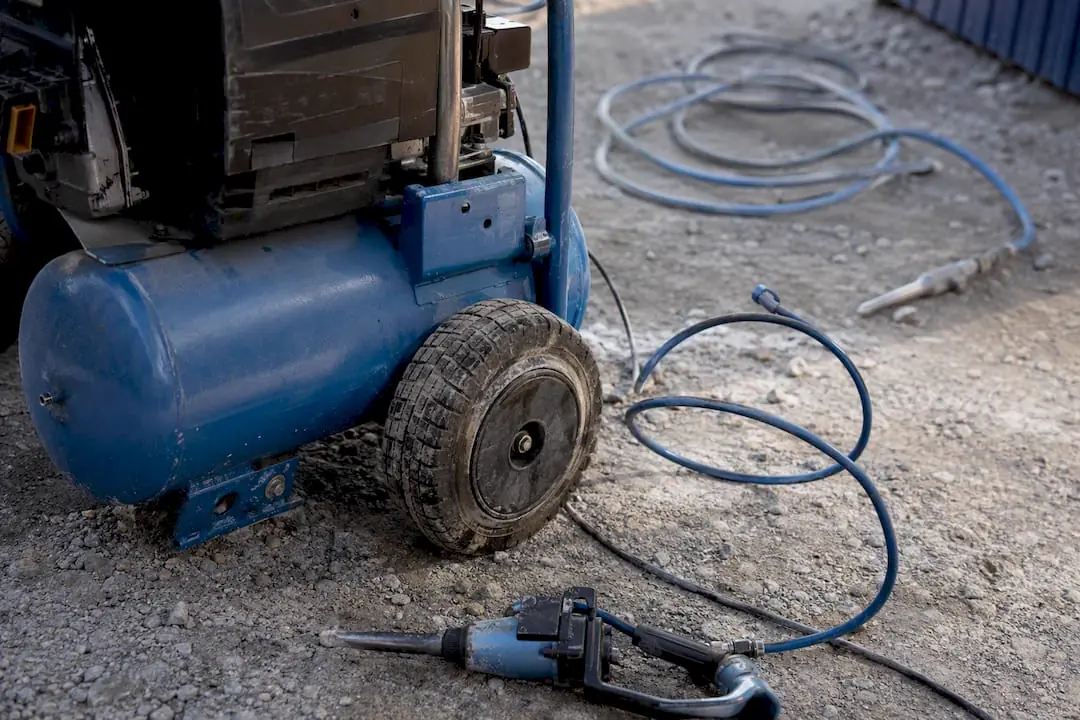
Battery-powered compressors address work without access to electricity, usually only for inflating tyres or minor air top-ups. Output is limited, and they cannot withstand extended continuous operation.
Diesel (towable) compressors are towed behind a vehicle or have their own chassis with a brake. They are deployed in the field, on construction sites without an electrical connection, or for sandblasting, where a standard 230V motor is not sufficient.
- Portable piston: workshop, garage, hobby, tyre service
- Wheeled (230 V/380 V): construction site, car repair shop, longer shifts
- Battery-powered: fast inflation, off-road call-outs, service vehicle
- Diesel/towable: sandblasting, construction sites without electricity, longer uninterrupted operation
What flow rate, pressure, power and air tank volume mean
Manufacturer catalogues such as Airpress emphasize effective capacity in l/min, i.e. the actual volume of air the compressor delivers at a given pressure, not the theoretical intake performance of the motor. This figure determines whether the machine will handle your tools, not the motor power in kW.
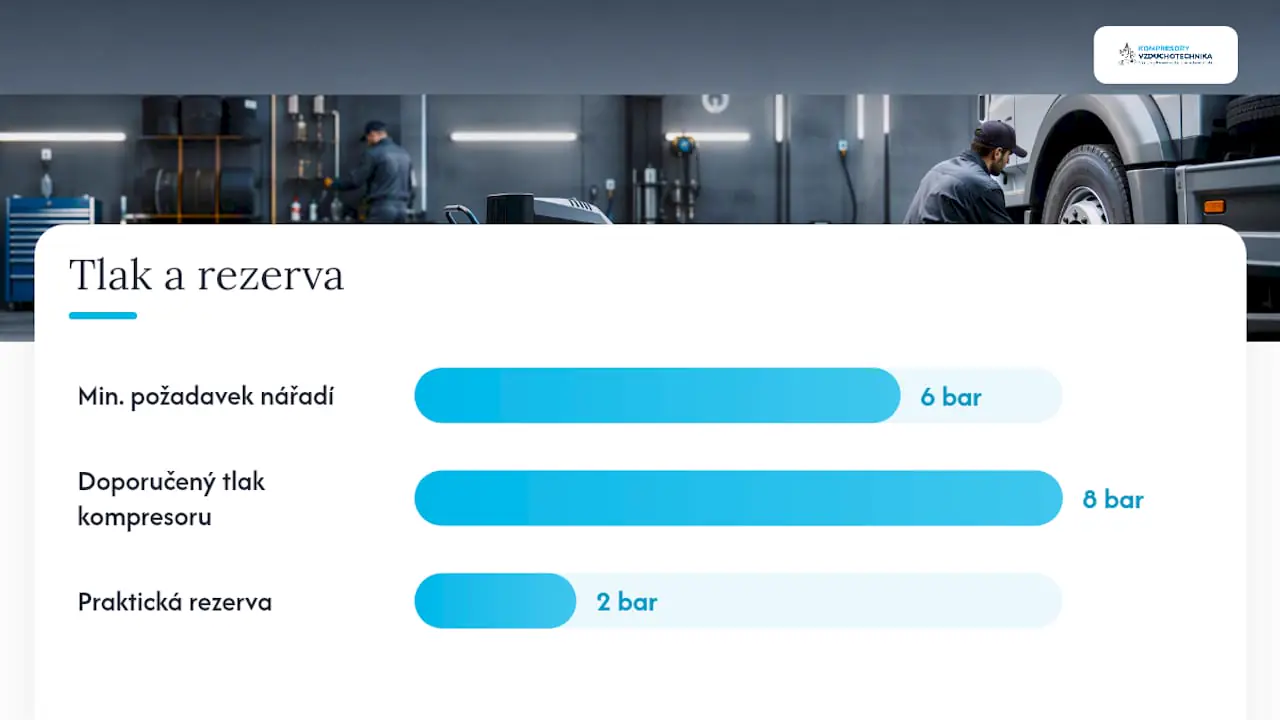
Working pressure is specified in bar and should have a reserve of approximately 2 bar above the minimum requirement of the tool. If a pistol grinder needs 6 bar, the compressor should deliver 8 bar. This reserve prevents pressure drops when several tools are drawing air at once and reduces frequent motor cycling, which shortens its service life.
The air tank volume determines how long you can work without the motor switching on. Smaller mobile compressors have 6 to 24 litres, workshop operations 24 to 50 litres, and professional use over 50 litres.
A simple procedure for calculating the required flow rate:
- Add up the air consumption (l/min) of all tools that may run simultaneously.
- Add a reserve of 20 to 30 % for leaks in the piping and hoses.
- Compare the result with the compressor's effective capacity at the pressure you require, not with the maximum value from the sales brochure.
- Check whether the air tank volume matches the length of uninterrupted work you need.
The indicative motor power varies depending on the application: for example, inflating tyres requires less power than working with impact wrenches or grinders, while professional use requires higher motor power.
Professional tip: Before comparing prices, calculate the actual air consumption according to the labels on the tools. A compressor with higher pressure but low flow won't help you with two tools running simultaneously.
A practical reserve of 2 bar between the minimum tool requirement and the set compressor pressure has proven in the field to be a simple rule that prevents unnecessary motor wear.
Which power source to choose for mobility in the field and in the workshop
The 230 V model is the most affordable choice for a household and smaller workshop. The downside is dependence on the power grid and limited output, since a standard socket can only handle a certain power input.
A battery-powered solution makes sense where electricity is not available and a short, intermittent draw is sufficient, typically for inflating tyres in the field.
Diesel is essential for sandblasting, long-lasting work on a construction site without a power connection, or when you need high and steady flow throughout the entire shift. These machines tend to be heavier and noisier, but independent of the grid.
Transport matters just as much as the motor:
- Wheels and a handle on small models allow the unit to be moved by one person on a flat surface.
- Towed chassis with a drawbar and brake are necessary for machines over 300 kg that are transported behind a vehicle.
- Mounting points and a stable frame limit the compressor's movement during transport on a flatbed or in a van.
- Check that the chassis matches the surface on which you will actually be moving the compressor, i.e. gravel, concrete, or unpaved ground on a construction site.
Oil-lubricated or oil-free compressor
An oil-free compressor delivers cleaner air without any trace of lubricant, which is essential for painting, food industry operations, or work with a spray gun, where an oil micro-stain would ruin the surface. The downside is usually a shorter service life under intensive use and higher noise levels in cheaper models.
An oil-lubricated compressor handles long and demanding cycles better, since lubrication reduces friction and piston wear. It is suitable for workshop tools, pneumatic impact wrenches, or grinders, where air cleanliness is not critical.
- Oil-free: painting, food industry, healthcare, short intensive tasks
- Oil-lubricated: workshop tools, service shops, long operation, lower operating cost per unit
- Oil-free: no maintenance required, but piston rings wear out faster
Professional tip: If you plan to do both painting and rough workshop tasks in one location, consider two smaller compressors instead of one compromise model. Cross-contamination of oil into the paint spray gun is hard to remedy.
How noise level affects the choice for a workshop or home
For operation in a garage, workshop, or near a residential area, choose a compressor with a noise level up to 70 to 75 dB. Above this threshold, long-term work in an enclosed space becomes unpleasant and may disturb the surroundings.
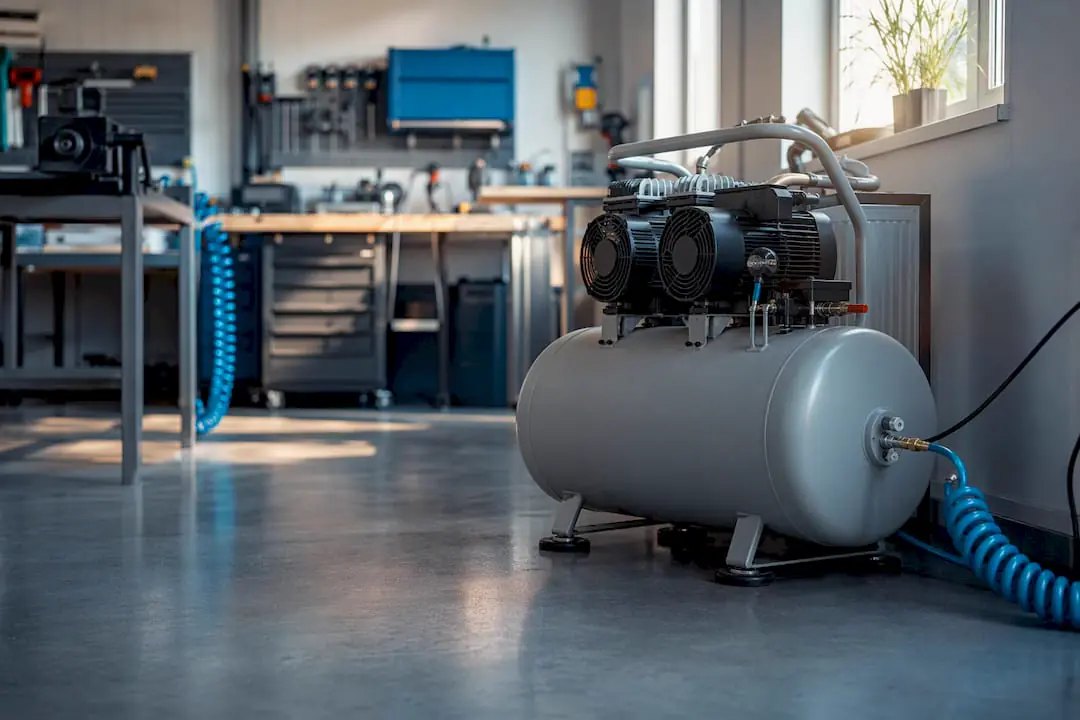
You can reduce perceived noise by placing the compressor further from the work area, using anti-vibration pads under the machine's feet, or installing it in a separate ventilated enclosure. Oil-free models without damping insulation tend to be noisier, so take this into account when choosing one for an apartment or a terraced house.
What each compressor is suitable for depending on the task
Each application has a different required combination of flow and pressure. Inflating tyres requires only a short draw of air, while painting needs a steady and clean flow over a longer period.
Sandblasting has a specific requirement for air volume. Mobile diesel screw compressors with an integrated aftercooler or dryer, such as those used in the ATMOS PDP50 model, can handle long uninterrupted operation with a high flow rate that a small piston compressor can never offer.
For quick home use, such as topping up a tyre or cleaning tools, even a small model with an air tank of around 6 litres will suffice. For regular workshop work, it pays off to invest in an air tank of 24 litres or more, as the motor switches on less often.
How to choose step by step and what to ask the seller
Before buying a mobile compressor, verify specific figures with the seller or service provider, not just advertising descriptions.
- What is the guaranteed effective flow rate at your required working pressure, not just the maximum value at zero draw.
- How long is the warranty and what exactly it covers, including the motor, compressor unit and air tank.
- Is a service network and spare parts available in the region where you will be using the compressor.
- What is the number of motor switching cycles per hour under normal load.
- What are the costs of routine maintenance, oil, filters and any repairs per year of operation.
Missing data on effective flow rate or the number of switching cycles is a first warning sign that the machine specification is simplified or misleading. Similarly, an unclear warranty condition without a clearly stated duration and scope of coverage often means a problem later when making a claim.
- Check the oil level and filters before every longer deployment.
- For diesel models, monitor the fuel and coolant replacement intervals.
- Track total cost of ownership (TCO), not just the purchase price, because a cheap compressor with a short engine lifespan ends up costing more.
Professional tip: Ask the dealer for a technical data sheet with the flow curve at different pressures, not just a single figure. The difference between flow at 6 bar and at 10 bar tends to be significant in cheaper models.
Expert consultation on selection as well as follow-up service is also offered by Kompresory-vzduchotechnika technical support, which readers turn to for more complex cases involving a combination of multiple tools on one network.
Personal recommendation for choosing a mobile compressor
The most common mistake I see customers make is deciding based on motor power in kW, not on effective flow in l/min. Two compressors with the same motor can have different actual output depending on the quality of the piston unit. I always recommend allowing a pressure reserve of 2 bar and an air tank one size larger than seems necessary. It saves switching cycles and nerves when working with multiple tools simultaneously.
— Zdeněk
Where to find a suitable mobile compressor and accessories
Kompresory-vzduchotechnika offers portable compressors with several air tank sizes according to actual operating needs, from compact 22-liter tanks for hobby and service work up to 34-liter air tanks for workshop operation with longer cycles.
For more demanding use, where longer uninterrupted operation without frequent motor cycling is needed, it makes sense to opt for the model with a 128-liter air tank. You can supplement your chosen compressor with quality hoses and accessories, or arrange a service contract with a guaranteed response time. If you're not sure what air tank volume and drive type your workplace needs, Kompresory-vzduchotechnika technical support can help with the selection based on your specific tools and operating conditions — just describe what equipment you plan to run and for how long each day.
Recommended resources for further reading
For a more in-depth comparison of drive types, read the comparison of screw and piston compressors or the compressor buying checklist. General selection recommendations are also offered in manufacturer catalogs such as Atlas Copco or Airpress.
Frequently Asked Questions
Which compressor should I choose for a home workshop?
For a home workshop, the most practical option is a portable piston compressor with an effective flow rate of 150 to 300 l/min and an air tank of 24 litres or more, which can handle common tools as well as minor inflating tasks.
Which is better, an oil-lubricated or oil-free compressor?
An oil-free compressor is better for painting and work requiring clean air, while an oil-lubricated model is better suited to long and intensive workshop use with lower operating costs per unit.
Which compressor is suitable for inflating tyres at home?
For inflating tyres, a small portable or battery-powered compressor with a flow rate of up to 150 l/min is sufficient; there is no need to invest in an air tank larger than 24 litres.
What is better, a compressor or a turbo?
These are completely different devices: a mobile compressor supplies compressed air for tools and inflating, while a turbocharger is a part of the vehicle's engine used to increase its power, so the comparison does not apply to the same category of use.
What is the approximate price of a mobile compressor?
The price depends on the type of drive, the air tank volume, and the effective flow rate; portable piston models for workshop use are more affordable than towable or diesel-powered machines intended for outdoor use or sandblasting.