


The indicative price of an energy audit of compressors for an industrial operation in Czechia depends on the scope of measurement and the number of machines and may vary. In most cases, the audit pays for itself through energy savings and the possibility of drawing subsidies for modernisation. Before you start selecting a supplier, it is worth discussing the scope of the operation in a non-binding consultation, for example with Kompresory-vzduchotechnika.
In brief:
- The price of an energy audit ranges from ten to over two hundred thousand CZK, depending on the scope of measurement and the number of machines, with smaller operations being cheaper.
- The audit usually takes several weeks and includes long-term measurement calculated based on the number of compressors, their type, and the required analyses.
- The most effective measures include repairing leaks, reducing the working pressure, and modernising control systems with the aim of a quick return on investment.
- The result is an action plan with concrete steps, which can be supported by subsidy programmes, thereby significantly reducing the costs of modernisation projects.
- Even smaller operations can save significantly on energy after repairing leaks and proper optimisation, which often pays off within a single year.
Contents
- What a compressor station audit actually includes
- The price of a compressor energy audit: range and what influences it
- What measures the audit will propose and how quickly the investment will pay back
- How to choose the depth of the audit according to the size of the operation
- How the audit proceeds step by step and how long it takes
- Standards, grants and the expertise behind the recommendations
- Why companies in the Czech Republic view the audit too narrowly
- Consultation and next steps with Kompresory-vzduchotechnika
- Verified sources and standards for further study
- Frequently Asked Questions
What a compressor station audit actually includes
A compressor station audit is not a one-off inspection with a stamp of approval. The technician measures specific operating variables over a longer period to capture the actual behaviour of the system, not just the momentary state during the visit.
The measured parameters and methods vary depending on the type of operation, but the basis is usually similar:
- Energy consumption of the compressors and their utilisation over time.
- Air flow and pressure in the main branches of the distribution system.
- Idle running times versus actual air consumption.
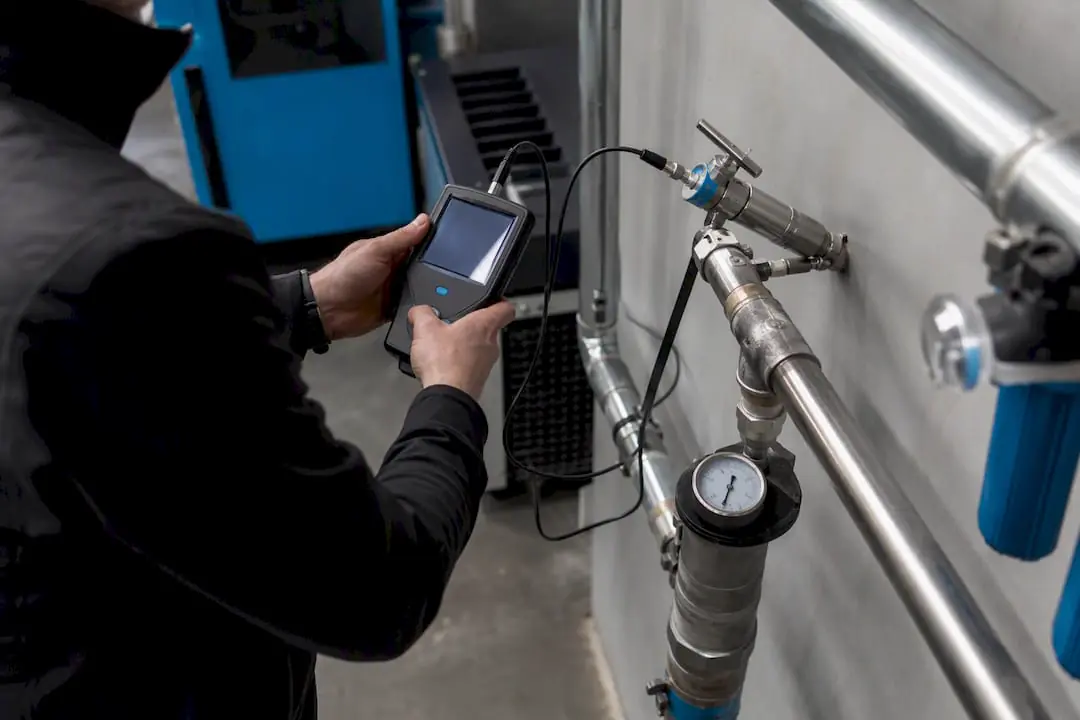
- Leak detection using ultrasonic detectors, which can locate even leaks that are inaudible to the human ear.
- Checking air quality, filtration, and dew point in dryers.
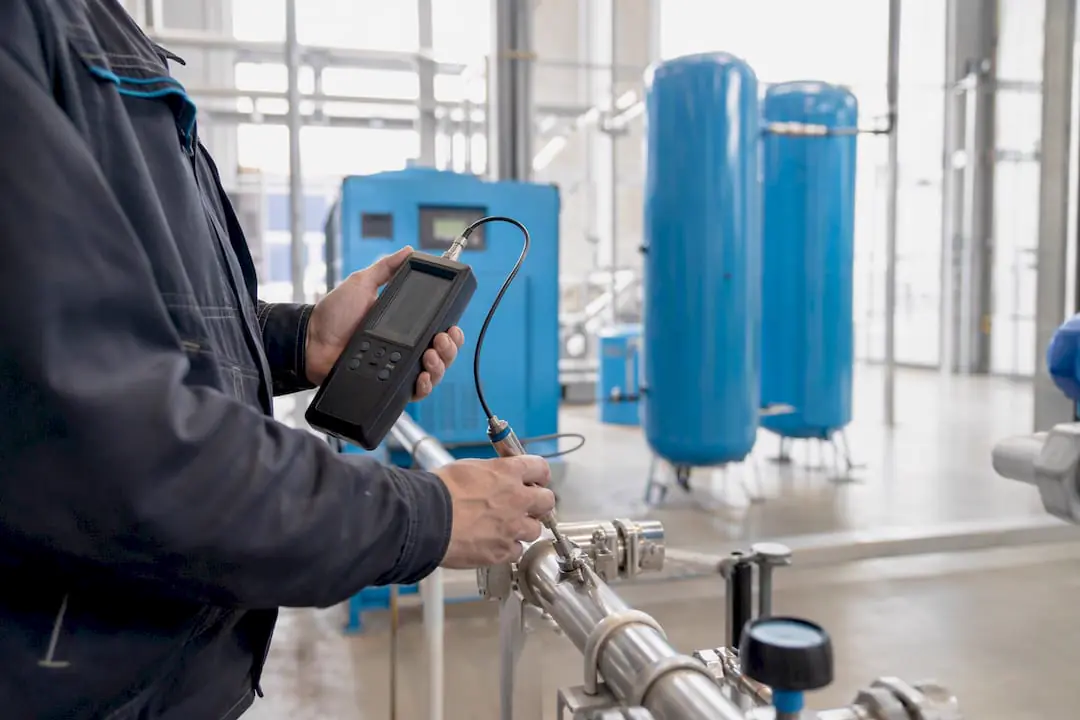
Continuous monitoring usually lasts days to weeks, because a one-off reading won't capture peaks or night-time idle running. The output is a report with utilisation graphs, a list of leaks and an estimated financial loss for each of them, plus a specific action plan of measures ranked by payback period. Detailed diagnostics of compressor condition are also described in the importance of compressor diagnostics for efficient operation.
Price of a compressor energy audit: range and what influences it
A comprehensive energy audit of a production facility in the Czech Republic can cost anywhere from lower amounts for smaller operations up to higher amounts for large facilities with many machines and a more detailed analysis.
Price guide: a small operation with a single compressor usually falls within the lower tens of thousands of CZK, while a comprehensive audit of an entire plant including laboratory analyses and long-term monitoring can reach up to CZK 200,000.
Several factors affect the final price:
- The number and type of compressors, since a screw compressor with a frequency inverter requires a different analysis than an older piston machine.
- The length of monitoring, as measurement over two weeks will provide more accurate data than a three-day reading, but will make the job more expensive.
- The need for laboratory analyses of air or oil quality.
- The location of the facility and the availability of technicians on site.
- The scope of work involved in installing measuring sensors into the piping.
For a quick overview, a cheaper option also exists. A virtual audit or quick screening without physical measurement can be obtained for a low price; for simple facilities, the price of a standard audit is higher. However, this is more of an estimate of savings potential than a basis that would hold up for a grant application.
What measures the audit will propose and how quickly the investment pays back
The audit report does not end with a diagnosis but with a specific list of steps ranked by cost-to-benefit ratio. The following measures appear most often:
- Repairing leaks in the distribution system, which tends to be the fastest-returning item.
- Reducing the working pressure to the minimum actually required by the operation.
- Modernizing the control of the compressor station and deploying inverters.
- Recovering waste heat for heating the hall or water heating.
- Replacing filtration and adjusting air drying according to actual consumption, not according to the original oversizing.
Optimizing the entire compressed air system can significantly reduce operating energy costs, which, for facilities where compressors make up a significant part of the electricity bill, means a useful saving. A specific illustrative example from practice includes heat recovery and replacement of lighting with LED, with a payback period of several years; for more comprehensive packages of measures, the payback tends to be longer, but the savings are greater.
Professional tip: Before investing in a new compressor, have the actual cost of leaks in your distribution system calculated. It often turns out that fixing leaks has a shorter payback period than any new technology.
The results always depend on the initial state of the system. A neglected distribution system with decades-old control will save considerably more after measures are implemented than a station that has already undergone partial modernization. Practical tips on specific modifications can also be found in the article how to optimize compressed air consumption and reduce costs.
How to choose the depth of the audit according to the size of the operation
The choice between a basic and a comprehensive audit should be based on the ČSN ISO 50002 standard, which defines the scope and methodology of energy audits, and above all on the actual operating profile of the company, not on what the cheapest supplier offers.
- A small operation with one to two compressors usually gets by with targeted measurement directly at the compressor station and shorter monitoring.
- A medium-sized operation with multiple technologies and a branched distribution system already needs a broader analysis, including pressure losses in individual branches.
- A large facility with dozens of consumers requires full operational monitoring, often supplemented by laboratory analysis of air quality.
A virtual audit or quick survey makes sense as a first step when you just want to get a rough idea of the savings potential before ordering a full assignment.
How the audit proceeds step by step and how long it takes
The process has a fixed structure that most serious suppliers follow:
- Inquiry and initial consultation, where the size of the operation and the goals of the audit are discussed.
- Drawing up a measurement plan according to the number of compressors and distribution systems.
- Installation of measuring instruments and the actual monitoring directly in operation.
- Analysis of the collected data and identification of leaks and inefficient modes.
- Delivery of the final report and consultation on the proposed measures.
The monitoring itself takes several days to weeks depending on scope, and the entire process from inquiry to report delivery can take several weeks. Before the first consultation, it is worth preparing a list of compressors and appliances, data on shift operation, and approximate electricity bills, so the technician can immediately estimate the scope of measurement.
Standards, subsidies, and the expert background behind the recommendations
The methodology for auditing compressor stations is based on the ČSN ISO 50002 standard, which sets requirements for energy audits across industries, and builds on domestic legislation governing mandatory and voluntary energy audits. These expert texts on the Kompresory-vzduchotechnika website further develop topics such as energy savings with a compressor or the use of waste heat.
An audit is not just a document to be filed away. It serves as an official technical basis for subsidy applications under the OP TAK or OPŽP programs, which can significantly reduce the net costs of implementing the proposed measures.
As a result, the initial investment in the audit often pays off even before the actual energy savings have time to materialize.
Why companies in Czechia take too narrow a view of audits
The most common mistake I see in industrial operations is viewing the audit as a necessary evil before applying for a subsidy. The figure on the audit invoice is then compared only to the cost of paperwork, not to what it actually delivers. That is short-sighted.
The real value of an audit lies in the action plan, not in the report itself. A company that has an audit prepared and then ignores the recommendations for half a year has wasted its money. Conversely, an operation that fixes the identified leaks and adjusts the working pressure within a few weeks often covers the cost of the audit even before the first subsidy payment arrives.
A second thing that conventional advice underestimates: the price of an audit should not be measured only against the size of the operation, but against the age of the compressor station. A ten-year-old distribution system without upgrades hides more reserves than a recently modernized station, so even a more expensive comprehensive audit pays off faster there. The priority should be to determine the state of leaks and pressure settings, and only then address whether new technology is needed.
— Zdeněk
Consultation and further steps with Kompresory-vzduchotechnika
Kompresory-vzduchotechnika offers exactly the combination an audit requires: a technical team that can design the measurement, evaluate the data, and directly supply and install the solution, without you having to look for another contractor to implement the measures.
After the audit evaluation, the next steps usually involve fixing leaks, adjusting filtration, or replacing dryers. The compressed air filtration range according to ISO 8573 covers exactly this part of the measures, and for older machines it is often worth considering a more modern compressor with lower consumption.
If you would like an indicative price calculated for your specific operation, simply contact Kompresory-vzduchotechnika with an overview of the number of compressors, their age, and approximate annual energy consumption. Based on these details, the team will propose the scope of measurement and arrange a non-binding consultation directly at your facility.
Verified sources and standards for further study
To verify the technical parameters of the audit, the standard ČSN ISO 50002 applies, which defines the procedure and scope of energy audits. Documentation for the OP TAK and OPŽP subsidy programs contains specific requirements for what an audit must include to be recognized as part of an application. Expert articles on the Kompresory-vzduchotechnika website, such as compressor diagnostics or utilization of waste heat, add practical context to the measures proposed in the audit.
Frequently asked questions
How much does a compressor energy audit cost?
A comprehensive audit of a compressor station in an industrial facility in Czechia usually costs between 25,000 and 200,000 CZK, depending on the scope of measurement and the number of machines, while a quick virtual screening can be obtained for just a few thousand crowns.
How much does an energy assessment of a building cost?
An energy assessment of a simple building starts at roughly 60,000 CZK, while for larger complexes with multiple buildings, the price increases depending on the complexity of the technologies and the need for additional measurements.
How long does an audit of a compressor station take?
The measurement itself takes days to weeks, while the entire process from inquiry to delivery of the final report usually takes several weeks.
Is an audit worthwhile for smaller operations as well?
Yes, even operation with a single compressor can often reveal leaks and incorrect pressure settings through an audit, and fixing these pays off faster than in large facilities, because the initial investment in the audit tends to be lower.
Can the audit serve as a basis for a subsidy?
An audit prepared in accordance with ČSN ISO 50002 serves as an official technical basis for the OP TAK and OPŽP programs, which reduces the net costs of implementing the proposed measures.