

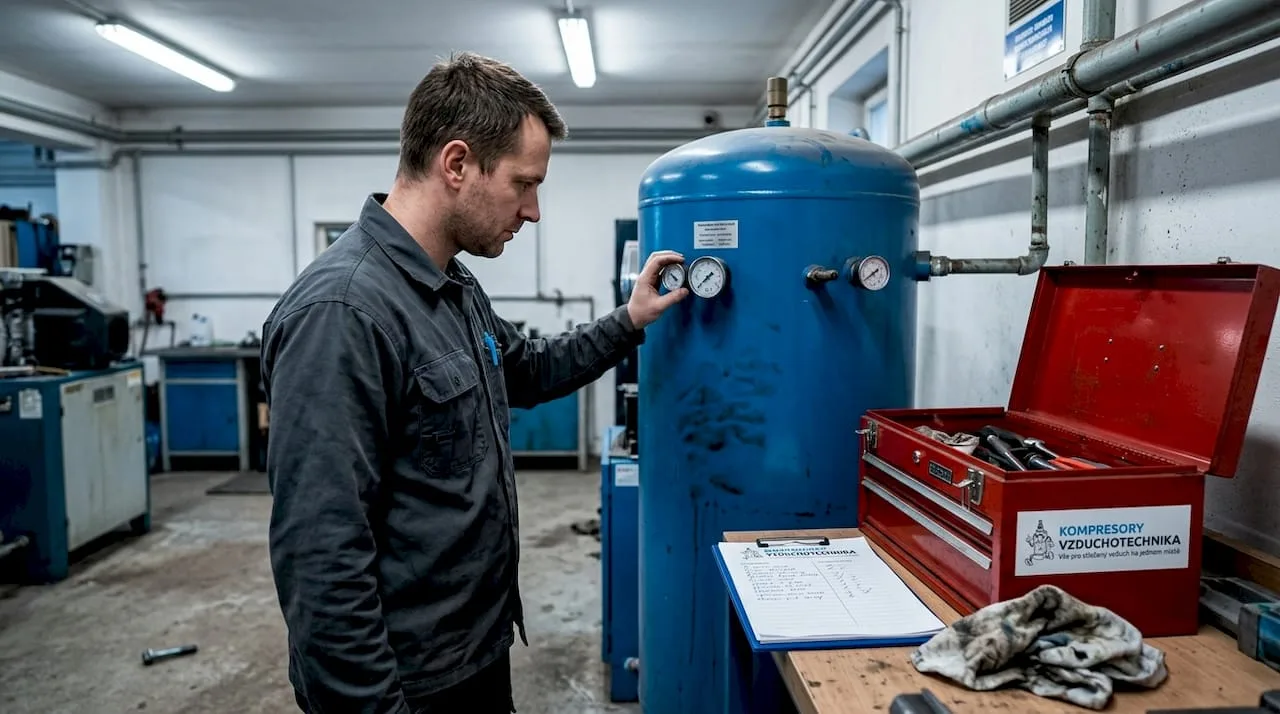
An air receiver tends to be perceived in pneumatic systems as a mere container for air. In reality it is a key element which directly influences the stability of the pressure, the life of the compressor and the safety of the whole system. Many technicians underestimate the influence of the right choice of air receiver and its regular maintenance, while the consequences show up only at a failure. In this article you will find out how an air receiver works, what its benefits are and how to proceed with the choice, installation and service.
Key findings
| Point | Details |
|---|---|
| Stabilisation of pressure | The air receiver prevents sharp pressure fluctuations and protects the whole pneumatic system. |
| Energy saving | A correctly chosen air receiver reduces the consumption of energy and the frequency of switching of the compressor. |
| Efficiency and maintenance | Regular draining of the condensate and checking of the valves fundamentally increase reliability. |
What an air receiver is and how it works
An air receiver is a pressure vessel intended for the accumulation of compressed air. Its primary function is the equalisation of pressure fluctuations. The compressor works cyclically, while the draw of air tends to be variable. The air receiver covers this mismatch and ensures a stable supply even at peaks in the draw. Without it the compressor would have to react to every change immediately, which leads to excessive wear.
Basic technical parameters:
- Volume: It is chosen according to consumption (typically 24 to 1000 litres).
- Maximum pressure: It must correspond to the limits of the system (as standard 8 to 16 bar).
- Certification: In the EU obligatory according to the directive PED 2014/68/EU.
- Orientation: A vertical (saving space) or horizontal design.
Main benefits and mistaken ideas
An air receiver brings measurable advantages, above all the reduction of the number of switchings of the compressor. Every start loads the motor, the valves and the bearings. The air receiver works as a buffer which spares the mechanical parts and the electrical energy. It further helps to stabilise the output pressure for the tools and enables a partial separation of moisture (condensate) before the air enters the distribution system.
A frequent myth: A bigger air receiver is always better. In reality a vessel that is too large needlessly lengthens the time of the initial filling and increases the investment costs without a real benefit for the specific application.
Professional tip: When choosing, always start from the measured consumption of air. An undersized air receiver forces the compressor to switch too often, which dramatically shortens its service life.
Pneumatics vs. hydraulics
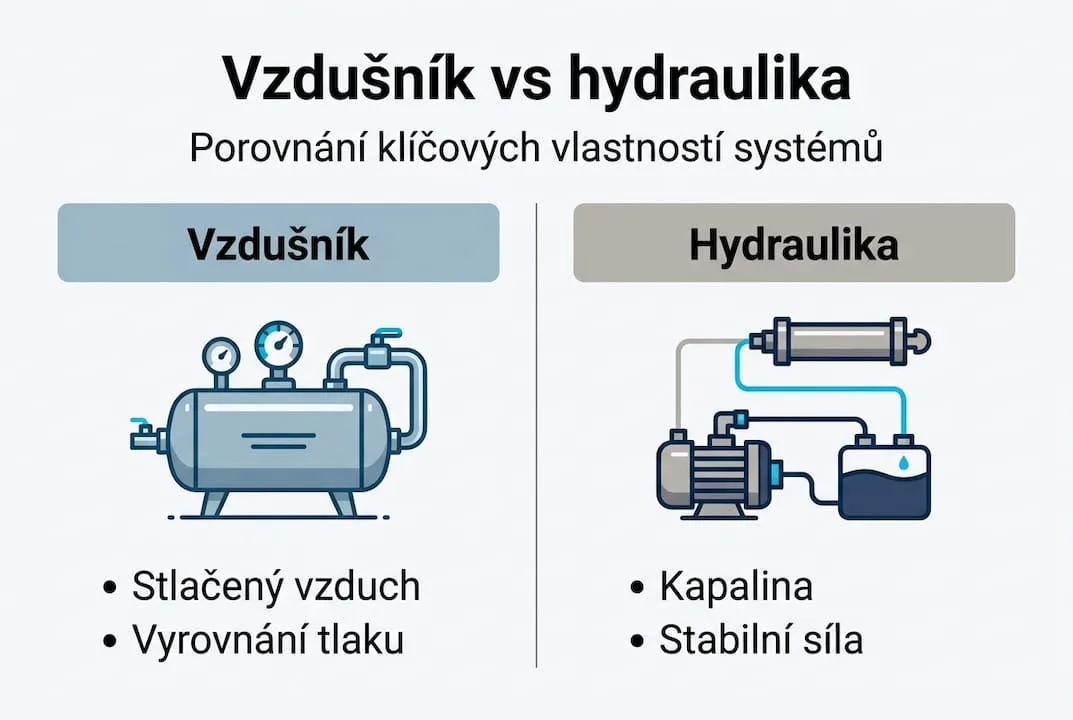
The difference lies in compressibility. Air is compressible, which is why in pneumatics we need an air receiver as a store of energy. Hydraulic systems work with an incompressible liquid, where the pressure is transferred immediately. Pneumatics dominates in applications requiring speed, simplicity and cleanliness (e.g. assembly lines in automotive or construction tools).
Practical tips for choice, installation and maintenance
When installing, place the air receiver on a firm base with good access. Every pressure vessel must be equipped with a manometer, a safety valve and a condensate drain valve.
The maintenance procedure:
- Draining of the condensate: Daily (manually) or automatically using a drain. In this way you prevent internal corrosion.
- Check of tightness: Regularly check the joints so that energy losses do not occur.
- Inspection: Observe the legal deadlines for inspections of pressure vessels (as a rule every 5 years).
- Safety valve: Test its function at least once a year.
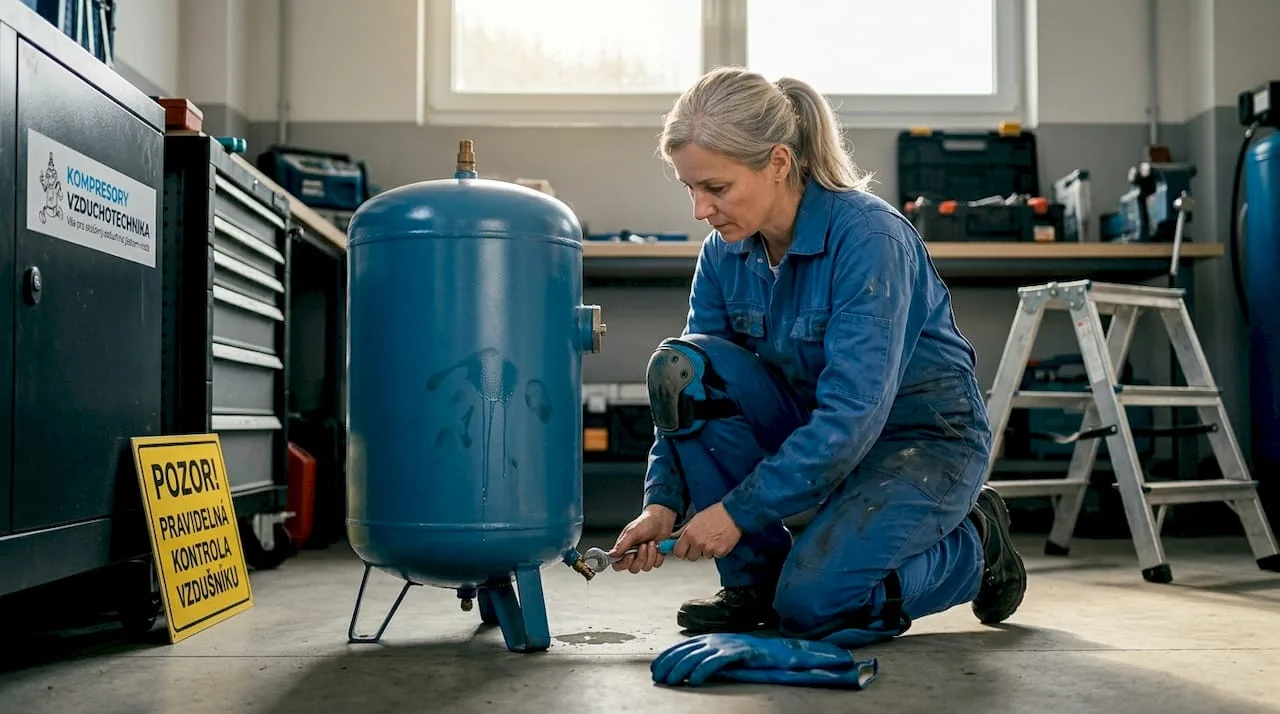
Professional tip: An automatic condensate drain is an investment that pays off. Manual draining is often neglected in practice, which leads to corrosion and contamination of the air in the distribution system.
Continuous monitoring and reliability
Most specialists deal with the air receiver only at installation. The key to savings, however, is ongoing monitoring. Follow the trends in consumption – if the compressor switches more often at the same load of the machines, you probably have leaks in the system. Regular elimination of air leaks is the fastest way to reduce the costs of electricity.
Solutions for professional pneumatics
At Kompresory-vzduchotechnika.cz you will find a complete range for your compressed air system. We offer certified air receivers from 24 to 1000 litres meeting the strict European standards.
Besides pressure vessels you will find with us economical SCR screw compressors and all accessories for air treatment. Our team will help you with the calculation of the necessary volume and with the design of efficient distribution exactly for your workshop or industrial plant.
Frequently asked questions
How do I recognise that the air receiver is too small?
The compressor starts more than 10 times an hour at an ordinary draw and the output pressure in the system visibly fluctuates when a tool is started.
How often should the condensate be drained?
In intensive operation daily. If you have an automatic drain, a weekly check of its function is enough.
Why does an air receiver extend the life of the compressor?
It limits the number of starts of the motor and damps pressure surges, which reduces the thermal and mechanical stress on the valves and bearings.
Are inspections needed for an air receiver?
Yes, like every stationary pressure vessel an air receiver is subject to regular inspections according to the valid safety regulations (in the Czech Republic according to the decree on reserved technical equipment).