

Variable pressure tends to be automatically perceived in industry as an undesirable phenomenon. This idea is, however, inaccurate. Correctly controlled fluctuation of pressure can be a tool for increasing the flexibility of the system, reducing the energy demand and adapting the output to current needs. Knowing when variable pressure is a problem and when an advantage is among the basic competences of a technician. This article explains the causes of pressure fluctuation, its influence on systems and offers specific recommendations for practice.
Key findings
| Point | Details |
|---|---|
| The benefit of controlled pressure | Correctly controlled variable pressure increases the flexibility and efficiency of systems. |
| Choice of valves | Pilot valves offer the most precise control of pressure with a variation of only 1–5 %. |
| The importance of maintenance | A regular check of the valves minimises the risks of surges and extends the service life. |
| Safety | Regulating elements protect the system from dangerous fluctuations and mechanical damage. |
What variable pressure is and why it arises
Variable pressure denotes a state in which the working pressure in the system changes over time. The distinction between controlled and uncontrolled fluctuation is key. Controlled fluctuation is deliberately set for regulating the output. Uncontrolled fluctuation arises unplanned, for example on the sudden closing of a valve, from an air leak or from insufficient capacity of the air receiver.
Typical causes of fluctuation:
- Changes of the draw when starting tools and machines.
- Air leaks in the pipework or the joints.
- Insufficient capacity of the pressure vessel.
- Wear of reducing valves and safety valves.
- Changes of the ambient temperature influencing the density of the air.
Practical finding: Short-term pressure surges (fractions of a second) are not visible on an ordinary manometer, yet they can damage the seals of tools. During diagnostics it is therefore advisable to use digital pressure sensors with data recording.
The key role of variable pressure in systems
Pressure directly determines the performance of a tool. A drop of 10 % can reduce the real output by up to 20 %. Conversely overpressure causes excessive wear of the seals and shortens the life of the components. Safety valves and pressure reducers are the basic protective elements which must eliminate or correct these fluctuations.
| Parameter | Undesirable fluctuation | Controlled fluctuation |
|---|---|---|
| Cause | Leak, fault, shock wave | Deliberate regulation of the output |
| Energy demand | High (losses) | Optimised |
| Risk of a fault | High (surges) | Low |
Professional tip: Check the function of the safety valves at least once every three months. The valve must be able to open freely in a manual test. A stuck valve provides no protection whatsoever.
Comparison of valves for pressure control
The choice of valve depends on the required accuracy. Pilot valves are the most suitable for automation, because they keep the variations within a range of 1–5 %. Standard pressure reducers are sufficient for ordinary workshop distribution.

The procedure for the choice:
- Pressure range: Automated processes require a deviation of up to 5 %, general distribution tolerates 10–15 %.
- Flow: The valve must be dimensioned for the maximum peak flow, not just for the average.
- Conditions: High temperatures require special sealing materials.
Practical recommendations for efficiency
Efficient pressure control requires more than just buying valves. Ongoing care is important:
- Monitoring: The installation of sensors in critical branches reveals problems in time.
- Elimination of leaks: A leak with a diameter of 3 mm at 7 bar represents a loss like the output of a smaller compressor.
- Dimensioning of the air receiver: A sufficient store evens out peaks and prevents sharp drops.
- Documentation: Record the pressure values after servicing for future comparison.
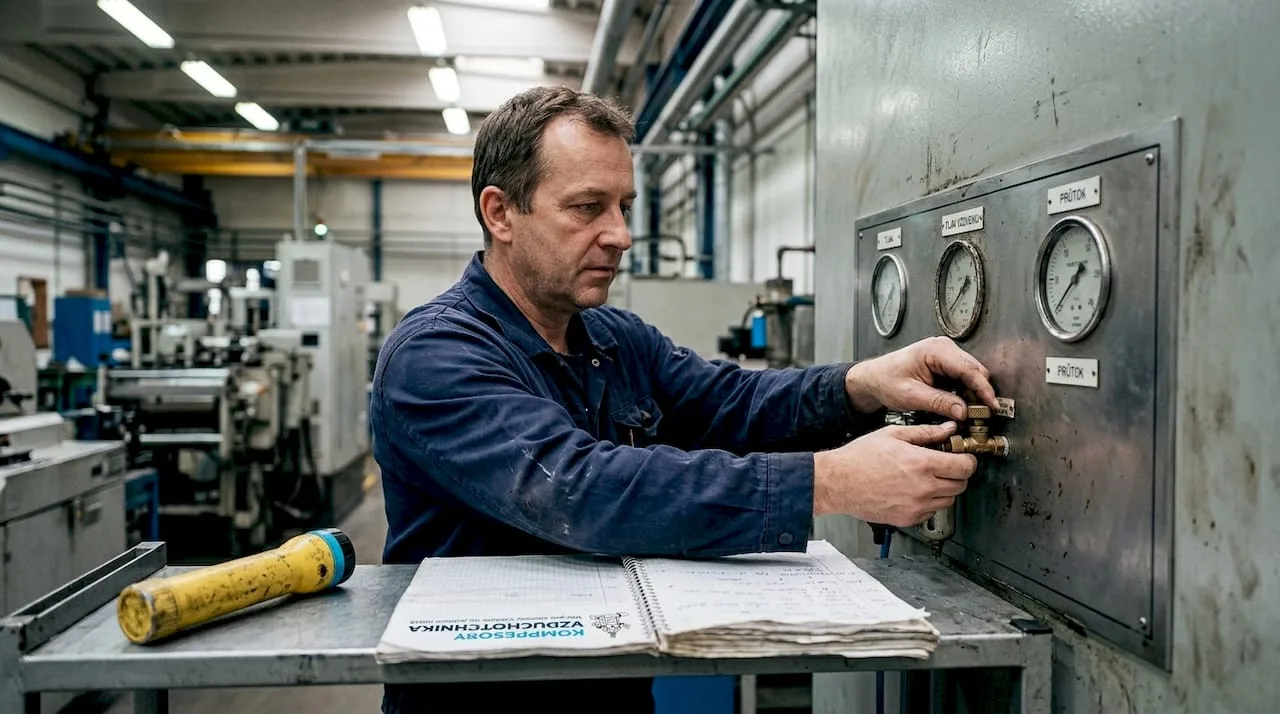
Professional tip: Pilot valves are ideal for lines where light and heavy operations alternate. Their ability to react to changes of flow with a minimal deviation spares the connected tools.
Solutions for pressure control with us
If you need to manage the fluctuation of pressure, at Kompresory-vzduchotechnika.cz you will find everything necessary.
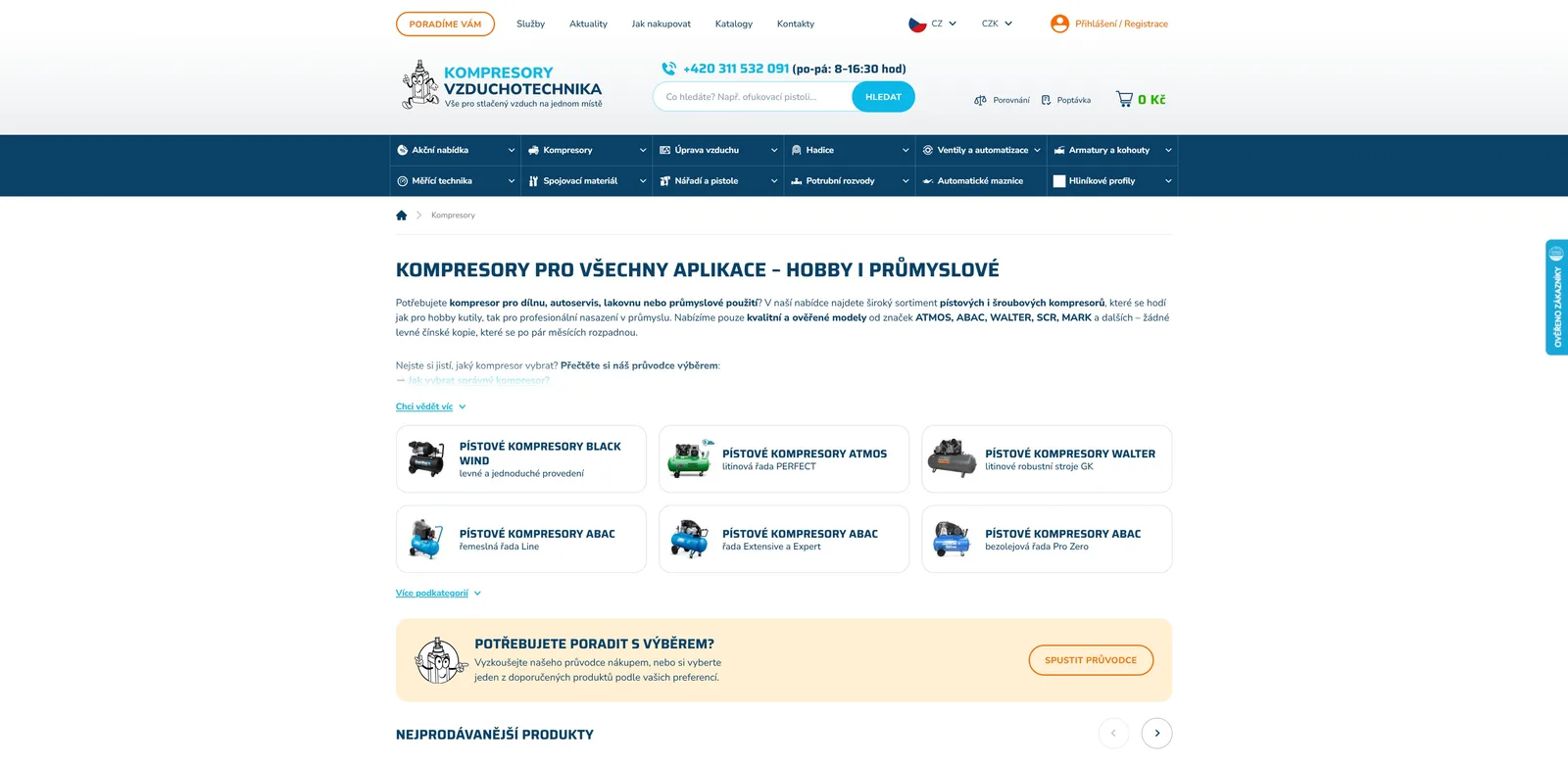
We offer pneumatic tools for various pressure ranges, precise safety valves and complete air treatment units up to 18 bar. Our technical team will help you with the dimensioning of the system, so that your operation is maximally economical and safe.
Most frequent questions
What is the ideal range of variable pressure?
For automation the recommended range of fluctuation is 1–5 %. With ordinary tools fluctuations of up to 10 % are acceptable.
Can the fluctuation of pressure destroy a tool?
Yes, especially pressure surges on the sudden opening of valves can tear seals or damage the rotors of pneumatic motors.
How often should the control valves be checked?
We recommend a visual check and a tightness test at least once a month, so that constant efficiency is ensured.
How does pressure regulation save money?
By reducing the pressure by 1 bar you save approximately 7 % of the costs of the electrical energy of the compressor.