

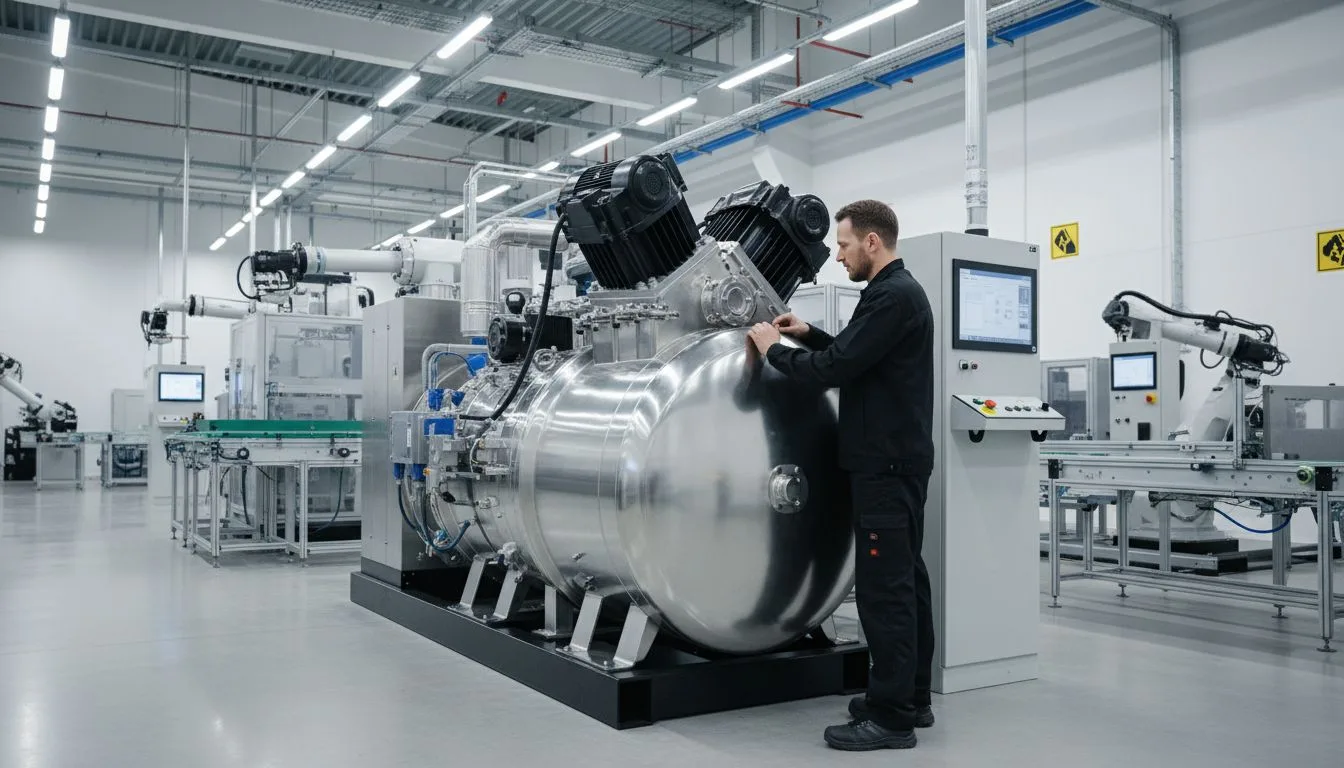
Clean air without the slightest trace of oil is invaluable in many sectors. Oil-free compressors therefore find ever wider use in industry, healthcare and the food industry, where any contamination can threaten product quality or patient safety. It is these compressors that make it possible to achieve absolute air purity, which offers a solution for demanding technological processes and for workplaces with high demands on reliability and simple maintenance.
Contents
- What oil-free compressors are and how they work
- The main types and how to choose an oil-free compressor
- Comparison table of the categories
- Advantages and limits of oil-free technology
- Use in practice and key applications
- How to choose the right category
- Maintenance, operating costs and comparison with alternatives
Key takeaways
| Point | Details |
|---|---|
| Oil-free compressors provide clean air | They produce air of the purity class according to ISO 8573-1, class 0 or 1, with no risk of oil contamination. |
| Different designs for specific applications | Piston, screw, scroll and diaphragm compressors differ in output, noise level and suitability for a given operation. |
| Less maintenance and long service life | Oil-free compressors require less maintenance, which reduces the total operating costs. |
| Higher initial cost | The initial investment is higher, but the long-term savings and the air purity make up for it. |
What oil-free compressors are and how they work
Oil-free compressors compress air without lubricating oil in the working space. The moving parts are either made of low-friction materials or lubricated by another technology that keeps the oil strictly out of the air circuit. The result is compressed air free of oil vapours, ideal for sensitive applications.
The technological principle lies in a special design concept that eliminates direct lubrication of the moving parts with oil. The key approaches are:
- Special low-friction sealing materials
- Precisely machined surfaces of cylinders and pistons
- Special polymers resistant to high pressure and temperature
- Advanced technologies for surface treatment of the components
The main differences compared with oil-lubricated compressors:
- An oil-lubricated compressor uses oil to lubricate and cool the piston or the rotor. Oil mist can then get into the outlet air, which requires separators and filters.
- An oil-free compressor produces air of purity class ISO 8573-1, class 0 or 1, without additional filtration.
- Oil-lubricated compressors tend to be more robust and cheaper to buy, but the costs of maintenance and filters add up.
Compressors without an air dryer often use advanced cooling systems that ensure the optimum operating temperature and service life of the equipment. Producing absolutely clean air is critical, for example, in the food industry, in pharmaceuticals, in electronics or in the manufacture of sensitive products.
Professional tip: When switching from an oil-lubricated to an oil-free compressor, check the whole air circuit. Oil residues in the pipework can contaminate the air even from a new machine.
The main types and how to choose an oil-free compressor
Oil-free compressors come in several designs that differ in technical parameters and in suitability for specific applications.
Oil-free piston compressors
The piston is fitted with special PTFE or graphite segments that need no oil lubrication. This is the most widespread category on the market.
- Output: 0.5 to 5 kW
- Pressure: usually up to 10 bar, up to 15 bar in special models
- Noise level: 60 to 85 dB
Suited to intermittent operation in workshops, service centres and smaller operations. The main drawback is the limited duration of continuous running, usually 50 to 70 % duty cycle (the ratio of running time to total time). Overloading leads to overheating.
Oil-free screw compressors
They work with a pair of screw-shaped rotors that pass the air on without direct contact. They need no lubrication in the working chamber and are built for continuous operation.
- Output: 5 to 250 kW
- Pressure: 6 to 13 bar
- Noise level: 62 to 75 dB
The number one choice for production and industry. They handle continuous load (100 % duty cycle), have low energy consumption and minimal vibration. The higher purchase price comes back through lower operating costs.
Scroll compressors
A scroll compressor uses two spiral plates, one fixed and the other moving on an eccentric path. The air is gradually compressed towards the centre of the spiral without piston movements or rotors requiring lubrication.
- Output: 1 to 15 kW
- Pressure: 8 to 10 bar
- Noise level: 45 to 65 dB (markedly quieter)
Ideal for laboratories, hospitals, quiet office operation or clean rooms. The drawbacks are a higher price per kW of output and limited scalability for very high outputs.
Oil-free diaphragm compressors
A diaphragm compressor uses a flexible diaphragm driven by a piston mechanism or hydraulically. The air never comes into contact with moving metal parts, so the output is absolutely clean.
- Output: 0.1 to 2 kW
- Pressure: 3 to 10 bar
- Noise level: 50 to 70 dB
They are used in analytical laboratories, when filling cylinders with medical gases or in the food industry. They are portable and reliable, but limited in output.
Compressors with 2.2 kW output are an interesting category for small and medium operations that need a reliable source of compressed air with an optimum ratio of output to price.
Comparison table of the categories
| Category | Typical output | Noise level (dB) | Duty cycle | Suitable applications | Maintenance costs |
|---|---|---|---|---|---|
| Oil-free piston | 0.5 to 5 kW | 60 to 85 | 50 to 70 % | Workshops, service centres, small production | Low to medium |
| Oil-free screw | 5 to 250 kW | 62 to 75 | 100 % | Industry, production, automotive | Medium |
| Scroll | 1 to 15 kW | 45 to 65 | 100 % | Laboratories, surgeries, clean operations | Low |
| Diaphragm | 0.1 to 2 kW | 50 to 70 | 80 to 90 % | Analytics, medical gases, food | Low |
No category is universally the best. The screw compressor dominates in industry, the scroll in quiet and sensitive environments, the diaphragm where absolute purity of the output matters. The oil-free piston compressor offers the best ratio of price to output for intermittent operation.
Advantages and limits of oil-free technology
Oil-free compressors bring a range of fundamental advantages. Air purity is their primary strength, eliminating the risk of oil contamination in sensitive processes.
Key advantages:
- Minimal risk of contaminating products
- Lower operating costs in the long run
- Markedly shorter maintenance time
- Greater environmental friendliness, with no need to dispose of used oil
- Longer service life of the components
Technological limits:
- Higher purchase price than comparable oil-lubricated machines
- Lower resistance to dust and aggressive environments in some types
- Higher operating temperatures in piston models, with breaks required
- Output limits in smaller portable models
Compressors with a pressure vessel show that oil-free systems can have slightly lower efficiency compared with traditional oil-lubricated compressors. The key is a precise analysis of the technical parameters, the operating costs and the long-term perspective of the specific process.

Use in practice and key applications
Oil-free compressors find their place in applications where maximum emphasis is placed on the purity of the compressed air.
Key areas of use:
- Food industry
- Pharmaceutical production
- Electronics industry
- Medical devices
- Precision engineering
- Laboratories
- Semiconductor manufacturing
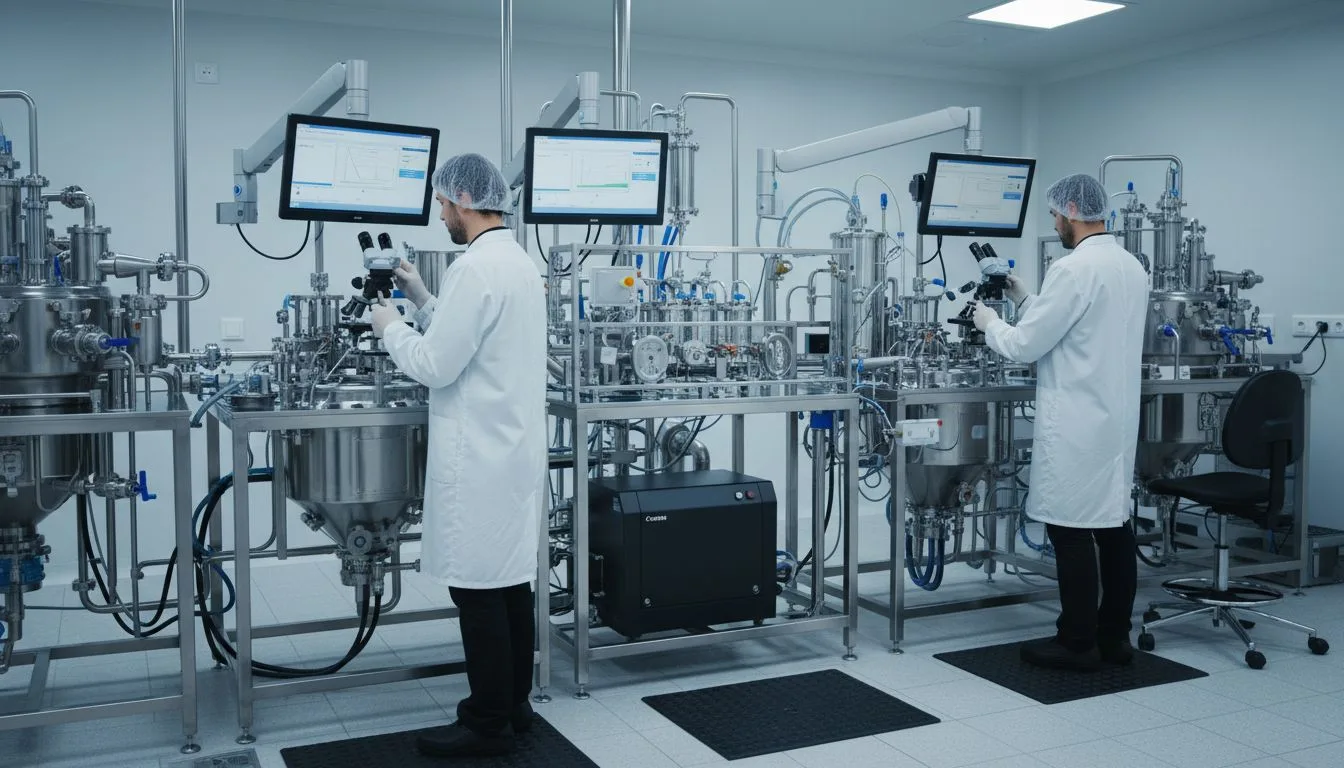
Professional compressed air treatment plays an essential role in applications where oil-free compressors guarantee the highest purity of the air medium. In the electrical industry they are key to manufacturing sensitive components, where even a minimal presence of oil can cause irreversible damage. In medical fields such as dentistry or surgery they are a guarantee of a sterile environment and patient safety.
Overview of categories by environment:
- Noisy environment of an industrial hall: piston or screw compressors
- Quiet workplaces, laboratories, surgeries: scroll or diaphragm compressors
- Mobile use on a building site or in the field: oil-free piston, or diaphragm compressors
- Continuous 24/7 production: oil-free screw compressors without exception
- Pharmaceutical or food production: diaphragm or certified scroll compressors
How to choose the right category
- Determine the type of operation. Intermittent operation in a workshop, continuous production, or mobile use? This question eliminates the unsuitable categories first.
- Calculate the total air consumption. Add up the flow of all simultaneously connected tools and add a 20 % reserve for losses in the pipework and future expansion.
- Set the maximum required pressure. Do not use higher pressure than necessary. Every extra bar raises energy consumption by roughly 7 %.
- Assess the environment and the noise limit. Where noise limits apply or offices are nearby, choose a scroll or a quiet screw compressor.
- Consider the air purity requirements. A paint shop or a food line requires a certified purity class. Check whether the model meets ISO 8573-1, class 0.
- Compare the total costs, not just the purchase price. Include energy, service, spare parts and service life.
Specific examples of use:
- Car workshop: oil-free piston 2 to 3 kW for pneumatic tools, intermittent operation
- Paint shop: scroll or oil-free screw for a constant supply of clean air without oil vapours
- Food plant: diaphragm or certified scroll, ISO 8573-1 class 0
- Industrial production (24/7): oil-free screw from 15 kW, air receiver of at least 300 litres
- Mobile repairs on site: oil-free portable piston, weight up to 30 kg, supply 230 V
The most common mistakes when choosing:
- Choosing a compressor only by output in kW without considering the flow (m³/min)
- Underestimating the noise level when installing in office or residential buildings
- Choosing a machine without an output reserve, which is not enough once the operation expands
- Saving on the purchase price, leading to higher costs for service and energy
- Ignoring the duty cycle, especially with piston compressors in continuous operation
Statistic: A correctly chosen and sized oil-free compressor can cut energy consumption by 15 to 30 % compared with an oversized machine. Indirect energy costs make up as much as 70 % of the total cost of compressed air in industrial operation.
Careful: oil-free does not mean maintenance-free. Air filters, coolers, condensate draining and checking the seals of the spiral plates in scroll compressors all require regular inspection. A sensible output reserve of 25 to 30 % above the current need is an investment in flexibility, not a luxury.
Maintenance, operating costs and comparison with alternatives
The maintenance of oil-free compressors requires a more specialised and precise approach to regular technical care than oil-lubricated machines.
Key points of maintenance:
- Regular inspection of the seals
- Cleaning the air filters
- Checking the integrity of the special polymer components
- Monitoring the tightness of the air paths
- Draining condensate and checking the coolers
- Regular calibration of the pressure systems
Measuring the pressure parameters is critical to ensuring optimum running, because even small deviations can significantly affect performance and service life.
From the point of view of operating costs, oil-free compressors are initially more demanding to buy, but in the long run they offer a range of economic advantages. Lower maintenance demands, minimal risk of contamination and a longer service life of the components offset the higher initial investment, which makes them an attractive choice for professional applications requiring maximum reliability and purity of the air medium.
Discover the power of oil-free compressors
At kompresory-vzduchotechnika.cz you will find a complete range of oil-free and oil-lubricated compressors for all the applications described, from portable piston models to powerful industrial units. Expert consultation on choosing the right category for your particular operation is available as well.