
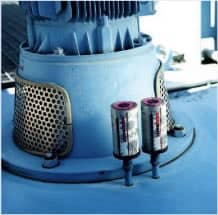
Without regular lubrication of some machines, seizure and failures may occur. Such states are therefore prevented by regular lubrication. There are, however, situations in which the state of lubrication of the machine is difficult to monitor, the machine is for example hard to reach, is in an easily overlooked place, in a hazardous operation, or the lubrication points are far apart, so that lubricating them by hand would not be efficient. Then automatic lubricators can be used, which will lubricate the machine for you.
How do automatic lubricators work?
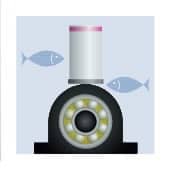
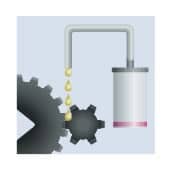
The automatic lubricator is essentially a transparent reservoir for any lubricating substance, which also contains a vessel with electrochemical dry cells. These produce an inert gas acting on a piston, which then pushes the lubricant through the lower funnel into the machine. No other energy sources are needed. They thus work for example even under water.
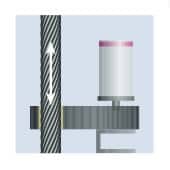
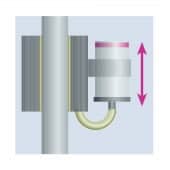
This simple patent can be used for regular lubrication of, for example:
- Pumps
- Cranes
- Lifts and escalators
- Fans
- Food-industry machines
- Conveyors
- And others
Automatic lubricators can be filled with various lubricants. They can thus be filled with:
- Universal grease
- Liquid lubricant
- BIO grease
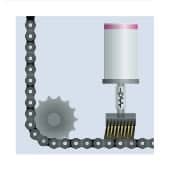
- Chain oil
- Universal oil
- High-temperature grease
- Oil for the food industry
The lubricator can also be emptied and refilled with a different type of lubricant. They are therefore usable repeatedly. The quantity of lubricant can be checked visually through the transparent inspection window. The system of automatic lubricators is also designed so that they allow regular lubrication for up to one year, while the cycle can be interrupted and the lubricator deactivated for a time and activated again. They therefore work continuously and you can set the length of the lubrication cycle yourself.
Operating automatic lubricators
By using automatic lubricators on a machine you can effectively prevent the machine running dry, its seizure and overheating, and thereby you will also reduce maintenance costs. Setting the automatic lubricator is done on the upper part with the help of an Allen key, with which you turn to the numerical indicators and thus easily set the dosing time.
Automatic lubricators Simalube
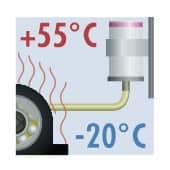
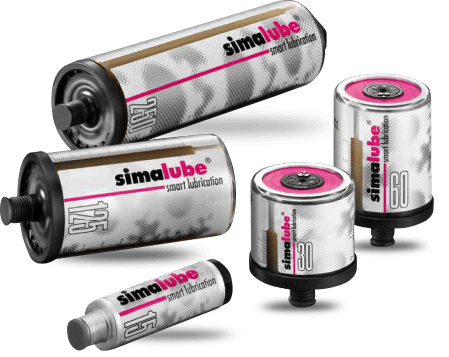
The Simalube brand offers quality automatic lubricators and lubricant dispensers, which are available in four different volumes, namely 30, 60, 125 and 250 ml. These lubricators then reliably supply the machine with lubricant for up to one year, and that continuously. They work in the temperature range from -20 to +55 degrees Celsius.
When using Simalube automatic lubricators, the need for manual lubrication is eliminated, the lubricators can be refilled and the quantity of lubricant that goes into the machine can be easily regulated; thanks to this, the costs of machine maintenance are significantly reduced.
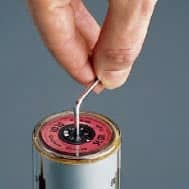
Starting and setting the Simalube automatic lubricator is done with an octagonal key, with which it is possible on the one hand to regulate the dosing time, or the lubricator can if necessary be stopped completely and started again.
The ecological operation of the lubricators is guaranteed by the use of BIO oil. The lubricating substance is also pushed completely out of the container, so that the container can subsequently be recycled.
Various lubricants can be used in specific temperature ranges, which may run from -30 to +250 degrees Celsius, depending on the type of lubricant.
Accessories for Simalube automatic lubricators
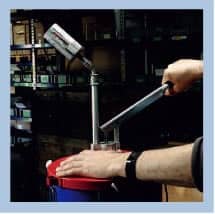
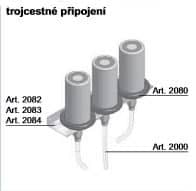
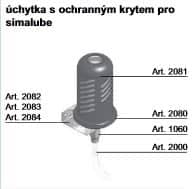
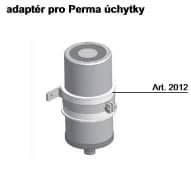
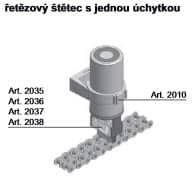
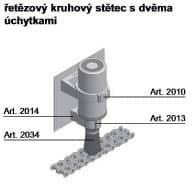
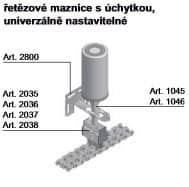
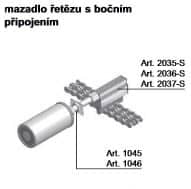
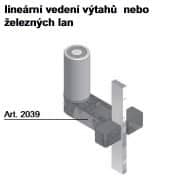
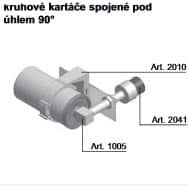
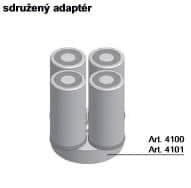
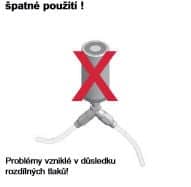
For Simalube lubricators a wide spectrum of accessories is also available, which allows varied mounting of the lubricators, as well as check valves to prevent the unwanted running out of oil, which may occur in some mounting positions. Also available are filling sets, which allow easy refilling of the Simalube automatic lubricator with lubricant.
| Application | Temperature range °C | Base oil | Thickener | 30 ml | 60 ml | 125 ml | 250 ml |
| without grease | - | SL00-30 | SL00-60 | SL00-125 | SL00-250 | ||
| Universal grease | -30 / +120 | Mineral | Li / Ca | SL01-30 | SL01-60 | SL01-125 | SL01-250 |
| Universal grease + MoS2 | -25 / +130 | Mineral | Li | SL02-30 | SL02-60 | SL02-125 | SL02-250 |
| High-temperature grease | -20 / +160 | Mineral | Be | SL04-30 | SL04-60 | SL04-125 | SL04-250 |
| Liquid lubricant | -20 / +120 | Mineral | Li / Ca | SL06-30 | SL06-60 | SL06-125 | SL06-250 |
| BIO grease | -20 / +100 | Esters | Li / Ca | SL09-30 | SL09-60 | SL09-125 | SL09-250 |
| Grease for the food ind. | -30 / +140 | Synthetic | AI | SL10-30 | SL10-60 | SL10-125 | SL10-250 |
| Chain oil | -10 / +90 | Mineral | - | SL14-30 | SL14-60 | SL14-125 | SL14-250 |
| Chain oil high-temperature | 0 / +250 | Synthetic | - | SL15-30 | SL15-60 | SL15-125 | SL15-250 |
| Oil for the food ind. | -15 / +150 | Synthetic | - | SL18-30 | SL18-60 | SL18-125 | SL18-250 |
| Universal oil | -30 / +150 | Mineral | Li comp. | SL24-30 | SL24-60 | SL24-125 | SL24-250 |
 |
 |
 |
|
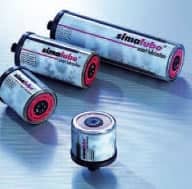
New generation of Simalube lubricators |
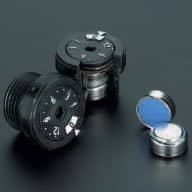
Reservoir with gas-producing dry cells |
The dosing time varies and can simply be up to 12 months |
 |
 |
Universal applicationSimalube is available in a wide offer of standard greases and oils. According to need, special lubricating greases can be used. The dosing time of the Simalube lubricator varies, but mostly between one and twelve months. The flexible dosing of the lubricant provides precise control of the quantity of lubricating grease applied. Simalube is intended for temperatures from -20 up to 55°C (-4 to 131°F) and is universal thanks to the wide spectrum of accessories. Refillability and environmental friendlinessSimalube contains no toxic substances, no batteries and no motors, which means that it has no negative effect on the environment. If the contents are exhausted, Simalube can be recycled using standard recycling procedures, or a new reservoir filled with new gas is attached to it and work can continue.
|
 |
 |
|
 |
 |
 |
 |
|
| You can learn further information about this product and its use on our telephone line. | ||
 |
 |
 |
 |
 |
 |
 |
 |
 |
 |
 |
 |