

Receiver drain valve: draining condensate by hand
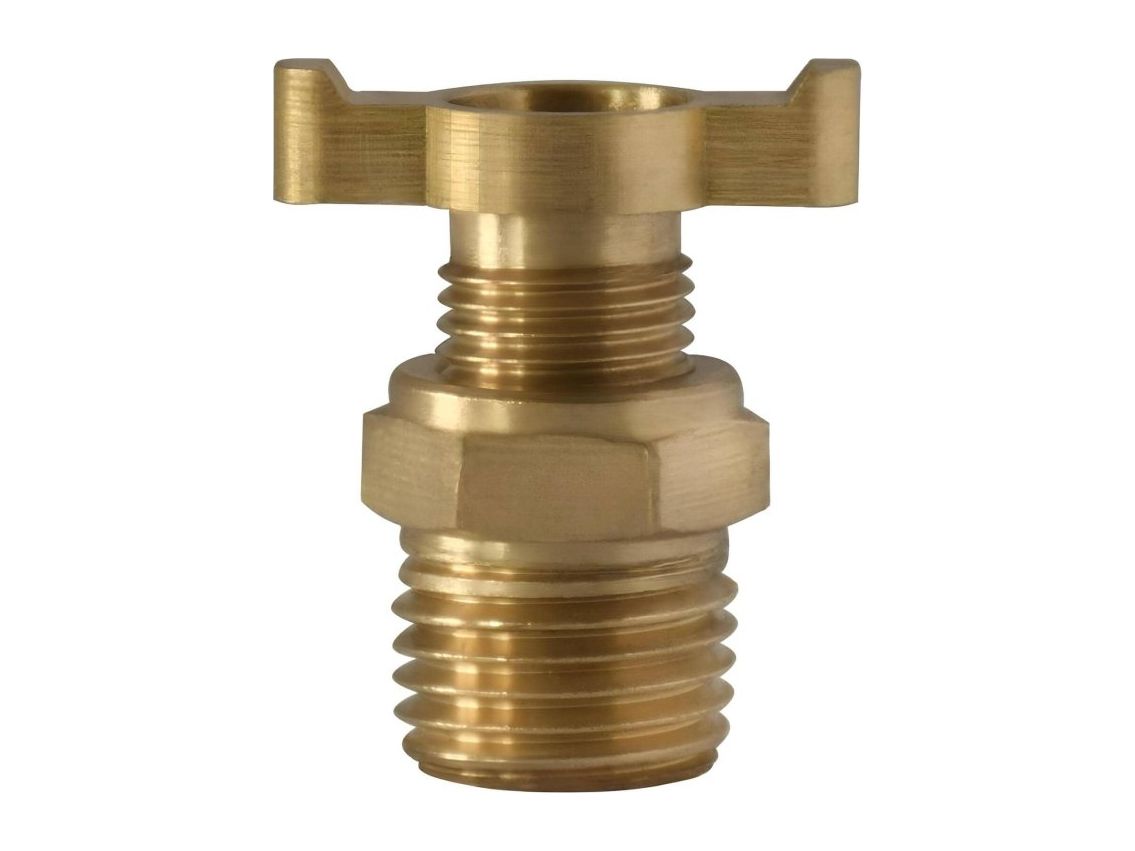
Water collects in the bottom of the receiver. It gets there because the air drawn in carries moisture, which condenses once the air is compressed and cools — and since it brings traces of oil with it, the result is an aggressive emulsion that eats the vessel from the inside. A drain valve is the cheapest way to stop that. It screws into the bottom outlet of the receiver and the condensate is released through it by hand.
Two designs, each for a different job
There are two ways to release the condensate. They differ in how fast it goes, how much room the fitting takes, and which thread it needs on the receiver.
Drain valve
The simplest and smallest answer. It screws straight into the bottom outlet of the receiver and the condensate is released by loosening the wing nut. There is no lever to catch on anything, which is why portable and wheeled compressors favour it. Thread G 1/4" male, pressure up to 10 bar.
Mini ball cock with lever
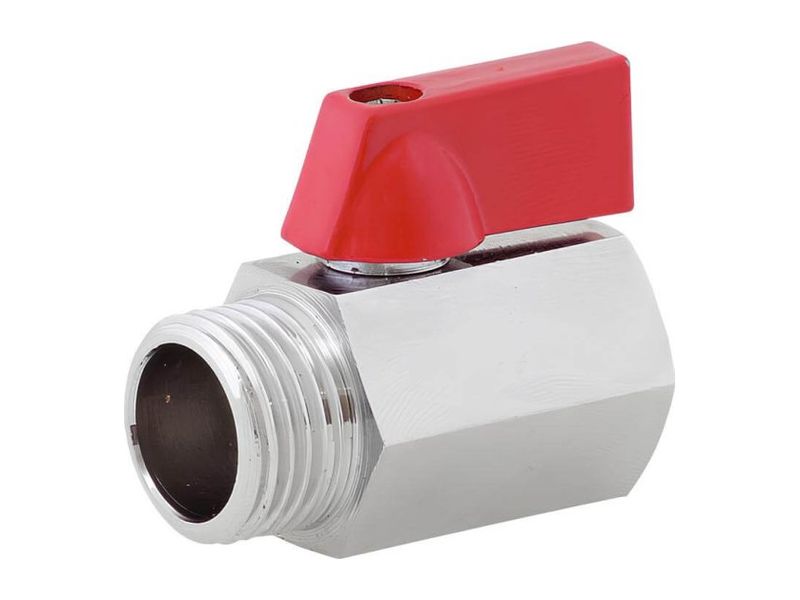
Instead of unscrewing, one movement of the lever does it — open and shut in a second, even with gloves on. The supplier lists it for compressed air connections, so it is at home on a receiver. It has both a male and a female thread, so it fits where the plain valve will not. Threads 1/4" to 1/2", pressure up to 10 bar.
Mind the pressure — ten bar is closer than it looks
Both the drain valve and the mini cocks are built for 10 bar. An ordinary workshop compressor cuts out somewhere between 8 and 11 bar, so at the top of that range you are already at the edge of what the fitting is designed for. If your machine is set to cut out at 10 bar or above, lower it, or get in touch — we will find a fitting rated higher.
The other thing is frost. Water left in the vessel and in the valve over winter in an unheated garage freezes and can split the fitting. That is why the receiver is drained dry before a longer stand — and why a valve you can reach without tools is worth having.
The mini cock up close
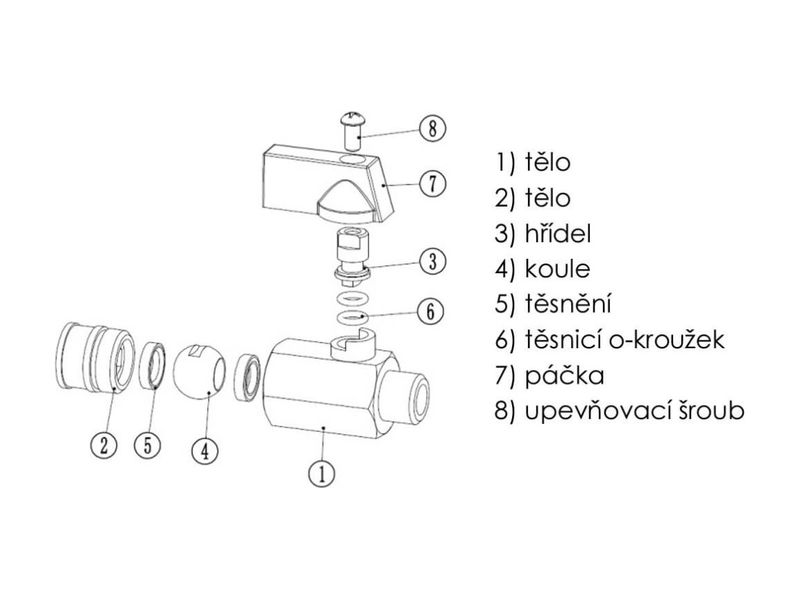
The mini cock differs from the screw-down valve in how it is operated, and in having a thread both outside and inside. The section view shows what it is built from.
Valve and cock overview
| Drain valves and cocks for releasing condensate — threads, bore and pressure | ||||||
|---|---|---|---|---|---|---|
| Order code | Design | Thread | Thread male/female | Bore DN | Pressure | Body length |
| BW-0014 | wing-nut drain valve | G 1/4" | vnější | — | 10 bar | — |
| BMA-14 | mini cock with lever | G 1/4" | vnitřní i vnější | 8 | 10 bar | 40 mm |
| BMA-38 | mini cock with lever | G 3/8" | vnitřní i vnější | 10 | 10 bar | 40 mm |
| BMA-12 | mini cock with lever | G 1/2" | vnitřní i vnější | 15 | 10 bar | 44 mm |
The pressure given is the maximum working pressure of the fitting, not the pressure of your compressor — that has to be lower. Bore DN is the internal diameter in millimetres and decides how fast the condensate runs out. Lengths come from the supplier’s datasheets.
#showmore#
How a drain valve is fitted
The valve belongs at the lowest point of the vessel — where the water runs to. On most piston compressors there is an outlet in the bottom of the receiver made for it. Seal the thread with PTFE tape or hemp; the vessel must be depressurised while you fit it.
How often and at what pressure to drain
Drain at a slight overpressure, around 1 to 2 bar. The pressure shoots the condensate out and flushes the valve seat clear of deposits at the same time. At full pressure it is dangerous, and at no pressure the sludge stays inside. How often? After every bigger job, and at least once a week — and on a machine that runs daily, better at the end of every shift.
When rusty water comes out of the valve, corrosion inside the receiver has already begun. Drain more often in that case and have the vessel inspected — a pressure vessel with a rusted-through bottom is a safety matter, not a cosmetic one.
When draining slips your mind
A manual valve has one weakness: you have to remember it. When it does not get done week after week, water builds up, takes away usable receiver volume, and the machine cycles more often because of it.
That is when an automatic drain earns its keep — it releases the condensate on its own, either at set intervals or only once it actually detects any. They are in a separate category, and our article goes through them in detail.
Where to go next
Draining is one part of looking after compressed air. Here is the rest that goes with it.
- Automatic drains — release the condensate themselves, without losing pressure
- Article on automatic drains — the difference between timed and level-sensing draining
- Condensate loops — catch the water in the line before it reaches the tool
- Air dryers — deal with moisture at the source, not once it is in the receiver

Ventilek says
This little part decides whether your receiver lasts ten years or three.
I know it is the sort of detail that gets forgotten. But the water in the vessel is not just water — there is oil in it too, and that mixture eats your receiver from the inside, where you cannot see. A rusted-through receiver cannot be mended; it gets scrapped. And one more thing: if your compressor lives in an unheated garage, drain the vessel dry for the winter. Frozen water splits the valve, and you find out in spring because it drips.
Frequent questions about draining the receiver
- How often should condensate be drained?
- On a machine that runs daily, at the end of every shift. On a workshop compressor in occasional use, after every bigger job and at least once a week. The damper the air in the workshop, the more often.
- Should I drain under pressure or without?
- At a slight overpressure, around 1 to 2 bar. The pressure shoots the condensate out and flushes the valve seat. At full pressure it is dangerous; at no pressure the sludge stays on the bottom.
- Which thread do I need?
- Whatever the outlet on your receiver takes — most often 1/4" or 3/8". The drain valve has a male G 1/4" thread; the BMA mini cocks have both male and female, so they also cover the case where the plain valve will not fit. If you are not sure, photograph the outlet and send it to us.
- Rusty water is coming out of the valve. What does that mean?
- That corrosion inside the receiver has begun. Drain more often and have the vessel inspected. A pressure vessel with a rusted-through bottom is a safety matter, not a cosmetic one.
- Can the valve freeze?
- Yes, and it is a common reason for one splitting. In an unheated garage, drain the receiver dry before winter and leave the valve open.
- What is the difference between the valve and the mini cock?
- The valve opens by loosening a wing nut, has no lever at all and takes up the least room — nothing to catch on when the machine is carried. The mini cock opens and shuts with one movement of the lever, even with gloves on, and has a thread outside and inside, so it fits where the plain valve will not.
The pressure given is the maximum working pressure of the fitting. Dimensions and materials follow the supplier’s datasheets. Fitting and removal are always done with the vessel depressurised.


Product sorting
List of products

Miniature ball valves made of nickel-plated brass. Body - nickel-plated brass, lever - aluminium, ball - chrome-plated brass, seal - PTFE. For compressed air connections in...

Miniature ball valves made of nickel-plated brass. Body - nickel-plated brass, lever - aluminium, ball - chrome-plated brass, seal - PTFE. For compressed air connections in...

Miniature ball valves made of nickel-plated brass. Body - nickel-plated brass, lever - aluminium, ball - chrome-plated brass, seal - PTFE. For compressed air connections in...

Drain valve with thread G 1/4" for manual draining of condensate from the pressure vessel of the compressor Black Wind.