

Precision pressure regulators DRF for pilot control
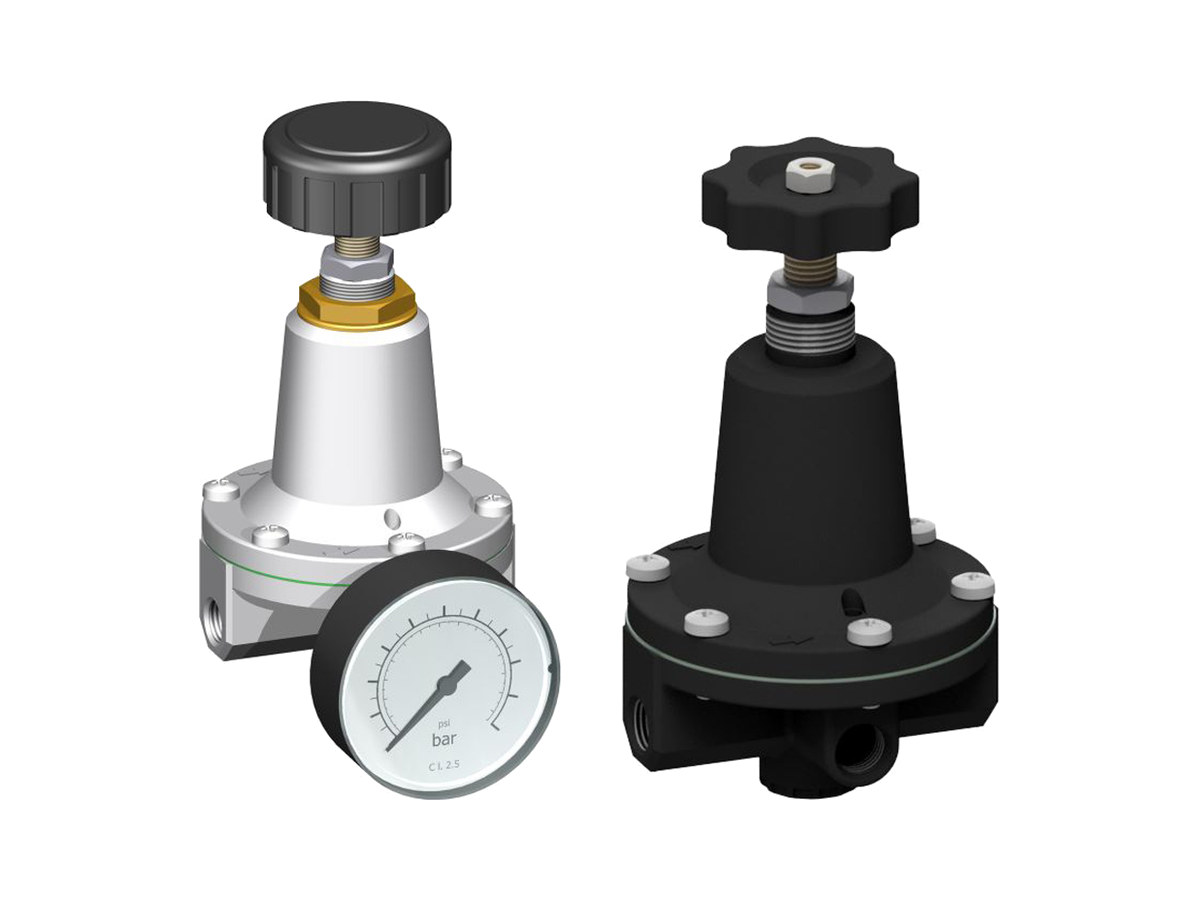
DRF precision pressure regulators by KNOCKS FLUID-Technik keep the outlet pressure very precisely – to ±7.5 mbar – even when the network pressure fluctuates. They are suitable wherever you need the most constant pressure possible at a low flow rate, and above all as pilot regulators for remote-controlled DRI regulators: the pressure set on the DRF is taken over by the DRI, which delivers it with a flow rate of up to 50,000 l/min.
The accuracy comes from a large diaphragm acting against a small valve seat. The regulator has no air consumption of its own, has secondary venting and works with normally filtered air. A ⌀ 50 mm pressure gauge is included; the FB versions also have a feedback connection. Control 0.1 to 16 bar, connection G 1/4".
What the DRF regulators offer
- control accuracy ±7.5 mbar
- the outlet pressure is almost independent of the network pressure
- no air consumption of its own (only a small one for the feedback version)
- secondary venting up to 100 l/min – you can reduce the outlet pressure even with no air being consumed
- ⌀ 50 mm pressure gauge included
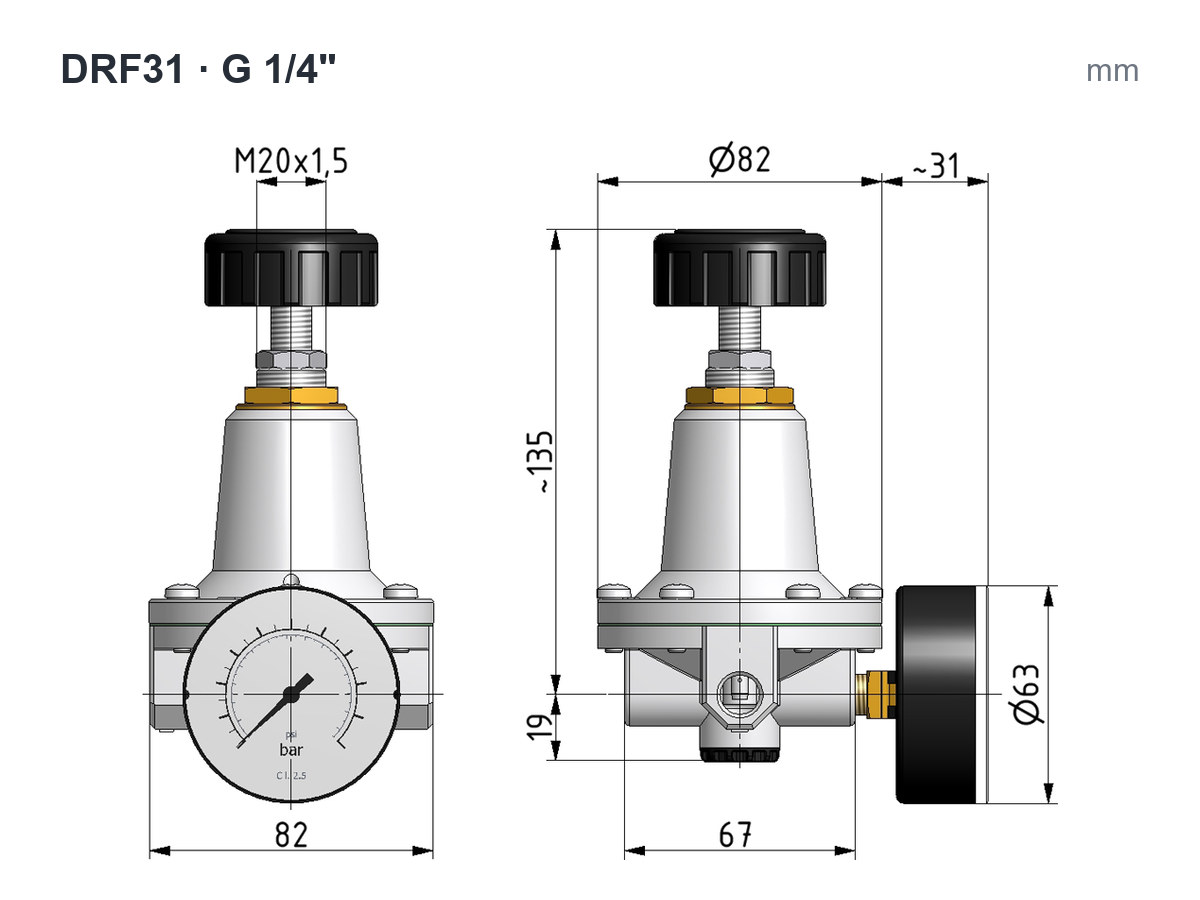
- panel mounting (M20 × 1.5 thread) or wall mounting with a bracket
- any mounting position, normally filtered air is sufficient
- zinc die-cast body, FKM diaphragm and seals, operation from −10 to +60 °C
All DRF regulators
| Code | Control range | Pressure gauge | Flow rate | Feedback | Weight |
|---|---|---|---|---|---|
| DRF31-1GS | 0.1–1 bar | 0–1.6 bar | 480 l/min | no | 0.85 kg |
| DRF31-3GS | 0.1–3 bar | 0–4 bar | 540 l/min | no | 0.9 kg |
| DRF31-6GS | 0.2–6 bar | 0–10 bar | 540 l/min | no | 0.85 kg |
| DRF31-10GS | 0.5–10 bar | 0–16 bar | 500 l/min | no | 0.9 kg |
| DRF31-7FB | 0.2–7 bar | 0–10 bar | 540 l/min | yes | 0.9 kg |
| DRF31-16FB | 0.5–16 bar | 0–25 bar | 540 l/min | yes | 0.9 kg |
Flow rate according to the manufacturer. Pressure gauge: scale range of the pressure gauge included.
Without feedback or with feedback?
The GS version (DRF31-1GS to DRF31-10GS) is a precision regulator without feedback. You can use it on its own for low flow rates or as a pilot for a DRI regulator – the DRI then also holds the pressure set on the DRF.
The FB version (DRF31-7FB, DRF31-16FB) also has a feedback connection: you feed the pressure from the outlet of the DRI regulator into it. The pilot then measures the pressure downstream of the DRI and compensates for it, so the pressure is held precisely even at high air consumption. It is intended only as a pilot for remote-controlled DRI regulators.
How to choose a DRF regulator
- Control range according to the pressure. Choose the smallest range whose upper limit is above the pressure you want to set – the pressure can be set more finely in a smaller range. For 0.5 bar, 0.1–1 bar is suitable; for 2.5 bar, 0.1–3 bar; for 5 bar, 0.2–6 bar; for 8 bar, 0.5–10 bar.
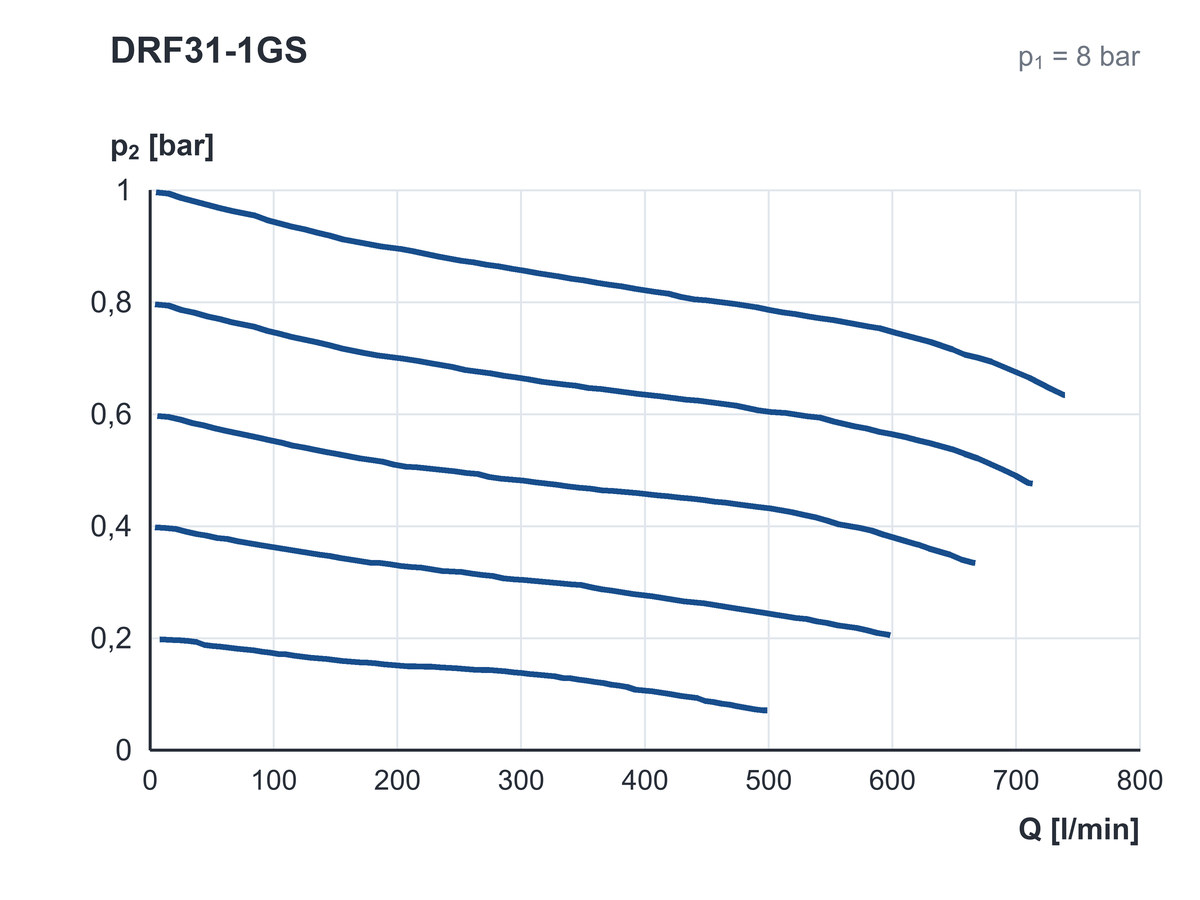
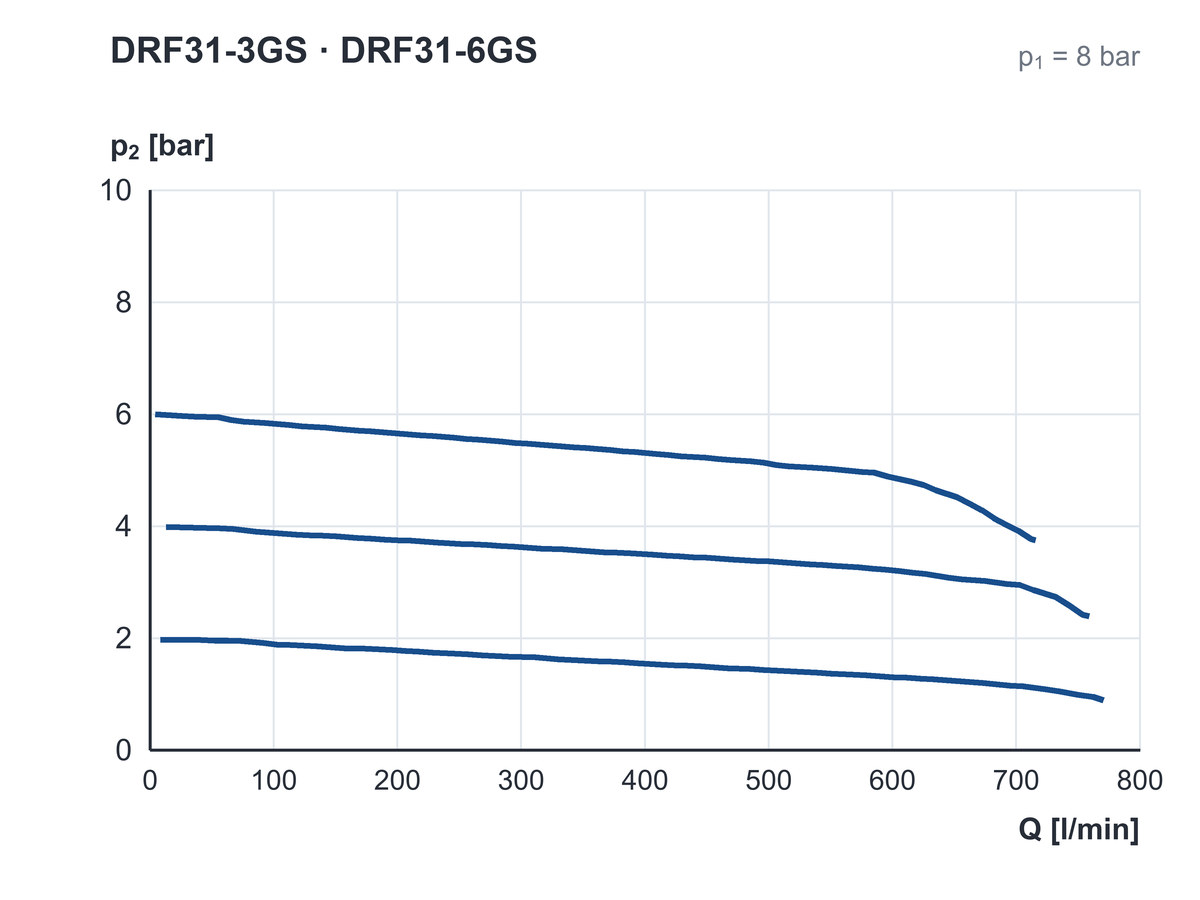
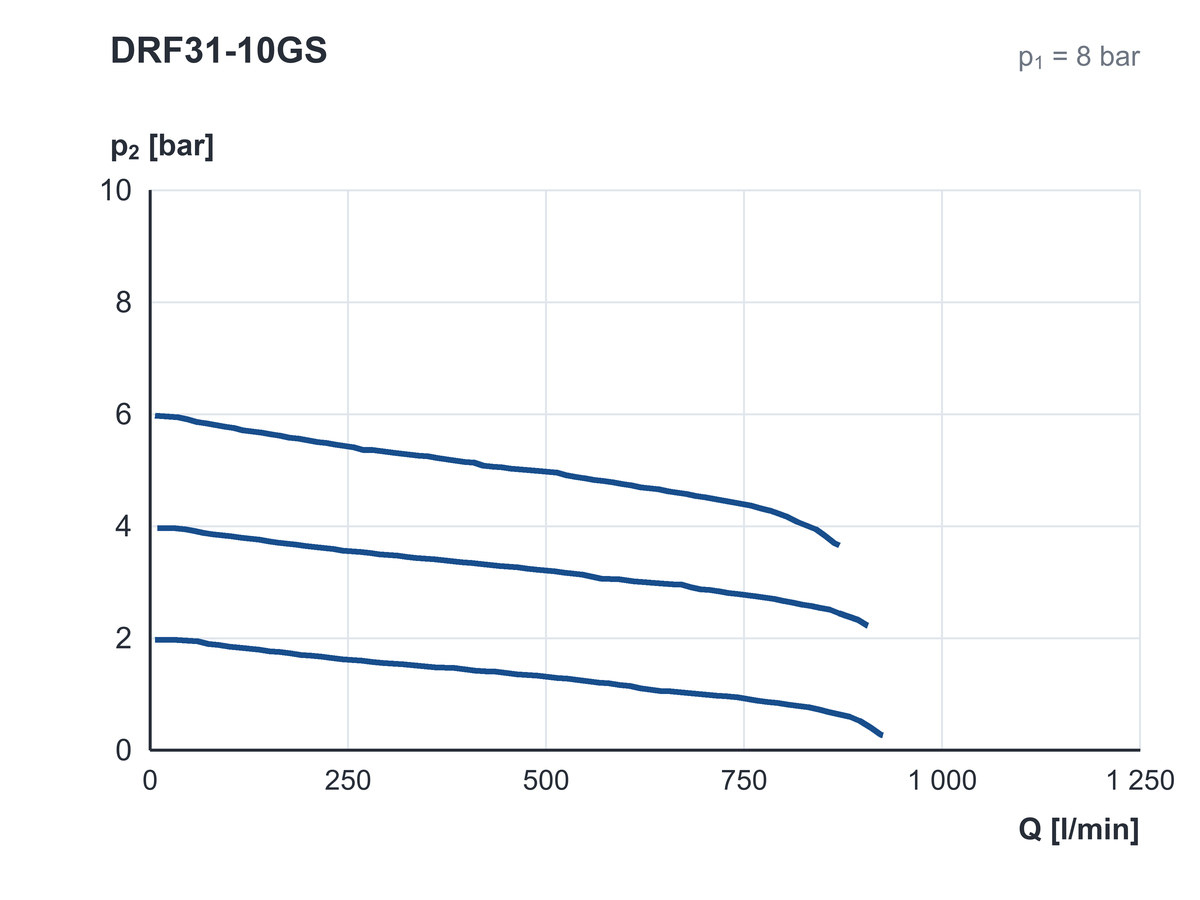
- On its own or as a pilot? The nominal flow rate of the DRF is 480 to 540 l/min, but the pressure drops as air consumption increases (see the curves below). For higher air consumption, install a DRI regulator in the pipework and use the DRF as a pilot – the outlet pressure of the DRI equals the pressure from the DRF.
- Feedback for the most precise pressure downstream of the DRI. If the pressure downstream of the DRI regulator matters most, choose a pilot with feedback: 0.2–7 bar or 0.5–16 bar.
Example: a test fixture needs a constant 2.5 bar and consumes only a little air. DRF31-3GS (0.1–3 bar) is sufficient. If you need 2.5 bar for a line consuming 12,000 l/min, install a DRI regulator of size BG 5 in the pipework and set the pressure with the same DRF as a pilot.
Not sure which regulator to choose? Try the pressure regulator selector – based on line pressure, required pressure and flow.
#showmore#
How a precision regulator works
- The handwheel tensions the spring. The spring presses on the large diaphragm, which opens the small valve – air flows from the inlet to the outlet.
- The outlet pressure pushes on the diaphragm against the spring. The diaphragm is large and the valve seat small, so the regulator reacts to even a tiny change in pressure – it holds it to ±7.5 mbar.
- A change in the network pressure shows only very slightly at the outlet: according to the manufacturer’s graph, a set pressure of 2 bar shifts by only hundredths of a bar when the inlet changes from 3 to 10 bar.
- When you reduce the set pressure or the outlet pressure rises, the diaphragm opens the vent hole and the excess air escapes (secondary venting).
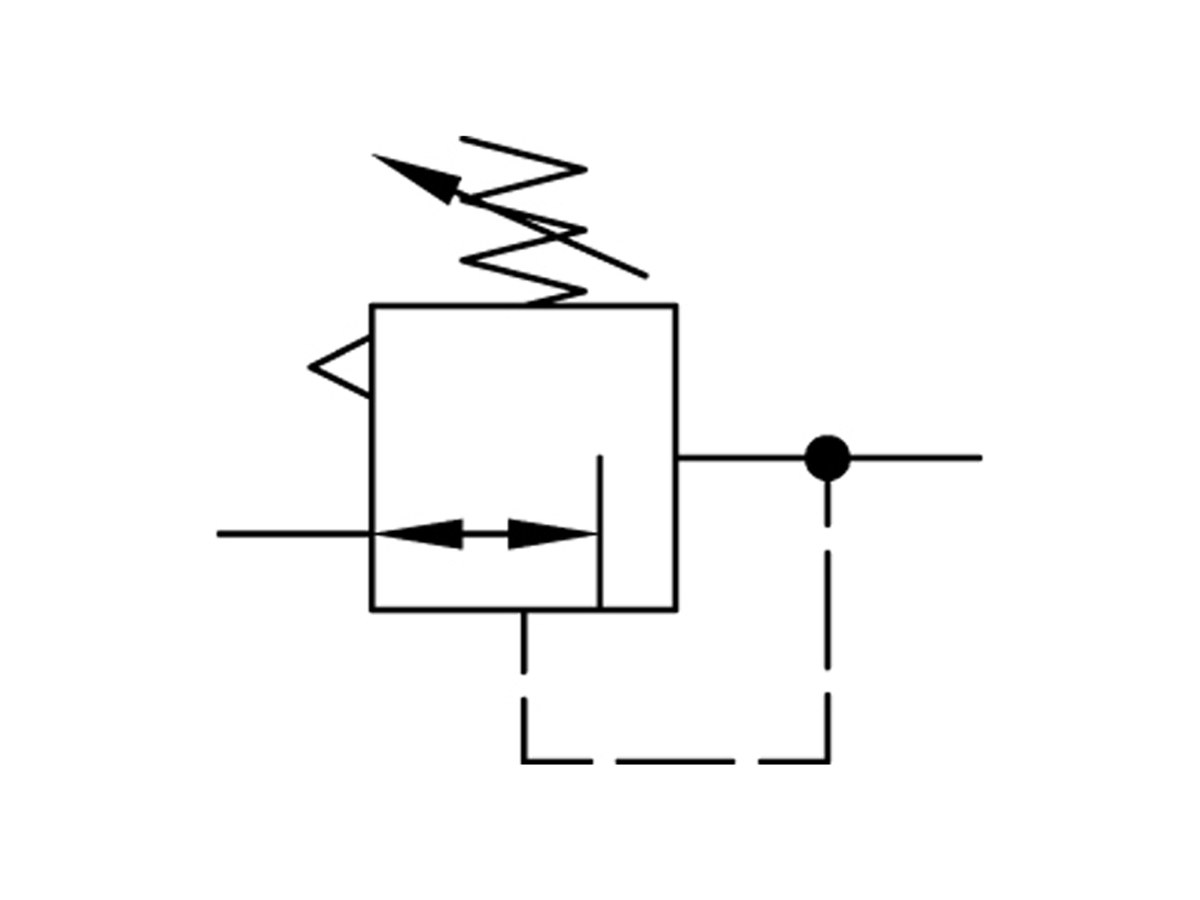
In circuit diagrams, the DRF regulator is drawn with this symbol: the diagonal arrow across the spring means adjustable pressure, the triangle on the left secondary venting and the dashed line sensing of the outlet pressure.
Connection as a pilot for a DRI regulator
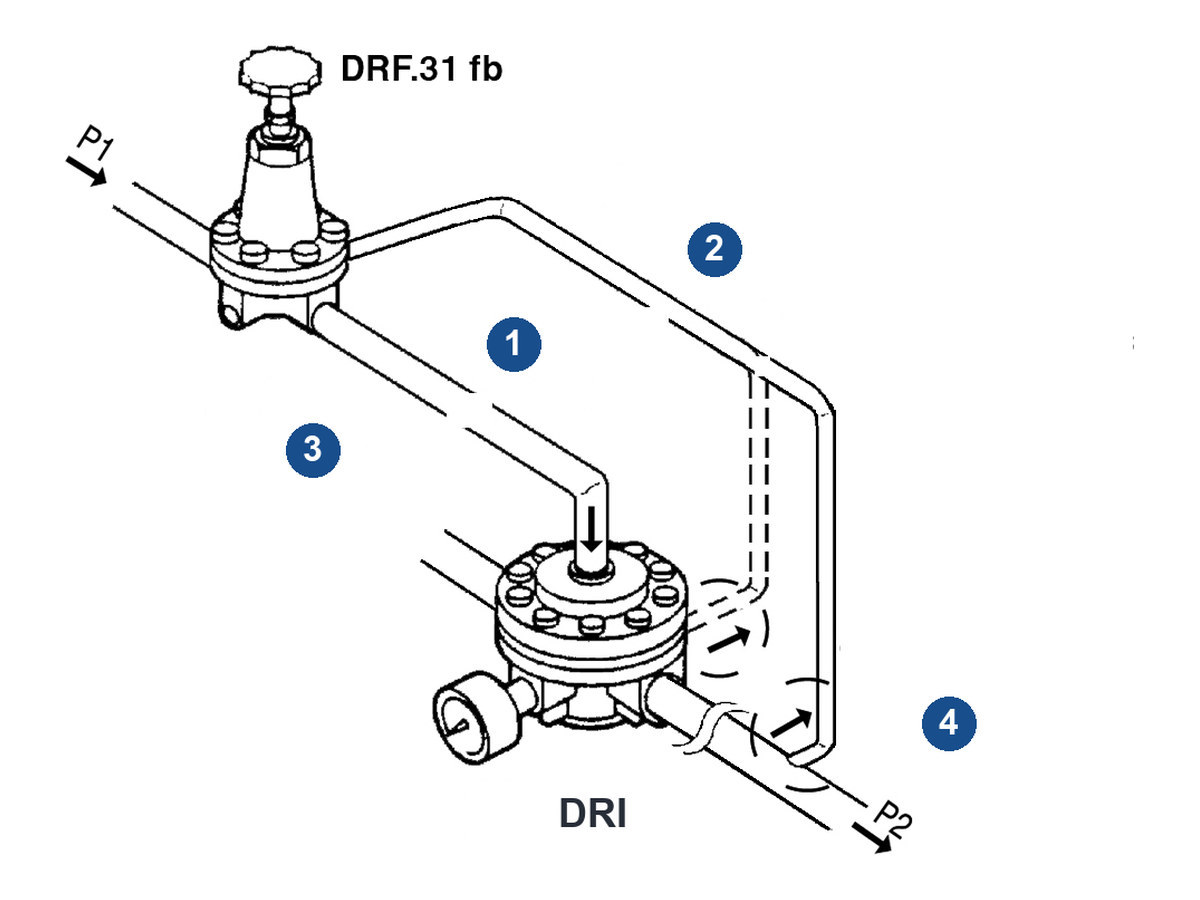
Connect the outlet of the DRF pilot regulator with a hose or pipe to the G 1/4" pilot air connection on the cover of the DRI regulator. The outlet pressure of the DRI then equals the pressure set on the DRF, and you set it where the pilot is.
For the version with feedback, feed the pressure from the pipework downstream of the DRI regulator into the feedback connection – the closer to the point of use, the more precise the pressure there. You will find DRI regulators in the category remote-controlled DRI pressure regulators.
Flow curves
The manufacturer’s graphs show how the outlet pressure drops as the flow rate increases at an inlet pressure of 8 bar. The flatter the line, the more stable the pressure at higher air consumption.
Installation and adjustment
- install a compressed air filter upstream of the regulator – fine filtration is not needed, normally filtered air is sufficient
- any mounting position is possible
- the regulator is mounted in a control panel by the M20 × 1.5 thread under the handwheel, or on a wall with a bracket
- set the pressure from below: loosen the handwheel to below the required value, then tighten it until the pressure gauge shows the required pressure
- the pressure gauge is connected with a G 1/4" thread
Accessories
Add a bracket when you mount the regulator on a wall or a machine frame.
| Part | Code | For regulators |
|---|---|---|
| mounting bracket | BW30 | DRF31-10GS, DRF31-1GS, DRF31-3GS, DRF31-6GS, DRF31-7FB, DRF31-16FB |
You will find all parts for the regulators in the category spare parts and accessories for pressure regulators.
Series specifications
| Parameter | Value |
|---|---|
| Inlet pressure | max. 16 bar |
| Control ranges | 0.1–1 / 0.1–3 / 0.2–6 / 0.5–10 bar (GS), 0.2–7 / 0.5–16 bar (FB) |
| Control accuracy | ±7.5 mbar |
| Flow rate | 480 to 540 l/min depending on the range |
| Secondary venting | yes, up to 100 l/min |
| Own air consumption | none (small for the feedback version) |
| Connection | G 1/4" |
| Pressure gauge | ⌀ 50 mm, G 1/4" connection, included |
| Panel mounting | M20 × 1.5 thread |
| Mounting position | any |
| Operating temperature | −10 to +60 °C |
| Medium | compressed air, neutral gases; fine filtration not required |
| Material | zinc die-cast body, FKM diaphragm and seals |
Ventilek advises
If you need precise pressure and a high flow rate at the same time, do not buy a large precision regulator. Install a DRI regulator in the pipework with a DRF as its pilot – ideally with feedback.
- high flow rate: remote-controlled DRI regulators
- very precise control with a high flow rate: FDR regulators
- pressure set by an electrical signal: DRPE proportional regulators
- What is a pilot regulator for?
- A pilot regulator supplies the pilot pressure to a remote-controlled DRI regulator. The DRI then holds the same pressure at its outlet as is set on the pilot – with a much higher flow rate. The pilot can be next to the operator, the DRI for example under the ceiling.
- Can I use the DRF regulator on its own?
- Yes, the GS version. It is a precision regulator for low air consumption, with a nominal flow rate of 480 to 540 l/min. The version with feedback (FB) is intended only as a pilot for a DRI regulator.
- Is the pressure gauge included?
- Yes – a ⌀ 50 mm pressure gauge with a scale to match the control range (0–1.6 / 0–4 / 0–10 / 0–16 / 0–25 bar).
- Does the DRF regulator need finely filtered air?
- No. Normally filtered compressed air is sufficient; fine filtration is not required. However, do not leave out the filter upstream of the regulator.
- Why does air escape from the regulator when the pressure is reduced?
- That is secondary venting. When you reduce the pressure, the regulator releases the excess air from the outlet and the pressure drops immediately, not only once air is consumed. A short hiss is therefore normal.
- What is the maximum inlet pressure?
- 16 bar. If the network pressure is higher, supply the regulator from a branch with lower pressure.
Technical data according to the manufacturer KNOCKS FLUID-Technik. Flow curves at an inlet pressure of 8 bar.
You will find more regulators in the category air pressure regulators.


Product sorting
List of products

KNOCKS precision diaphragm pressure regulator for low flow rates and as a pilot for remote-controlled DRI regulators.control range 0.1–3 bar, accuracy ±7.5 mbarinlet pressure up...

KNOCKS precision diaphragm pressure regulator for low flow rates and as a pilot for remote-controlled DRI regulators.control range 0.1–1 bar, accuracy ±7.5 mbarinlet pressure up...

KNOCKS precision diaphragm pressure regulator for low flow rates and as a pilot for remote-controlled DRI regulators.control range 0.5–10 bar, accuracy ±7.5 mbarinlet pressure...

KNOCKS precision diaphragm pressure regulator for low flow rates and as a pilot for remote-controlled DRI regulators.control range 0.2–6 bar, accuracy ±7.5 mbarinlet pressure up...

Precision pressure regulator DRF by KNOCKS with a feedback connection.pilot regulator for remote-controlled DRI regulatorscontrol range 0.2 to 7 bar, accuracy ±7.5 mbarfeedback...

Precision pressure regulator DRF by KNOCKS with a feedback connection.pilot regulator for remote-controlled DRI regulatorscontrol range 0.5 to 16 bar, accuracy ±7.5 mbarfeedback...