

Manual condensate drains MCD
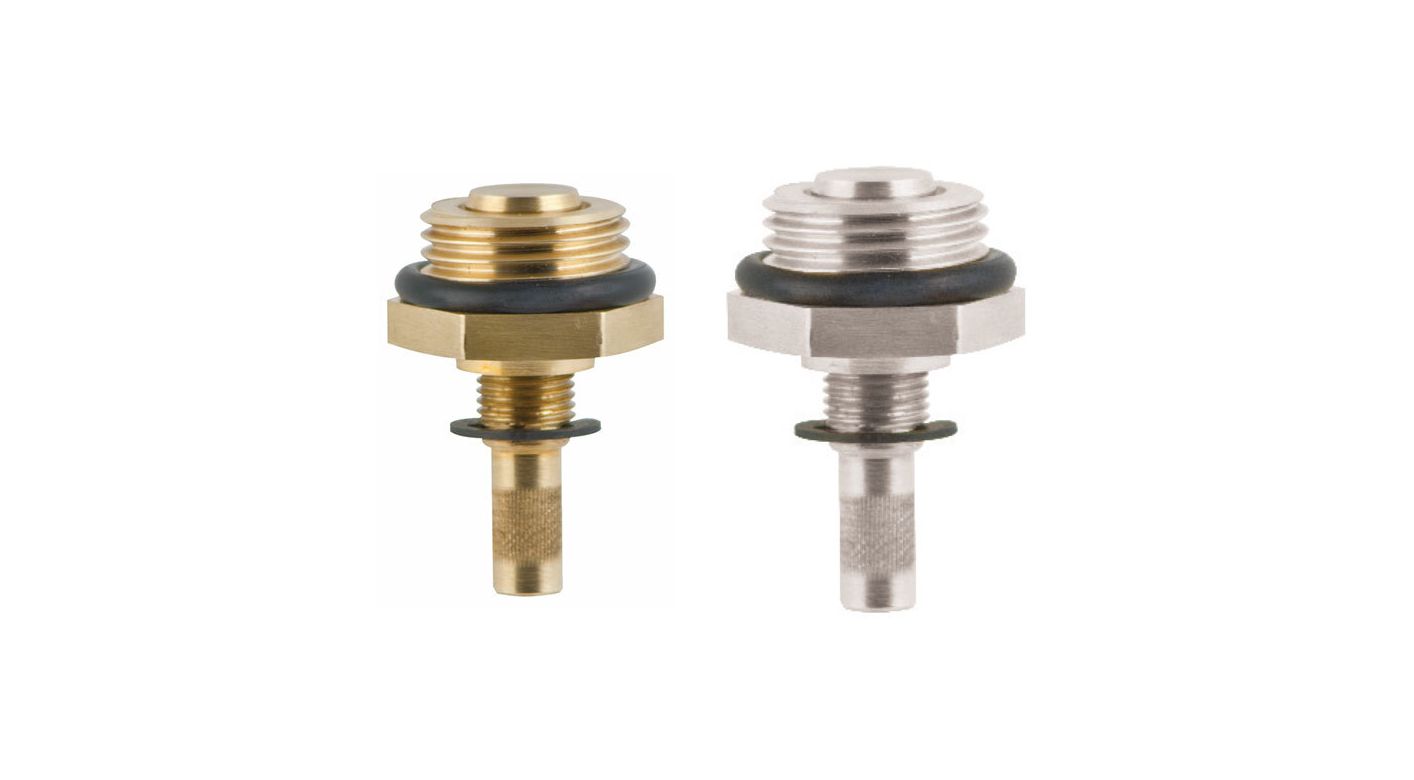
The simplest way to get condensate out: open it and let it go. No electronics, no float, nothing that can fail. In return, though, somebody has to walk over to it — and that is exactly why it gets forgotten.
MCD versions
Both versions are the same in size and pressure; they differ in material.
| Manual MCD drains — material, pressure and connection | |||||
|---|---|---|---|---|---|
| Order code | Material | Working pressure | Temperature | Connection | Wrench |
| MCD | brass | 20 bar | +1.5 – +65 °C | 1/2" | SW 24 |
| MCDI | stainless steel | 20 bar | +1.5 – +65 °C | 1/2" | SW 24 |
#showmore#
How the MCD works
It is a valve. You open it, the condensate leaves, you close it. Working pressure up to 20 bar, temperature +1.5 to +65 °C.
It makes sense where little condensate forms and where you walk past anyway — on a small workshop compressor, on a filter you check every shift. The moment it starts being forgotten, it is time for an automatic drain.
Fitting
It screws in with a 1/2" thread into a filter, a pressure vessel or a cyclone separator. Tighten with an SW 24 spanner.
What to watch
A manual drain is only as reliable as the person opening it. When it gets forgotten, the water stays inside — and that is exactly the case where an automatic unit pays off.

Ventilek says
The cheapest drain is the one that gets forgotten.
Nothing against a manual valve — on a small workshop compressor it is perfectly fine and there is nothing on it to fail. But let us be honest: somebody is meant to open it every day. If you know that will not happen at your place, buy a float straight away — it needs no power either and does it on its own.
Frequently asked questions — manual mcd
- When is a manual drain enough?
- On a small compressor or a filter you walk past daily anyway. The moment draining starts being forgotten, it is time for an automatic one.
- What is the difference between brass and stainless?
- Size and pressure are the same. Stainless is taken where the medium is more aggressive or the surroundings call for it.
- Where does the MCD go?
- Into a filter, a pressure vessel or a cyclone separator — anywhere the condensate settles. 1/2" thread, SW 24 spanner.


Product sorting
List of products

Manual condensate drain MCD in brass with a G 1/2" thread for filters, pressure vessels and cyclone separators. It opens with a turn. Up to 20 bar.

A manual condensate drain for filters, pressure vessels and cyclone separators. Stainless steel build, with no electronics and no moving parts that could seize.