


Klínové řemeny patří mezi běžný spotřební materiál nejen v oblasti vzduchových kompresorů. Nachází svoje místo všude tam, kde potřebujeme převést kroutící moment z hnací řemenice na hnanou. Takový převod síly má hned několik výhod. Proto doporučujeme na klínových řemenech nikdy nešetřit, aby těchto výhod bylo opravdu využito. A nejde pouze o životnost. Klínové řemeny umožňují využití vyšších otáček a výkonu s nižšími ztrátami, mají minimální protažení řemene při zatížení, zajišťují tichý chod a pohlcují vibrace.
Dnes vás naučíme nakupovat a vybírat tyto řemeny správně. Velmi často se totiž setkáváme s tím, že uživatel má poškozený či přetržený řemen a neví, jak ho identifikovat a dle toho pořídit nový.
Klínové řemeny bývají vyráběny z vysoce odolné a trvanlivé gumy (např z SBR pryže), do které bylo umístěno tkaninové jádro pro maximální pevnost tahu. Používají se taktéž specializované materiály odolné vůči olejům či extrémním teplotám. Nic však není věčné a i ty nejkvalitnější řemeny si jednou zaslouží výměnu nebo rupnou.
Kde všude řemeny nachází svoje uplatnění?
- Kompresory
- Čerpadla
- Agregáty
- Motory automobilů
- Alternátory
- Pily
- Pračky, myčky
- Různé výrobní stroje
@KATEGORIE@(/klinove-remeny/)(20,random)(slider)
Identifikace klínového řemenu
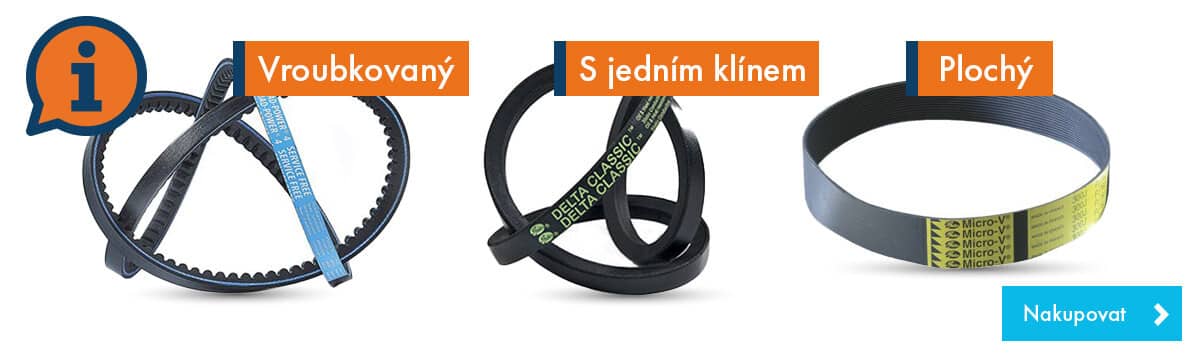
Druhů řemenů je velká spousta. Proto ten váš vždy vezměte do ruky a prozkoumejte jeho konstrukci, tvar.
Může být těchto konstrukcí:
(některé speciální řemeny jsou v kombinaci provedení)
Zjišťujeme rozměry řemenu
Nejlepší situace je, když před sebou máte stroj s novým řemenem. Na venkovním hřbetě každého nového řemenu totiž naleznete údaje o rozměru a výrobci, proto doporučujeme si tyto informace co nejdříve poznamenat například do revizní knihy či jinam, kam si o zařízení vedete záznamy. Výhodou bývá také u některých výrobců kompresorů a jiných zařízení, že se k celé specifikaci můžete proklikat na internetu a zjistíte, jaký řemen na stroj pasuje.
Z opotřebeného řemenu lze těžko cokoliv vyčíst, takže na scénu musí nastoupit posuvné měřítko, svinovací metr a provázek. Nebojte se, nechystáme se nic vyšívat. Provázek totiž slouží k tomu, aby šlo lehce změřit délku řemene. A to tak, že provázek jednoduše natáhnete po obvodu vnějšího povrchu. Poté stačí naměřenou část provázku přiložit k metru a zjistit celkovou délku řemenu. Nezapomeňte však, že opotřebený řemen je vytahaný - prodloužený. Může jít v řádu až o menší jednotky centimetrů. Počítejte s tím a zjistěte, jak velkou rezervu na dopnutí má napínák řemenu přímo na stroji.
Posuvné měřítko je potřeba k tomu, aby byla přesně změřena venkovní šířka (největší šířka) a výška profilu. U řemenů s více klíny je vhodné změřit také rozestup mezi klíny. Od středu klínu ke středu dalšího klínu (označováno jako p). Jakmile všechny údaje o potřebných rozměrech zjistíte, je tady čas podívat se do samotné nabídky na e-shopu.
Shrnutí měření
možnosti měření délky
- vnitřní délka Li - měřená po vnitřním povrchu
- vnější délka La - měřená po vnějším povrchu
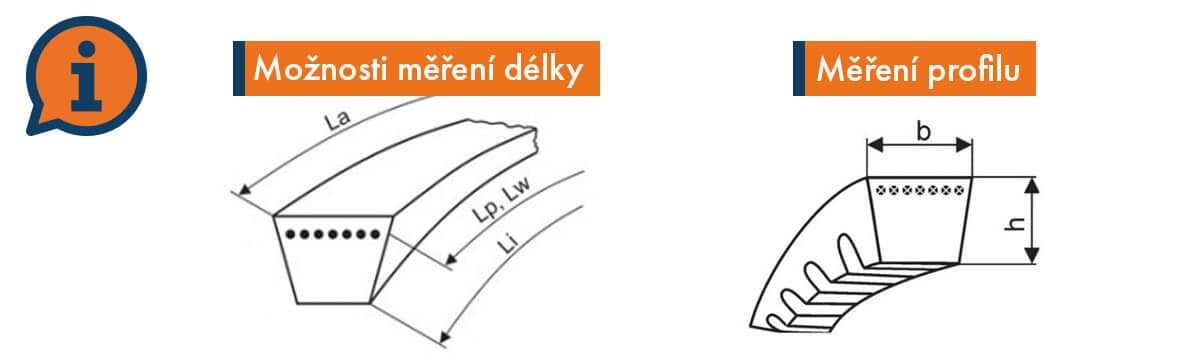
měření profilu
- šíře řemenu (b)
- výška klínu (h)
- úhel klínu (a)
- rozestup mezi klíny (p) - (platí u násobných řemenů s více klíny)