
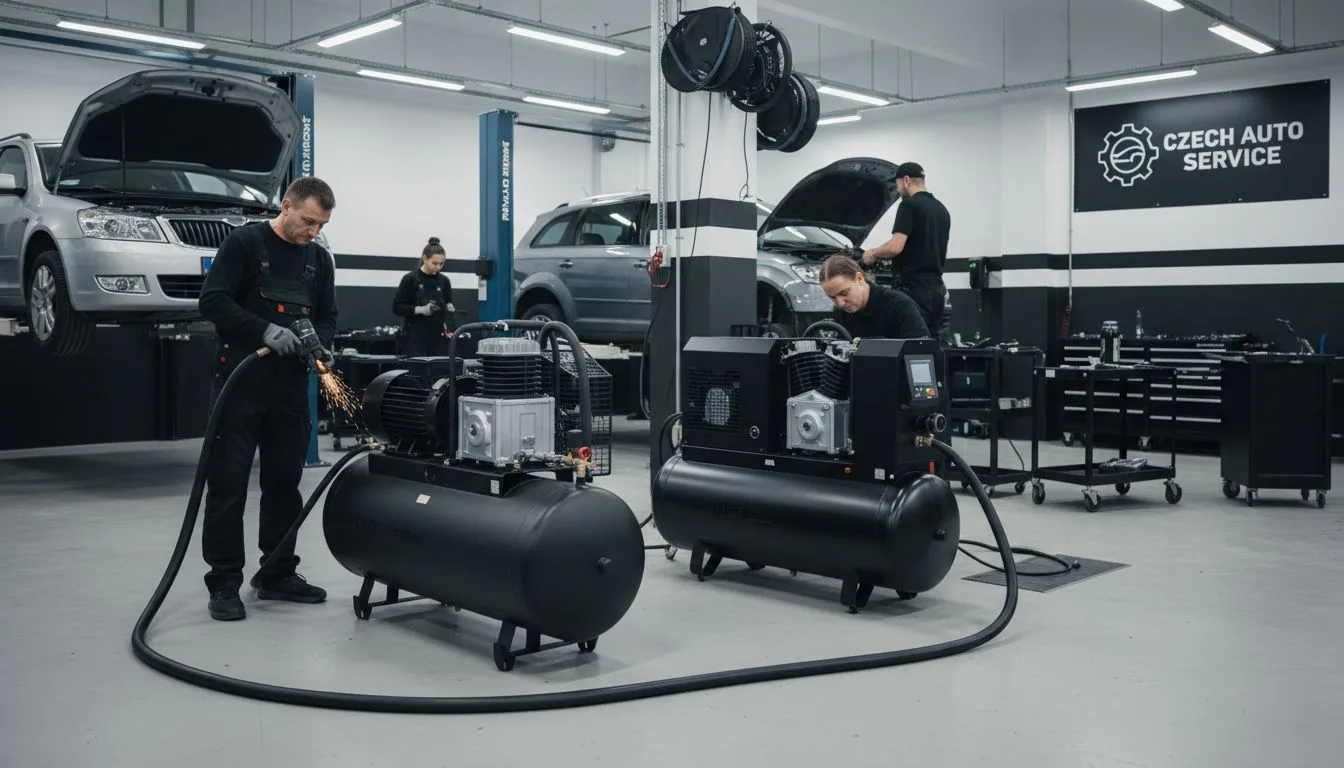
More than 90 percent of industrial operations worldwide use air compressors, which play a key role in the daily running of workshops, production plants and service centres. Choosing the right type and understanding how a compressor works fundamentally affects efficiency, reliability and operating costs. This guide will help you better understand the basic differences, advantages and limits of air compressors and save both time and money when deciding.
Contents
Key summary
| Point | Details |
|---|---|
| How compressors work | Air compressors convert mechanical energy into compressed air by mechanically compressing the air. |
| Types of compressor | The main types are piston, screw, vane and turbo compressors, which differ in their applications and operating principles. |
| Choosing a compressor | The right choice depends on specific requirements such as the pressure needed, the air volume and the operating conditions. |
| Maintenance of compressors | Regular maintenance is necessary to ensure efficiency and a long service life of the equipment, including checking and filter replacement. |
How air compressors work
Air compressors are machines that convert mechanical energy into the energy of compressed air. According to eluc they serve to compress gas and are divided into low-pressure, medium-pressure and high-pressure compressors.
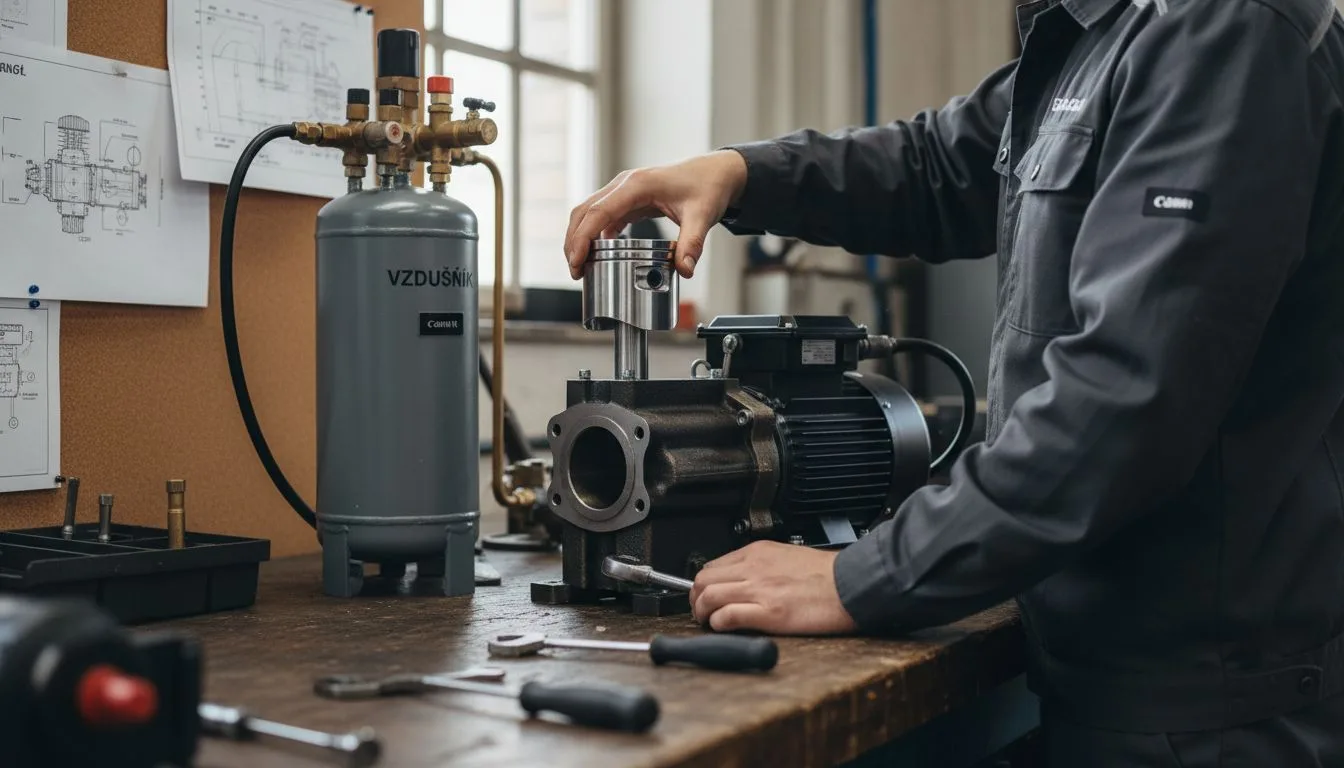
The working principle is based on mechanically compressing air, where the machine draws in ambient air and gradually compresses it into a smaller space. Piston compressors work on the basis of the movement of a piston in a cylinder, during which the gas is drawn in, compressed and discharged. This mechanism allows a marked increase in pressure and the conversion of ordinary air into useful compressed air.
The key components of an air compressor include:
-
An electric motor or a combustion engine
-
The compression unit (cylinders and piston)
-
A cooling system
-
A pressure vessel (air receiver)
-
Control and safety valves
At Compressors you will find a wide range of models covering nearly all industrial and craft applications.
The main types of air compressor
Air compressors are traditionally divided, according to eluc, into four basic categories: piston, screw, vane and turbo compressors. Each type has its specific characteristics and use in various industrial and craft applications.
According to dspace, compressors can be divided into two main groups by working principle: positive displacement compressors and dynamic compressors. Positive displacement compressors work on the principle of reducing the volume of the gas, while dynamic compressors raise the pressure by accelerating the gas and then converting the kinetic energy into pressure energy.
The main types of air compressor include:
-
Piston compressors: suited to small operations and single-shift running
-
Screw compressors: intended for continuous industrial operation
-
Vane compressors: they use rotating vanes to compress the air
-
Turbo compressors: they work on the dynamic principle of high-speed rotation
For a detailed overview of screw compressors we recommend visiting our specialist section focused on professional industrial compressors.
Key properties and uses of the individual types
Piston compressors are among the most widespread type of compressor, ideal for smaller operations and craft workshops. They are known for reliability, a low purchase price and the ability to work in intermittent operation. They suit smaller industrial operations, car repair workshops and home DIYers.
Screw compressors are the professional solution for continuous industrial operation. Their main strengths lie in quiet running, high efficiency and the ability to produce large volumes of compressed air. Compressors with a high pressure of 20 bar are ideal for demanding industrial applications requiring a constant supply of air.
Other types of compressor include:
-
Vane compressors: suited to precise and clean environments
-
Turbo compressors: intended for energy-intensive operations
-
Diaphragm compressors: specialised for particular industrial processes
Choosing the right compressor depends on the specific requirements of the operation, including the pressure needed, the air volume, the operating conditions and the economic costs.
Comparison: advantages and limits of the individual compressors
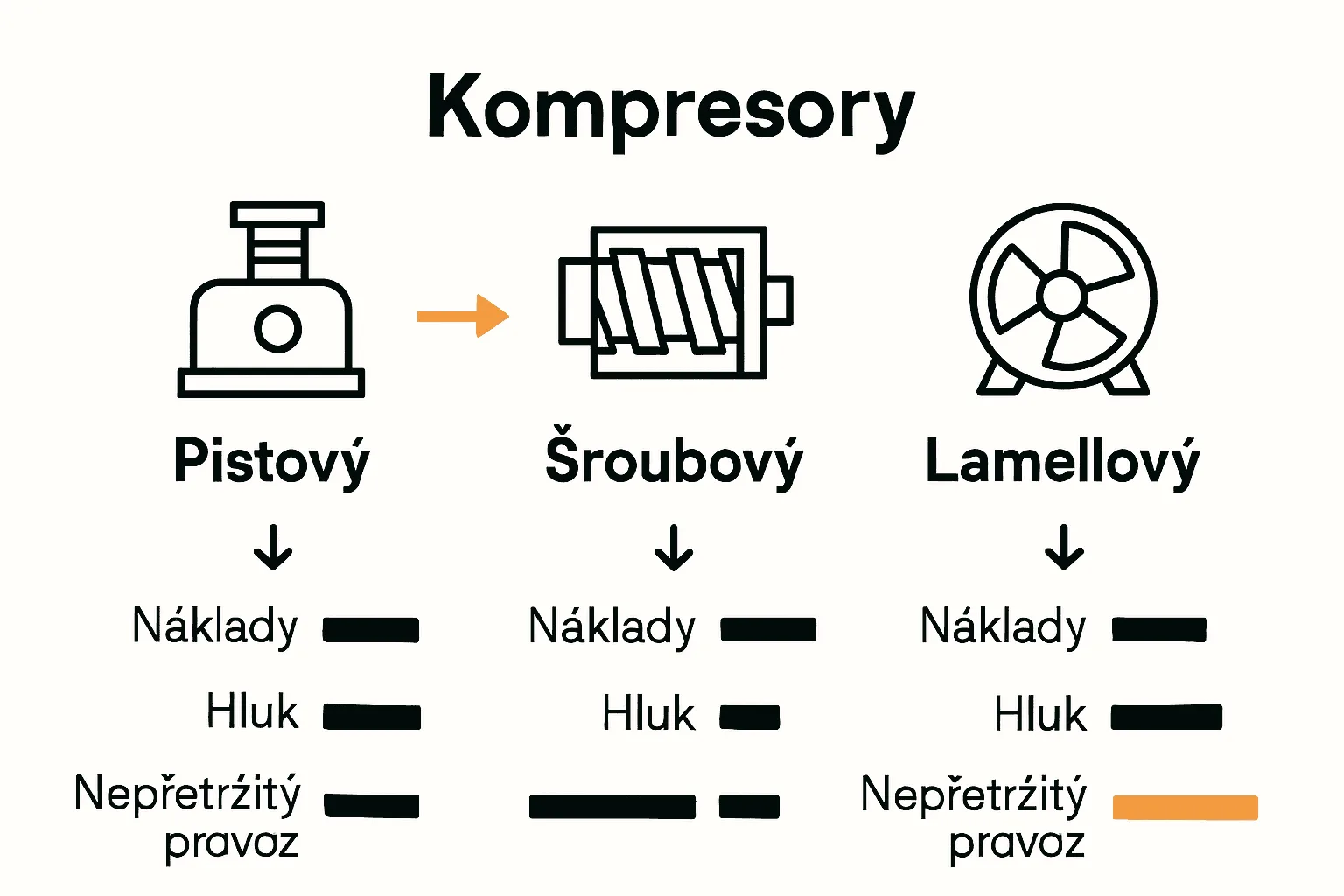
Piston compressors are the traditional solution with clear advantages as well as limits. Their main strengths include low purchase cost, easy maintenance and reliability. Their weakness, on the other hand, is a higher noise level, limited capacity and a shorter service life in continuous operation.
Screw compressors offer considerably higher output and reliability for continuous operation. Compressors with a 10 l pressure vessel allow a stable supply of air with minimal pressure fluctuations. Their disadvantage is the higher purchase cost and more complex service work.
A comparison of the key parameters of the individual compressor types:
-
Piston compressors:
-
Advantages: Low price, easy maintenance
-
Limits: Higher noise level, lower output
-
-
Screw compressors:
-
Advantages: High output, quiet running
-
Limits: High purchase cost
-
-
Vane compressors:
-
Advantages: Precision, clean operation
-
Limits: Higher operating costs
-
Choosing the right compressor requires careful assessment of the specific operating requirements, the expected load and the economic demands.
Common mistakes in choosing and running a compressor
Underestimating the required output is one of the most serious mistakes when choosing a compressor. Many users choose equipment with insufficient output, which leads to reduced efficiency, overloading of the motor and premature wear.
Another critical mistake is neglecting regular maintenance. Compressors without an air dryer require particular attention, because the absence of regular cleaning and checking can cause serious operating problems and shorten the service life of the equipment.
The most common mistakes in running and choosing compressors:
-
Incorrect sizing:
-
Underestimating the output needed
-
Excessive capacity raising the operating costs
-
-
Neglecting maintenance:
-
Skipping regular checks
-
Not draining the condensate
-
Neglecting filter replacement
-
-
Faulty installation:
-
Unsuitable placement
-
Insufficient ventilation
-
No vibration damping
-
Choosing and running a compressor correctly requires careful assessment of the specific operating conditions and consistent preventive maintenance.
Choose the ideal air compressor to suit your needs
If the article has shown you the challenges of choosing the right type of air compressor, whether piston, screw or vane, do not delay your decision. The right compressor can free you from worries about insufficient output and ensure reliable work in demanding conditions.

Look through our extensive range at Kompresory vzduchotechnika, where you will find exactly what your workshop or operation needs. You can choose from a wide assortment including compressors with a 10 l pressure vessel and 20 bar compressors for industrial use. Do not wait for a bad choice to trouble you and order your new compressor today at https://kompresory-vzduchotechnika.cz so that your work runs smoothly without needless interruptions.
Frequently asked questions
What are the main types of air compressor?
Air compressors are divided into piston, screw, vane and turbo compressors. Each type has specific properties and uses in various industrial applications.
How do piston compressors work?
Piston compressors work on the principle of the movement of a piston in a cylinder, which draws in ambient air, compresses it and discharges it into the pressure vessel. They suit smaller operations and have a low purchase price.
Why are screw compressors considered a professional solution?
Screw compressors are intended for continuous operation thanks to their high output, quiet running and ability to produce large volumes of compressed air.
What are the advantages and disadvantages of vane compressors?
Vane compressors provide high precision and cleanliness, which makes them suited to specific applications. On the other hand, their operating costs are usually higher compared with other types of compressor.