


TL;DR:
- The output of a compressor is the quantity of compressed air delivered per unit of time at a given pressure. The power input is the electrical energy consumed by the machine; these values differ. The efficiency is influenced by the type, condition and control of the compressor; correct maintenance and optimisation of the system are important.
Many technicians and buyers in production judge a compressor primarily by its power input in kilowatts. That is a mistake which leads to oversized or undersized machines, unnecessarily high operating costs and outages of production. The output of a compressor is not the same as its power input. This article explains precisely what the output of a compressor really means, how it is measured, what influences it and how to optimise it for specific operating conditions in production, construction or automotive.
Contents
- The basic definition of the output of a compressor
- How the output of a compressor is measured and why it is not only about numbers
- Factors influencing the output of a compressor in practice
- Output and efficiency: how to optimise air consumption and costs
- Our experience: what the output tables of compressors will not tell you
- A solution for a higher efficiency of the output of a compressor
- Most frequent questions about the output of a compressor
Key findings
| Point | Details |
|---|---|
| Output is not power input | The output states the volume of air delivered, the power input only the energy consumed. |
| Measure the actual values | Follow the output and the consumption in real operating conditions, not only according to the catalogue. |
| Optimisation saves costs | Regular maintenance and the correct setting of the compressor significantly reduce operating costs. |
| Factors influencing the output | The type of compressor, the state of the equipment and the operating environment have a fundamental influence on the resulting output. |
The basic definition of the output of a compressor
In technical practice the output of a compressor is defined as the quantity of compressed air delivered per unit of time at a stated pressure. Most often it is given in litres per minute (l/min) or cubic metres per hour (m³/h). This figure says how much air the machine actually delivers into the network, and it is the parameter which directly determines whether the compressor can cover the requirements of the connected tools and equipment.
The output of a compressor is defined by the quantity of compressed air in a given time and at a given pressure. The power input, on the other hand, expresses how much electrical energy the machine consumes. These two values are not linearly related. A compressor with a power input of 7.5 kW can have a considerably different volumetric output than another machine with the same power input, if they differ in the technology of compression, the efficiency of the electric motor or in mechanical losses.
The relationship between power input and output is described by the so-called specific output, that is how many m³/h of compressed air the machine produces per 1 kW of energy consumed. The higher this value, the more efficient the operation. It is precisely here that the long-term operating costs are decided.
The key technical parameters of the output of a compressor:
- Volumetric output (l/min or m³/h) at the nominal pressure
- Maximum working pressure (bar)
- Specific output (m³/h per kW)
- Power input of the electric motor (kW)
- Type of compression (piston, screw, turbo compression)
| Type of compressor | Power input (kW) | Volumetric output (m³/h) | Specific output (m³/h/kW) |
|---|---|---|---|
| Piston single-stage | 2,2 | 9 | 4,1 |
| Piston two-stage | 5,5 | 28 | 5,1 |
| Screw | 7,5 | 52 | 6,9 |
| Screw with a frequency converter | 7,5 | 55 | 7,3 |
Screw compressors achieve a considerably better specific output than piston machines of the same power input. That has a direct impact on the annual costs of electricity, especially in continuous operation. This topic is described in more detail in the article about electric compressors in practice.
Professional tip: When choosing a compressor always focus on the volumetric output at the working pressure of your application, not only on the power input. Two machines with the same power input can have a difference in volumetric output of up to 30 %.
How the output of a compressor is measured and why it is not only about numbers
We will complement the introductory definition of output with how the output is actually measured and why one cannot rely blindly on the figure used.
The measurement of the output of a compressor takes place in two basic ways: a laboratory test and an operational measurement. The laboratory test is carried out under standardised conditions according to standards, most often ISO 1217 for positive displacement compressors. The results are reproducible, but need not correspond to real operation in a particular hall or workshop.
The procedure for correct measurement of output in operation:
- Measure the actual flow of air with a flow meter installed after the air receiver.
- Record the working pressure at full load.
- Follow the power input using a wattmeter or a network analyser.
- Repeat the measurement at various loads and ambient temperatures.
- Compare the measured values with the catalogue data of the manufacturer.
The standards for measuring output differ. The European standard ISO 1217 lays down the conditions for the intake (temperature, pressure, humidity), while the results are converted to reference conditions. The American standard CAGI (Compressed Air and Gas Institute) uses a different methodology. Machines tested according to different standards therefore cannot be compared directly without conversion.
Correct measurement of output substantially influences the efficiency of production. If you proceed from the laboratory value when dimensioning the network, but real operation takes place at a higher temperature or altitude, the actual output will be lower. The temperature of the intake air has a direct influence: every extra 10 °C reduces the density of the air by approximately 3 %, which shows up as a drop in volumetric output.
| Condition | Laboratory test (ISO 1217) | Operating reality (production hall) |
|---|---|---|
| Intake temperature | 20 °C | 30 to 40 °C |
| Relative humidity | 0 % | 50 to 80 % |
| Altitude | 0 m | 200 to 500 m |
| Actual output | 100 % | 85 to 93 % |
The practical impact is obvious: a compressor with a catalogue output of 50 m³/h can in real operation deliver only 43 to 46 m³/h. When dimensioning the network it is necessary to take this difference into account with a reserve of at least 10 to 15 %.
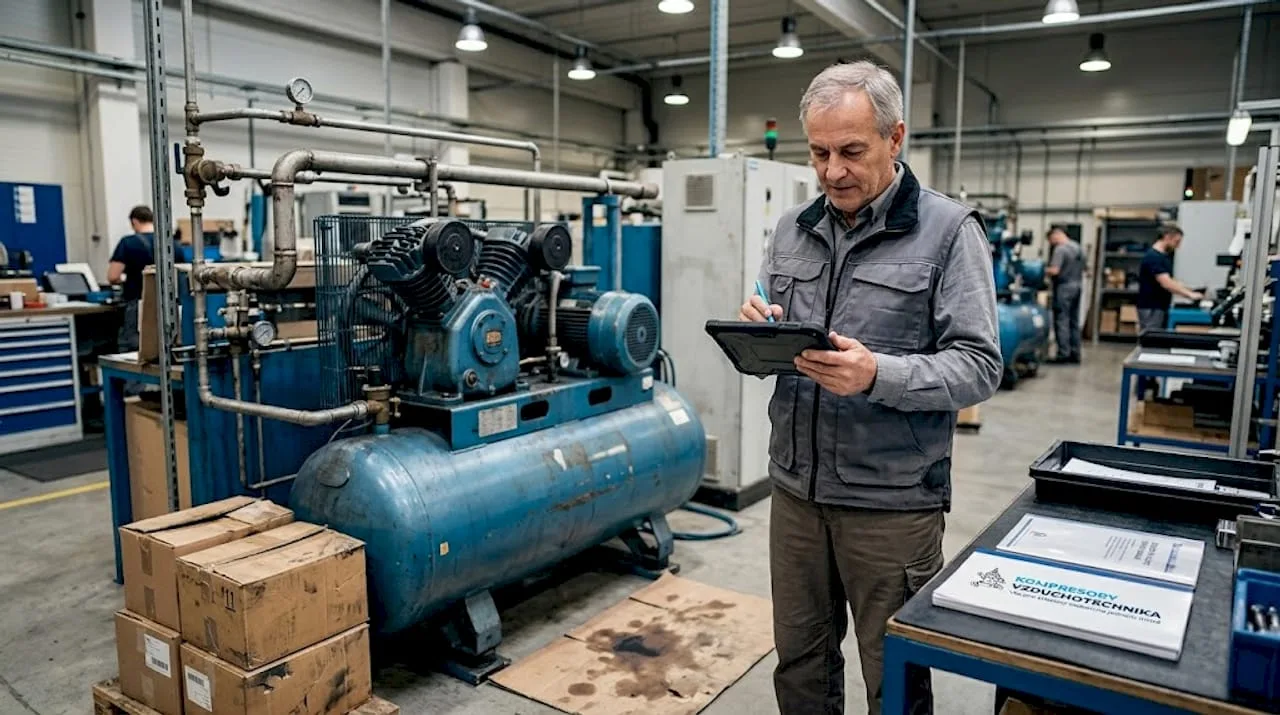
Professional tip: Do not believe catalogue values blindly. Ask the supplier for the results of measurement according to a specific standard and verify whether they correspond to the conditions of your plant. With larger installations it pays to carry out your own operational measurement after starting the machine.
Factors influencing the output of a compressor in practice
After understanding how to measure output let us focus on the factors which influence it in everyday operation.
The output of a compressor is not a static value. It changes depending on the operating conditions, the state of the machine and the method of control. The efficiency of the output depends on the kind and age of the compressor, the method of operation and the maintenance. The identification of the key factors makes targeted interventions possible without the necessity of investing in a new machine.
The main factors influencing the output of a compressor:
- Type of compressor: Screw compressors work continuously and achieve a stable output at full load. Piston machines have intermittent operation and the output fluctuates depending on the cycle. Turbo compressors are suitable for very high flows, but react sensitively to changes of pressure.
- Temperature of the surrounding air: A higher temperature reduces the density of the intake air and thereby the mass flow. The output falls. Correct placement of the compressor with a sufficient supply of cool air is a basic condition.
- Working pressure: Every increase of pressure by 1 bar increases the power input by approximately 7 %. An unnecessarily high pressure in the network directly increases costs without added value.
- Humidity of the air: Damp air contains less oxygen and nitrogen, which reduces the effective output. Condensate in the distribution moreover causes corrosive damage.
- State of the air filter: A clogged filter increases the resistance during intake and reduces the volumetric output. Regular replacement of the filter is one of the simplest measures.
- State of the oil and lubrication: With oil compressors the viscosity and cleanliness of the oil influence the mechanical losses as well as the output of the compressor.
As much as 20 % of the energy losses in industrial compressor stations are caused by a bad setting of the working pressure and leaks in the distribution. Yet these losses are identifiable and removable without replacing the machine.
Regular maintenance has a direct impact on preserving the nominal output. A machine after 5 years of operation without systematic maintenance can reach only 80 % of the original output. Yet the costs of preventive service are a fraction of the costs of an unplanned outage of production. The detailed influence of the electric motor on output is described in the article about the influence of the electric motor on output.
The optimisation of the control of a compressor includes the deployment of frequency converters, which adapt the revolutions of the motor to the current consumption of air. The machine thus does not work unnecessarily at full output at a low consumption. The result is an energy saving of 20 to 35 % compared with a compressor with fixed revolutions.
Output and efficiency: how to optimise air consumption and costs
After the analysis of the factors of output follow instructions on how to use this knowledge for specific savings and efficiency.
By optimising the output one can reduce operating costs by up to 30 %. That is not a theoretical figure. Production companies which have systematically approached an audit of compressed air consumption achieve these savings repeatedly. The key is a structured approach.
Step by step: analysis of the consumption and the needs of production
- Audit of consumption: Install flow meters on the main branches of the distribution. Record the consumption in various shifts and with various production programmes. Identify peaks and lulls.
- Identification of leaks: An ultrasonic leak detector reveals leaks which are otherwise invisible. Leaks in industrial plants make up on average 20 to 30 % of the total consumption.
- Analysis of pressure losses: Measure the pressure at the inlet to the compressor and at the place of consumption. A difference greater than 0.5 bar signals problems in the distribution.
- Assessment of the dimensioning: Compare the actual peak consumption with the installed output. An oversized compressor works in short cycles and wears out faster.
- Implementation of the measures: Repair the leaks, reduce the working pressure to the minimum necessary for the application, consider deploying a frequency converter.
Recommendations for an immediate increase in efficiency:
- Reduce the working pressure by 0.5 bar if the application allows it. The energy saving is approximately 3.5 %.
- Replace the air filters according to a schedule, not only when the output falls.
- Repair all the identified leaks. One leak of 3 mm diameter at a pressure of 7 bar consumes approximately 1.5 m³/h of air continuously.
- Install timers or automatic shutdown of the compressor outside production shifts.
- Consider sharing an air receiver between several compressors to even out pressure peaks.
Professional tip: Ongoing checking of output and consumption is cheaper than reactive service. The installation of a simple monitoring system with an alarm on a drop in output or a rise in consumption pays back within 6 to 12 months.
A specific example from practice: a production company with an installed output of 3 x 37 kW screw compressors carried out an audit of consumption. The result showed leaks worth 18 % of the total consumption, an unnecessarily high working pressure of 1 bar above the need and an unsuitable switching cycle of the third compressor. After removing the leaks, reducing the pressure and deploying a frequency converter on one machine the annual consumption of electricity fell by 22 %. The investment returned in 14 months. Further tips on optimisation are offered by an overview of the most frequent faults of compressors.
Our experience: what the output tables of compressors will not tell you
Catalogue values of output are a starting point, not a final verdict. From projects in industrial plants we know that the decisive details lie elsewhere: in the method of control of the compressor, in the actual losses in the distribution and in the configuration of the whole compressed air network.
Table values are regularly overstated by 5 to 15 % compared with real use in a specific application. Manufacturers measure under ideal conditions, operation takes place in the real world. The greatest savings we have recorded at customers were not brought by replacing the machine with a more powerful one, but by changes in operation: the repair of leaks, the correct setting of pressure and the optimisation of switching cycles.
Trust the data from your own practice. Ongoing measurement of output and consumption gives a more accurate picture than any catalogue. An overview of frequent mistakes in the choice of output shows where companies most often err and how to avoid these mistakes.
A solution for a higher efficiency of the output of a compressor
The findings of this article can be transferred into practice with the support of specific products and expert advice.
For industrial plants with a requirement for a high and stable output we offer economical SCR screw compressors with a frequency converter, which achieve a considerably better specific output compared with piston machines. For smaller workshops and automotive plants the range of MARK compressors and accessories is available. Our technicians will help with the choice of the right machine, the dimensioning of the network and the setting of the operating parameters. The complete offer of compressors includes machines for every type of operation, from mobile units to stationary industrial compressors.
Most frequent questions about the output of a compressor
What is the difference between the power input and the output of a compressor?
The power input is the electrical energy consumed by the compressor in kilowatts, the output is the volume of compressed air delivered per unit of time at a stated pressure. The difference between power input and output is fundamental for a correct assessment of efficiency and the choice of the right machine.
What most influences the actual output of a compressor?
The real output is influenced by the type of compressor, the operating conditions such as temperature and pressure, the state of the equipment and the correct setting of the system. The state and maintenance of the machine have a fundamental influence on the output achievable in the long term.
Can the output of a compressor be increased without replacing the machine?
Yes, optimisation of the control, the removal of leaks and regular maintenance often increase the output even without a new investment. By optimising operation the usable output can be increased and the operating costs reduced without a capital investment in a new machine.

Why is it important to follow the output of a compressor in the context of the specific production?
Every company has different needs and a different profile of air consumption; correct dimensioning and ongoing checking of output prevents losses and increases the efficiency of the whole plant. The output of a compressor must be adapted to the specific operation, because a universal solution as a rule does not lead to optimal results.
Recommended
- How the electric motor influences the output and reliability of a compressor
- Energy saving with a compressor: an expert guide 2026 - Kompresory-Vzduchotechnika.cz
- What an electric compressor is and how it will improve the efficiency of a plant - Kompresory-Vzduchotechnika.cz
- Two-stage compressor: higher efficiency for industry 2026