
TL;DR:
- A check valve protects the piping from reverse flow and the compressor from damage. Correct installation and maintenance extend its service life and increase the efficiency of the system. The choice of the type of valve depends on flow, pressure and medium, while cone valves with a guided cone are the most suitable.
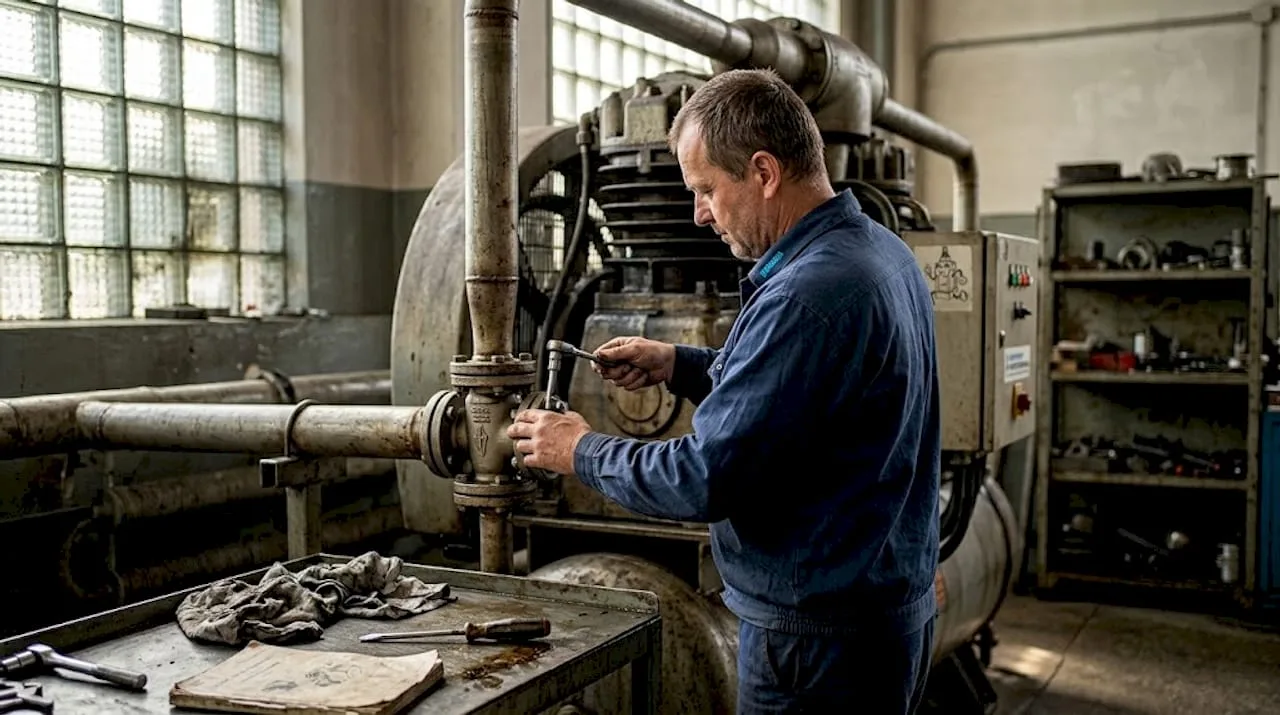
In most industrial compressor systems one overlooked element stands behind faults and energy losses: the check valve. A check valve protects piping, pumps and compressors by allowing flow in only one direction and preventing reverse flow. In practice this means that without a correctly chosen and installed check valve you risk damage to the compressor, a loss of pressure or a pressure surge in the piping. In this article you will get an overview of the technical principle, a comparison of the designs, specific applications in industry and recommendations for correct installation and service.
Contents
- The principle of the check valve and its technical definition
- A comparison of the types of check valve and the key parameters
- The check valve in practice: applications in compressors and air technology
- The most frequent mistakes, edge cases and the correct installation of a check valve
- How the check valve decides the reliability of a compressor – an expert’s experience
- Compressed air and compressors: how to ensure maximum safety and efficiency
- Frequently asked questions
Key findings
| Point | Details |
|---|---|
| Flow in one direction | A check valve allows flow in only one direction and protects the equipment from back pressure. |
| Technical variability | There are several types of valve with various parameters for specific applications — the right choice is key. |
| Efficiency of the system | A correctly chosen check valve increases the reliability and energy efficiency of a compressor to as much as 95 %. |
| Mistakes during installation | Incorrect installation of the valve can lead to faults, leaks and a safety risk. |
| Practical service | A regular check of the seal and the correct direction of flow minimises faults and extends the service life of the system. |
The principle of the check valve and its technical definition
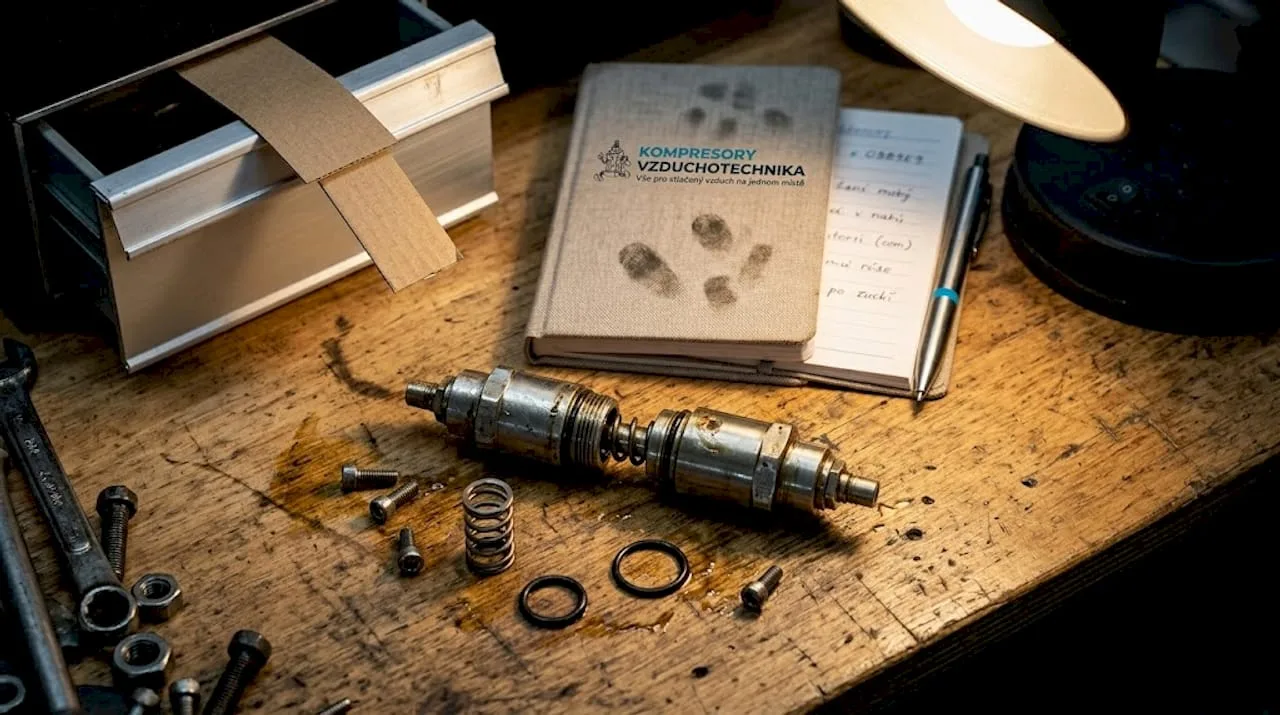
A check valve is a one-way industrial fitting. Its basic task is simple: to let the medium through in one direction and, on a drop or reversal of pressure, to close the flow immediately. That applies to liquids, gases and compressed air.
The mechanism of opening and closing depends on the design. With spring valves the inlet pressure overcomes the resistance of the spring and the valve opens. With gravity types the flap is held by its own weight. The valve opens at an inlet pressure higher than the outlet pressure, while the opening pressure typically ranges between 0.5 and 1 bar. After the inlet pressure drops the valve is closed by gravity, the spring or back pressure from the outlet side.
The key technical parameters of check valves include:
- nominal pressure (DN/NPS): from 1/8" to 1.5" and more
- working pressure: as standard from 160 to 630 bar (industrial applications)
- material of the body: carbon steel, stainless steel, brass
- seal: rubber, NBR, FKM (viton), metal seat
- temperature of the medium: from -40 °C to +200 °C depending on the design
- type of connection: threaded, flanged, compression rings
From the point of view of construction you will most often meet two basic designs. The cone valve (with a guided cone) offers precise guidance of the closing element and a cross-section with zero or minimal pressure loss. The flap valve works with a swinging flap, which is suitable for horizontal as well as vertical mounting, but on fast closing can cause a pressure surge.
For a comparison with other safety elements it is appropriate to follow the function of safety valves too, because in compressor systems these elements work together.
Table: basic technical parameters of check valves
| Parameter | Typical value | Note |
|---|---|---|
| Opening pressure | 0.5 to 1 bar | depends on the spring and the design |
| Working pressure | 160 to 630 bar | industrial types |
| Diameter of the connection | 1/8" to 1.5" | threaded design |
| Material of the body | stainless steel, brass | according to the medium |
| Seal | viton, NBR, metal | according to temperature and medium |
Professional tip: when choosing a check valve always specify the medium, working pressure and temperature. For aggressive media or high temperatures choose a stainless steel body with a viton seal.
A comparison of the types of check valve and the key parameters
On the market there are several design variants of check valve. For industrial applications the choice of the right type is fundamental for the reliability and energy efficiency of the system.
Flap valves are the most widespread type. The flap is opened by the flow of the medium and closes by its own weight or a spring. They are suitable for large pipe diameters and low flow velocities. A disadvantage is the risk of a pressure surge on fast closing.
Spring valves contain a closing element pushed by a spring into the closed position. They open only after the resistance of the spring is overcome by the inlet pressure. They are more compact, suitable for vertical as well as horizontal mounting and withstand a pressure surge better.
Cone valves with a guided cone are technically the most precise. Cone types have a cross-section with zero or minimal pressure loss, which is a key advantage at high flow velocities. The cone is guided precisely in the body of the valve, so neither vibrations nor lateral movement occur.
The technical parameters of the valves cover pressures from 160 to 630 bar, sizes from 1/8" to 1.5", materials of stainless steel and seals of viton or metal. That covers the absolute majority of industrial applications in the area of compressed air and hydraulics.
Key finding: for high flow velocities always prefer a valve with a guided cone. You will minimise turbulence, reduce noise and extend the service life of the whole system.
Comparison table of types of check valve

| Type of valve | Advantages | Disadvantages | Recommended application |
|---|---|---|---|
| Flap | low price, large diameters | risk of a pressure surge | low-pressure systems |
| Spring | compact, resistant to pressure surges | higher pressure difference | compressors, hydraulics |
| Cone (guided) | cross-section without pressure loss, accuracy | higher price | high flow, precise systems |
The procedure for choosing a check valve for an industrial system:
- determine the working pressure and flow of the medium
- establish the medium (air, oil, water, aggressive liquids)
- choose the material of the body and the seal according to temperature and chemical resistance
- decide on the orientation of the mounting (horizontal, vertical)
- compare the pressure differences and the speed of closing
A detailed overview of the available types can be found in the section check valves as accessories for a compressor. For the calculation of the energy saving with a compressor the choice of the right valve is one of the basic steps.
The check valve in practice: applications in compressors and air technology
Check valves are present in compressor systems at several key places. Each of them has specific requirements on the type, material and parameters of the valve.
Typical applications of check valves in industry:
- protection of the suction and discharge piping of the compressor
- prevention of reverse flow of compressed air into the compressor when shutting down
- protection of pumps in hydraulic circuits
- separation of branches in compressed air distribution
- systems of heat recovery in screw compressors
- protection of air receivers from back pressure
Protection against back pressure in suction and discharge piping is one of the most important functions of the check valve in industrial compressed air systems and hydraulics. Without this element, when the compressor is shut down, reverse flow of the medium would occur, which can damage the screw or piston assembly.
In systems with heat recovery in screw compressors the efficiency reaches as much as 95 % of the use of the supplied electrical energy. The check valve here ensures that the heated oil or air flows in the right direction into the heat exchanger and does not return back into the compressor.
For maximum efficiency an empirical benchmark applies: the maximum velocity of the flow of air through the check valve should not exceed 7 m/s, otherwise turbulence and increased pressure losses occur. When dimensioning the valve for a specific system always count on a reserve of the flow cross-section.
An overview of the reliability and efficiency of the two-stage compressor shows what a fundamental role check valves play between the stages of compression. Incorrect function of the valve between the first and the second stage causes overheating and a drop in output.
Professional tip: at every service of the compressor check the state of the check valve. Focus on the tightness of the seat, the function of the spring and any deposits. A neglected valve causes energy losses which show up in consumption even before a mechanical fault occurs. An overview of the most frequent faults of compressors confirms that the check valve figures among the first three causes of faults.
The most frequent mistakes, edge cases and the correct installation of a check valve
Even a correctly chosen check valve can fail if it is badly installed or neglected during service. From practice several recurring mistakes emerge which manufacturers often do not mention in their catalogues.
Pressure surges, leaks at the seal and incorrect installation are the most frequent operating problems of check valves. A pressure surge arises on the fast closing of a flap valve in systems with a high flow velocity. The pressure wave can damage the piping, the flanges and the valve itself.
The most frequent mistakes during installation and operation:
- turning the valve in the opposite direction of flow (the most frequent mistake during fitting)
- leaving impurities in the piping before the valve (causes seizing of the seat)
- the use of a valve with a seal unsuitable for the given medium
- fitting a flap valve in a vertical position without checking the orientation
- ignoring the recommended tightening torque of the threaded connection
Edge cases which manufacturers point out only rarely:
- during operation in an environment with high humidity corrosion of the spring occurs with standard steel designs. Solution: a stainless steel spring or a viton seal
- with intermittent operation of the compressor (frequent starting and shutting down) the fatigue of the spring accelerates. Recommended frequency of checking: every 500 operating hours
- in systems with oil and air at the same time (lubricated compressors) swelling of the rubber seals occurs. Always specify the medium when ordering
A principle from practice: before fitting a check valve always flush the piping with a clean medium. Impurities in the piping are the most frequent cause of premature failure of the valve in the first hours of operation.
The procedure for the correct installation of a check valve:
- check the marking of the direction of flow on the body of the valve (an arrow or the inscription “IN/OUT”)
- flush the piping before fitting
- tighten the threaded connection to the recommended torque (see the documentation of the manufacturer)
- after the first start check the tightness of all the joints
- record the date of installation and plan the first service check
Observing the safety rules for a compressor includes the regular checking of check valves as part of preventive maintenance.
How the check valve decides the reliability of a compressor – an expert’s experience
In industrial practice one pattern repeats itself: the check valve is an element which nobody notices until it causes a problem. Specialists in air technology and compressors know that underestimating the specification and maintenance of the check valve leads to unnecessary energy losses, unplanned shutdowns and in an extreme case to damage to the compressor.
The conventional approach in many plants is simple: the valve is replaced when it stops working. That is a mistake. A correctly chosen and regularly checked check valve extends the service life of the whole system and keeps the energy efficiency at the designed level. At every modernisation or extension of a compressed air system the specification of the check valves must be verified again. Flow, pressure and medium can change, and the old valve then works outside the optimal range.
For maximum the efficiency of an electric compressor the correct function of the check valve is one of the key preconditions. A minimum of losses and maximum efficiency are not the result of chance, but the consequence of correct specification, installation and regular service of every element in the system, the check valve not excepted.
Compressed air and compressors: how to ensure maximum safety and efficiency
After the technical analysis of check valves the next step is natural: to ensure that the whole compressed air system works reliably and safely. At kompresory-vzduchotechnika.cz you will find a specialised range of check valves and accessories for industrial compressors.
We offer expert consultation when choosing the right type of valve, dimensioning for a specific application and advice on installation. In the category of check valves types for pressures from 160 to 630 bar, various materials and seals are available. For a complete solution of a compressor system take a look also at MARK compressors, which meet demanding industrial requirements for output, reliability and energy efficiency.
Frequently asked questions
How do I recognise that a check valve is working correctly?
A correctly working check valve does not let reverse flow through and keeps the system free of leaks. A regular check of the flow and the seal is the basis. Leaks from the seal most often show up as a drop of pressure in the system or a visible escape of the medium around the valve.
Which type of check valve is suitable for a high flow?
For high flow velocities a valve with a guided cone is recommended. Cone types do not restrict the cross-section and minimise turbulence, which is key for systems with a flow above 5 m/s.
What are the most frequent mistakes when installing a check valve?
The most frequent mistakes include reversing the direction of flow, clogging of the valve with impurities and disregarding the technical parameters. Incorrect installation in the opposite direction is the cause of immediate failure and damage to the following components.
How does a check valve influence the efficiency of a compressed air system?
A quality valve minimises pressure losses and increases energy efficiency. In systems with heat recovery in compressors the efficiency reaches as much as 95 %, while the maximum flow without turbulence is 7 m/s.
Recommended
- Safety valves: function, choice and the right capacity - Kompresory-Vzduchotechnika.cz
- Decompressor: a key function in industrial pneumatics - Kompresory-Vzduchotechnika.cz
- How the electric motor influences the output and reliability of a compressor
- Avoid the most frequent mistakes in using compressors - Kompresory-Vzduchotechnika.cz