
Two-stage screw compressors SCR-H and SCR-HPM
 Two-stage compression
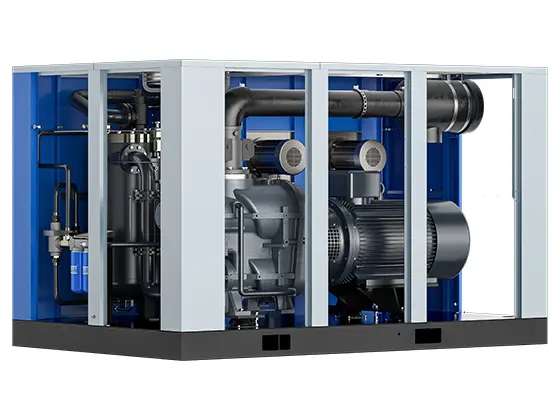
A screw compressor that compresses the air in two goes. The first block takes it up to an intermediate pressure, the intercooler takes the heat out of it and the second block pushes it to the outlet pressure. Cooler air puts up less resistance, so the same amount of air costs less electricity — the manufacturer states a saving of more than 10 % against a single-stage machine at full load. The SCR-H series covers 132 to 280 kW and is built either with a fixed speed, or as the SCR-HPM with a variable-speed drive and a permanent magnet motor. It is an oil-lubricated machine, but it lets less than 3 ppm of oil into the air.
How to pick from the series
Four questions in this order. The first two set the size of the machine, the other two decide whether a drive is worth it and what the compressor room will have to take.
1 · How much air you use
Add up what the machines consume and put a reserve on top for leaks in the pipework. The table below gives the output in m³/h at each of the four pressures — always compare at the pressure you are really going to run at.
2 · At what pressure
Every extra bar costs roughly 6 to 7 % of the input power. Seven bar is enough for most air tools and production lines; 12.5 bar makes sense only where a particular machine calls for it. The pressure is chosen on the model page.
3 · Fixed speed, or a drive
Fixed speed (H) pays off with even demand, where the machine runs flat out all the time. A drive (HPM) belongs where consumption swings — the machine turns its speed down instead of blowing off into the open.
4 · What the compressor room will take
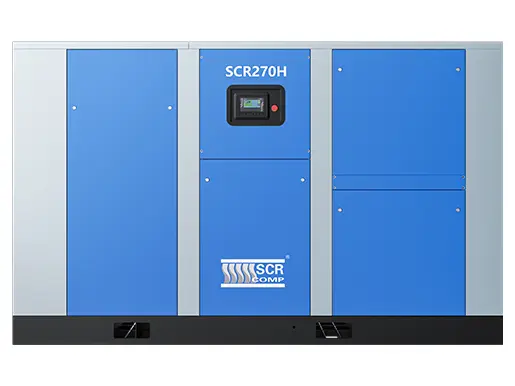
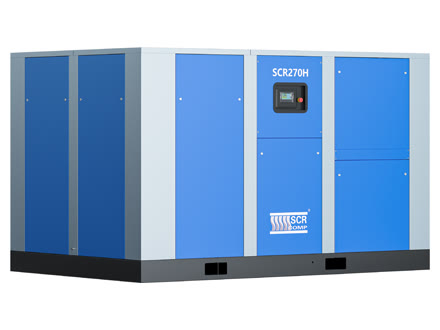
The smallest machine of the series weighs 4,700 kg and measures 3.4 × 2.1 × 2.0 m, the largest 7,400 kg and 4.0 × 2.2 × 2.3 m. On top of that you have to allow for venting the heat away and for a DN80 to DN125 flange at the outlet.
Two versions, one series
Mechanically it is the same machine. What differs is the motor and the way it follows demand.
| Two versions, one series | ||||
|---|---|---|---|---|
| Designation | Motor | Control | Range | When to choose it |
| H | asynchronous, class IE4 from 132 to 200 kW | fixed speed | 132–280 kW | Even demand, where the machine runs all the time anyway. Simpler, without power electronics. |
| HPM | permanent magnet, beyond IE4, IP55 protection | variable-speed drive | 132–280 kW | Swinging demand. The machine controls its output steplessly and does not have to blow off into the open; from 250 kW up the drive comes as an external cabinet. |
Technical data of the SCR-H series
| Two-stage screw compressors SCR-H — all 14 machines | |||||||||
|---|---|---|---|---|---|---|---|---|---|
| Machine model | Rating | Max. output (l/min) | 7 bar (m³/h) | 8 bar (m³/h) | 10 bar (m³/h) | 12.5 bar (m³/h) | Outlet | Dimensions l × w × h (mm) | Weight |
| SCR-H — fixed speed | |||||||||
| SCR-132 H | 132 kW | 28,500 | 1,710 | 1,680 | 1,350 | 1,110 | DN80 | 3,400 × 2,100 × 2,000 | 4,700 kg |
| SCR-160 H | 160 kW | 33,000 | 1,980 | 1,968 | 1,650 | 1,380 | DN80 | 3,400 × 2,100 × 2,000 | 4,900 kg |
| SCR-185 H | 185 kW | 39,000 | 2,340 | 2,310 | 2,040 | 1,740 | DN100 | 3,400 × 2,200 × 2,100 | 5,800 kg |
| SCR-200 H | 200 kW | 43,000 | 2,580 | 2,520 | 2,340 | 1,980 | DN100 | 3,400 × 2,200 × 2,100 | 6,000 kg |
| SCR-220 H | 220 kW | 45,800 | 2,748 | 2,730 | 2,520 | 2,250 | DN100 | 3,400 × 2,200 × 2,100 | 6,600 kg |
| SCR-250 H | 250 kW | 51,500 | 3,090 | 3,060 | 2,760 | 2,430 | DN125 | 4,000 × 2,200 × 2,300 | 7,000 kg |
| SCR-280 H | 280 kW | 60,000 | 3,600 | 3,360 | 3,060 | 2,760 | DN125 | 4,000 × 2,200 × 2,300 | 7,400 kg |
| SCR-HPM — variable-speed drive and permanent magnet motor | |||||||||
| SCR-132 HPM | 132 kW | 28,500 | 516–1,710 | 504–1,680 | 405–1,350 | 333–1,110 | DN80 | 3,400 × 2,100 × 2,000 | 4,700 kg |
| SCR-160 HPM | 160 kW | 33,000 | 594–1,980 | 588–1,968 | 498–1,650 | 414–1,380 | DN80 | 3,400 × 2,100 × 2,000 | 4,900 kg |
| SCR-185 HPM | 185 kW | 39,000 | 702–2,340 | 696–2,310 | 612–2,040 | 522–1,740 | DN100 | 3,400 × 2,200 × 2,100 | 5,800 kg |
| SCR-200 HPM | 200 kW | 43,000 | 774–2,580 | 756–2,520 | 702–2,340 | 594–1,980 | DN100 | 3,400 × 2,200 × 2,100 | 6,000 kg |
| SCR-220 HPM | 220 kW | 45,800 | 840–2,748 | 840–2,730 | 780–2,520 | 660–2,250 | DN100 | 3,400 × 2,200 × 2,100 | 6,600 kg |
| SCR-250 HPM | 250 kW | 51,500 | 930–3,090 | 918–3,060 | 828–2,760 | 732–2,430 | DN125 | 4,000 × 2,200 × 2,300 | 7,000 kg |
| SCR-280 HPM | 280 kW | 60,000 | 1,020–3,600 | 960–3,360 | 840–3,060 | 690–2,760 | DN125 | 4,000 × 2,200 × 2,300 | 7,400 kg |
The “Max. output” column is the largest amount of air the machine will give — that is at seven bar, because the lowest pressure gets the most out of the same motor. It is in l/min so that the machine can be compared with the other series on the site; the pressure columns are in m³/h, the way the manufacturer states the output. On the HPM machines the pressure columns give the control range — from the lowest output the machine will turn down to, up to the maximum. Each machine is ordered in one of the four pressures and the pressure is chosen on its own page; the order code then reads for instance SCR-200/8H, that is 200 kW at 8 bar.
Outputs, dimensions, weights and connections are stated by the manufacturer, the noise levels and order codes by the importer. The output is measured to ISO 1217, annex C. The figures hold for standard conditions; in heat, at altitude or in a dusty plant the machine has to be assessed separately. We reserve the right to make changes without notice — the order confirmation is what counts.
#showmore#
What sets the series apart
Two stages instead of one
The air goes through two screw blocks in series with an intercooler between them. A lower pressure ratio per block means less leakage back past the rotors and a smaller loss — and that is exactly where the saving the manufacturer puts at over ten percent comes from.
Oil in the air below 3 ppm
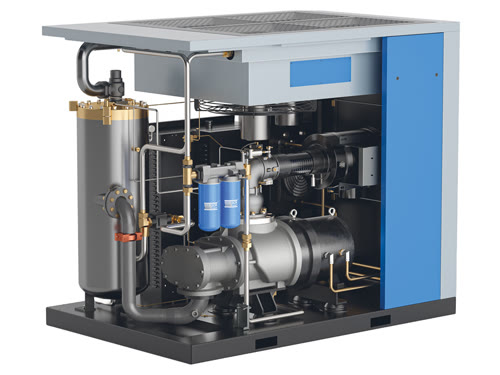
A generous separator vessel and a replaceable element keep the oil content below 3 ppm for the whole 4,000 hour service interval, the manufacturer says. Machines from 250 kW up have two elements. The whole separating path is oversized so that the pressure drop stays under 0.02 MPa — the less resistance at the outlet, the lower the pressure the machine has to make.
An intake built for dust
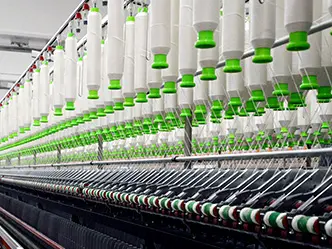
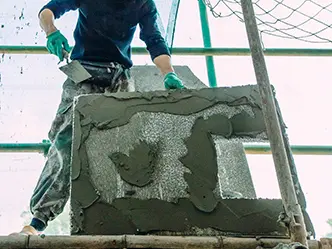
The double element of the intake filter catches 99.9 % of particles under 0.3 µm, according to the manufacturer, and reports when it is clogging up. The intake change interval is 2,000 hours — worked out for a cement plant and a spinning mill, not for a clean workshop.
SCR9000 control
A seven-inch colour touch display, over thirteen protections and Modbus RTU for a higher-level system. Up to sixteen compressors can be linked into one network — with a machine of this size that is the normal situation, not the exception.
Siemens switchgear
The power side is built on Siemens components. The internal air and oil pipework is all steel, not hoses that age and start to leak.
How the machine is built
Two blocks and an intercooler
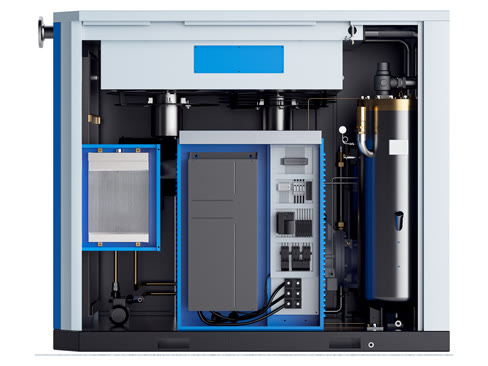
The first stage draws the air in through a filter and compresses it to an intermediate pressure. Before it gets to the second block it passes the intercooler and gives up its heat — colder air takes up less volume, so the second stage does not have to fight so hard. Both blocks are driven by one motor through a gearbox, so each of them runs at the speed that suits it.
Where the oil ends up
Inside the machine the oil lubricates the rotors, seals the gap between them and carries the heat away. It is then pulled out of the compressed air by the swirl in the large vessel and, at the end, by the fine separator element. The oil filter meanwhile holds the dirt in the oil down to 0.1 µm, so that the element does not clog up sooner than it should.
Cooling and what to do with the heat
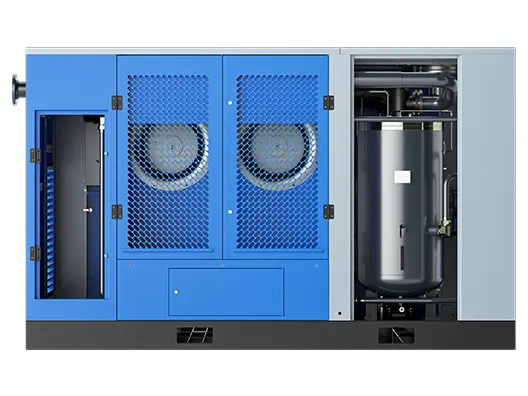
Air cooling is the standard — centrifugal fans pull air through the oil cooler and through the aftercooler, which is twenty percent larger than it needs to be. For a hot or cramped compressor room water cooling can be ordered, and the heat the machine makes can be put back into service water heating by heat recovery.
Getting at the service points
The switchgear, the filters and the separator sit behind doors in an upright wall, not under the roof of the machine. The lid of the vessel is arranged so that the separator element can be changed without taking the pipework apart. On a machine that has to run around the clock, the length of the shutdown counts for more than the price of the part.
What can be ordered with the series
The basic version is air-cooled, with a fixed speed or with a drive. The rest is added to suit the compressor room:
- Water cooling — A circuit carries the heat away instead of the air. For hot plants and for rooms with nowhere to vent to.
- Heat recovery — A heat exchanger passes the heat into service water heating. On machines of this size that is tens of kilowatts which would otherwise go up to the ceiling.
- External variable-speed drive — From 250 kW up the HPM drive comes in a separate cabinet beside the machine, not inside it.
- Aftercooler — The manufacturer lists it as optional — without it the air leaves the compressor hot and the moisture condenses out in the pipework.
- Extended five-year warranty — Offered by the importer for the whole series.
Where this air is used
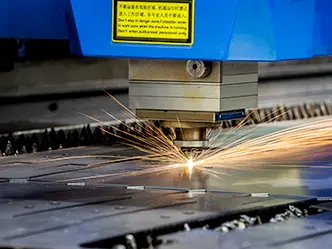
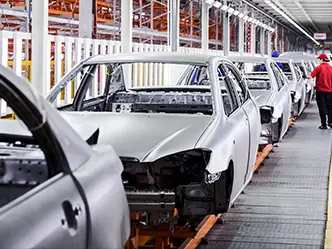
The series is built for plants that take air all the time and in quantity, and where the yearly electricity bill counts for more than the purchase price. The air is oil-lubricated — where it touches the product, the oil-free series belongs instead.
Where to go next
SCR-H is the most powerful oil-lubricated series we carry. If a smaller machine comes out of your figures, or if you need air without oil, the way leads elsewhere:
- SCR-EPM2 screw compressors — single-stage with a magnet motor, 55 to 160 kW — when 132 kW comes out as your ceiling, not your starting point
- Oil-free SCR-G screw compressors — class 0 air for food production, pharmaceuticals and electronics, 37 to 280 kW
- SCR-APM Maxi screw compressors — compact machines for the workshop and the smaller plant
- Compressed air dryers — without a dryer the moisture drops out in the pipework, not in the compressor
- Industrial filtration to ISO 8573-1 — polishes off the residual oil and dust behind the compressor
- Pressure vessels and air receivers — even out the peaks in demand and save the machine some switching
Ventilek advises
On a 132 kW machine it is the running, not the purchase, that decides the cost. A year of continuous operation uses so much electricity that a difference of ten percent can pay for a good part of the machine. Before you settle on a size and on the control, have the consumption worked out from your own demand profile — measuring on the pipework is cheaper than a badly chosen compressor.
Frequently asked questions
- How does a two-stage machine differ from an ordinary screw compressor?
- It compresses the air in two goes and cools it between the stages. Each block therefore copes with a smaller pressure ratio, less air escapes back past the rotors and the same output costs less electricity. The manufacturer puts the saving at more than ten percent at full load.
- When is the HPM with a drive worth it and when is a fixed speed enough?
- The demand profile decides. When the machine runs flat out all the time, the drive has nothing to save and only adds electronics. When consumption swings, a fixed-speed machine keeps blowing off into the open, and those are exactly the hours the drive takes away.
- How much oil gets into the air?
- Less than 3 ppm for the whole 4,000 hour interval, the manufacturer says. For a plant where the air touches the product or the packaging that is not enough — there the oil-free SCR-G series with class 0 air belongs, and the link to it is below.
- Why does the order code say /12 when the machine gives 12.5 bar?
- The order code carries a shortened form. The machine works at 12.5 bar, and in the technical data and in the tables we always write 12.5.
- Does the machine need a dryer?
- Yes, if the air is not to condense in the pipework. The compressor heats the air and saturates it with moisture; that moisture drops out where the air cools down — usually only in the pipes. A dryer deals with it at the source.
- Will the machine cope with a dusty plant?
- The intake is built for it: a double element, 99.9 % of particles under 0.3 µm according to the manufacturer, and a clogging indicator. The intake filter change interval is 2,000 hours.


