


- Compressed air filtration is prescribed by the ISO 8573-1 standard
- NGF filters
- Professional industrial filters
- Accessories for professional industrial filters
- Choosing a MARK air filter
- Types of MARK filters
Compressed air filtration is prescribed by the ISO 8573-1 standard
Contaminants in atmospheric air are a major enemy of any compressed air network and cause wear and corrosion of every component. The quality that compressed air must have in different environments is prescribed by the ISO 8573-1 standard. You will learn how to find your way around the standard in the article on compressed air quality: https://www.kompresory-vzduchotechnika.cz/poradna/jak-filtrovat-stlaceny-vzduch. Industrial filters are a useful ally in the fight against contaminants in compressed air.
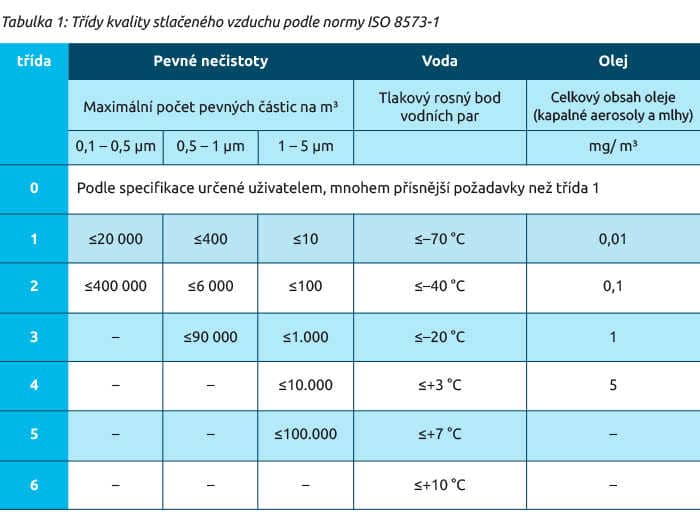
Compressed air classes
For various applications the ISO 8573-1 standard lays down quality classes expressed by three digits. For workshop air, for example, the standard requires quality 4-4-5. These three digits give three prescribed quality classes in this order: quality class for solid particles, quality class for water (pressure dew point temperature), quality class for oil.
Standards for filter testing
Filter manufacturers state the standards to which their filters are tested.
The ISO 12500 standard defines universal test methods for manufacturers of compressed air filters.
It specifies the critical input parameters of the supplied oil and the size of the supplied particles.
- ISO 12500-1 defines the testing of coalescing filters for aerosol separation.
- ISO 12500-2 defines oil vapour adsorption for adsorption filters.
- ISO 12500-3 defines particle size in particle filtration.
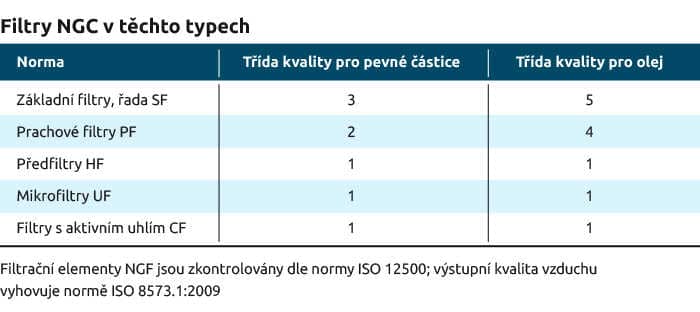
The ISO 8573 standard defines air quality on the basis of the amount of components remaining in the compressed air. At www.kompresory-vzduchotechnika you can choose from a remarkably rich range of industrial air filters:
NGF filters
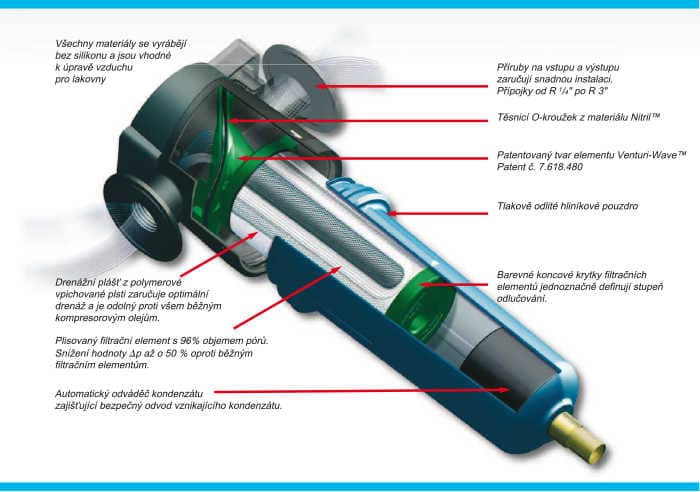
The NGF filter range delivers perfect compressed air quality at low operating costs. These filters are designed for the following operating conditions:
- Max. working pressure: 16/11 bar
- Volumetric operating flow: 34 – 2 549 m³/h (567 – 424 833 l/min)
- Inlet temperature max. 66 °C
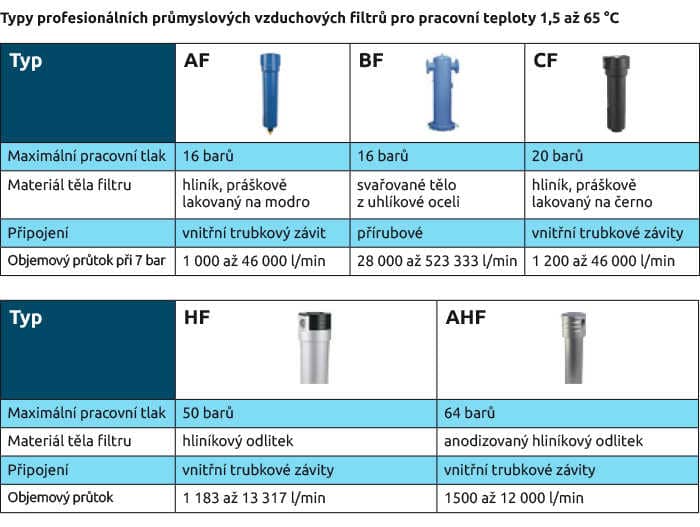
Professional industrial filters
Figure 1. Shows the construction of an AF type filter and hints at how to choose a suitable filter:
- Choose the filter housing from the list below according to the pressure in the system, the volumetric flow and the requirements for resistance and connection.
- Choose the suitable filtration grade according to the required air quality (in the right-hand column of the figure).
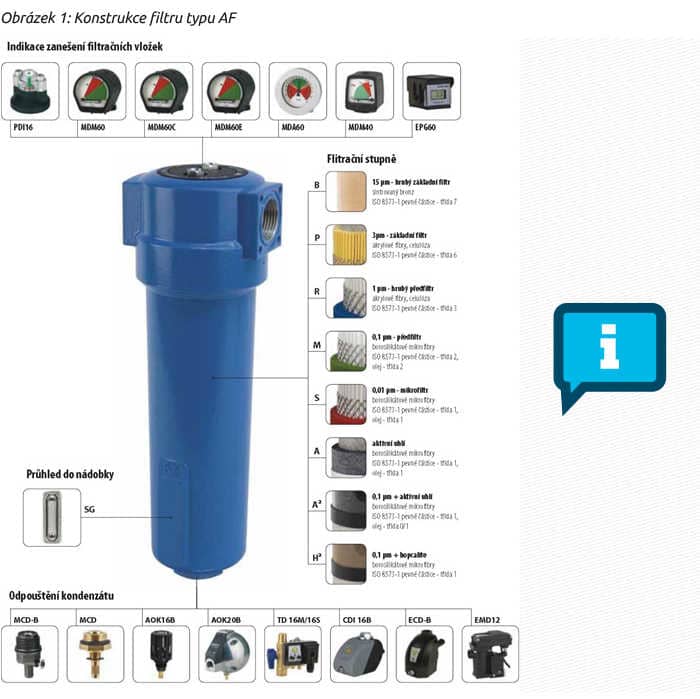
Tip: when ordering a filter or a filter element, write into the order number the letter designating the required filtration grade. If you choose an AF type filter with filtration grade S (microfilter 0,01 µm). write into the order: ASF
Rule for replacing the filter element
- 1 x a year or when a pressure drop of 350 mbar is reached; from grade A every 6 months.
- Choose the type of clogging indicator for the filter element to go with the filter. The indicator shows when to replace the element.
- For condensate discharge choose a suitable drain.
Choosing the filter housing
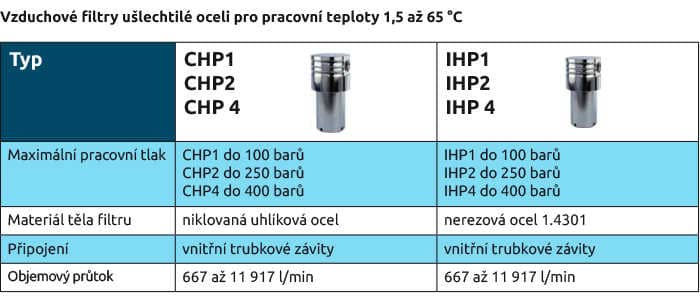
When choosing the filter housing, take these parameters into account:
- Maximum working pressure and temperature
- Volumetric flow: the individual filter ranges are supplied in size variants for different volumetric flows
- Filter material according to the working environment:
- for undemanding operations a carbon steel filter is enough
- for operations with a more aggressive environment (corrosion etc.) we reach for filters made of aluminium, nickel-plated steel or stainless steel
- for food and pharmaceutical operations there are special filters of the PF/HPF. SF, SPF ranges - Connection to the compressed air system: we choose a pipe thread or a flange according to the connection point in the system
Filters for special applicationsSpecial filters differ from the standard ones in having connections for pressure sensing and draining in the upper or lower part of the filter by means of a female pipe thread The filters serve well in demanding working environments: packaging, chemical, food and pharmaceutical industry, biotechnology, breweries, fermentation processes, hospitals. They withstand temperatures up to 150 °C and some of them can be sterilised. |
 |
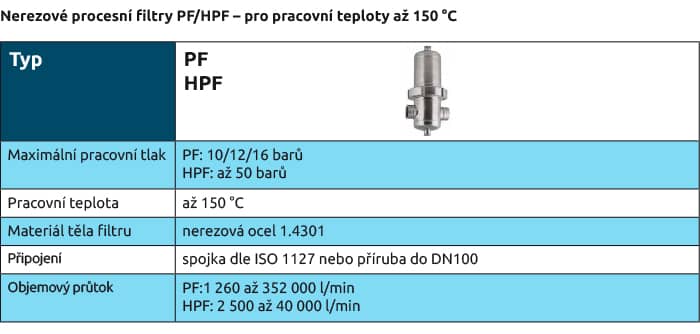
Stainless steel sterile SPF filters for working temperatures up to 150 °C
The filters undergo the so-called DOP integrity test – a quick check of the filter integrity using an oil aerosol. The test confirms that the filter is tight and free of any leaks. The filter complies with the requirements of the American FDA regulation for food contact, CFR article 21.
Accessories for professional industrial filters
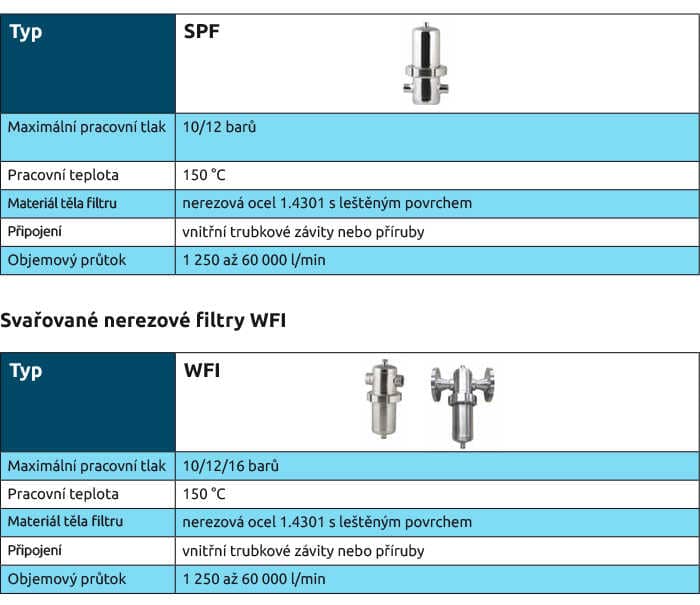
Filter element clogging indication
In every compressed air system you have to fight pressure loss – it is caused by every fitting and every dryer, but also by the filter. A clogged filter naturally reduces the pressure more than a clean one, which is why it is so important to watch the clogging of filter elements and replace them regularly. A clogging indicator makes this monitoring easier. Of the many types we mention at least two here:
|
 |
We recognise the condition of the filter element from the difference between the inlet and outlet pressure in the filter, that is from how big a pressure loss the filter causes. The gauge scale is marked with a red and a green field. The element needs replacing as soon as the gauge needle moves into the red field. |
 |
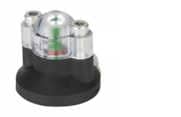
A sight glass can easily be fitted to the body of the AF filter so that you can visually check how much condensate is in the filter bowl. |
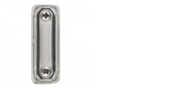 |
Condensate drainsA suitable type of drain can be fitted for discharging condensate:
This manual drain is operated by a turning pin and can be screwed onto the bowls of filters as well as onto pressure vessels. |
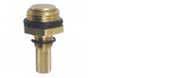 |
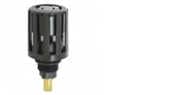
An automatic drain controlled by a float. When the float rises to a certain height, it opens the discharge. |
 |
- Automatic electronic condensate drains
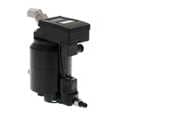
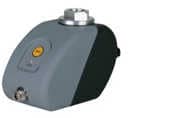
The condensate level is monitored by a capacitive level sensor. When it detects that the level is too high, it sends a signal to the self-cleaning valve, which opens and discharges the condensate. Electronic drains also have a fault detection function and release no air when discharging the condensate.
LG drain
|
 |
CDI electronic drain
|
 |
MARK industrial filters
Mark industrial filters have numerous design advantages that suit use in plants as well as in workshops. They are designed for a working pressure of 16 bar.
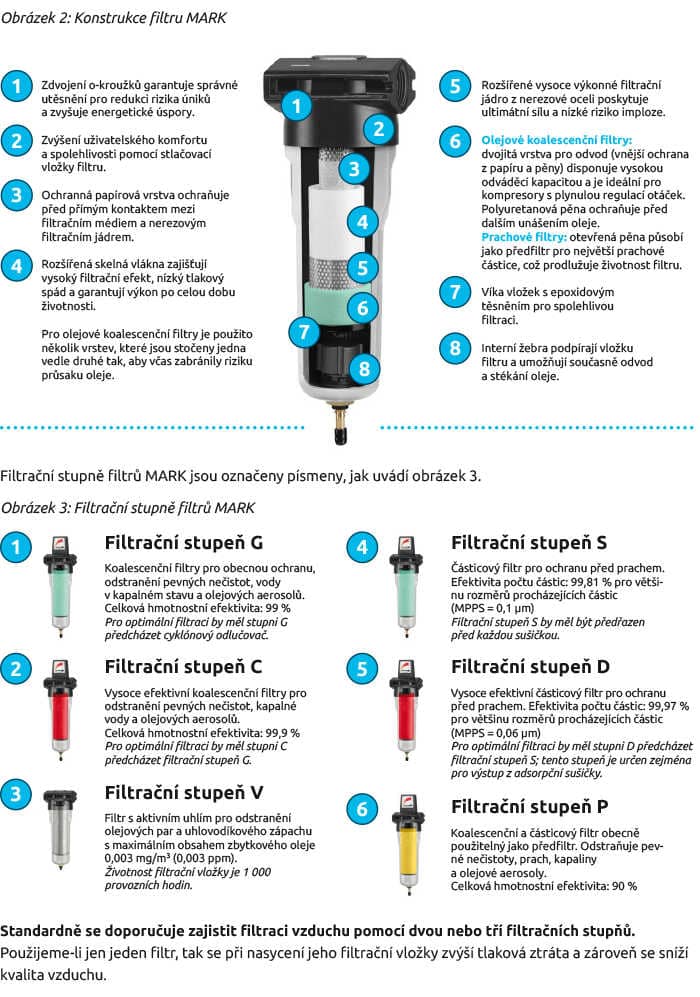
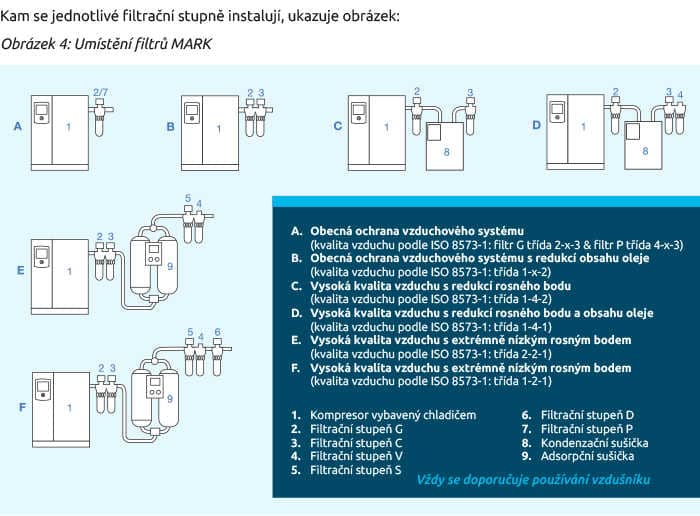
As a standard it is recommended to provide air filtration by means of two or three filtration stages. If we use only one filter, then as its element becomes saturated the pressure loss rises and at the same time the air quality drops.
Where the individual filtration stages are installed is shown in the figure:
Choosing a MARK air filter
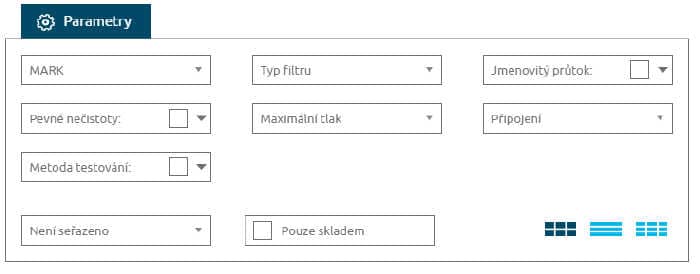
At the www.kompresory-vzduchotechnika.cz portal you can choose from a wide range of MARK filters. Instead of tediously browsing individual data sheets, you can simplify the choice using the search table. In it you can proceed as follows:
- If you know the right filter type, select it in the Filter type box from the options: dust, fine dust, microfilter
- You can also reach the right filter type by entering the air quality class – in the Solid contaminants box (0,1 µm or 0,06 µm)
- Refine the selection by entering the parameters in the Maximum pressure, Nominal flow and Connection boxes
Types of MARK filters
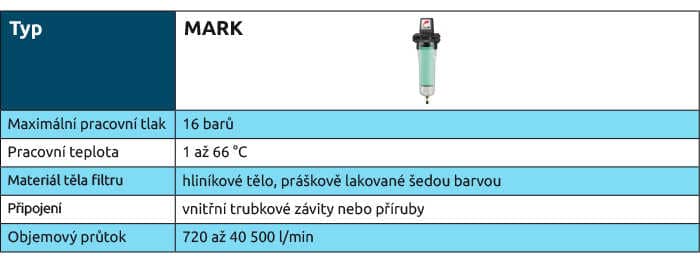
MARK filters are designed for pressures of 16 bar. The range includes filters of the following types:
• particle
• coalescing
• activated carbon filters
• prefilters
Particle filters for protection against dust
FS series dust filters by MARK
- Tested for particle size in filtration (according to the ISO 8573-3 standard)
- Filter efficiency 99,81 % for particles of size MPPS* = 0,1 µm
FD series dust filters by MARK
- Tested for particle size in filtration (according to the ISO 8573-3 standard)
- Filter efficiency 99,97 % for particles of size MPPS* = 0,06 µm
*) efficiency for the particles that penetrate the filter most MPPS – Most Penetrating Particle Size
Coalescing filters for the removal of oil and aerosols
Besides dust, coalescing filters also remove water, oil and oil aerosols from the air.
FG series microfilters by MARK
- Testing ISO 12500-1, ISO 8573-2 (separation of aerosols and oil vapours)
- Total mass efficiency: 99 %
FC series submicrofilters by MARK
- Testing ISO 12500-1, ISO 8573-2 (separation of aerosols and oil vapours)
- Total mass efficiency: 99,9 %
Activated carbon filters
Activated carbon filters remove oil vapour and hydrocarbon odour.
V series activated carbon filters by MARK
- Testing according to the ISO 8573-5 standard for the amount of contaminants remaining in the compressed air
- Maximum residual oil content 0,003 mg/m³ (0,003 ppm)
Prefilters
They capture contaminants from the compressed air that could damage the dryer, for example.
FP prefilters by MARK
- Testing ISO 12500-1, ISO 8573-2 (separation of aerosols and oil vapours)
- Total mass efficiency: 99 %