
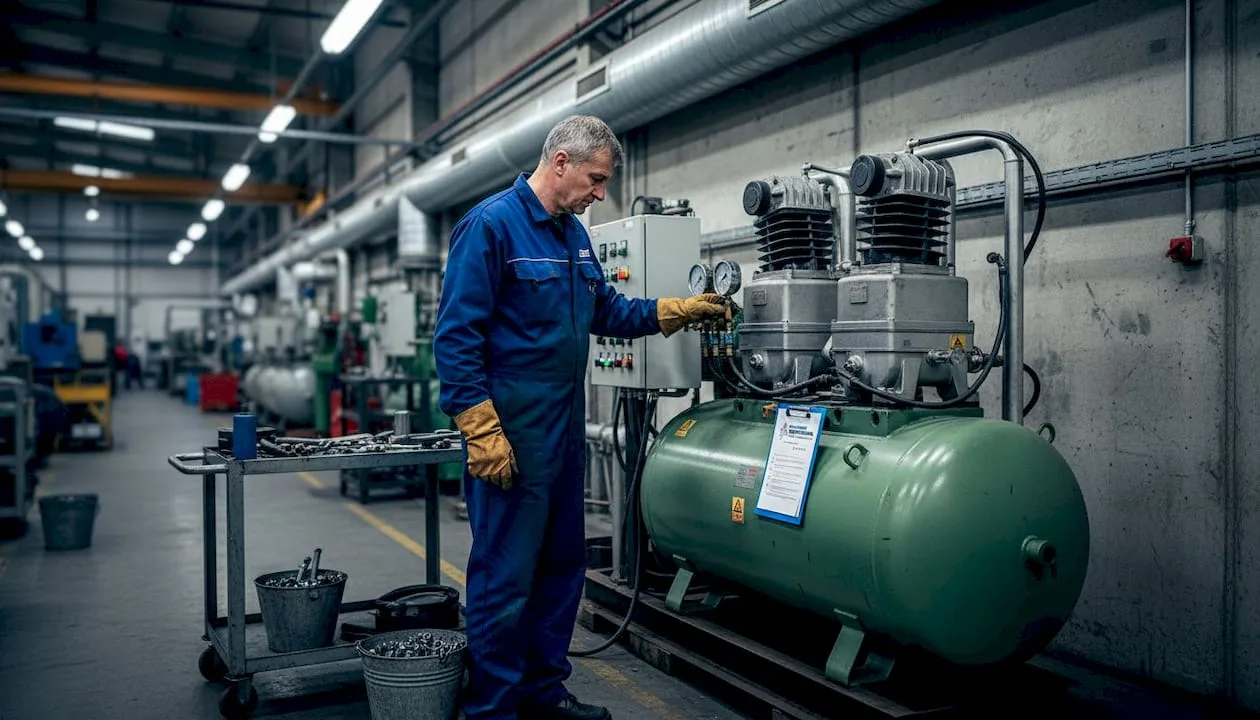
Most industrial plants lose tens of thousands of crowns a year because of a single overlooked detail: an incorrectly chosen compressor. The difference between a single-stage and a two-stage solution is not just a technical formality. It is a difference in operating costs, reliability and performance under continuous load. A two-stage compressor compresses the air in two separate phases with intercooling, thereby achieving a higher efficiency and higher pressures than single-stage alternatives.
Key findings
| Point | Details |
|---|---|
| Higher efficiency | Two-stage machines produce a higher pressure at a lower energy consumption thanks to two-phase compression. |
| Energy savings | Compared with single-stage models they can reduce electricity costs by up to 15 %. |
| Continuous operation | They are ideal for demanding industrial applications requiring a high output pressure and non-stop running. |
| A longer service life | Regular maintenance of the intercooler and the filters significantly extends the service life and reduces the risk of faults. |
What a two-stage compressor is and how it works
A two-stage compressor compresses the air gradually. In the first stage the air is compressed to an intermediate pressure (approx. 3 to 4 bar), then it passes through the intercooler, where its temperature is reduced, and in the second stage it is compressed to the final working pressure (often up to 12 bar). The intercooler is key – by cooling the air its volume is reduced, which lowers the energy demand of the second stage and spares the motor and the mechanical parts.
Typical design elements:
- Two compression cylinders or rotors with different diameters.
- An air intercooler for reducing the thermal load.
- A robust design intended for high working pressures.
- Lower operating temperatures increasing the reliability of the seals and bearings.
Professional tip: If your plant requires a pressure above 10 bar or continuous running of more than 6 hours a day, a single-stage compressor is not enough. A two-stage solution will offer lower temperatures and a longer service life.
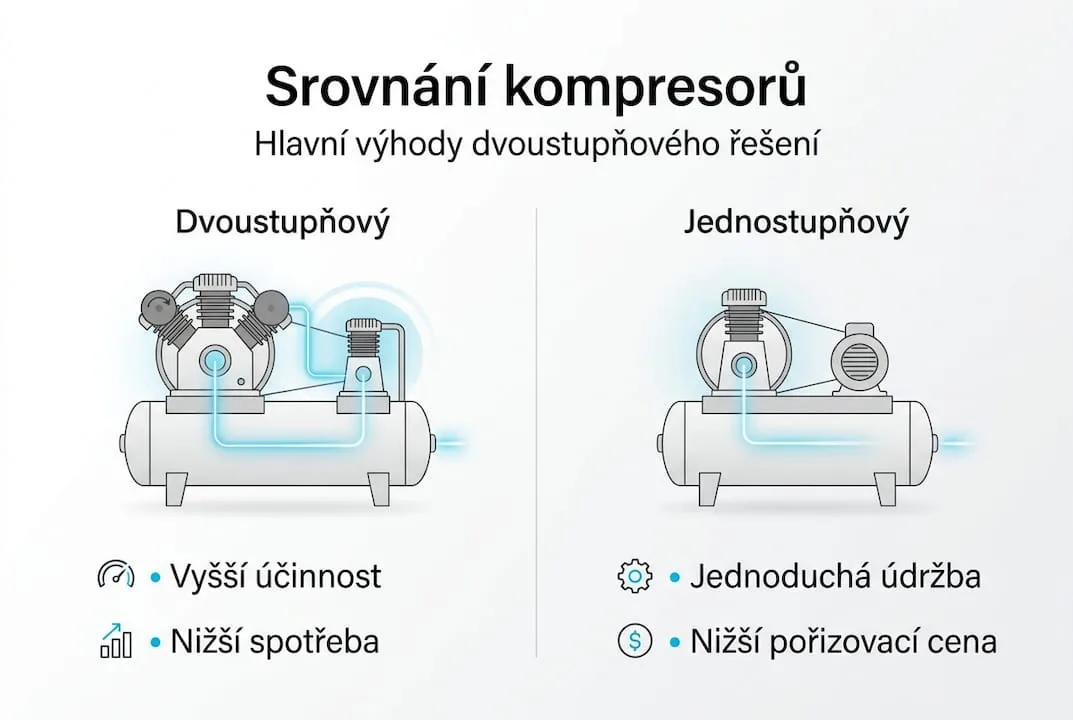
Comparison: Two-stage vs. single-stage compressor
The differences show up directly in the operating costs. Two-stage compressors achieve an isentropic efficiency of 80–88 %, while single-stage machines move between 65–75 %. With a machine with an output of 100 HP that means that the two-stage solution delivers approximately 10–15 % more air at the same power input.
| Parameter | Two-stage | Single-stage |
|---|---|---|
| Efficiency | 80 to 88 % | 65 to 75 % |
| Maximum pressure | approx. 12 bar (175 PSI) | approx. 8,6 bar (125 PSI) |
| Operating temperature | Lower (intercooling) | High |
| Suitability for non-stop running | Yes | Limited |
The main advantages of two-stage compressors for industry
In industry two-stage machines are gaining ground thanks to their ability to maintain a stable output even under extreme load. In a plant with a power input of 55 kW the saving on electricity can amount to over 100 000 Kč a year. The lower thermal load moreover means that the oil degrades less and the intervals of its change are longer.
Typical industrial applications:
- Automotive industry: Paint shops and assembly lines requiring a pressure of 8–12 bar.
- Mechanical engineering: Pneumatic presses and clamping systems.
- Sandblasting plants: Surface blasting requiring a high and stable flow.
- Construction: Heavy drilling and preparation of surfaces.
Correct maintenance and service life
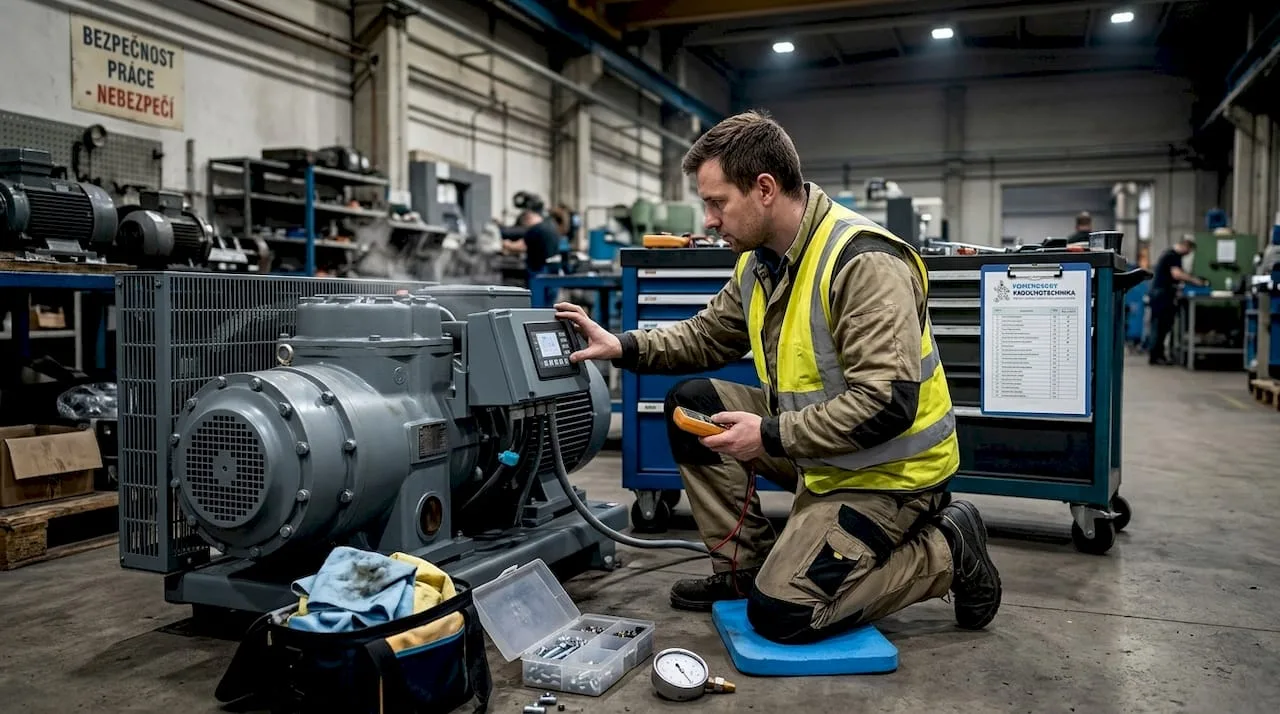
A quality two-stage compressor will last decades if you observe the basic service rules. Regularly check the air filters (every 500 hours) and clean the intercooler of impurities. The most important point is the drainage of condensate – accumulated moisture in the vessel causes corrosion and contaminates the oil. An automatic condensate drain is an investment that comes back in an industrial plant within a few months.
Our experience: Watch out for the distribution
A frequent mistake is the installation of a powerful two-stage machine into unsuitable pipework. If the distribution is too narrow or has many bends, pressure losses swallow the whole energy saving achieved by the compressor. The correct dimensioning of the distribution is just as critical for the efficiency of the system as the choice of the type of compression itself.
Where to obtain a two-stage compressor reliably
At Kompresory-vzduchotechnika.cz we offer a complete range of SCR screw compressors, including highly efficient two-stage models from 5,5 to 250 kW.
Besides the machines themselves you will also find with us aluminium or plastic pipes for modern air distribution and all accessories for the treatment of compressed air. Our specialists will help you with the design of a system which will correspond exactly to your needs and minimise your operating costs.
Frequently asked questions
What is the main difference between a single-stage and a two-stage machine?
The two-stage one compresses the air twice with cooling between the stages, which increases the efficiency by 10–15 % and makes it possible to reach a higher pressure without overheating.
What savings can I expect?
At a comparable output you will save at least 10 % of the costs of electrical energy by moving to a two-stage solution.
Is the service life of a two-stage compressor really longer?
Yes, thanks to intercooling the components work at lower temperatures, which slows the degradation of the oil and reduces the mechanical wear of the seals and bearings.
When is a single-stage compressor enough for me?
If you need a pressure of up to 8 bar and the compressor does not run for more than 4 hours a day in intermittent operation.