
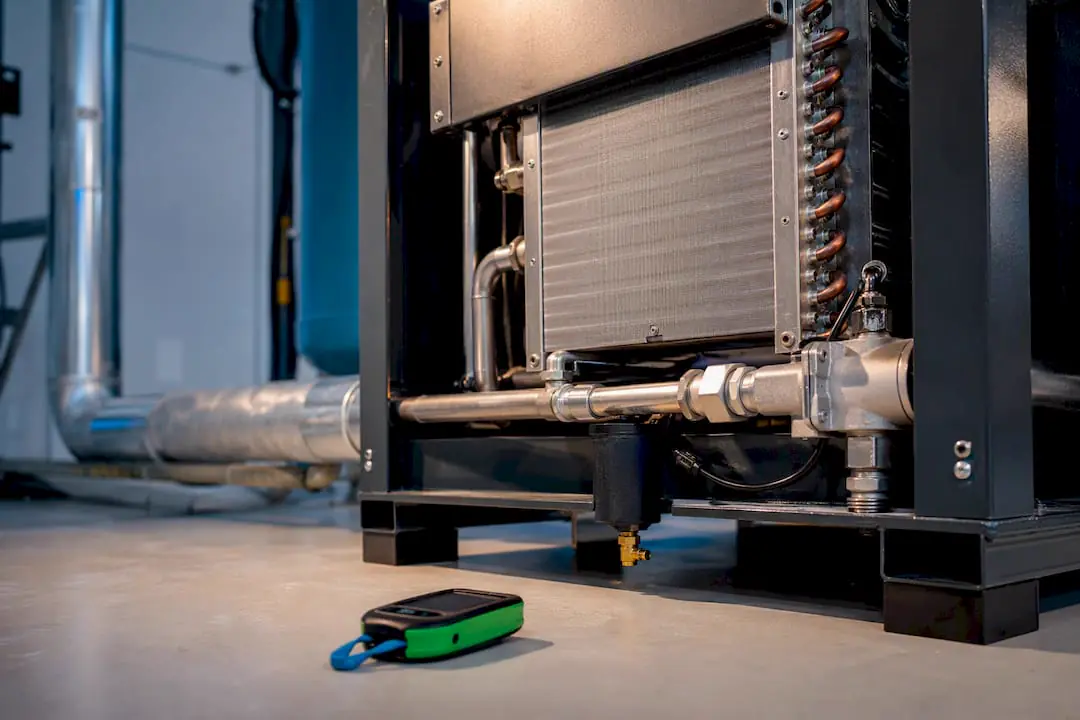
Operating costs of a compressed air dryer are mostly made up of electricity, with the remainder consisting of maintenance, spare parts, and equipment depreciation. The biggest drain on money comes from unnecessarily high operating pressure, insufficiently cooled inlet air, and a stricter dew point than the application actually requires. The ISO 8573-1 standard should not be taken as a mere formality here, because it precisely determines how much money the reader pays for each degree of drier air.
In brief:
- Increasing the operating pressure above 7 bar leads to a significant increase in energy costs, with every increase of 0.07 bar raising consumption by approximately 0.5 percent.
- Energy costs are the largest item in the budget, and for adsorption dryers, there is also the energy required for regenerating the drying medium, which is reflected in higher consumption.
- Servicing, replacement of the drying medium, and condensate drainage make up a significant part of the costs, while neglecting maintenance increases the risk of costly failures and corrosion.
- The operating temperature of the air and the correct choice of dryer type according to the required dew point significantly affect energy consumption and overall costs.
- Tips for savings include reducing operating pressure, monitoring compressed air leaks, and centralizing equipment, which can bring savings as early as the first year of operation.
Contents
- Operating costs of a dryer: what they consist of
- How pressure and temperature affect operating costs
- How much does dryer operation cost: calculation and example
- Dryer maintenance: costs and service intervals
- How to reduce dryer costs: quick measures with payback
- How Kompresory-vzduchotechnika approaches cost estimation
- Complete air treatment solution in one place
- Useful resources on this topic
- Frequently asked questions
Dryer operating costs: what they consist of
Energy is always the heaviest item in the budget for a compressed air dryer. For a refrigeration dryer, this means the power input of the compressor refrigeration circuit and the fan; for an adsorption dryer, it also includes the energy consumed during regeneration of the drying medium, whether this takes place through heating or through the loss of part of the compressed air to the regeneration cycle. The difference between the two types is crucial for the overall budget and we will discuss it in more detail in the section on consumption calculation.
The second largest category is service and consumables. This includes replacement of the drying medium (silica gel or molecular sieve in adsorption units), filter cartridges, valve seals, and regular refrigerant checks for refrigeration dryers.
The third item concerns costs associated with failure and condensate drainage. A malfunctioning or undersized dryer allows moisture to penetrate the distribution system, causing pipe corrosion, damage to pneumatic components, and contamination of production. Condensate drainage requires functional condensate separators and their regular inspection, otherwise the costs are simply shifted elsewhere in the system.
The last component is amortization. A dryer typically has a service life of 10 to 15 years, provided it receives adequate maintenance. The budget therefore also reflects the purchase price spread over the years of operation, not just routine servicing.
Summary of main items:
- Energy – power input of the dryer compressor, and for adsorption units, also medium regeneration
- Service and spare parts – filters, desiccant, seals, dew point sensors
- Condensate drainage – functional separators and their inspection
- Failure costs – corrosion of piping, production downtime, repairs of downstream components
- Depreciation – acquisition cost spread over the planned service life
How pressure and temperature affect operating costs
Operating pressure and inlet air temperature are among the parameters that have the greatest influence on how much a dryer actually consumes. Increasing pressure above 7 bar raises the compressor's energy consumption by approximately half a percent for each small increment above this value. In practice, this correction factor is calculated cumulatively, so a system running at 8.5 bar instead of the required 7 bar pays measurably more, without production gaining any benefit.
A higher inlet air temperature has a similar effect through a different mechanism. An underestimated ambient or inlet temperature reduces the dryer's capacity and increases the risk of condensation in the piping, so the dryer has to work harder to maintain the required dew point.
The choice between a refrigeration dryer and an adsorption dryer depends precisely on the required dew point according to ISO 8573-1. Refrigeration dryers typically achieve a dew point of around +3 °C and are more energy-efficient for common applications. Adsorption dryers can reach a dew point well below freezing, which requires more energy but is necessary for paint shops, pharmaceutical production, or the food industry.
Professional tip: Before purchasing a new dryer, have the actual inlet air temperature measured during summer operation, not just the catalog value for the compressor room – a difference of a few degrees can undersize even a correctly selected model.
How much does it cost to run a dryer: calculation and example
The annual energy cost of a dryer can be estimated using a simple formula: power input in kilowatts multiplied by the number of operating hours per year and the price of electricity per kilowatt-hour, adjusted by correction factors for pressure and temperature.
- Determine the dryer's power input – for a refrigeration unit, this is the nameplate power input of the compressor and fan; for an adsorption unit, it's the power input plus the energy of the regeneration cycle.
- Multiply by operating hours – typical three-shift operation means 6,000 to 8,000 hours per year.
- Add the price of electricity – at a price of around 4 to 5 CZK/kWh for industrial consumers, the annual energy cost of a medium-sized refrigeration dryer (5 kW) in three-shift operation comes to approximately 120,000 to 160,000 CZK for electricity alone.
- Adjust by the pressure correction factor – operating 0.5 bar above the necessary level increases this amount by a few percent, and for larger systems this means tens of thousands of CZK extra per year.
An adsorption dryer with the same flow rate typically consumes more energy due to regeneration, but heat recovery in drying systems can significantly narrow this gap, as it uses waste heat from the compressor station to heat the regeneration air.
Key figure: a small deviation in operating pressure, say 0.5 bar above the required value, translates through correction factors into a permanent increase in compressor consumption of a few percent, which accumulates over the entire operating life of the dryer.
The result is particularly sensitive to inlet temperature and pressure – two parameters that an operating technician can influence without investing in new equipment.
Dryer maintenance: costs and service intervals
The service interval for a dryer varies by type, but ignoring recommended intervals is one of the most costly mistakes in compressed air operation. Refrigeration dryers require inspection of the cooling circuit and cleaning of the condenser once or twice a year, while adsorption units need more frequent checks of valves and dew point sensors, since their cyclic chamber switching puts much greater strain on mechanical components.
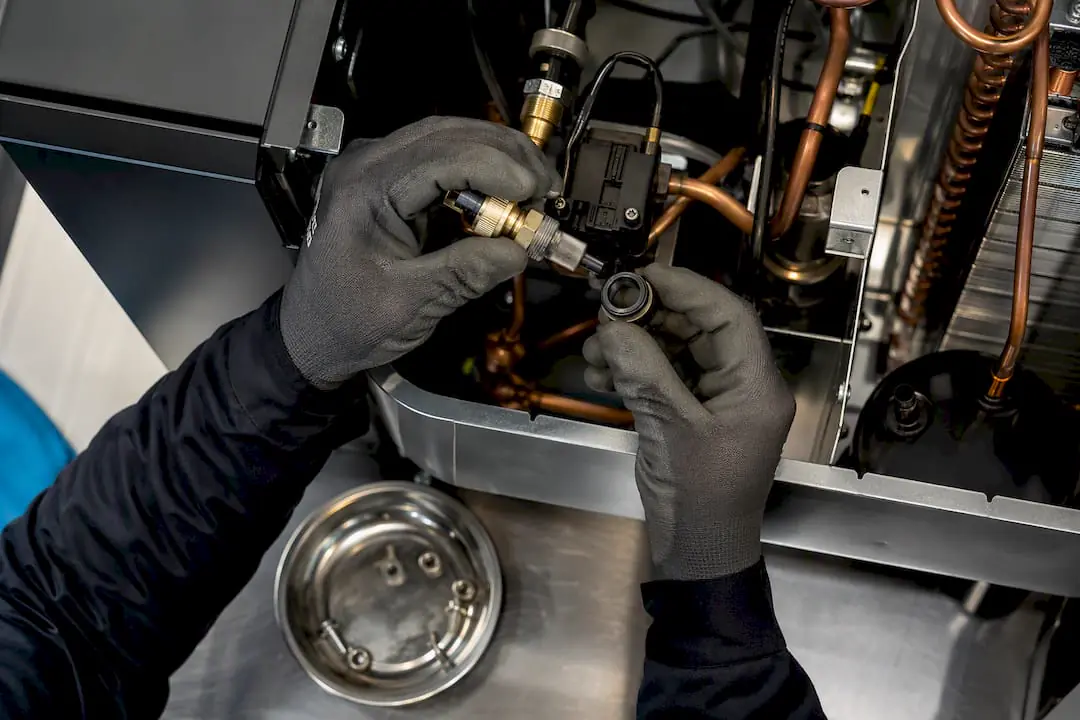
Replacement of the desiccant medium in adsorption dryers is handled once every 3 to 5 years, depending on the quality of the inlet air and the quality of filtration upstream of the dryer. Neglected filtration shortens the medium's service life and forces earlier, more costly replacement.
Warning signs that precede a costly failure include:
- Increasing noise or vibration of the dryer's compressor unit
- Slower achievement of the required dew point
- Frequent cycling of valves on the adsorption unit outside the normal rhythm
- Visible corrosion or moisture behind the condensate separator
It pays to calculate the total cost of ownership over the entire service life, not just the first years of operation, because neglected maintenance in the early years will come back as significantly higher repair costs later.
How to reduce dryer costs: quick measures with a payback
Reducing dryer operating costs doesn't have to wait for a new investment. Several steps will pay off already within the first year of operation.
- Reduce the operating pressure to the level actually necessary – even a drop of 0.3 to 0.5 bar will show up as a measurable energy saving for both the compressor and the dryer.
- Consider heat recovery for adsorption dryers – waste heat from the compressor room reduces the energy needed for media regeneration and shortens the payback period on the investment in a heat exchanger.
- Implement monitoring and rapid leak detection – inefficient compressed air systems lose up to 25% of energy through leaks, and this also applies to dried air, for which the operation paid extra.
- Centralize drying sources – aggregating several smaller dryers into one more efficient system reduces both the energy and service burden.
Professional tip: Schedule dew point and pressure measurements before and after any intervention in the system – without numbers, the savings can only be estimated, but with measurement they can be proven and justified to company management.
How Kompresory-vzduchotechnika approaches cost estimation
Technical consulting and energy audits focused specifically on dryer operation in the context of the entire compressed air system, not in isolation, are available. For an accurate estimate, we need basic operating data from the client: required flow rate, operating pressure, inlet air temperature, and operating regime (one, two, or three shifts).
Based on this data, a suitable dryer type can be recommended along with a realistic estimate of annual operating costs. For those interested in a more detailed analysis, we recommend a consultation or energy audit with a specific savings proposal tailored to the given operation.

A complete air treatment solution in one place
Direct access is available to technologies that actually affect dryer operating costs, without the need to assemble a solution from multiple suppliers. The range includes compressed air treatment units up to 18 bar, which combine filtration and drying into one compact unit.
For operations with strict air purity requirements, a compressed air filtration program according to ISO 8573 is available, which helps select the correct purity class without unnecessary overinvestment in a lower dew point than the application actually needs. In addition to equipment sales, turnkey solution design, installation, and energy audits are available, which reveal the actual reserves in a specific compressor room. For an individual calculation of operating costs and recommendation of a suitable dryer, you can use the contact listed on the specialists' pages through the range of pneumatic solutions and describe your operating regime.
Useful resources on the topic
- The importance of air drying in industry and construction
- 7-day audit for companies: reduce compressor operating costs
- Basic requirements for a compressor room: 2026 guide
Frequently asked questions
What has the biggest impact on a dryer's operating costs?
The biggest factor is energy consumption, which is increased unnecessarily by high operating pressure and high inlet air temperature. The second most significant item is regular servicing and replacement of the desiccant.
How often is the desiccant replaced in an adsorption dryer?
The desiccant in adsorption dryers is typically replaced once every 3 to 5 years, depending on the quality of inlet filtration and the load on the system.
Is a refrigerant dryer cheaper to operate than an adsorption dryer?
For common dew points around +3 °C, a refrigerant dryer is more energy-efficient. An adsorption dryer is necessary where the application requires a significantly lower dew point according to ISO 8573-1.
How much will reducing the operating pressure save?
Every 0.07 bar above the required 7 bar increases the compressor's energy consumption by approximately 0.5%, so even a small reduction in pressure will result in a measurable annual saving.
Who can help calculate the operating costs of a specific dryer?
Technical consulting and energy audits are available, which determine a realistic estimate of operating costs based on actual flow, pressure, and temperature.