
TL;DR:
- Controlling air humidity is the key to preventing corrosion and equipment damage in industrial and construction operations. Effective air drying using refrigeration or desiccant methods depends on the required dew point and the operating conditions. Modern combined systems optimise energy efficiency and extend equipment life, while the right choice and ongoing monitoring are essential for safe and efficient operation.
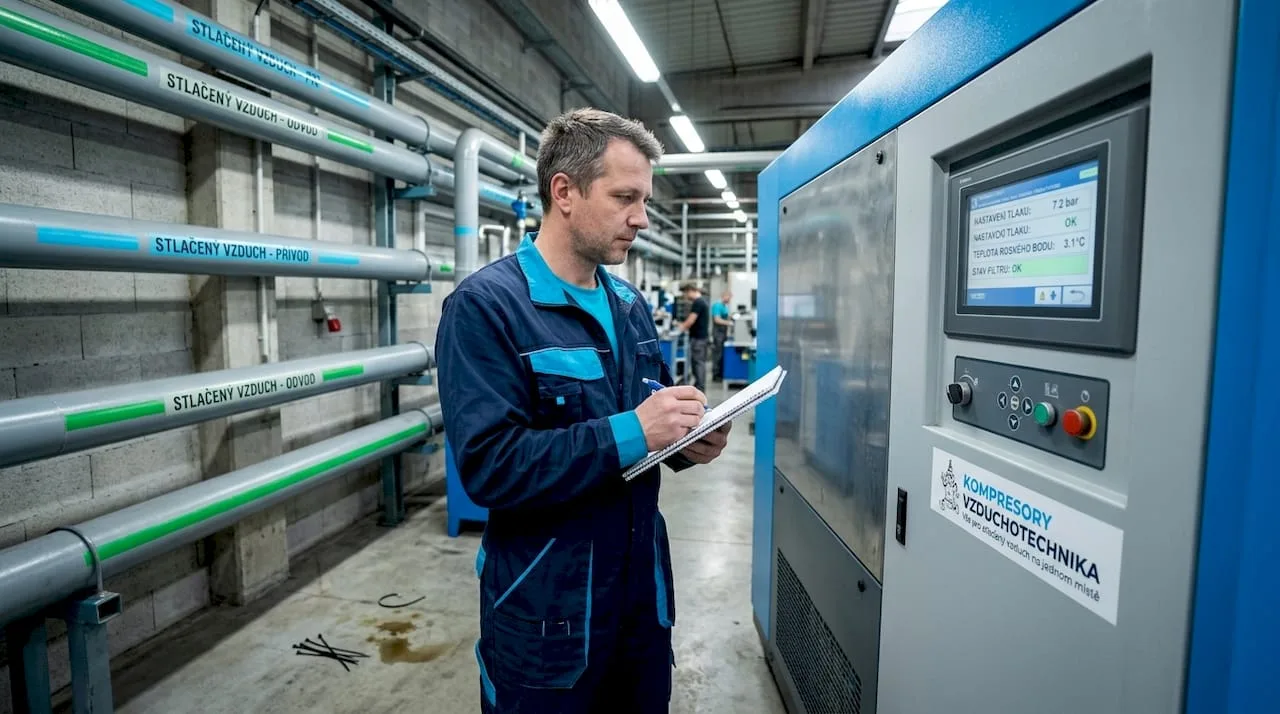
Controlling moisture in compressed air is one of those technical topics that get underestimated in practice until the first breakdown or complaint. Yet the importance of air drying is fundamental for industrial and construction sites: moisture in a compressed air system corrodes pipework, damages pneumatic equipment, degrades the quality of surface finishes and, in cold conditions, threatens to freeze entire distribution lines. This article explains the physical principles behind the main drying methods, compares their performance and energy parameters, shows specific industrial and construction applications and offers practical advice on choosing the right system.
Contents
- Key findings
- Basic principles of air drying: refrigeration and desiccant methods
- Applications of air drying in industry and construction
- Advanced methods and trends in air drying
- The effect of air drying on health and safety in the workplace
- A view from practice: what really matters in air drying projects
- Air drying solutions from Kompresory-vzduchotechnika
- FAQ
Key findings
| Point | Details |
|---|---|
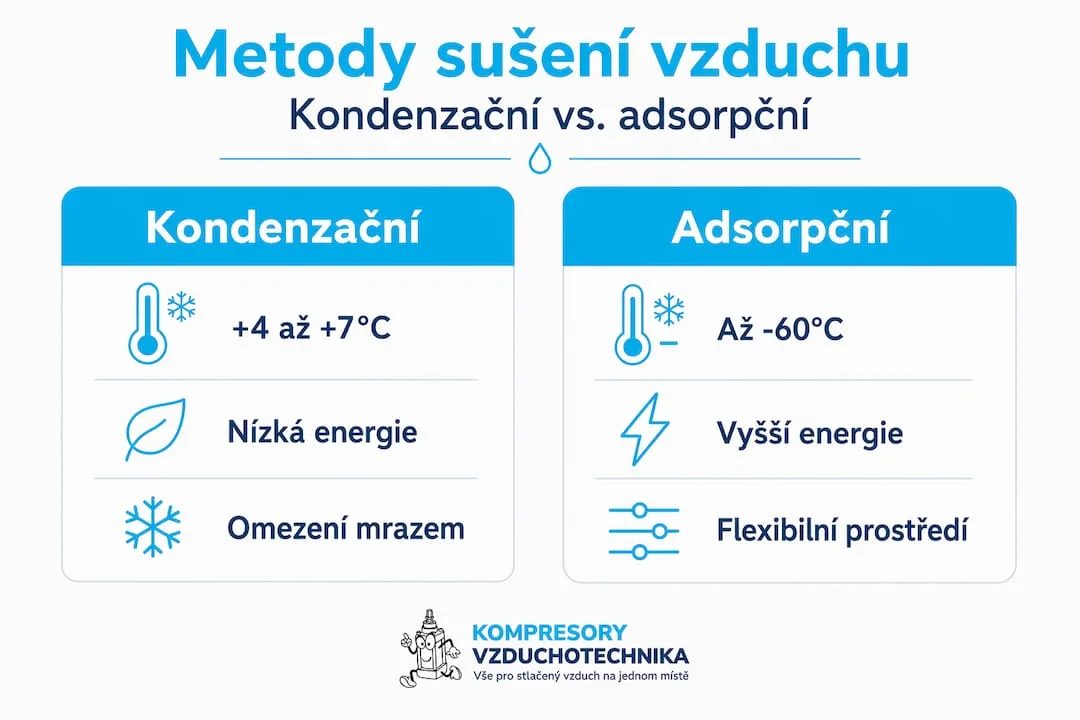
| Refrigeration vs desiccant method | Refrigeration systems are limited to a dew point of +4 to +7 °C, desiccant systems reach as low as -60 °C. |
| Combined systems save energy | Pre-cooling removes most of the moisture and adsorption dries the air down to the required value. |
| Moisture shortens equipment life | Good air drying prevents corrosion, condensation and pneumatic failures. |
| Health and safety risks | Excessive moisture encourages mould growth, corrosion products and microbial contamination. |
| The choice depends on the dew point | The decisive parameter when selecting a method is the required dew point, not just the general level of humidity. |
Basic principles of air drying: refrigeration and desiccant methods
Compressed air dehumidification, known technically as compressed air drying, is based on two physically different principles. Understanding the difference between them is a prerequisite for choosing the right technology for a particular site.
Refrigeration method
Refrigeration dryers cool the compressed air to a temperature close to the water dew point, which makes the moisture condense so it can be drained out of the system. The physical limit of this method is a dew point of +4 to +7 °C. For most industrial applications operating above freezing, this performance is sufficient. Refrigeration systems are energy efficient when the inlet air has high relative humidity and their purchase costs are lower than those of desiccant units.
A fundamental limitation appears in low-temperature environments. At low operating temperatures refrigeration systems lose performance because of the risk of icing and an overall drop in efficiency. Building sites in winter conditions or outdoor installations are therefore unsuitable for this type without an additional solution.
Desiccant method
Desiccant dryers work on a different principle: moisture is bound physically or chemically to the surface of a desiccant material, most often silica gel or activated alumina. The result is a markedly lower dew point. Desiccant systems reach dew points down to -60 °C and below, which is essential for pharmaceutical production, food processing, paint shops or precision pneumatic control.
The drawbacks are a higher energy demand for regenerating the desiccant and a higher purchase price. On the other hand, the energy efficiency of desiccant methods is better than that of refrigeration methods precisely at low relative humidity.
Comparison of the parameters of both methods
| Parameter | Refrigeration dryers | Desiccant dryers |
|---|---|---|
| Achievable dew point | +4 to +7 °C | down to -60 °C and below |
| Energy demand | Lower at high RH | Lower at low RH |
| Suitability for low temperatures | Limited | High |
| Purchase costs | Lower | Higher |
| Typical use | Industrial plants, engineering | Pharmaceuticals, paint shops, food processing |
Professional tip: The choice of dehumidification method must be based on the required dew point and the energy sources available on site. Simply trying to "dry more" without knowing the operating parameters makes the installation needlessly expensive without adding any value.
Applications of air drying in industry and construction
A theoretical overview of air drying options is not enough. What matters is how moisture specifically affects individual production or construction processes and what the real consequences of a badly chosen technology are.
Moisture in compressed air damages equipment and materials in several ways. In pneumatic tools and valves it corrodes seals and oxidises moving parts. In painting processes it reduces coating adhesion and causes surface defects. In food production it introduces the risk of microbial contamination directly into the product. A correctly chosen drying system extends equipment life and reduces maintenance costs.
Specific sectors where compressed air dehumidification is critical:
- Paint shops and surface finishing: Moisture causes fisheyes, blisters and poor adhesion. A dew point below -20 °C is a standard requirement.
- Food and pharmaceutical industry: The air comes into direct contact with the product. Strict standards for compressed air purity and dryness (ISO 8573) apply here.
- Construction and concrete work: Moist air during blasting or pneumatic shotcreting changes the properties of the mix and shortens tool life.
- Engineering and CNC machining: Air for cooling, blow-off and control. Condensate in control valves causes process instability.
- Electrical switchrooms and control systems: Even a small amount of condensate leads to a short circuit or corrosion of the contacts.
The risks of choosing the wrong method are not only technical. Unplanned downtime caused by repairing or replacing pipework and equipment damaged by condensate represents losses in an industrial plant many times higher than the price of the right dryer. Dehumidifiers also speed up the drying of materials considerably, which is crucial for example when plaster or concrete mixes are drying out in enclosed building spaces.
Professional tip: When choosing a dryer for construction use, do not forget to take the ambient temperature into account. A refrigeration dryer on a building site at temperatures below 5 °C without a heated space is technically unsuitable. In such a case a desiccant or combined system is the right choice.
Advanced methods and trends in air drying
Modern industrial plants are moving away from choosing between a refrigeration and a desiccant solution and are switching to combined systems that use the advantages of both methods.
The logic of combined systems is straightforward. Pre-cooling the air with a refrigeration unit removes 80 to 90 % of the moisture present by an energy-cheap route. The desiccant dryer then handles the remaining moisture and reaches the required low dew point without having to regenerate the entire volume of desiccant. The result is a considerably lower energy consumption and a longer life for the desiccant medium.
Procedure for implementing a combined system in a new installation:
- Determine the required dew point for the most demanding application on site. This parameter decides whether adsorption is needed at all.
- Size the refrigeration stage for the air flow rate with a margin of 15 to 20 % for seasonal humidity variations.
- Choose the type of desiccant regeneration in the adsorption stage. Thermal regeneration using waste heat from the compressor is the most energy-efficient option.
- Set up the control system for seasonal switching. In summer, at high humidity, the refrigeration stage runs at full output; in winter its contribution falls and adsorption takes over a larger share.
- Monitor the dew point online with sensors. Automatic control extends desiccant life and prevents unnecessary regeneration.
Using waste heat from the compressor to regenerate the desiccant is an area where industrial plants achieve interesting savings in practice. Screw compressors produce heat that would otherwise be wasted into the surroundings. Integrated dehumidification units feed this heat straight into the dryer's regeneration cycle, which reduces the power input of the whole system.
Professional tip: Monitor the dew point at the system outlet continuously, not just during commissioning. The desiccant gradually becomes saturated and without monitoring you will only find out about the deterioration once the damage has been done. Online dew point sensors are now available at affordable prices and their installation pays for itself quickly.
The effect of air drying on health and safety in the workplace
The results of correct compressed air dehumidification show up in more than the technical condition of the equipment. The direct impact on the working environment and the health of operators is measurable too.
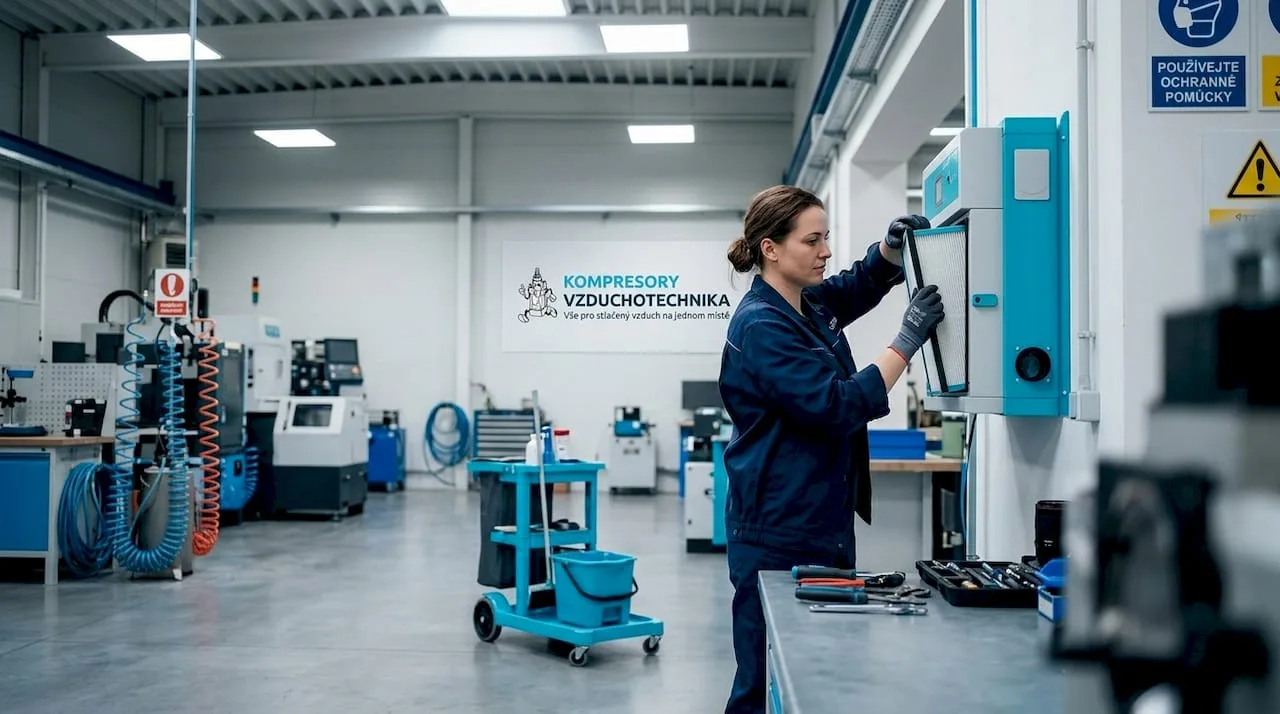
Excessive humidity in the working environment encourages mould growth, speeds up corrosion of structures and creates conditions for microbial contamination. In areas with a pneumatic distribution system, moist air carries oil and corrosion products directly into the workspace, where operators inhale them.
Key risks of unsuitable air quality on site:
- Corrosion dust from the pipework gets into the compressed air during blow-off, cleaning or pneumatic material transport.
- Micro-organisms and mould multiply in damp pipework and filters and contaminate production lines in food processing or pharmaceuticals.
- Condensate in painting or blasting equipment causes uneven application and makes it necessary to repeat the operation, which increases workers' exposure to chemicals.
- Ice in the pneumatic distribution system at low temperatures represents a safety risk for pipework and pressure vessels.
Industrial filtration and air treatment is therefore a systemic measure, not an optional extra. The combination of mechanical filtration, condensate separators and air drying forms the basis of safe operation. Plants subject to strict hygiene standards are obliged to document compressed air quality in accordance with ISO 8573, and moisture content is one of the key monitored parameters. More on comprehensive compressed air treatment for industry and construction can be found in the technical overview on the Kompresory-vzduchotechnika portal.
A view from practice: what really matters in air drying projects
Over the years I have spent working with industrial compressed air systems I have repeatedly come across one mistake that costs plants unnecessary money. Design and operations teams focus on compressor output and forget about drying. The dryer is then added afterwards as a "necessary evil", and it tends to be undersized or badly chosen.
The most surprising experience? Plants that switched from refrigeration to combined technology did not report energy savings as the main benefit. They reported dramatically lower spending on pneumatic repairs and a reduction in downtime. That is the real return on investment, and financial analyses carried out before the project do not capture it.
What design teams repeatedly overlook: seasonal variability. A dryer sized for summer conditions (30 °C, 80 % RH) may behave completely differently in winter, or even freeze up. I have seen installations where the refrigeration dryer stopped working in January because it stood in an unprotected area. Things like that cost more than making the right choice at the start.
My recommendation for practice: first define the worst operating scenario (lowest ambient temperature, highest inlet humidity, maximum flow) and only then select the technology. Combined systems with controlled regeneration currently offer the best balance between efficiency and cost for most industrial applications. And dew point monitoring is not a luxury. It is a necessary condition for the system to work the way it was designed to.
— Zdeněk
Air drying solutions from Kompresory-vzduchotechnika
Correct compressed air dehumidification starts at the source. Kompresory-vzduchotechnika offers a complete range for the entire compressed air chain: from powerful SCR screw compressors through dryers and filters to complete air treatment units.
For small and medium-sized operations there are compressed air treatment units combining filters and dryers in a compact design up to 10 bar. For industrial installations with higher demands on flow and dew point, the Kompresory-vzduchotechnika team provides technical advice and help with choosing the right combination of refrigeration and desiccant stages. The range also includes compressed air distribution lines for routing the dried air correctly around the site. Expert support, service and consultation are part of standard customer care.
FAQ
What is the dew point and why does it matter when drying?
The dew point is the temperature at which the moisture contained in the air starts to condense. The lower the dew point a dryer guarantees, the drier the air it delivers into the system and the lower the risk of condensation and equipment damage.
What is the difference between a refrigeration and a desiccant dryer?
A refrigeration dryer cools the air and drains off the condensate, reaching a dew point of roughly +4 to +7 °C. A desiccant dryer binds moisture to a desiccant material and reaches dew points down to -60 °C, so it suits more demanding applications and low temperatures.
When is it worth using a combined drying system?
A combined system pays off where the required dew point is lower than -20 °C and energy saving is a priority at the same time. The refrigeration stage removes most of the moisture cheaply and the desiccant stage reaches the required value with minimal energy load.
How does air drying affect workers' health?
Moist air in the pipework encourages corrosion and the growth of micro-organisms. These contaminants get into the workspace every time a pneumatic tool is used or air is blown off. Dry, filtered air significantly reduces these health risks.
How can you tell that a dryer is not working properly?
The most common symptoms are condensate at the pipe outlet or in pneumatic tools, corrosion marks inside the distribution lines, more frequent failures of pneumatic valves and, in winter operation, freezing of the lines. A reliable way to check is to measure the dew point at the dryer outlet.
Recommended
- Air treatment: maximum efficiency for industry and construction - Kompresory-Vzduchotechnika.cz
- A guide to industrial air distribution: operational efficiency - Kompresory-Vzduchotechnika.cz
- How to eliminate air leaks: a guide to 42% energy savings - Kompresory-Vzduchotechnika.cz
- Compressed air pipework 50 mm – performance for industry