
In brief:
- Pressure regulators reduce high pressure from a cylinder or network to a safe working value. They are used in welding, industrial gas distribution, water supply and medical systems, and require correct selection, installation and regular maintenance. They are supplied by a specialized dealer with certification and technical support in the Czech Republic.
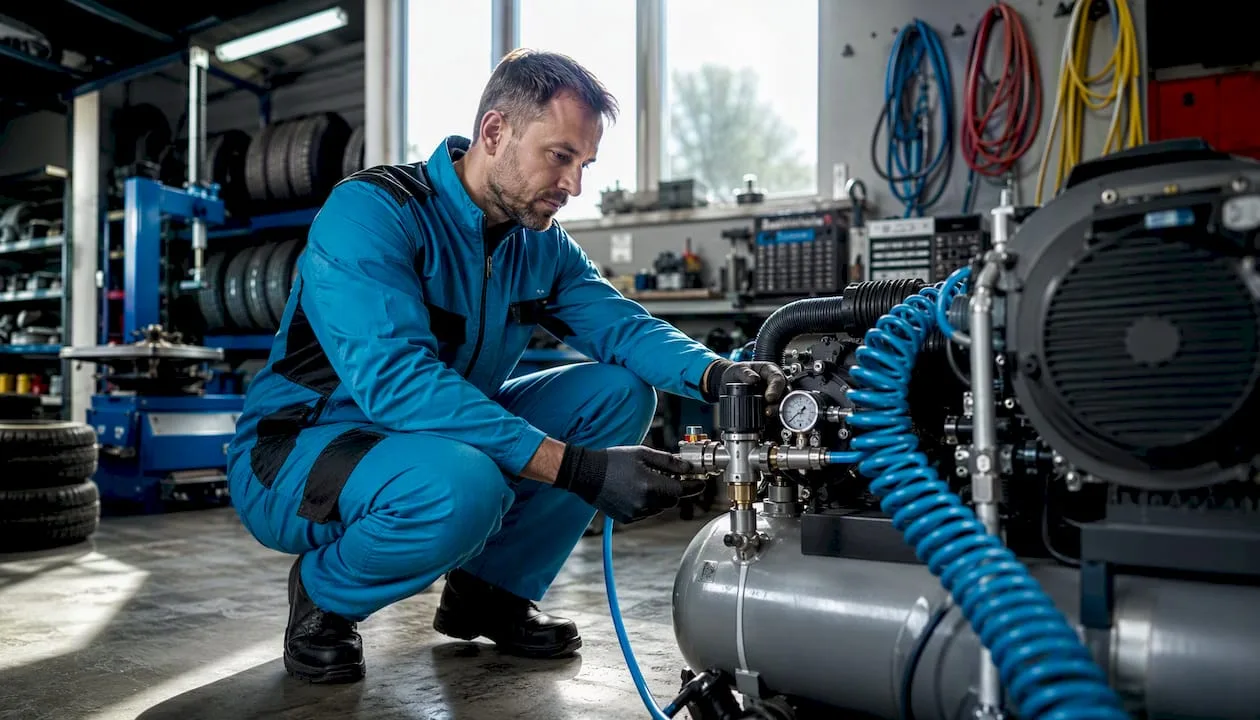
A pressure regulator reduces the high inlet pressure from a gas cylinder or pipeline network to a stable working pressure. Uses of pressure regulators cover welding and cutting, industrial compressed air distribution, technical gas distribution, water supply and hydraulic systems, as well as medical and laboratory applications. Before first use, always check that the regulator is designed for the given gas, verify the cleanliness of the threads, and loosen the adjusting screw before opening the cylinder valve.
Immediate safety steps:
- Verify the type of regulator: each gas (oxygen, acetylene, argon, CO2) requires a regulator with the corresponding thread and internal setting.
- Check the threads and seals for cleanliness, with no traces of oil or grease, especially for oxygen.
- Loosen the adjusting screw before opening the cylinder valve, open it slowly and monitor the pressure gauge.
Professional tip: For welding, laboratory work, or any other application requiring stable outlet pressure as the cylinder level drops, choose a two-stage regulator. A single-stage model is suitable for less demanding industrial distribution where pressure fluctuation is not an issue.
Contents
- Where are pressure regulators used?
- What types of pressure regulators exist and when to choose which?
- How to choose a pressure regulator for a specific application?
- How to correctly install a pressure reducing valve?
- How to maintain a pressure reducing valve and when to replace it?
- What does Kompresory-vzduchotechnika offer for service and installation?
- Key takeaways
- Operational experience speaks clearly
- Where to buy and have a pressure reducing valve installed in the Czech Republic
- Useful resources and standards
- Frequently asked questions
Where are pressure reducing valves used?
Pressure reducing valves are used wherever it is necessary to reduce the inlet pressure to a safe and functional operating value. Below is an overview of the main areas with specific examples.
Welding and cutting:
- MIG/MAG and TIG welding: regulation of flow and pressure of shielding gases (argon, CO2, ArCO2 mixtures).
- Plasma cutting: precise adjustment of plasma and shielding gas pressure.
- Oxy-fuel welding and cutting: acetylene and oxygen valves with separate threads and pressure limits.
Gas industry and technical gas distribution:
- Reducing pressure from cylinders to the appliance's working pressure.
- Central distribution systems in industrial halls: one pressure reducing valve at the network inlet, individual regulation at each draw-off point.
- Distribution of inert gases (nitrogen, argon) for the food industry, chemistry, and electronics.
Industry and manufacturing:
- Compressed air pneumatic distribution systems: maintaining constant working pressure upstream of pneumatic tools and actuators.
- Machines and automated lines: protection of sensitive components from pressure surges.
- Pressure storage tanks (air receivers): a pressure reducing valve at the air receiver outlet prevents overpressure in the distribution system.
Water and hydraulic systems:
- Protection of household appliances (washing machines, dishwashers, water heaters) from overpressure from the water supply network.
- Reduction of noise and vibration in piping, extension of fitting service life.
- Machine hydraulic circuits: stabilisation of working pressure in the circuit.
Medical and laboratory applications:
- Precise pressure regulation of medical gases (oxygen, nitrous oxide) in hospitals.
- Laboratory instruments: constant pressure for chromatographs, spectrometers and reactors.
What types of pressure reducing valves exist and when to choose which one?
The choice of the correct type depends on the medium, the required regulation precision and the operating conditions.
Single-stage vs. two-stage valves
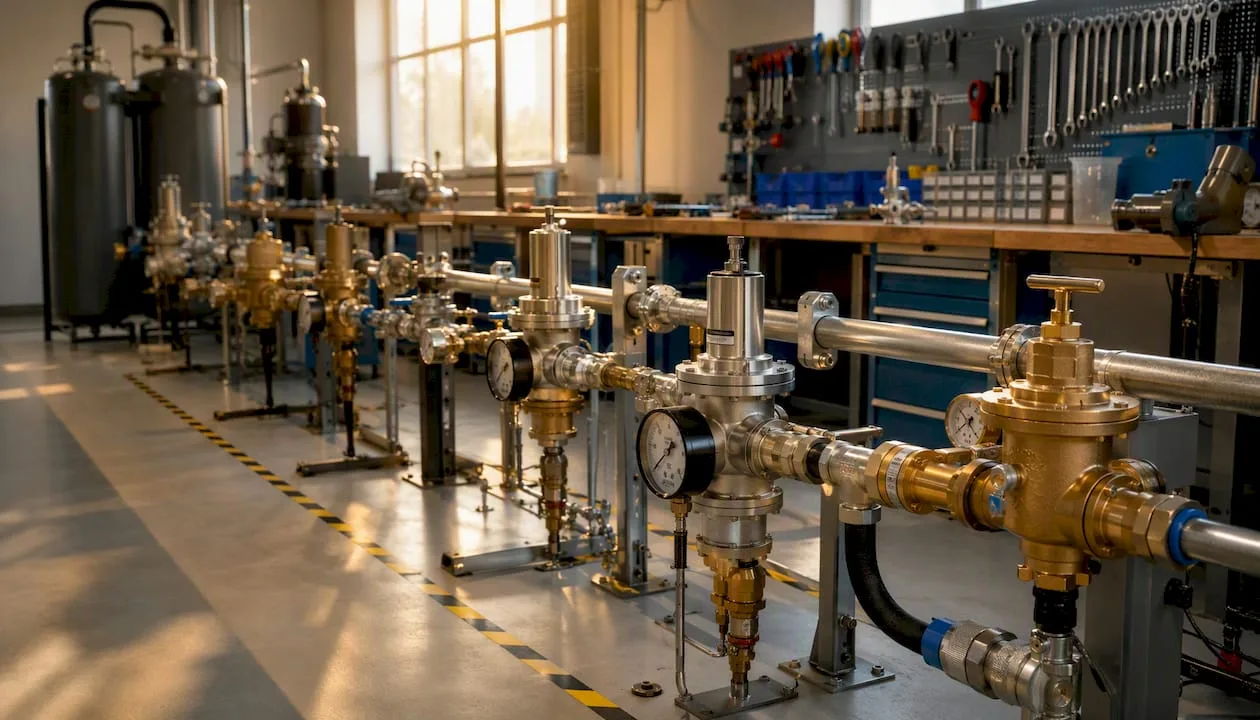
A single-stage valve reduces pressure in one step. The outlet pressure fluctuates slightly as the pressure in the cylinder decreases, which is acceptable for less demanding industrial distribution systems or short-term work. A two-stage valve reduces pressure in two stages and keeps the outlet pressure stable even when the pressure in the cylinder drops significantly. For professional welding, TIG or laboratory work, a two-stage valve is the standard.
Diaphragm vs. piston design
A diaphragm valve responds faster to changes in flow and offers more sensitive regulation. It is suitable for low to medium pressures and clean gases. A piston valve withstands higher pressures and mechanical stress, but its response is slower. Professional welding sets for welding use a double stainless steel diaphragm with overpressure protection.
Valves by medium
| Medium | Typical thread | Max. inlet pressure | Note |
|---|---|---|---|
| Oxygen | W 21 × 1/14" LH (right) | 200–300 bar | Free of oil and grease |
| Acetylene | W 19 × 1/14" LH (left) | — | Max. outlet ≤ 1.5 bar |
| Argon / CO2 | W 21 × 1/14" | 200–300 bar | Standard thread |
| Compressed air | G 1/4" – G 1/2" | up to 16 bar | Brass or stainless steel |
| Nitrogen / inert gases | W 21 × 1/14" | 200–300 bar | According to gas purity |
Acetylene valves have the maximum outlet overpressure limited to a safe value; older types with higher settings pose a safety risk and should be replaced.
Material of construction
Brass valves are the standard for most technical gases and compressed air. Stainless steel design is chosen for corrosive environments, aggressive media, or applications requiring purity (food industry, pharmaceuticals). Oxygen valves must not contain any traces of lubricants or organic materials in the seal.
How to choose a pressure reducing valve for a specific application?
The correct selection depends on four basic parameters. Review them before every purchase.
Pressure ranges:
- Inlet pressure: the valve must be dimensioned for the maximum filling pressure of the cylinder or network (200 or 300 bar for cylinders, 6–16 bar for industrial distribution systems).
- Outlet pressure: set to the value required by the appliance; for acetylene, do not exceed 1.5 bar.
Flow rate and regulation accuracy:
- Determine the required flow rate in l/min or m³/h according to the appliance.
- For applications with variable consumption (multiple welding stations), verify that the valve covers the peak flow rate without a pressure drop.
Material and seals:
- Oxygen: exclusively valves marked “O2 pure”, free of lubricants.
- Acetylene: valves with left-hand thread, never to be interchanged with oxygen valves.
- Aggressive media or moisture: stainless steel design or special seals (PTFE, EPDM).
Connection and certification:
Step-by-step selection procedure:
- Identify the gas type and the maximum pressure of the source (cylinder, network).
- Determine the required outlet pressure and flow rate of the appliance.
- Verify the thread of the cylinder valve or pipeline connection.
- Check the certification of the valve (ČSN EN ISO 2503 for welding regulators, or EN 13175 for cylinder valves, as applicable).
- Select the sealing and body material according to the medium and environment.
- For demanding applications (welding, laboratory work), choose a two-stage design.
Professional tip: Swapping regulators between different gases is common and dangerous. The threads may physically fit, but the internal pressure settings and sealing materials are different. Always check the marking on the regulator body, not just the shape of the nut.
How to properly install a pressure regulator?
Correct installation prevents the most common causes of damage. The most frequent cause of regulator destruction is opening the cylinder with the adjusting screw tightened, which causes the diaphragm to rupture and requires professional service or replacement of the regulator.
- Visual inspection: Check the threads of the regulator and the cylinder valve for cleanliness, damage, and the absence of grease. For oxygen regulators, there is zero tolerance for oils.
- Cylinder securing: Place the cylinder in a vertical position and secure it with a chain or clamp to a wall or trolley.
- Loosening the regulating screw: Before connecting to the cylinder, loosen the regulating screw (turn counterclockwise) all the way, so the valve is in the idle position.
- Connection to the cylinder: Screw the valve nut onto the cylinder valve by hand, then tighten with a wrench. Left-hand threads (acetylene) must be tightened in the opposite direction.
- Slow opening of the cylinder: Open the cylinder valve slowly, by no more than half a turn, and watch the inlet pressure gauge. A sudden pressure jump indicates a problem.
- Setting the working pressure: Turn the regulating screw clockwise until the outlet pressure gauge shows the required value.
- Leak check: Apply soapy solution to the joints and watch for any bubbles. Never use an open flame.
Valve placement in the distribution system: Place the pressure reducing valve as close as possible to the pressure source (cylinder, compressor). In central distribution systems it is installed at the network inlet; individual regulation at appliances is handled by secondary valves or air treatment units. The valve must be accessible for inspection and servicing.
After installation, verify the function of both pressure gauges, the correct setting of the overpressure safety valve, and the tightness of all joints.
How to maintain a pressure reducing valve and when to replace it?
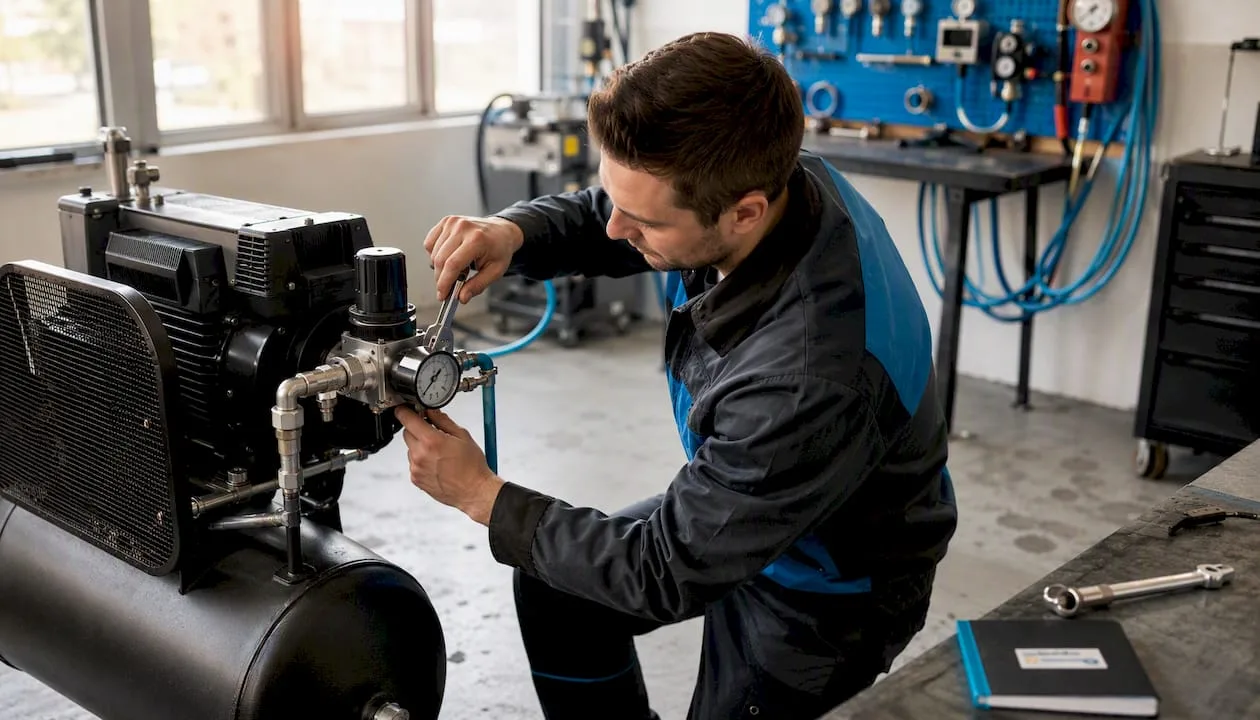
Regular maintenance extends the valve's service life and prevents unexpected failures.
Pre-use inspection checklist:
- Cleanliness of threads and seals, no traces of corrosion or grease.
- Diaphragm integrity: the valve must not allow gas to pass when the appliance is closed.
- Safety device functionality: verify that the safety valve is not blocked or over-tightened.
- Correct display of both pressure gauges (inlet and outlet).
Recommended maintenance schedule:
- Before each use: visual inspection of threads, seals, and pressure gauges.
- Monthly: leak test with soapy solution on all connections.
- Once a year: detailed service according to the manufacturer's instructions, replacement of seals and diaphragm at the slightest doubt.
- After each fall or mechanical impact: immediate inspection or replacement.
When to replace the valve:
- Damaged or cracked diaphragm (most often after opening the cylinder with the regulating screw tightened).
- Leaks that cannot be resolved by replacing the seal.
- Corrosion on the body or thread.
- Inability to maintain the set outlet pressure.
- The pressure gauge shows zero or unstable pressure when the cylinder is open.
Store valves in a dry place, protect threads with plastic caps, and never store them with a hose connected under pressure.
What does Kompresory-vzduchotechnika offer for service and installation?
Kompresory-vzduchotechnika provides expert consultation, supply and service of pressure reducing valves and accessories for industrial operations throughout the Czech Republic. Services include turnkey design, installation, inspections, and energy audits of compressed air systems.
Practical examples from operation:
- Replacement of a damaged diaphragm after improper opening of an oxygen cylinder with a tightened regulating screw.
- Degreasing and cleaning of oxygen valve threads contaminated with lubricant from a compressor.
- Substitution of an acetylene valve for an oxygen one: the thread physically fits, but the pressure setting and sealing material are incorrect. Such a substitution leads to uncontrolled overpressure or gas leakage.
- Replacement of outdated acetylene valves with certified models with a 1.5 bar limit.
How Kompresory-vzduchotechnika helps with selection:
- Measures the actual flow and pressure in your operation.
- Recommends a specific valve type and design based on the medium, pressure, and flow.
- Ensures the delivery of certified goods and turnkey installation.
- Provides technical support and 24/7 service.
The most common mistake we see in the field is opening the cylinder without first releasing the regulating screw. The diaphragm ruptures instantly and the valve becomes irreparable. The second most common mistake is mixing up valves for different gases — the threads fit, but the pressure settings and sealing materials differ. Both mistakes are 100% preventable with the correct procedure and the selection of certified equipment.
Professional tip: When ordering installation or inspection, have the following information ready: type of gas or medium, maximum inlet pressure of the source, required outlet pressure and flow rate, type of thread and connection size. The service technician will then arrive prepared and the work will proceed without unnecessary delays.
Key takeaways
Correct selection, installation, and regular maintenance of the reducing valve are the basis of safe and reliable operation in industry, welding, and the gas industry.
| Point | Details |
|---|---|
| Valve type according to medium | Each gas requires a valve with the corresponding thread, pressure limit, and sealing material. |
| Installation safety procedure | Release the regulating screw before opening the cylinder; open slowly and monitor the pressure gauge. |
| Acetylene limit | The maximum outlet gauge pressure of the acetylene valve is 1.5 bar; replace older types with a higher limit. |
| Regular maintenance | Visual inspection before each use, detailed service once a year according to the manufacturer's instructions. |
| Kompresory-vzduchotechnika | Supply, installation and service of reducing valves as a turnkey solution for industrial operations in the Czech Republic. |
Operational experience speaks clearly
Technical literature on reducing valves is extensive, but practice shows that most problems stem from two sources: haste during installation and underestimating valve mix-ups. Both mistakes are, however, easily preventable.
What surprises me most about this: mixing up valves for different gases is not a matter of ignorance. Technicians who have worked with gases for years make this mistake because the thread physically fits and the valve "works". However, an acetylene valve on an oxygen cylinder is not just incorrect, it is a ticking time bomb. The internal pressure settings, sealing materials, and resistance to oxidation are fundamentally different.
The second problem, loosening the regulating screw, seems trivial. Yet it is the most common cause of valve destruction in the field. The diaphragm ruptures instantly and the valve becomes unrepairable. Yet all it takes is one extra step before opening the cylinder.
I recommend that every operation establish a written procedure for working with pressure cylinders, including a checklist before each use. This is not bureaucracy, it is prevention of production downtime and injury. Certification according to ČSN EN ISO 2503 is not just a formality, it is a guarantee that the valve has been tested for the conditions in which you will be using it.
Where to buy and have a reducing valve installed in the Czech Republic
Kompresory-vzduchotechnika offers a complete range for compressed air distribution, including conditioning units up to 18 bar and accessories for industrial installations. For more demanding distribution systems, pressure vessels and air tanks are also available, which, in combination with pressure reducing valves, are used to stabilize pressure throughout the system.
Ordering installation or inspection takes place via the e-shop or directly by contacting the technical department. Before ordering, please prepare: type of medium, inlet and outlet pressure, required flow rate, and connection size. Corporate customers can take advantage of registration for special prices and priority technical support. Kompresory-vzduchotechnika ensures delivery of certified goods, turnkey installation, and 24/7 service throughout the Czech Republic.
Useful resources and standards
Technical standards for pressure reducing valves:
Recommended resources for technical verification:
- GCE Group: technical manuals and catalogs of cylinder pressure reducing valves, safety data sheets for oxygen and acetylene
- KOWAX: operating instructions for pressure reducing valves, safety guidelines for oxygen applications
- Svarbazar: principles for operating pressure reducing valves, overview of risks of valve mix-up
Kompresory-vzduchotechnika pages for service and purchase:
- Overview of pneumatic valves in industry: applications and selection criteria.
- Safety valves: function and selection: additional safety features for pressure reducing valves.
- Function of the air tank in pneumatic systems: how the air tank and pressure reducing valve work together.
Frequently asked questions
What is a pressure reducing valve used for?
A pressure reducing valve reduces the high inlet pressure from a gas cylinder or pipeline network to a stable working pressure required by the appliance. It is used in welding, industrial gas distribution, water systems, medicine and laboratories.
Where is a pressure reducing valve placed?
A pressure reducing valve is installed as close to the pressure source as possible, i.e. directly on the cylinder valve or at the inlet of the pipeline network. In central distribution systems, it is supplemented with secondary regulators or conditioning units at individual appliances.
How is a pressure reducing valve correctly connected?
Loosen the adjusting screw, screw the valve nut onto the cylinder valve and tighten it with a wrench. Then slowly open the cylinder valve and only afterwards set the outlet pressure by turning the adjusting screw clockwise.
What are the two basic types of pressure reducing valves?
Single-stage valves reduce the pressure in one step and are suitable for less demanding applications. Two-stage valves reduce the pressure in two stages and keep the outlet pressure stable even as the pressure in the cylinder drops, which is why they are the standard for welding and laboratory work.
Why must there be no oil on an oxygen valve?
Oxygen valves are extremely sensitive to contamination by oils and lubricants. Even a small amount of grease can cause an explosion upon contact with oxygen under pressure. If contamination is suspected, shut down the equipment and contact the distributor for professional cleaning.
Recommended
- Overview of pneumatic valve applications in industry 2026 - Kompresory-Vzduchotechnika.cz
- The importance of multi-way valves in industrial systems - Kompresory-Vzduchotechnika.cz
- How air valves work: their key role and efficient solutions - Kompresory-Vzduchotechnika.cz
- What is industrial ventilation: a guide for production facilities - Kompresory-Vzduchotechnika.cz