

In brief:
- Integrated ventilation systems combine components and ductwork into a single unit, increasing energy efficiency and reducing space requirements. This system is particularly suitable for new buildings, NZEB (nearly zero-energy buildings), and buildings with limited installation space. The company Kompresory-vzduchotechnika offers design, supply, installation and servicing of these systems in the Czech Republic.
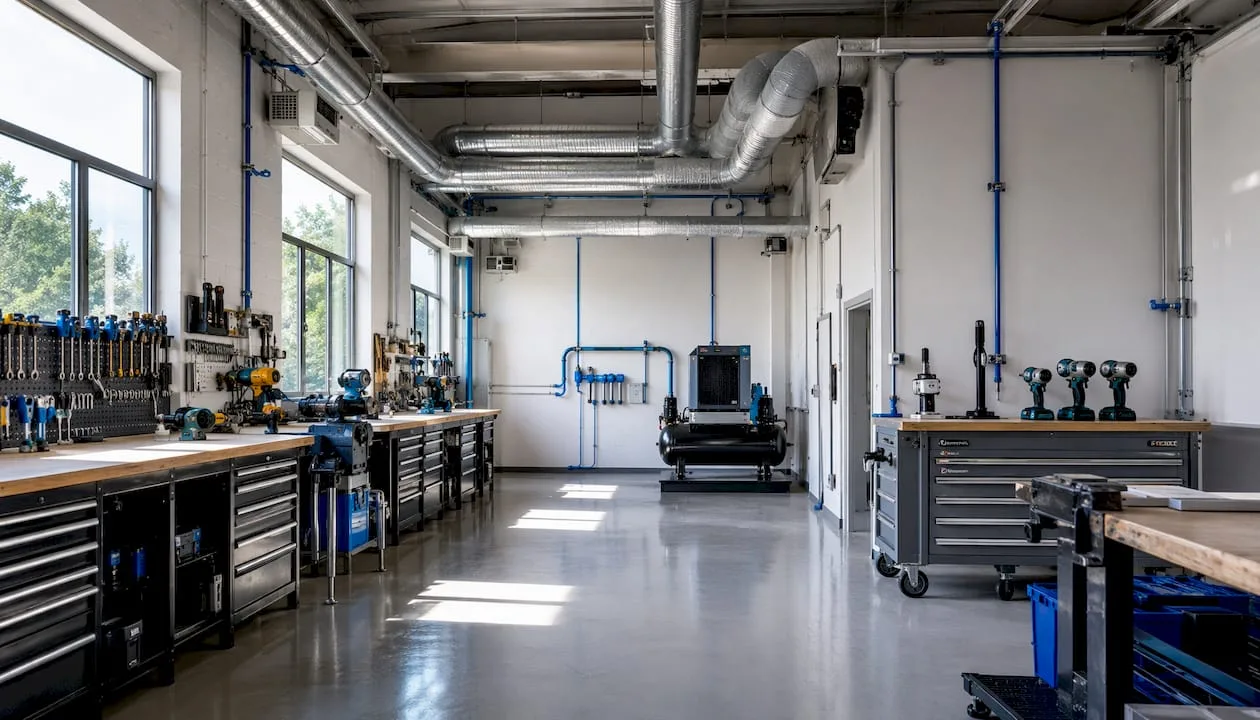
Integrated ventilation is a system in which ventilation components and ductwork routes are designed and implemented as a single compact unit. The aim is to minimize space requirements, achieve higher duct airtightness (for example class D), and maximize the building's energy efficiency. This approach makes sense primarily for new buildings, buildings with an NZEB requirement, and projects with limited installation space. Lindab is among the manufacturers that actively offer integrated ductwork solutions for the Czech market. For implementation support, equipment supply and servicing, Kompresory-vzduchotechnika has proven itself on the Czech market.
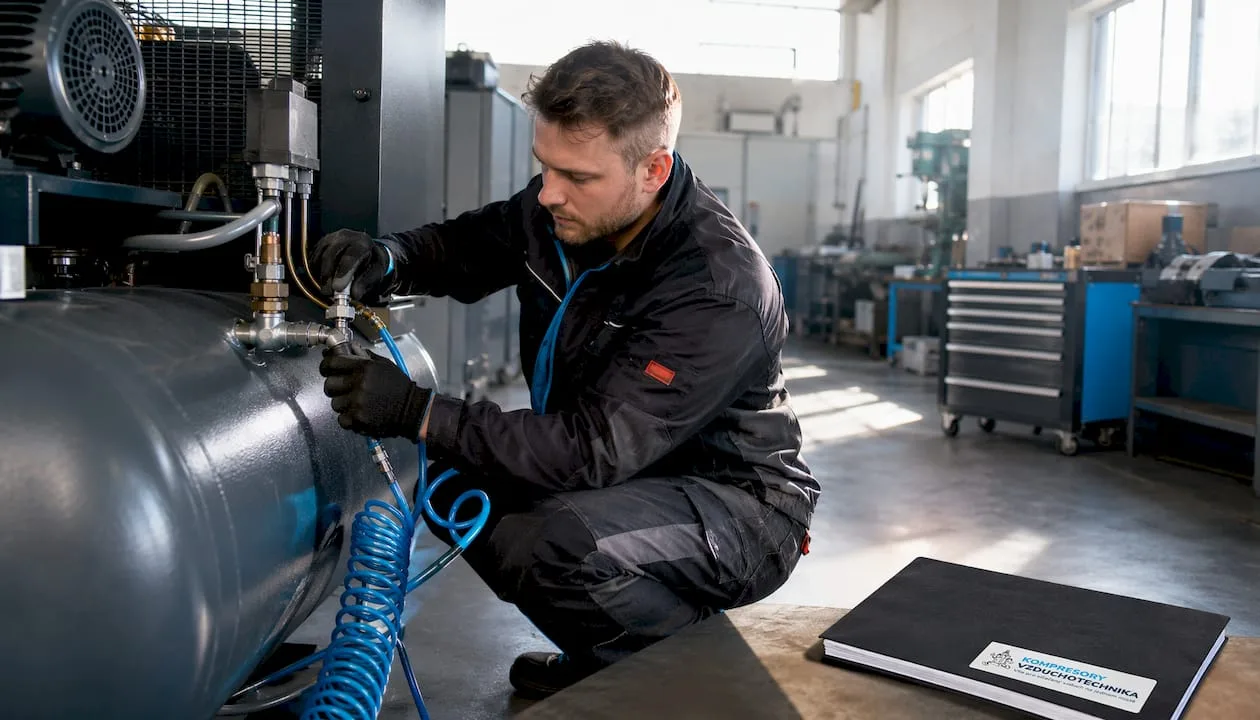
The term "integrated ventilation" has two dimensions: technological integration of components in a single manufactured assembly, and systemic integration of ductwork directly into the building structure. Both dimensions have different implications for design and servicing.
Contents
- What does an integrated ventilation system consist of?
- What benefits and trade-offs does an integrated solution bring?
- Checklist for designers and technicians
- When to choose an integrated solution and when decentralization?
- How does implementation, commissioning and servicing proceed?
- How can Kompresory-vzduchotechnika help you with an integrated solution?
- Key takeaways
- Why the service approach matters more than performance on paper
- Kompresory-vzduchotechnika: technical support for your project
- Useful resources for further study
- Frequently asked questions
What does an integrated ventilation system consist of?
An integrated solution consists of several interconnected units. Each must be dimensioned with regard to the others, otherwise the system as a whole will not achieve the projected parameters.
- An air handling unit with heat recovery ensures air exchange and heat recovery. The efficiency of heat exchangers in residential systems can reach very high values, while in industrial applications it depends on the type of heat recovery unit.
- An integrated heat pump or heat exchanger utilizes the enthalpy of the exhaust air, which is more favorable for the heat pump than outdoor air. Compact units with an integrated heat pump (type VTS) combine a rotary regenerator and a pump in a single assembly, eliminating the need for external chillers.
- Ductwork integrated into the building structure is part of the floors, walls, or ceilings. Lindab describes this approach as structurally connecting ductwork with building elements in order to achieve tightness class D and reduce the space requirements of the installation.
- Filtration and ventilation elements regulate the quality of the supply air, capture dust and allergens, and help protect internal components.
- The control and measurement unit coordinates the operation of the entire system. PI control (proportional-integral) is practically essential for minimizing control deviations and limiting the number of switchings of heating and cooling elements.
It is advisable for the designer to prepare a block diagram of the entire system before starting the drawing documentation. A clear diagram will reveal conflicts in the routing and facilitate coordination with other trades on the construction site.
What benefits and trade-offs does an integrated solution bring?
Main benefits:
- Space saving: ducting integrated into the structure eliminates the need for a separate technical floor or extensive suspended ceilings.
- Higher airtightness: properly designed and installed integrated ducting achieves airtightness class D, which is a prerequisite for meeting the energy requirements of new buildings.
- Better energy balance: heat recovery reduces heat losses from ventilation, and the integrated heat pump utilizes exhaust air with higher energy potential than outdoor air.
- Faster installation: integration eliminates the need to prepare base frames and extensive external distribution, which shortens installation time and simplifies construction coordination.
- Simplified trade coordination: one compact unit replaces multiple separate subcontracts.
Trade-offs and risks:
- Service access to compact units tends to be more difficult than with conventional assemblies. Many investors underestimate this fact during specification.
- Higher demands on control algorithms: PI control requires correct setup and regular parameter checks.
- The initial investment may be higher for fully integrated configurations with a heat pump.
Professional tip: When specifying the project, explicitly define service access to each internal component. Modular mounting of the heat exchangers and compressor will save hours of work during the first major repair.
Checklist for the designer and technician
Before submitting the design documentation, verify every point:
- Ductwork leakage class — determine the required class (typically D for NZEB) and choose the corresponding cross-section dimensions and joints. The leakage class directly affects the choice of ductwork system.
- Service access — mark the access openings to each internal component. Verify whether the heat exchanger and compressor can be removed without interfering with the building structure.
- BMS communication protocols — specify Modbus or another required protocol, the data logging range, and diagnostic functions. Automatic air control is a key element of the whole system.
- PI control — specify the required control parameters and verify whether the control unit supports an integral component for stable operation without oscillation.
- Post-installation tests — plan flow measurement, ductwork leakage testing, heat recovery verification, free cooling validation, and verification of heat pump modes.
- Enthalpy performance — include in the specification an enthalpy performance test of the heat pump when using exhaust air.
Professional tip: Verify the availability of spare parts for the chosen compact unit before finalizing the specification. Unavailability of a part during the warranty period will extend downtime and increase service costs.
When to choose an integrated solution and when decentralization?
The decision depends on a combination of leakage requirements, available space, and service accessibility.
An integrated solution is suitable when:
- This is a new building or renovation aiming to meet the NZEB or passive standard.
- The project has limited installation space and a separate plant room cannot be allocated.
- The ductwork airtightness requirement reaches class D.
- The building requires centralized climate control (industrial halls, office buildings).
A decentralized or modular solution is the better choice when:
- This is a small renovation with a limited budget, where an integrated installation would require extensive structural work.
- The building has difficult access for servicing, and ease of component replacement is a priority.
- Airtightness requirements are lower and energy balance is not a key criterion.
A practical decision rule: if the requirement for airtightness and space savings outweighs the requirement for easy serviceability, an integrated solution is the right choice. For more on the benefits of centralized air distribution in industry, see the separate article.
How does implementation, commissioning, and servicing work?
Installation of an integrated system takes place in several consecutive phases:
- Preparation of structural penetrations — coordination with other trades, route surveying, creation of penetrations, and installation of ductwork supports in the structure.
- Installation of the compact unit — placement of the ventilation unit with heat recovery and heat pump at the prepared location, connection to air ducts.
- Connection to internal networks — connection to the electrical installation, BMS, and possibly to the building's heating or cooling system.
- Control unit integration — setting up communication (Modbus), parameterization of PI control, configuration of logging and alarms.
- Trial operation — flow measurement at each outlet, duct leak testing, verification of heat recovery, validation of free cooling and the heat pump.
- Handover of documentation — test protocols, wiring diagrams, service manual with a schedule of regular inspections.
Regular maintenance includes filter replacement (typically every 6–12 months), inspection of the recovery heat exchanger, access to the compressor and expansion valve, and review of control parameters. Compact units save costs on external infrastructure, but service work on internal components can be more time-consuming than with conventional setups.
How can Kompresory-vzduchotechnika help you with an integrated solution?
Kompresory-vzduchotechnika offers comprehensive support from design to service:
- Technical consulting and turnkey design — assessment of the building layout, design of integrated routing, inspection of service access.
- Equipment supply — compressors, air treatment units, pipe distribution systems, filtration and automation accessories.
- Installation and commissioning — installation, setting of control parameters, trial operation and handover of documentation.
- Energy audits — verification of the system's energy balance and identification of savings.
- 24/7 service — service interventions, inspections, delivery of spare parts.
A consultation or technical quotation can be requested directly through Kompresory-vzduchotechnika.cz. Simply send the building layout and basic requirements for performance and tightness.
Key takeaways

Integrated ventilation and air conditioning is a practical choice for new buildings and NZEB projects, where duct tightness and space savings outweigh the requirement for easy servicing.
| Point | Details |
|---|---|
| Definition and levels of integration | The system combines technological integration of components with system integration of ductwork into the building structure. |
| The highest tightness class used for NZEB | Integrated ductwork meets tightness class D, which is a condition for NZEB and passive buildings. |
| PI control as the basis | A control algorithm with an integral component minimizes component switching and ensures stable operation. |
| Service accessibility from the start | Access openings and modular component mounting must be part of the design specifications from the outset, not a subsequent modification. |
| Kompresory-vzduchotechnika | Offers turnkey design, equipment supply, installation, energy audits, and 24/7 service for integrated solutions. |
Why service accessibility matters more than performance on paper
The technical parameters of integrated units are now comparable across manufacturers. The real difference only becomes apparent during the first major service event. A compact assembly with a heat exchanger embedded deep in the ceiling void without an access opening can turn a standard filter replacement into a half-day construction job.
Practice shows that investors and designers only pay attention to service accessibility when they actually need it. The correct approach is the opposite: service scenarios need to be considered before a specific unit is selected. Verify whether the manufacturer supplies service documentation with the dimensions of access openings, and whether spare parts are available on the Czech market without long delivery times.
A local supplier with its own service team, such as Kompresory-vzduchotechnika, can ensure operational continuity even in the event of a non-standard failure, since it does not rely exclusively on the manufacturer's import chain.
Kompresory-vzduchotechnika: technical support for your project
Integrated ventilation and air conditioning systems require precise specification from the very first drawing. Kompresory-vzduchotechnika offers technical consultations, component supply, and service for industrial and construction projects in the Czech Republic.
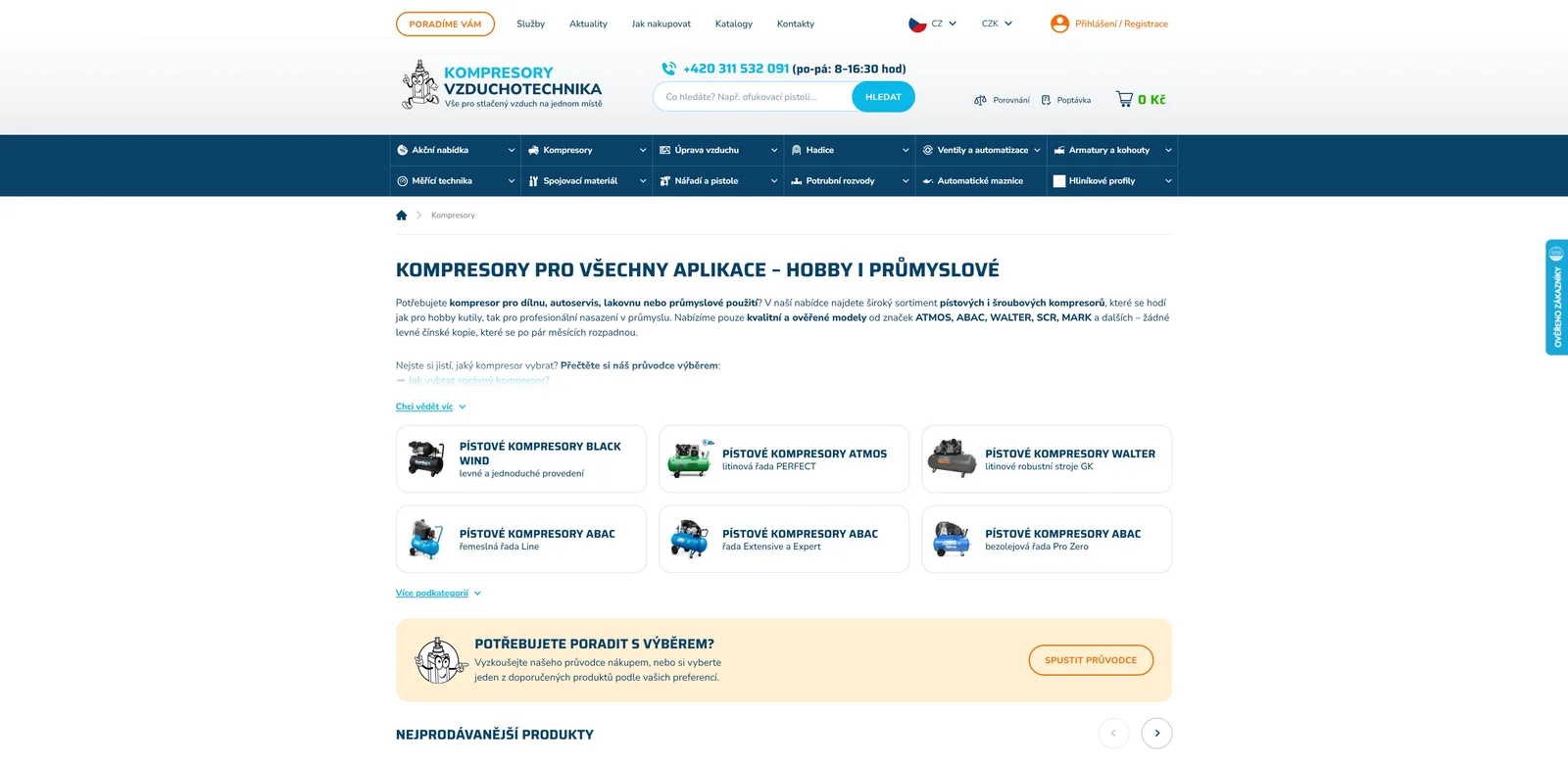
For compressed air distribution in integrated installations, distribution pipes with diameters of 15–28 mm and a push-in system for quick installation are available. For air filtration and treatment, the e-shop offers air treatment units up to 10 bar in both classic and compact designs. Customer service and 24/7 support are available to operations teams throughout the system's service life. Send the facility layout via Kompresory-vzduchotechnika.cz and get a preliminary assessment free of charge.
Useful resources for further study
- Lindab — technical data sheets for integrated ductwork systems: detailed documentation on tightness classes, dimensions and installation procedures; suitable for designers selecting a ductwork system.
- TZB-info — articles on integrated heat pumps and HVAC control: expert texts on PI control, enthalpy performance and free cooling; suitable for technicians designing control schemes.
- TZB-info — ventilation for a healthy environment: overview of heat recovery and filtration principles and the impact of air quality on operation; suitable as a basis for energy audits.
- Kompresory-vzduchotechnika.cz blog: practical articles on installing ventilation systems, automation and operation of compressed air systems; suitable for tradesmen and operating technicians.
Frequently asked questions
What exactly does integrated ventilation mean?
Integrated ventilation is a system in which ventilation components and ductwork routes are designed as a single unit built into the building's structure. The aim is to achieve higher ductwork tightness, save installation space and improve the energy balance.
What ductwork tightness class is required for integrated systems?
For new buildings and buildings with an NZEB requirement, tightness class D is standardly required. This class is a prerequisite for meeting the energy standards applicable to new buildings in the Czech Republic.
Why is PI control important for integrated ventilation?
PI control minimizes control deviations and reduces the number of switching cycles of heating and cooling elements. Without the integral component, the system oscillates and the components wear out unnecessarily.
When is it better to choose a decentralized solution instead of an integrated one?
A decentralized solution is more suitable for small renovations with a limited budget, or where the building layout does not allow the integration of piping into the structure without extensive interventions.
How can Kompresory-vzduchotechnika help with the design of an integrated system?
Kompresory-vzduchotechnika offers technical consulting, turnkey design, supply of equipment including piping distribution and air treatment units, installation, commissioning, and 24/7 service.
Recommended
- List of tasks for compressed air: a guide for technicians - Kompresory-Vzduchotechnika.cz
- What does automatic air control mean: a guide to systems - Kompresory-Vzduchotechnika.cz
- Air flow testing methods: a guide for technicians - Kompresory-Vzduchotechnika.cz
- The significance of the compression stage: a guide for technicians - Kompresory-Vzduchotechnika.cz