

In short:
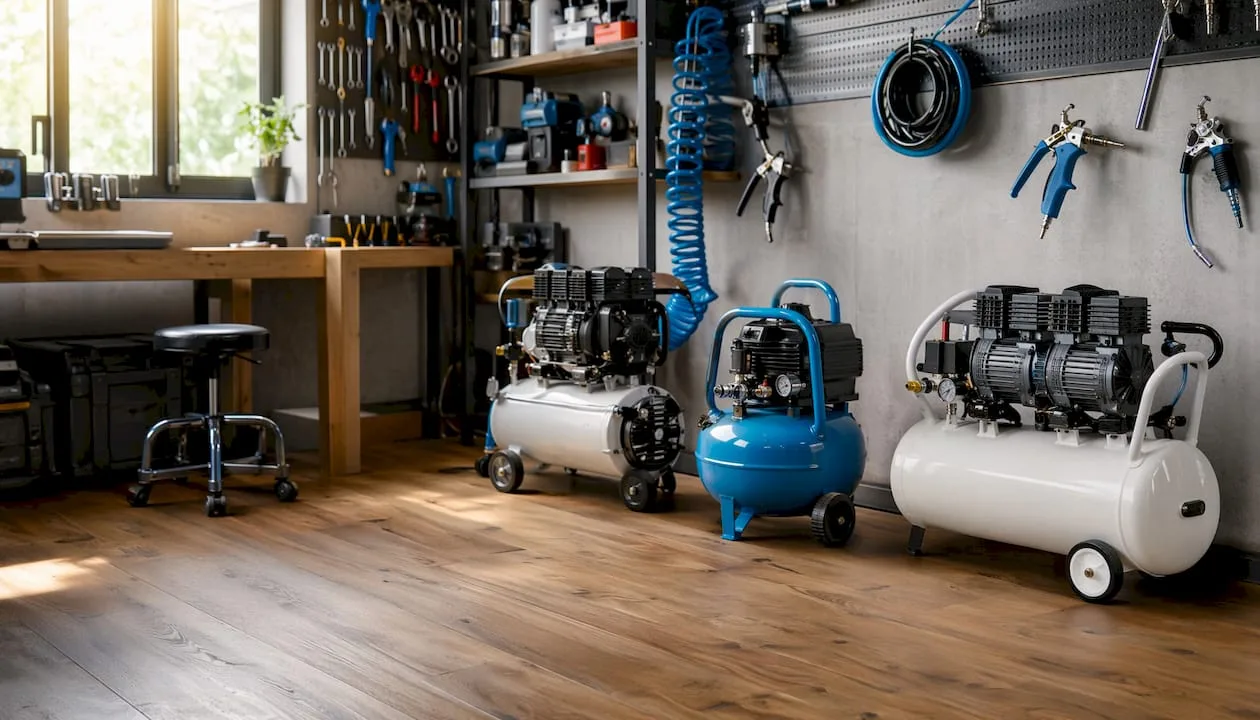
- A compressor for home use makes various jobs easier, from inflating tyres to spray-painting furniture. Choosing the right model depends on the free air delivery, the air tank volume and the type of lubrication. Quiet oil-free compressors with a capacity of around 150–200 l/min and a 50-litre air tank are suitable for most household tasks.
A home-use compressor is a device that covers dozens of practical tasks, from inflating tyres to dust removal to spray-painting furniture. The right choice depends on three key parameters: free air delivery, air tank volume and type of lubrication. Modern home compressors are designed for simple operation without the need for professional training. Home use of compressors offers possibilities that were previously reserved exclusively for professional workshops. Choosing the right model determines the efficiency, noise level and overall service life of the equipment.
1. What types of compressors are suitable for home use?
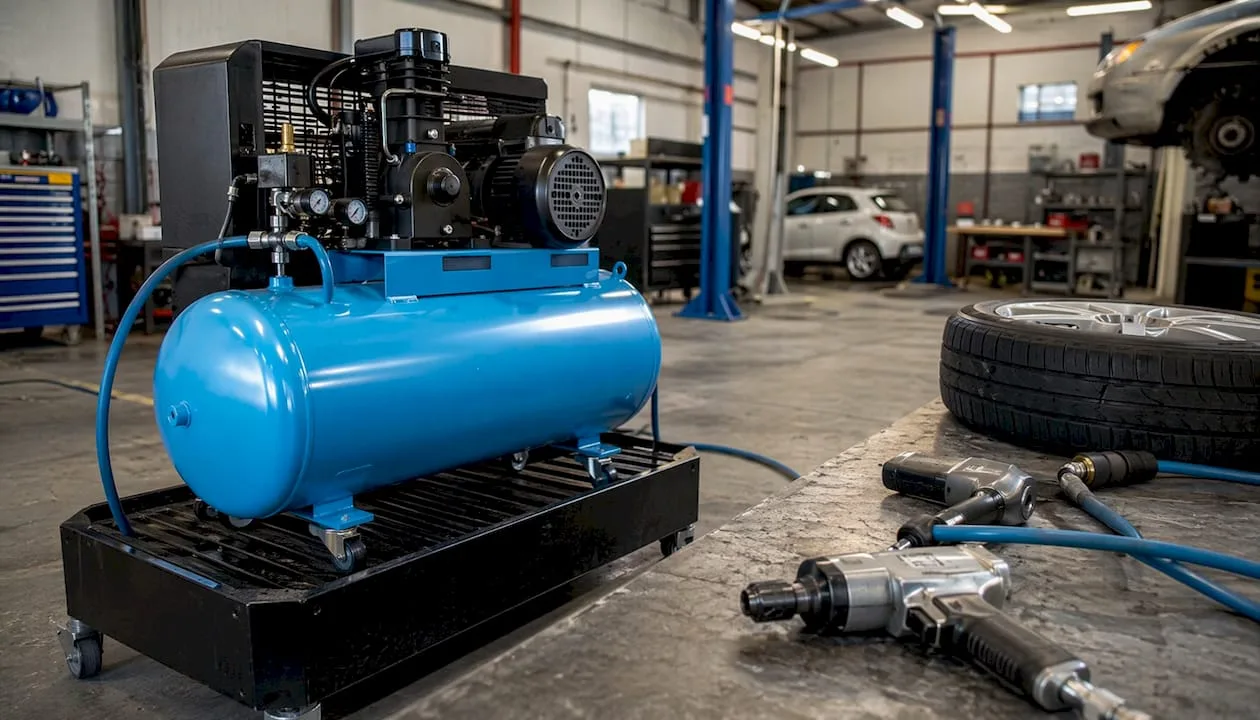
The basic division of compressors for home use is into oiled and oil-free types. Each type has different maintenance requirements and is suited to different situations.
Oil-free compressors are the first choice for beginners. Oil-free compressors require minimal servicing and eliminate the risk of oil leaking into the compressed air. This is an advantage especially when spray-painting or working with food. The purchase price is lower and operation is simple.
Oiled compressors can handle more demanding and longer-lasting jobs. They have a longer service life under intensive operation and lower noise levels compared to equivalent oil-free models. However, they require regular oil changes and level checks.
- Oil-free compressor: suitable for inflating, cleaning, occasional spray-painting
- Oiled compressor: suitable for pneumatic tools, longer working cycles, renovations
- Piston compressor: the most widespread type for home workshops
- Screw compressor: quiet and powerful, but more expensive
Professional tip: If you plan to use the compressor less than once a week for lighter jobs, an oil-free model will save you time on maintenance and money on servicing.
2. Practical uses of a compressor at home and in the garden
Home compressors are used for tyre maintenance, dust cleaning, furniture renovation with pneumatic tools, and garden care. Each of these applications has different requirements for pressure and air flow.
Inflating
Inflating tyres on a car, bicycle, garden tractor, or inflatable mattresses is one of the most common household tasks. Car tyres require a pressure of approximately 2.0–2.5 bar, while sports bicycle tyres require up to 8 bar. A compressor can do this job in a fraction of the time compared to a hand pump.
Dust cleaning and dirt removal
Compressed air cleans air conditioning filters, computer cases, garden tools, or gaps in paving. A blow gun with a pressure of 3–6 bar removes dust from places a brush cannot reach. This application saves time during regular workshop or garage maintenance.
Pneumatic tools for renovation and maintenance
- Pneumatic drill and screwdriver: faster and lighter than electric alternatives
- Pneumatic sander: ideal for sanding car bodywork or furniture
- Nail gun: flooring installation, cladding, carpentry work
- Pneumatic nut gun: wheel changes or chassis repairs
Spray painting and lacquering
Spray painting requires a pressure of 30–50 PSI (approximately 2–3.5 bar) and a steady air flow. A spray gun applies paint more evenly than a brush and significantly speeds up the work. For painting furniture or fences, a compressor with an air tank volume of at least 50 litres is essential.
3. How to choose the right compressor power and parameters
Compressor performance is indicated by free air delivery in litres per minute (l/min) and maximum pressure in bar. These two values determine which tools and applications the compressor can handle.
Household tasks require a free air delivery between 80 and 270 l/min. Hobby models up to 150 l/min can handle basic tasks such as inflating or cleaning. For pneumatic tools or painting, a delivery of at least 180–200 l/min is required.
| Application | Required pressure | Recommended flow |
|---|---|---|
| Inflating tyres | 7–10 bar (100–150 PSI) | 30–50 l/min |
| Spray painting | 2–3.5 bar (30–50 PSI) | 100–200 l/min |
| Nail gun | 5–6 bar (70–90 PSI) | 30–60 l/min |
| Pneumatic grinder | 6–7 bar | 150–250 l/min |
| Dust blowing | 3–6 bar | 20–40 l/min |
The recommended air tank volume is at least 50 litres for efficient operation of home compressors. A larger air tank means longer working cycles without having to wait for the pressure to build back up. For occasional inflating, 24 litres is enough; for painting or pneumatic tools, 50–100 litres is the right choice.
A compressor output with a reserve of at least 50% above current needs prevents overload and extends the service life of the equipment. So if the tool consumes 100 l/min, choose a compressor with an output of at least 150 l/min.
Professional tip: When choosing, always consider that you'll add more tools in the future. A compressor with a power reserve will pay off more than a model „sized exactly" to today's needs.
A detailed overview of selection factors can be found in the compressor selection guide on the Kompresory-vzduchotechnika blog.
4. Practical tips for operation and maintenance of a home compressor
Proper operation extends the life of the compressor and prevents unnecessary repairs. Most problems arise from neglecting simple regular tasks.
-
Drain condensate after each use. Regular condensate draining prevents corrosion of the pressure tank and increases operational safety. Open the drain valve at the bottom of the air tank until all the water has drained out.
-
Never turn off the compressor by unplugging it. Always turn off the compressor using the switch on the pressure switch. Unplugging under load damages the motor and increases the risk of injury.
-
Seal accessory threads with PTFE tape. Missing thread sealing with PTFE tape is the most common cause of air leaks. Leaks increase noise, waste energy, and shorten the compressor's lifespan.
-
Check the oil level on oil-lubricated models. Check the oil level before each extended use. Operating without sufficient oil will cause irreversible damage to the compressor.
-
Clean the air filter regularly. A clogged filter reduces performance and causes overheating. Clean or replace the filter according to the manufacturer's instructions, typically every 50–100 hours of operation.
-
Store the compressor in a dry, frost-free place. Moisture and frost damage seals and metal parts. A garage or dry workshop are ideal storage locations.
An overview of the most common operating mistakes can be found in the article mistakes when using compressors on the Kompresory-vzduchotechnika blog.
5. Benefits of quiet compressors for home use
Silent compressors significantly expand the possibilities of working at home. Some models operate below 50 dB, which corresponds to the volume of a normal conversation. This allows work in an apartment, near neighbours, or during evening hours.
| Compressor type | Typical noise level | Suitable location |
|---|---|---|
| Standard piston | 70–85 dB | Outdoor workshop, garage |
| Silent oil-free | 45–60 dB | Apartment, living room |
| Silent oil-lubricated | 50–65 dB | Workshop in the house, cellar |
Anti-vibration pads and adequate ventilation extend the compressor's service life and further reduce noise during operation. Placing the compressor on an anti-vibration pad prevents the transmission of vibrations to the floor and surrounding walls. The requirements for correctly positioning a compressor in a household are described in the compressor room guide on the Kompresory-vzduchotechnika blog.
Quiet compressors are particularly advantageous for apartments and family houses, where noisy operation would disturb others. Their purchase price is higher, but the comfort of everyday use justifies this investment.
Key findings
The right choice of compressor for a household depends on a combination of intake capacity, air tank volume, and lubrication type, with oil-free models offering 150–200 l/min capacity and a 50-liter air tank covering most household needs.
| Point | Details |
|---|---|
| Compressor type | Oil-free models are suitable for beginners and occasional work, while oil-lubricated models are suitable for more demanding operation. |
| Capacity and air tank | An intake capacity of 150–200 l/min and an air tank of at least 50 liters will cover both painting and pneumatic tools. |
| Capacity reserve | Choose a compressor with a capacity at least 50% higher than the current needs of your tools. |
| Regular maintenance | Drain the condensate after each use and seal threads with PTFE tape to prevent leaks. |
| Quiet models | Compressors below 50 dB allow working in an apartment or in the evening without disturbing those around you. |
Practical experience: what you won't find in the manuals
The most common mistake I see with home users is underestimating the power needed. They buy a compressor "just for inflating tires" and then find out they want to paint a fence or sand a car body. The result is an overloaded machine that overheats and ends up in the repair shop after two seasons.
The second thing that surprises me is ignoring the condensate. People turn on the compressor, use it, and put it away. Water in the tank then corrodes the metal from the inside. An air tank that would last twenty years ends up lasting five. Yet it only takes opening the valve for thirty seconds after each use.
I also recommend not underestimating the noise level. If you're working in a garage next to a living space or in an apartment, a standard piston compressor will stop being fun very quickly. A quiet model at a higher price pays off because you'll actually use it instead of putting it aside because of the noise.
And one last thing: accessories determine the result just as much as the compressor itself. A quality spray gun, a properly sized hose, and an air purifier turn an average compressor into a reliable tool. A cheap gun will ruin even the best paint.
— Zdeněk
Compressors for home use from Kompresory-vzduchotechnika
Kompresory-vzduchotechnika offers compressors for home use, from compact oil-free models to more powerful oil-lubricated machines suitable for renovations and pneumatic tools. The range also includes accessories for air treatment that ensure clean and dry air for both painting and fine work.
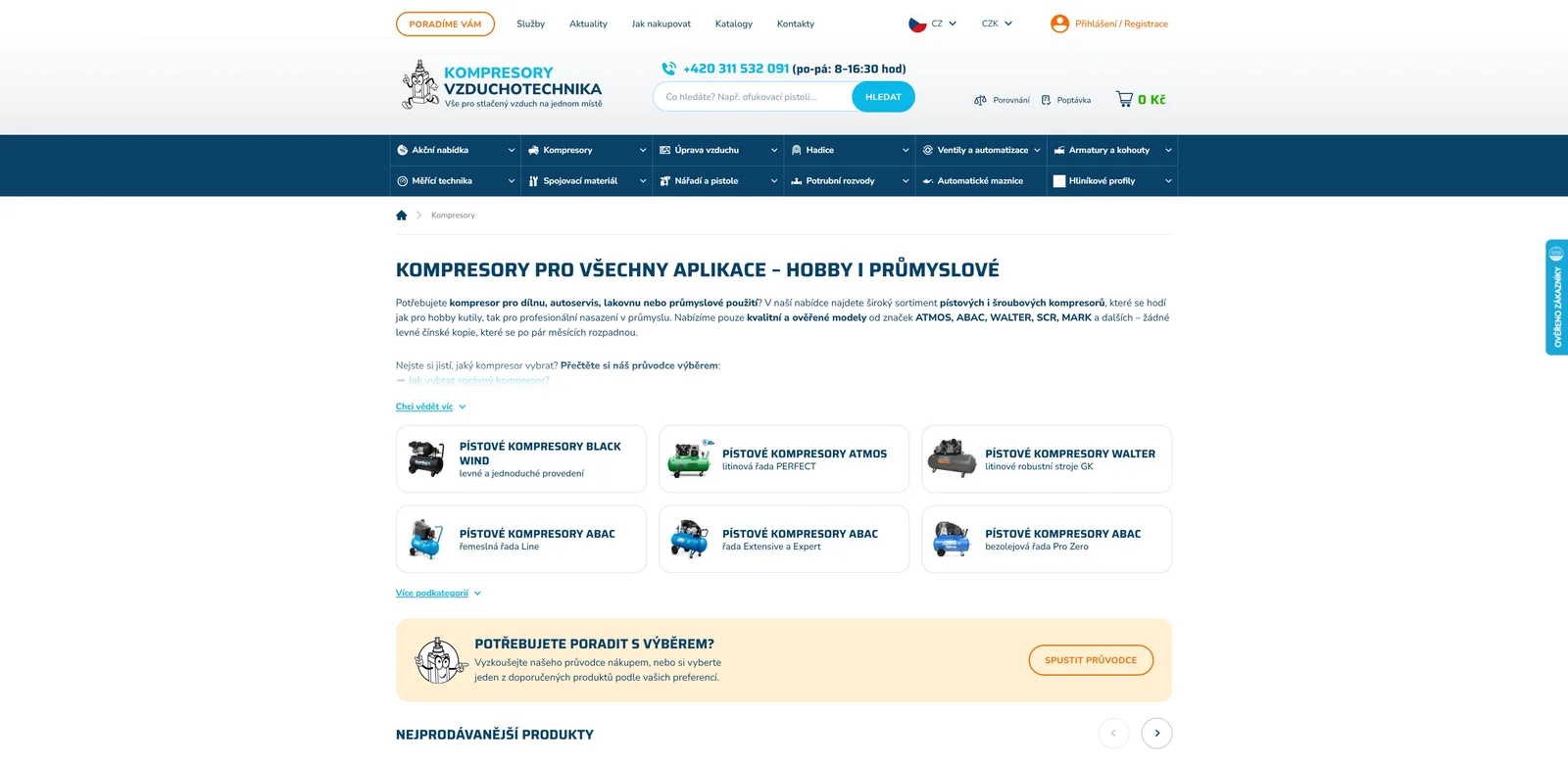
For painting and surface cleaning, our range includes spray and blow guns of various power classes. Proper compressor operation also requires air treatment units, which remove moisture and impurities from the compressed air. The Kompresory-vzduchotechnika team provides technical advice both when choosing and after purchasing the equipment.
Frequently Asked Questions
Which compressor is best for home use?
An oil-free piston compressor with an air tank volume of 24–50 litres and a free air delivery of 100–150 l/min will cover most household tasks. For more demanding work such as painting or pneumatic tools, a model with an output of at least 180 l/min is recommended.
How often should the condensate be drained from the compressor?
Drain the condensate after every use of the compressor. Regular draining prevents corrosion of the air receiver and extends the service life of the equipment.
How many bars do I need for inflating tyres?
Inflating a car's tyres requires a pressure of 7–10 bar (100–150 PSI). Most home compressors can easily reach this pressure.
Are quiet compressors suitable for a flat?
Quiet compressors operating below 50 dB are suitable for use in a flat or near living areas. Their noise level corresponds to normal conversation and won't disturb neighbours even during evening work.
How do I know if a compressor has sufficient power?
A compressor has sufficient power if its free air delivery exceeds the tool's consumption by at least 50%. If the compressor motor runs continuously without pausing, the equipment is overloaded and a more powerful model should be chosen.
Recommended
- Examples of compressor use: a guide for the workshop and production - Kompresory-Vzduchotechnika.cz
- Factors for selecting an industrial compressor: a 2026 guide - Kompresory-Vzduchotechnika.cz
- List of small compressors and their benefits for workshop and construction site - Kompresory-Vzduchotechnika.cz
- Basic requirements for a compressor room: guide 2026 - Kompresory-Vzduchotechnika.cz