

In brief:
- The best compressor for 2026 matches performance, lubrication type, and air receiver volume according to the application.
- For home use, oil-free models with low noise levels and simple maintenance are suitable, while for industry, screw compressors with greater capacity apply.
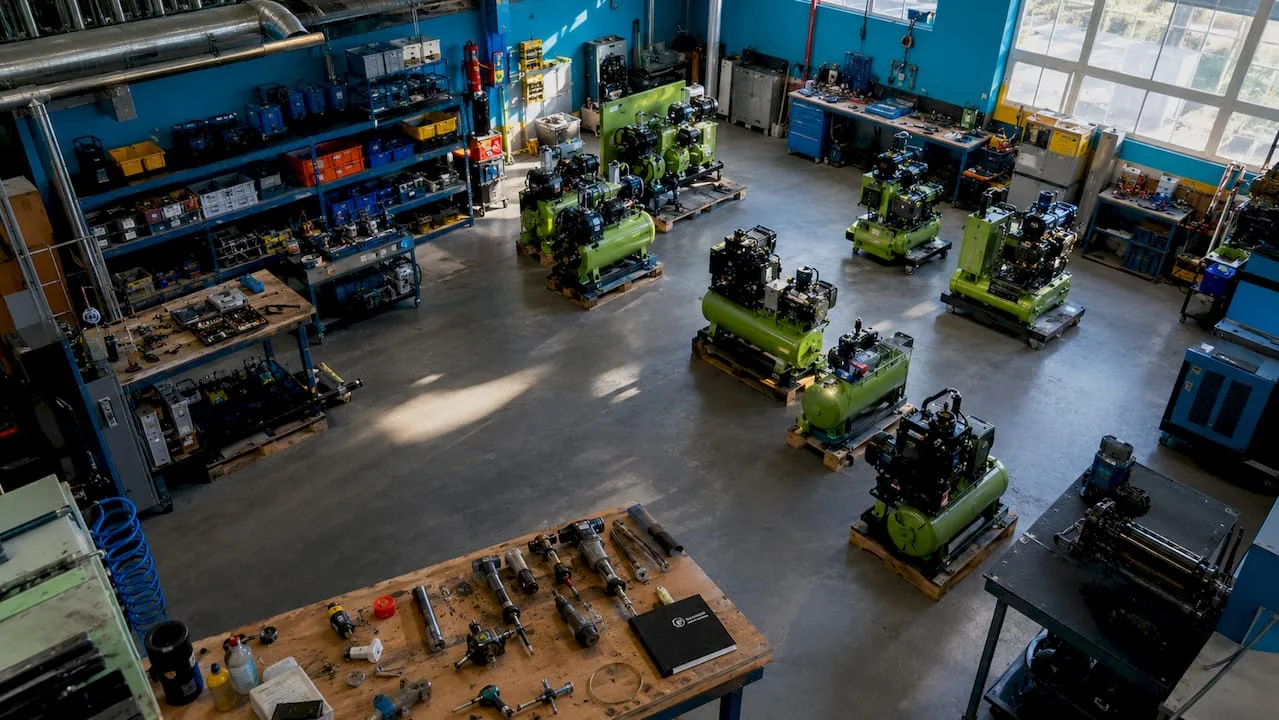
The best compressor for 2026 is the one that precisely matches the required performance, lubrication type, and air receiver volume. The performance range spans from 1.5 kW for home use up to 55 kW and more for industrial operations, with the air receiver volume determining pressure stability and the number of motor starts. The key difference between oil-lubricated and oil-free models lies in the cleanliness of the output air and maintenance requirements. This list of the best compressors for 2026 covers all main categories from home use through workshop to industry, so that every user finds a model matching their needs.
1. How to choose a compressor for home and hobby use
Oil-free compressors with a power of 1.5–3.7 kW are the best choice for home users and hobbyists. They handle tire inflation, painting small areas, air cleaning, and powering pneumatic tools for small jobs. An air receiver with a volume of 50–100 l is sufficient for intermittent operation typical of a home workshop.
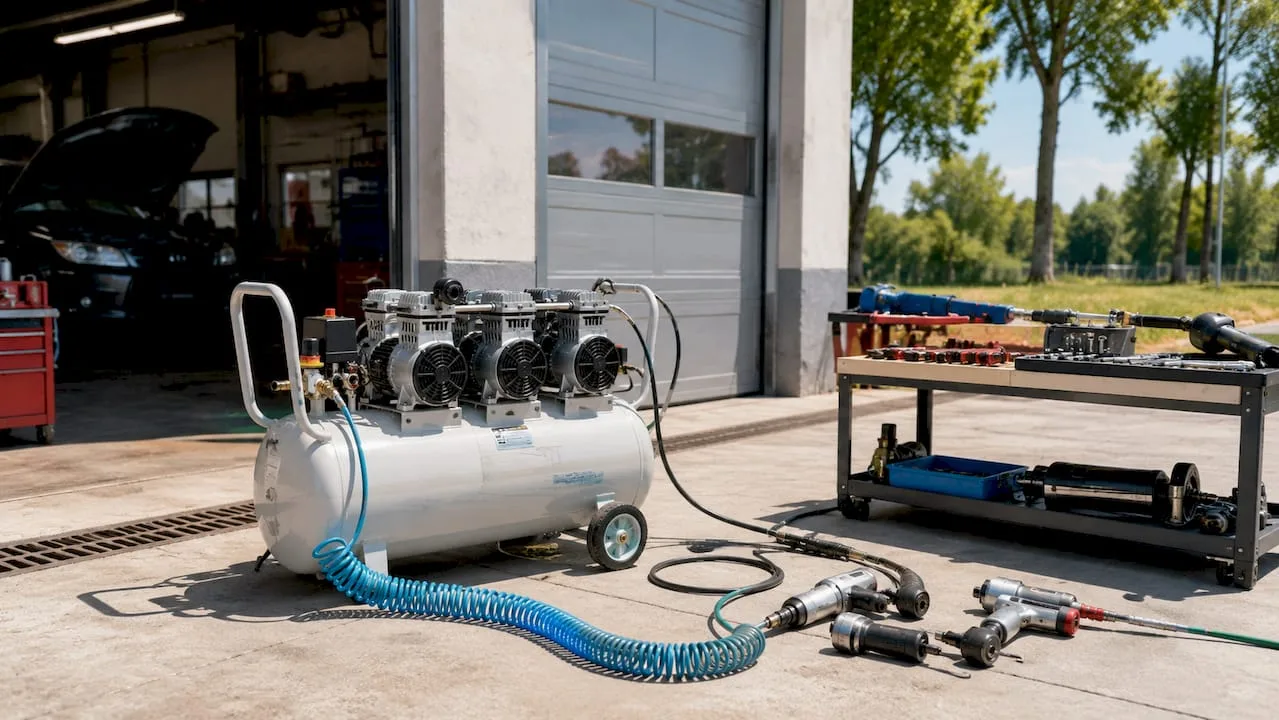
Modern home models offer digital control and automatic shutdown once the set pressure is reached. This function reduces energy consumption and protects the motor from overload. With an intake capacity in the range of 36.5–528 l/min and a maximum pressure of up to 8 bar, oil-free models cover the vast majority of household tasks.
Advantages of an oil-free compressor for home use:
- No oil changes or risk of output air contamination
- Lower noise level compared to oil-lubricated piston models
- Compact dimensions and low weight for easy relocation
- Minimal maintenance requirements, suitable for irregular use
- Quick start-up without the need for warming up
Professional tip: Before buying, check whether the manufacturer states the actual intake capacity (l/min) and not just the theoretical one. The difference is often significant and directly affects which tools the compressor can handle.
2. Best compressors for workshops and small to medium-sized operations
Workshops and small operations require compressors with an output of 5.5–11 kW as the standard. This power range covers the simultaneous operation of multiple pneumatic tools, such as grinders, screwdrivers, or spray guns. An air tank with a volume of 200–500 l ensures stable operating pressure and reduces the number of motor starts, thereby extending its service life.
A piston compressor is cheaper to purchase and suitable for intermittent operation. A screw compressor operates quietly, continuously, and with higher energy efficiency under continuous load. For a workshop with an eight-hour working day and multiple users, a screw model is more economically advantageous.
Key parameters for choosing a workshop compressor:
- Motor output of 5.5–11 kW depending on the number of connected tools
- Air tank of 200–500 l for stable pressure without interruptions
- Type of lubrication according to application: oil-lubricated for workshops, oil-free for painting
- Maximum working pressure of 8–10 bar for standard pneumatic tools
- Noise level below 70 dB for a comfortable working environment
Regular maintenance includes checking the oil, replacing air filters, and detecting air leaks. Neglecting these steps leads to loss of performance and higher operating costs. Oil-lubricated compressors generally require an oil change every 500 operating hours.
Professional tip: The most common mistake in workshops is underestimating the required air tank volume. If the compressor starts more than twice per minute, the air tank is too small. Add an additional pressure vessel instead of replacing the entire compressor.
3. Industrial compressors: screw technology for stable production
Industrial operations require compressors with an output of 15–55 kW and air tanks with a volume of 1,000 l or more for continuous operation. Screw technology is the standard in this segment thanks to its low noise level, high reliability, and energy efficiency under continuous load. Proper sizing of an industrial compressor significantly reduces operating costs and production downtime.
Modern industrial compressors are equipped with digital control systems featuring automatic pressure regulation and remote performance monitoring. Leaks in compressed air distribution systems can increase energy consumption by up to 20%. Regular diagnostics and leak detection are therefore economically essential.
| Operation category | Compressor output | Air tank volume | Recommended type |
|---|---|---|---|
| Small operation / workshop | 1.5–5.5 kW | 50–200 l | Oil-lubricated piston |
| Medium operation | 5.5–15 kW | 200–500 l | Piston or screw |
| Large industrial plant | 15–55 kW | 500–1,000 l | Oil-lubricated screw |
| Continuous production | over 55 kW | over 1,000 l | Screw, possibly oil-free |
Installing a compressor requires a suitable environment with sufficient ventilation, stable temperature, and protection from dust. An unsuitable environment shortens the compressor's lifespan and increases service costs. Industrial operations should plan regular diagnostics at least once a year.
Professional tip: A powerful compressor without a suitable air receiver volume and the right accessories will not ensure optimal operation. Filters, condensate separators and air treatment units are just as important as the compressor itself.
4. Oil-free vs. oil-lubricated compressors: which to choose in 2026
Oil-free compressors are the standard in industries requiring high air purity, such as painting, the food industry, or healthcare. They eliminate the risk of oil particles being carried into the output air, which is a requirement for certified processes. For clean applications, an oil-free compressor with quality condensate separation is the only correct choice.
Oil-lubricated compressors have a longer bearing lifespan and a lower purchase price for comparable output. They require regular oil changes and lubricant level checks, but their operating costs, with proper maintenance, are lower than those of oil-free models. For workshops and industrial operations without air purity requirements, oil-lubricated compressors remain the more economically advantageous choice.
| Parameter | Oil-free compressor | Oil-lubricated compressor |
|---|---|---|
| Cleanliness of the output air | High, no oil particles | Standard, requires filtration |
| Bearing lifespan | Shorter | Longer |
| Maintenance | Lower lubrication requirements | Regular change of oil |
| Noise level | Generally lower | Higher for piston models |
| Purchase price | Higher | Lower |
| Suitable applications | Painting, food industry, healthcare | Workshops, construction, industry |
The choice between the two types depends on the specific application. If the production process requires air purity certification or you work with food, an oil-free compressor is not an optional alternative. For other operations, the decision is based on the ratio of purchase price, operating costs, and required service life.
5. Duty cycle and its impact on model selection
The duty cycle of a compressor indicates how large a portion of the operating time the machine actually works. Piston compressors typically have a duty cycle of 50–70%, while screw compressors operate at 100% load without interruption. Failure to respect the duty cycle leads to motor overheating and premature wear.
For intermittent operation in a home workshop or seasonal use, a piston compressor with a 50% duty cycle is sufficient. Operations with continuous air consumption, such as production lines or auto repair shops with multiple workstations, require a screw compressor with a 100% duty cycle. Correctly matching the compressor to the duty cycle extends the machine's lifespan and reduces repair costs.
6. Accessories and compressed air distribution
Even a powerful compressor cannot ensure reliable operation without the proper accessories. Filters, pressure regulators, condensate separators, and automatic lubricators form the foundation of every functional compressed air system. Quality compressed air distribution made of aluminum or steel pipes minimizes pressure losses and leaks.
Pressure regulators allow precise adjustment of the working pressure for each tool individually. A condensate separator protects pneumatic tools from moisture, which causes corrosion and shortens service life. Regular air tank venting and leak checks are among the basic operating procedures.
7. Safety during compressor operation
Safe compressor operation requires compliance with pressure limits and regular inspection of safety valves. The air receiver must have a valid pressure test in accordance with applicable regulations, otherwise there is a risk of administrative penalties as well as safety hazards. Overpressure caused by a malfunctioning safety valve is among the most serious operational risks.
When working with a compressor in automotive or industrial operations, specific safety rules apply, including hearing protection, proper hose fastening, and regular inspection of the condition of pressure vessels. Hoses and couplings must correspond to the maximum working pressure of the compressor. Underestimating these rules increases the risk of workplace injuries.
8. How to avoid the most common operating mistakes
The most common mistake in compressor operation is neglecting regular maintenance. Oil checks, filter replacement, and air leak detection are key to extending service life and maintaining performance. Neglecting these steps leads to loss of performance and higher operating costs.
The second common mistake is selecting a compressor with insufficient power or too small an air tank. Underestimating the required power causes motor overload and shortens the machine's lifespan. An overview of the most common mistakes when using compressors helps prevent costly repairs.
The third mistake is installing the compressor in an unsuitable environment. Dust, high humidity and insufficient ventilation shorten the compressor's lifespan and increase the risk of failure. Proper placement and regular compressor diagnostics are an investment that pays off in the form of lower service costs.
Key insights
The best compressor for 2026 is the one that precisely matches the power output, air tank volume and type of lubrication for a specific application, with regular maintenance determining its actual lifespan and operating costs.
| Point | Details |
|---|---|
| Power output according to operation | Household 1.5–3.7 kW, workshop 5.5–11 kW, industry 15–55 kW and more. |
| Air tank volume | 50–100 l for households, 200–500 l for workshops, 1,000 l and more for industry. |
| Type of lubrication | Oil-free for painting and food industry, oil-lubricated for workshops and industry. |
| Regular maintenance | Checking the oil, replacing filters and detecting leaks extend lifespan and reduce costs. |
| Accessories | Filters, pressure regulators, and condensate separators are an essential part of every system. |
Practical experience: what you won't find in the catalog
I've spent years in workshops and industrial plants, and one thing still surprises me. Users invest in a powerful compressor but save money on the air tank and accessories. The result is predictable: the compressor starts too often, the motor overheats, and after two years the first major repair follows.
The second problem I see repeatedly is underestimating the environment. A compressor installed in a dusty, unventilated room ages three times faster than the same machine in a clean compressor room. Yet proper placement costs nothing, it just requires planning in advance.
Oil-free compressors are very attractive from a marketing standpoint today, but their shorter bearing lifespan is a real disadvantage. For painting or the food industry, there is no alternative. For a regular workshop, an oil-lubricated model is still the more economically sensible choice, provided it is regularly maintained.
My recommendation is simple: buy a compressor with 20% more power than you think you need. Operating demands increase over time, and sufficient power reserve extends the machine's lifespan. And don't skimp on filtration and pressure regulation. These determine the quality of the output air just as much as the compressor itself.
— Zdeněk
Kompresory-vzduchotechnika: technical support and complete product range
Kompresory-vzduchotechnika offers a complete range of compressors for home, workshop, and industrial use, including expert advice on selection.
For industrial plants requiring stable pressure, SCR screw compressors are available with high reliability and low energy consumption. The range also includes pressure vessels with a volume of 725 l for stabilizing industrial air systems. The Kompresory-vzduchotechnika team provides technical consultations, service, and assistance in selecting the right model for every application. More information about available services can be found on the Kompresory-vzduchotechnika services page.
Frequently asked questions
How much compressor power do I need for a home workshop?
For a home workshop, a compressor with a power output of 1.5–3.7 kW and an air tank of 50–100 l is sufficient. This output covers tyre inflation, cleaning with air, and small pneumatic tools.
When should I choose an oil-free compressor instead of an oil-lubricated one?
An oil-free compressor is a necessity for painting, and in the food and healthcare industries, where the outlet air must not contain oil particles. For ordinary workshops, an oil-lubricated model is more economical.
How large an air tank do I need for stable operation?
The air tank volume depends on the intensity of use: 50–100 l for home use, 200–500 l for workshops, and 1,000 l or more for industrial operations with continuous air draw.
How often is it necessary to carry out maintenance of a compressor?
Oil-lubricated compressors require an oil change approximately every 500 operating hours. Air filters and leak checks should be carried out at least once a year on all types of compressors.
What is the difference between a piston compressor and a screw compressor?
A piston compressor is cheaper and suitable for intermittent operation with a 50–70% duty cycle. A screw compressor runs continuously at 100% load and is more economical for operations with constant air draw.
Recommended
- Factors for selecting an industrial compressor: a 2026 guide - Kompresory-Vzduchotechnika.cz
- Basic requirements for a compressor room: guide 2026 - Kompresory-Vzduchotechnika.cz
- Tips for Quiet Compressor Systems: A 2026 Guide - Kompresory-Vzduchotechnika.cz
- How to correctly choose compressor oil: 2026 guide - Kompresory-Vzduchotechnika.cz