
TL;DR:
- Compressor diagnostics helps cut energy costs, extend equipment life and detect faults sooner.
- Using methods such as vibration analysis or tribological diagnostics correctly makes it possible to identify wear and leaks in time.
- Regular prevention and data-driven maintenance significantly reduce both the costs and the environmental impact of industrial operations.
Compressed air production accounts for up to 10% of electricity consumption in industrial plants, yet compressor diagnostics receives only a fraction of the attention it deserves. A poorly set up or insufficiently monitored compressor not only drives up operating costs, it also shortens the life of the entire system. Understanding what diagnostics reveals and how to carry it out properly is essential for every technician. This article gives an overview of the methods, the most common mistakes and a practical procedure for introducing diagnostics into your operation.
Contents
- Key takeaways
- Compressor diagnostic methods in industry
- The most common faults revealed by diagnostics
- Economic and environmental benefits of diagnostics
- How to introduce diagnostics into your operation
- A view from practice: what diagnostics really changes
- Diagnostics and efficiency with support from Kompresory-vzduchotechnika
- FAQ
Key takeaways
| Point | Details |
|---|---|
| Diagnostics saves energy | Air leaks account for 10 to 30% of output and detecting them directly reduces costs. |
| A megohmmeter, not a multimeter | Only a megohmmeter with a high test voltage reliably reveals the insulation condition of the winding. |
| Tribological diagnostics | Lubricant analysis warns of wear in time, before a breakdown occurs. |
| Temperature anomalies as a signal | Illogical temperature differences indicate internal leaks or mechanical failure. |
| Planned maintenance reduces costs | Moving from reactive repairs to predictive diagnostics extends equipment life. |
Compressor diagnostic methods in industry
Systematic compressor diagnostics does not rest on a single method. A reliable picture of the condition of the equipment emerges from combining several approaches, each of which reveals a different group of faults.
Measuring operating parameters
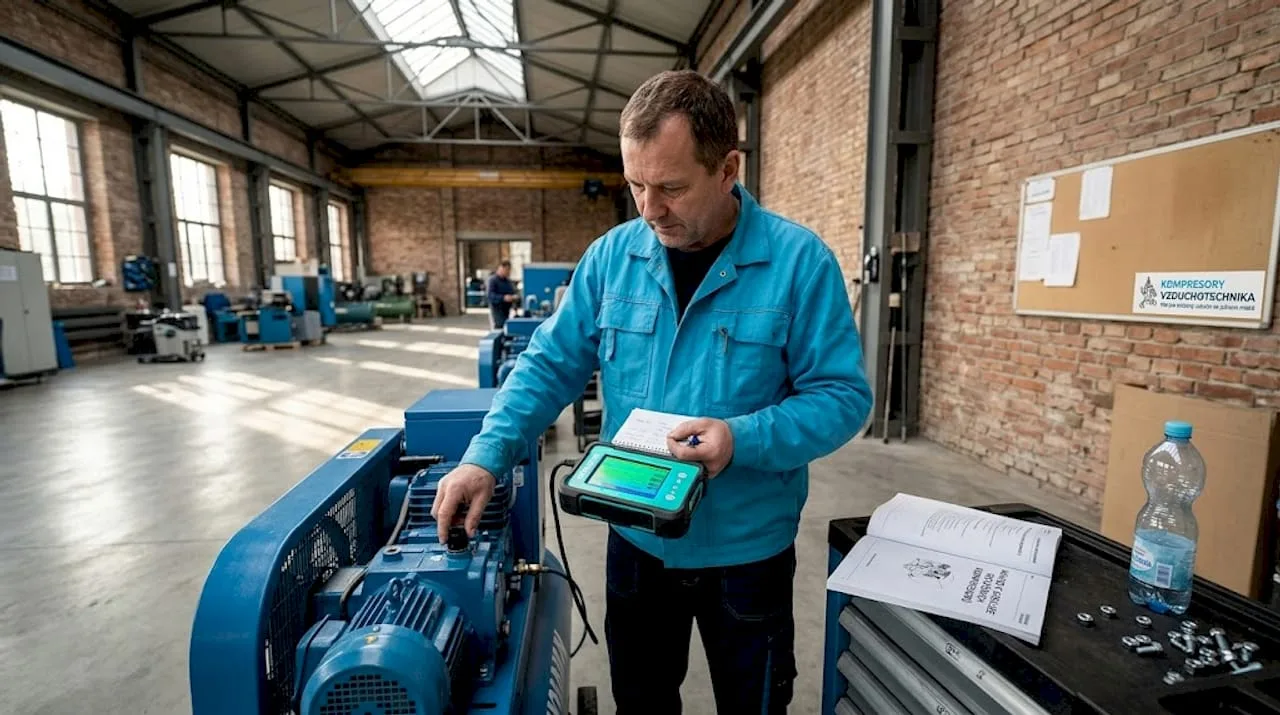
The basis is monitoring pressure, temperature and power input over time. A one-off measurement is not enough. Diagnostics that tracks temperature anomalies over time reveals mechanical faults that a visual inspection misses. If the discharge temperature rises without any change in load, that is a sign of an internal leak or impaired cooling.
Tribological diagnostics
Tribological diagnostics analyses the water content, viscosity and cleanliness of the oil. Monitoring these parameters catches bearing wear or lubricant contamination before it causes a failure. Samples are taken at operating temperature from a standardised point so that the results are comparable.
Vibration analysis and acoustics
Vibration analysis identifies imbalance, loose parts or damaged bearings. Measurement is carried out with an accelerometer placed on the compressor housing and on the bearing housings. Acoustic emission also picks up microcracks or incipient cavitation that do not yet show in the vibration spectrum.
Electrical diagnostics and the megohmmeter
The condition of a compressor motor winding cannot be measured reliably with an ordinary multimeter. Reliable insulation diagnostics requires a megohmmeter, which at a test voltage of 500 or 1000 V reveals incipient degradation of the winding insulation. A result below 1 MΩ signals the need for a service intervention.
An overview of the basic diagnostic methods and what they focus on:
- Pressure and flow measurement: reveals leaks, incorrect control settings and reduced output
- Oil tribological diagnostics: detects wear, foreign particles, moisture and lubricant degradation
- Vibration analysis: picks up imbalance, damaged bearings and mechanically loose parts
- Electrical diagnostics with a megohmmeter: checking the insulation condition of the motor winding
- Ultrasonic leak detection: locating leaks in flanges, joints and valves
- Thermal imaging: visualising temperature anomalies on electrical and mechanical parts
Professional tip: When performing tribological diagnostics, always take oil samples at the same operating temperature and from the same point in the lubrication circuit. Results obtained under different conditions cannot be reliably compared.
The most common faults revealed by diagnostics
Compressor diagnostics does not only deliver data about the current condition. It reveals patterns of problems that recur and have specific causes. Knowing these patterns means fixing the cause, not just the symptom.
Air leaks
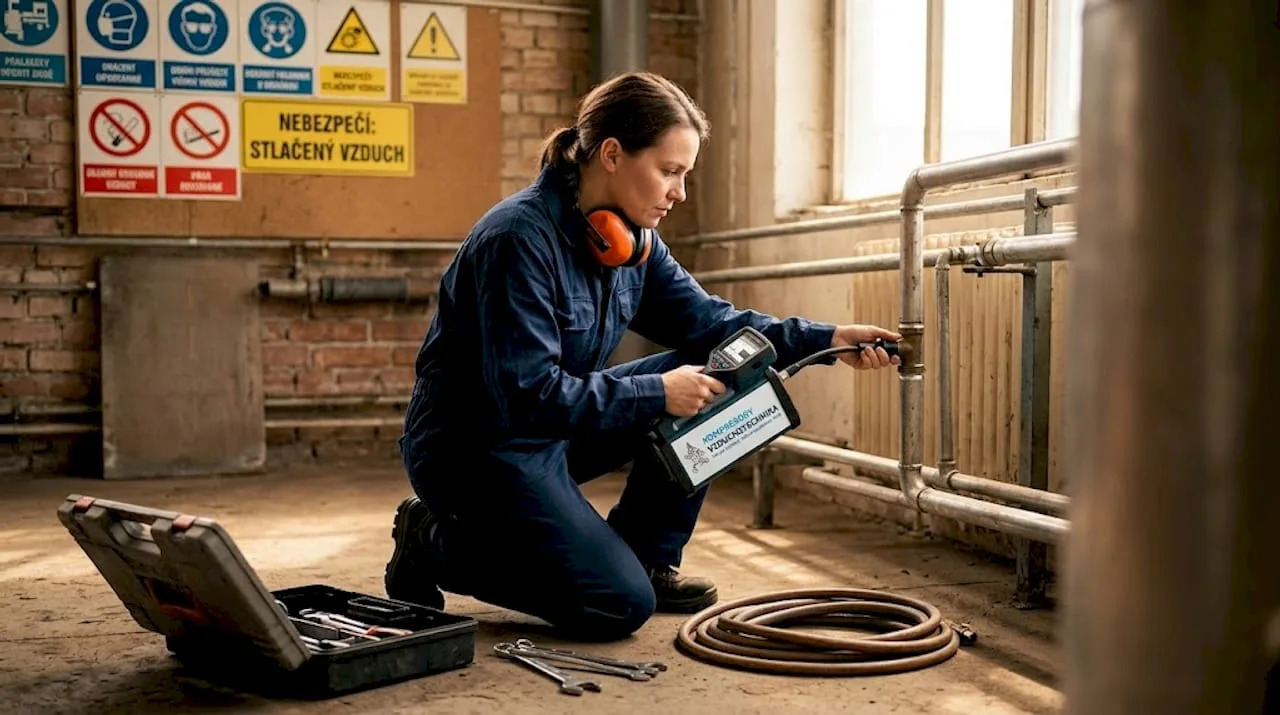
This is the most widespread problem in industrial compressor rooms. Air leaks reach 10 to 30% of the total volume of air produced. The compressor has no way of knowing whether the air is driving a tool or escaping through a crack in the pipework. It works just as hard either way.
Poor lubrication and its symptoms
Insufficient or degraded lubricant causes accelerated wear of sliding surfaces and bearings. The symptoms include a higher operating temperature, noisier running and rising power input at the same output. Tribological diagnostics catches these changes before they cause a breakdown.
Electrical winding faults
Technicians often measure the insulation condition of a compressor winding incorrectly because they use a multimeter instead of a megohmmeter. Incipient degradation of the insulation then goes undetected until the motor fails.
Unsuitable operating conditions
The most common cause of compressor failures is not a design flaw but operation outside the designed conditions. Overheating due to an unsuitable location for the compressor, inadequate ventilation of the machine room or incorrectly set protective devices cause needless failures that diagnostics identifies unambiguously.
A practical procedure for revealing the most common faults during diagnostics:
- Ultrasonic leak inspection at full operating pressure, mapping and marking every leak
- Taking an oil sample for tribological diagnostics and comparing it with the manufacturer's reference values
- Measuring the insulation resistance of the winding with a megohmmeter with the power supply disconnected
- Recording operating temperatures at the inlet, the outlet and the cooling system at various times during operation
- Comparing power input with the values in the technical documentation at the same working pressure and flow rate
- Checking the settings of the protective devices and comparing them with the design parameters of the equipment
Professional tip: If the compressor consumes more energy but its output stays the same or falls, look for leaks first. Only when you find no leaks should you move on to more detailed electrical diagnostics and analysis of the mechanical parts.
Many service companies neglect leak repairs, even though it is precisely this neglect that leads to expensive replacements of O-rings, valves or entire compressors. A preventive seal repair costs a fraction of what replacing the whole assembly does.
Economic and environmental benefits of diagnostics
Regular compressor diagnostics shows up in more than just a lower failure rate. It delivers measurable energy savings, extends equipment life and reduces CO2 emissions.
Moving from reactive repairs to planned predictive maintenance reduces repair costs and eliminates unplanned downtime. A production line brought to a halt by a compressor failure generates losses that far exceed the price of the service itself.
Comparison: reactive vs. predictive approach to maintenance
| Parameter | Reactive repairs | Predictive diagnostics |
|---|---|---|
| Downtime planning | Unplanned, immediate | Planned, minimal impact on production |
| Repair costs | High, with urgent surcharges | Lower, planned service intervals |
| Compressor service life | Shortened by uncontrolled wear | Extended by regular condition monitoring |
| Energy consumption | Uneven, hidden leaks | Optimised, leaks eliminated |
| CO2 emissions | Higher because of inefficiency | Lower with correct operating settings |

Proper diagnostics and the elimination of air leaks can cut compressed air costs by tens of percent. In an operation with higher consumption that means savings on the order of hundreds of thousands of korunas a year. Reducing the power input of the compressor has a direct effect on CO2 emissions, because industrial electricity still carries a considerable carbon footprint.
Introducing regular monitoring of operating data also makes it possible to plan the replacement of worn parts in advance. Replacing a bearing during planned downtime costs a fraction of a replacement after a breakdown, when other components are damaged as well. This topic is covered in more detail in the guide to energy savings.
How to introduce diagnostics into your operation
Implementing a diagnostic process need not be complicated. The key is a systematic approach and choosing the right tools for the particular type of equipment.
Choosing tools and sensors
Basic diagnostics only requires an ultrasonic leak detector, a megohmmeter, a thermometer with an IR probe and a pressure gauge with a data logger. For advanced diagnostics you can add a vibration analyser and a sampling kit for tribological diagnostics. Flow sensors and smart power meters allow continuous monitoring without the need for regular manual checks.
The tribological diagnostics process step by step
Sampling always takes place at the operating temperature of the oil. The sample is taken into a clean sample container from a standardised sampling point. The laboratory measures viscosity, water content, acid number and the presence of wear metals. The results are compared with previous samples and with the limit values set by the lubricant manufacturer.
An overview of the recommended tools and how often to use them:
- Ultrasonic leak detector: monthly at full operating pressure, mapping the entire distribution network
- Megohmmeter for insulation measurement: quarterly or at every service intervention on the electrical part
- Oil tribological diagnostics: every 500 to 1,000 operating hours or as recommended by the manufacturer
- Vibration analysis: every six months or whenever a mechanical defect is suspected
- Thermal imaging of electrical and mechanical parts: once a year or before planned downtime
Professional tip: Record diagnostic results in the operating log together with the date, the value and the operating conditions during the measurement. A trend over time is worth more than a single isolated figure.
Data should be evaluated jointly by the technical operators and the maintenance engineer. The technician knows the operating conditions, the engineer evaluates the trend and proposes measures. This cooperation is the foundation of a working predictive maintenance system. For an overview of the most common operating mistakes, see also the article on mistakes in using compressors.
The audit plan should include both regular daily checks by the operator (visual inspection, checking pressure and temperatures, oil level) and periodic expert diagnostic cycles carried out by a service company or a trained technician.
A view from practice: what diagnostics really changes
From my own experience I can say that the greatest added value of diagnostics does not lie in the numbers themselves. It lies in the fact that the technician stops putting out fires and starts preventing them.
In one plant where diagnostics was performed once a year purely for the insurance company, I saw compressors consuming 25% more energy than when they were commissioned. Nobody dealt with it, because the compressor “was running”. It was only tribological diagnostics that revealed the oil had been contaminated with water for three whole years and the bearings were wearing several times faster.
What practice has taught me: the most overlooked aspect is not a technical method but communication. The technician measures the insulation, finds a value of 0.8 MΩ and writes it into a form. But nobody evaluates it, because there is no escalation system. Diagnostics without evaluation and response is just data collection.
The choice of interval matters too. Too short an interval generates unnecessary service costs. Too long an interval will not catch a rapidly developing fault. The right setting comes from the historical data of the specific machine, not from a general manufacturer recommendation.
Working with an accredited tribological laboratory always pays off when your own capacity is not enough to interpret the results correctly. The laboratory sees hundreds of samples a year and spots an anomaly that does not look suspicious to the plant operators.
Long-term monitoring is an investment that pays for itself with the first breakdown avoided. That is not an estimate, that is a result.
— Zdeněk
Diagnostics and efficiency with support from Kompresory-vzduchotechnika
Good diagnostics starts with the right equipment and expert support. Kompresory-vzduchotechnika offers technicians and plant engineers the products and advice they need to set up a working diagnostic process.
In the Kompresory-vzduchotechnika range you will find energy-efficient SCR screw compressors with low specific energy consumption, suitable for continuous industrial operation with monitoring requirements. The range is complemented by pneumatic and hydraulic components for reliable management of compressed air distribution. The Kompresory-vzduchotechnika team also provides expert advice on choosing diagnostic tools, setting service intervals and optimising compressor operation. More information in the overview of services.
FAQ
What is compressor diagnostics and why does it matter?
Compressor diagnostics is a systematic process of measuring and evaluating the operating parameters of the equipment, such as pressure, temperature, power input and oil condition. The aim is to reveal incipient faults before they cause an outage or expensive damage.
How do you diagnose an air leak in a compressor?
Leaks are most reliably detected with an ultrasonic detector at full operating pressure. Every leak found is marked and recorded in a map of the distribution network so that repairs can be planned and the total volume of losses tracked.
Why is an ordinary multimeter not enough for measuring winding insulation?
A multimeter works with low voltage and will not reveal incipient degradation of the insulation. A megohmmeter applies a test voltage of 500 to 1000 V, which reliably reveals insulation degradation before it causes a motor failure.
How often should compressor oil tribological diagnostics be carried out?
The standard interval is every 500 to 1,000 operating hours, depending on the type of oil and the recommendation of the compressor manufacturer. For equipment with a history of contamination or a higher thermal load, the interval is shortened.
What are the biggest savings from regular diagnostics?
The biggest savings come from eliminating air leaks, which account for 10 to 30% of total output, and from replacing worn parts in time instead of an emergency repair of the whole compressor.
Recommended
- What compressor output means: key factors and efficient use - Kompresory-Vzduchotechnika.cz
- Avoid the most common mistakes when using compressors - Kompresory-Vzduchotechnika.cz
- A list of safety rules for working with a compressor in automotive 2026 - Kompresory-Vzduchotechnika.cz
- Decompressor: a key function in industrial pneumatics - Kompresory-Vzduchotechnika.cz