

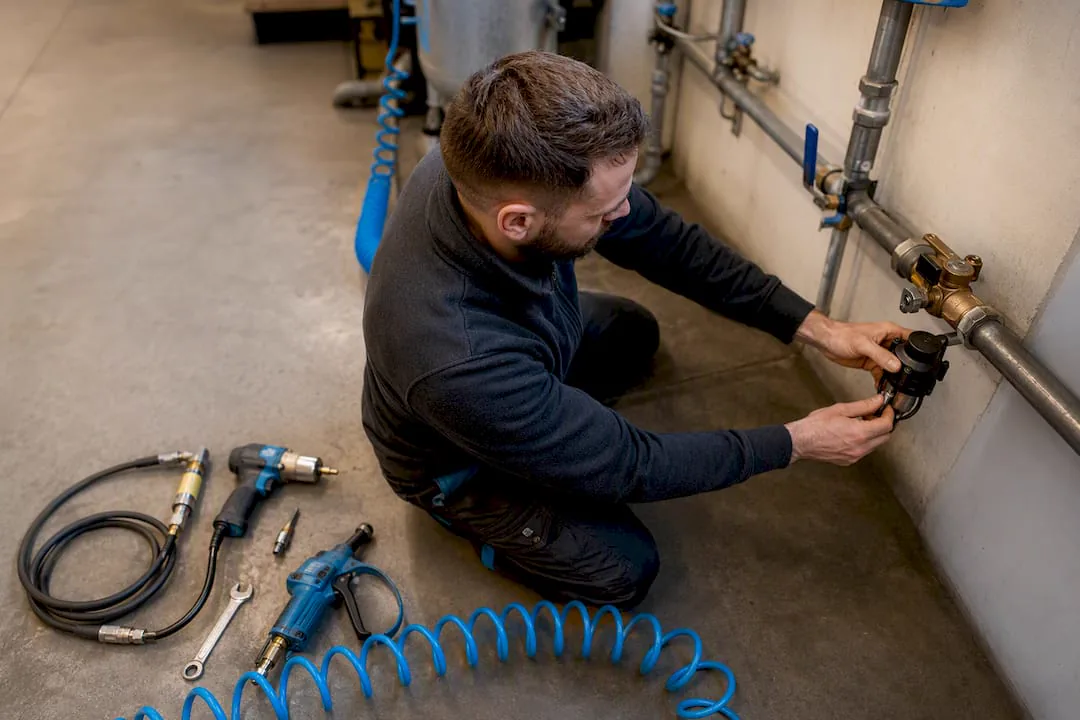
For most workshops, a mechanical float or zero-loss electronic drain is sufficient. For systems with oily condensate, an oil/water separator is unavoidable, regardless of the type chosen. Selecting the correct condensate drain depends on three things: the size of the installation, the contamination of the condensate, and the availability of power supply at the installation site.
Quick guidance by type of installation:
- Small workshops and service shops: a simple float or timer drain can handle the usual amount of condensate without the need for electronics.
- Medium-sized operations: electronic zero-loss drains save energy by discharging condensate only as actually needed, not according to a timer.
- Large industrial installations: a combination of robust electronic or magnetic drains with cyclonic water separators before dryers protects downstream equipment.
- Oily condensate: for oil-lubricated compressors, always add an oil/water separator regardless of the type of drain selected.
 9:22
Video: Compressed air treatment step by step. The video starts right at the chapter Condensate and condensate drains (2:18). Ventilek shows what is in compressed air, in which order filters, a dryer and a regulator go after the compressor, and what to do with condensate. The air treatment calculator puts the whole set together for you. The video is in Czech with English subtitles.
1:04 How clean your air needs to be 1:43 The right order after the compressor 2:18 Condensate and condensate drains 3:14 Air dryers 4:56 Filters 5:37 Oil-water separator 6:14 Regulator and treatment unit 7:01 Example: paint shop
Key findings
The correct condensate drain is always based on the measured water production, the presence of oil, and the availability of power supply, not on the price of the cheapest model.
| Point | Details |
|---|---|
| Measure condensate production | Base it on the compressor output and relative humidity, not on a rough estimate. |
| Check the oil content | For oil-lubricated compressors, always add an oil/water separator. |
| Choose according to the size of the operation | Small workshops can manage with a float-type drain, medium and large operations require a zero-loss electronic type. |
| Install at low points | Installation below the air receiver and at the lowest points of the piping reduces the risk of filter clogging. |
| Consult on selection and installation | Kompresory-Vzduchotechnika.cz offers consultation, installation, and revision of the selected drain. |
Contents
- Types of condensate drains and how they work
- How to choose a drain: steps and checklist
- Where to install drains in a compressed air system
- Maintenance of Drains and Troubleshooting Common Faults
- Expert Background and Services of Kompresory-Vzduchotechnika.cz
- Influence of Temperature and Humidity on Drain Selection
- Specific Applications by Type of Operation
- What You Should Not Underestimate When It Comes to Drains
- Complete Compressed Air Treatment Solutions from Kompresory-Vzduchotechnika.cz
- Frequently Asked Questions
Types of Condensate Drains and How They Work
Condensate drains automatically remove water, oil, and impurities from the compressed air system, thus protecting the equipment from corrosion and loss of efficiency. There are five basic design principles on the market, and each one is suitable for a different operating situation.
Float (mechanical) drains operate without electricity. The float rises with the condensate level and opens the discharge valve once it reaches a certain level. Many models can discharge without air loss up to an operating pressure exceeding 10 bar, making them suitable even where no electrical connection is available. The disadvantage is sensitivity to mechanical impurities, which can clog the float or the valve seat.
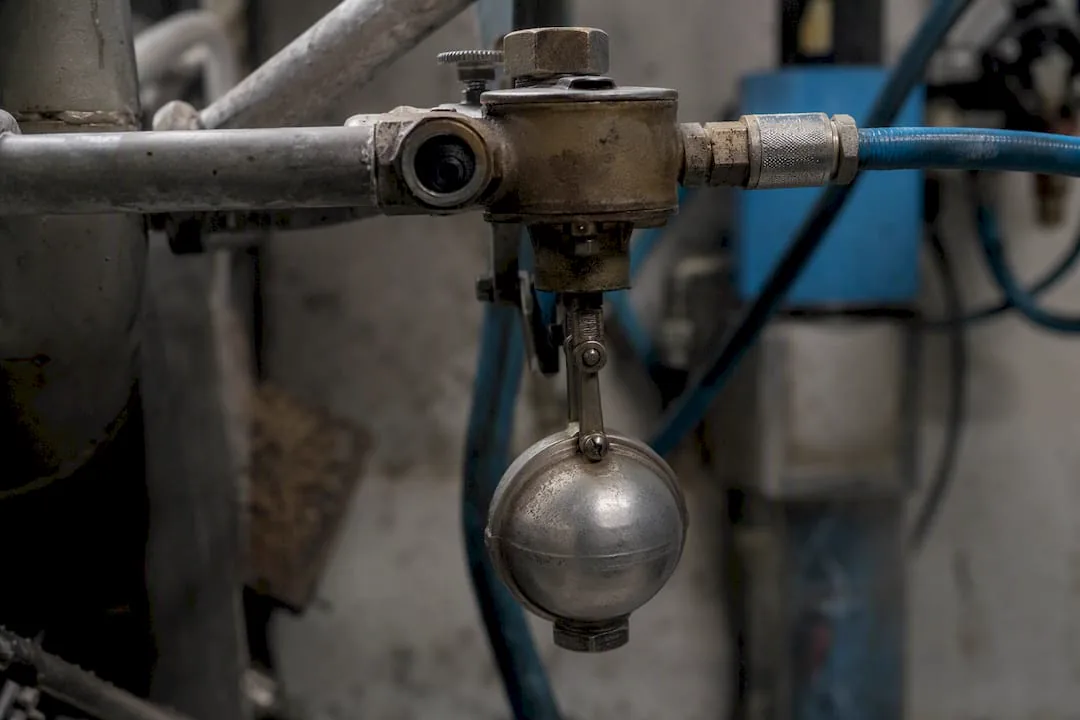
Timed drains discharge condensate at regular intervals set on a timer, regardless of the actual amount of condensate in the container. They are inexpensive and simple to install, but if the interval is set incorrectly, they unnecessarily discharge compressed air as well, which increases operating costs.
Electronic zero-loss drains (often referred to as IWD or EWD) use a condensate level sensor and discharge only as much condensate as has actually accumulated. This significantly minimizes compressed air waste compared to timed models. The capacity of modern zero-loss drains covers a wide range of condensate discharge rates suitable for both small and large compressor rooms, thus covering small compressors as well as large compressor rooms.
Magnetic drains use magnetically controlled valves that respond quickly and reliably even under fluctuating load. They are suitable where condensate production varies significantly during a shift.
Cyclone water separators are not drains in the true sense, but supplementary equipment. By using centrifugal force, they capture water aerosols from the air stream, thus protecting dryers and filters from overload.
Key parameter: zero-loss electronic drains bring the greatest savings in operating costs precisely in medium and larger operations, where the volume of discharged air with timer-based models noticeably worsens the energy balance.
When comparing types, monitor four technical parameters: maximum operating pressure, flow rate in m³/min, discharge capacity in litres per hour, and the material of the drain body. Cast iron or aluminium construction is sufficient for standard condensate; stainless steel construction is necessary where the condensate is aggressive.
How to choose a drain: steps and checklist
Choosing the right condensate drain is not about which model is "the best," but which one matches your operation. Follow the steps below.
- Estimate condensate production. This is roughly based on compressor output, operating time, and relative humidity of the air at the installation site. A more humid environment and higher output mean a larger volume of condensate, and therefore a need for a drain with higher discharge capacity.
- Determine whether the condensate is oily. For oil-lubricated compressors, a combination of a drain with an oil/water separator is recommended. Compact filtration units can significantly reduce the oil content, which helps meet requirements for environmentally compliant disposal.
- Take operating pressure and air losses into account. If energy savings are key for you, prefer a zero-loss electronic solution over a timer-based model.
- Check power supply availability. Where electricity is not available or its connection is costly, a mechanical float drain remains a practical choice.
- Check connections and material. For aggressive condensate (for example, from oil compressors with specific additives), choose stainless steel construction instead of standard cast iron.
- Verify service access and availability of spare parts. A drain located in a hard-to-reach place will complicate routine maintenance and replacement of worn parts.
Professional tip: For systems with significantly fluctuating load, typically in multi-shift operations with variable air consumption, choose a drain with adaptive electronic control. It responds to the actual volume of condensate in real time and minimizes losses even under sudden load.
Where to install drains in a compressed air system
The placement of the drain determines whether it will work reliably or become a source of recurring faults.
- Install below the air receiver, on the bottoms of filters and separators, and at the dryer outlet, i.e. at all points where condensate naturally accumulates.
- Place drains at the lowest points of the pipeline route. Installation at low points significantly reduces the risk of condensate accumulation and subsequent clogging of filter elements.
- Ensure sufficient access for servicing. A drain built into a tight space without the possibility of disconnection will slow down any future inspection.
- Make sure the pipeline has a proper slope toward the outlet so that condensate does not stagnate and form pockets before the drain itself.
- Avoid locations with strong vibrations (near piston units) and uninsulated piping with high condensate temperature. Before installation, also check the safe procedure according to the guide for depressurizing pressurized vessels.
Maintenance of drains and troubleshooting common faults
The condensate drain is one of the components that is easily forgotten until it starts to fail. Regular inspection, however, takes only a few minutes a month.
- Check the seals, strainer, solenoids, and float at least once a month, more often in dusty operations.
- Test the drain function by manually triggering the cycle and watch whether the drain actually closes after discharging the condensate.
- Measure air losses by listening or using an ultrasonic detector, a leak at the drain indicates a worn seal or a clogged valve seat.
- Address clogging by cleaning the strainer and the drain outlet, common in operations with a higher proportion of solid impurities in the condensate.
- Check for freezing in uninsulated outdoor piping during winter, a frozen drain stops functioning completely.
- Check the sensor function on electronic models, if the drain does not discharge at all or, conversely, discharges continuously.
Work on a pressurized system is always preceded by safe depressurization according to the internal procedure, see the guide to the compressor venting procedure.
Professional tip: A leaking drain is often mistakenly thought to be a compressor fault. Before you start looking for a leak elsewhere in the piping, check the drain valve of the condensate drain first, it tends to be the cheapest and fastest repair in the whole system.
Professional background and services of Kompresory-Vzduchotechnika.cz
Choosing a condensate drain is only part of the overall care of a compressed air system. Kompresory-Vzduchotechnika.cz provides:
- expert consultation on choosing the type of drain according to the specific operation and type of condensate,
- installation, inspections, and energy audits of compressor stations,
- service support for resolving leaks and faults in compressed air piping.
For operators dealing with the legislative side of condensate disposal, an overview of legal obligations for operators in the Czech Republic is useful. When dealing with air leaks in the system, the practical guide to repairing leaks will help, and when planning a new compressor room, it is worth consulting the requirements for compressor room layout.
Influence of temperature and humidity on condensate drain selection
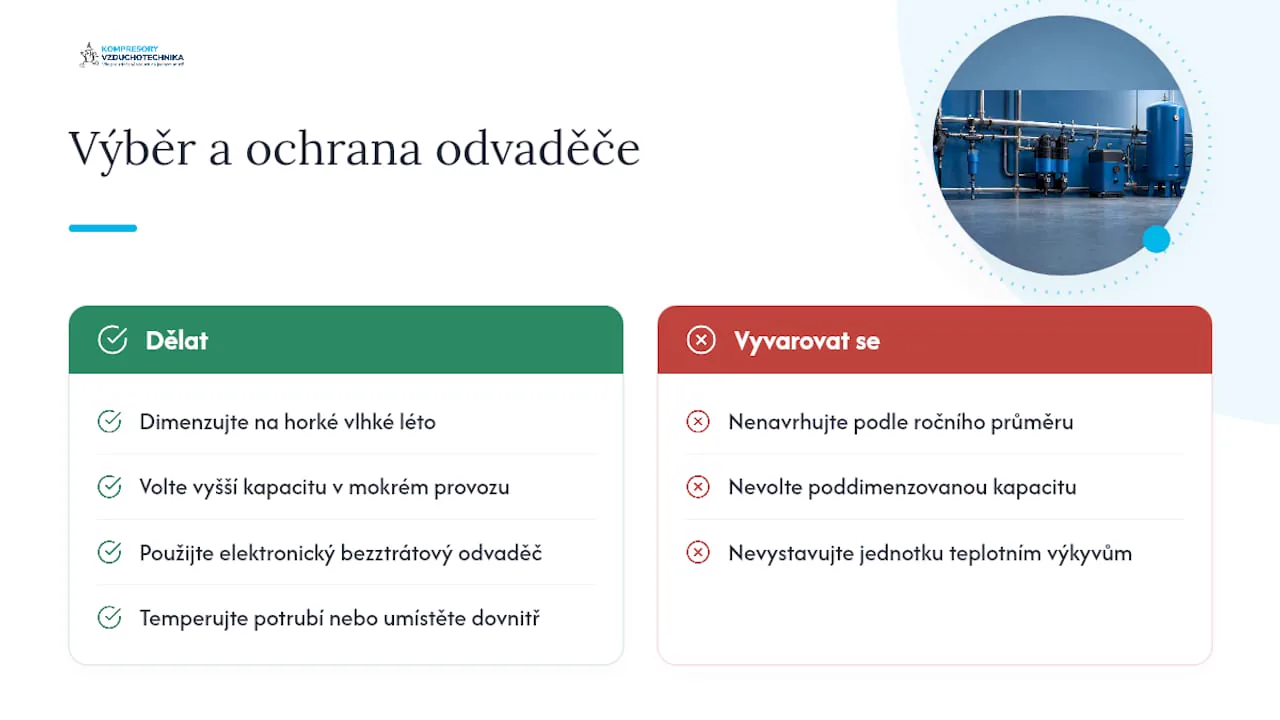
Temperature and relative humidity of the air at the compressor intake point directly affect the amount of condensate that the drain must handle. The warmer and more humid the air drawn in by the compressor, the more moisture is precipitated during compression and subsequent cooling. In the summer months, the same compressor therefore produces significantly more condensate than in winter, and a drain sized for winter operation may fall short in summer.
In facilities with high humidity (for example near paint shops, washing stations or food processing plants with steam), it is worth choosing a drain with higher discharge capacity, ideally an electronic zero-loss type, which adapts to fluctuating production without manual readjustment.
Low temperatures bring the opposite problem: the risk of condensate freezing in the discharge piping or directly in the drain body. Outdoor installations and uninsulated plant rooms require either heat tracing of the piping or placing the drain in a heated space during winter months. Temperature fluctuations between day and night shifts also stress the seals and float mechanisms, shortening their service life.
When designing the system, therefore, do not assess condensate production based on a single annual average figure, but according to the most demanding scenario, i.e. a hot and humid summer. A drain that can handle the peak will have no problem handling normal operation.
Specific uses by type of facility
In practice, the choice of drain varies depending on the industry and nature of production.
Car repair shops and paint shops usually work with smaller piston or screw compressors and condensate with a higher oil content from lubricated units. Here, a combination of a simple float drain with a compact oil/water separator directly under the filtration unit has proven effective.
Food and pharmaceutical facilities place emphasis on reliability and hygiene. An electronic zero-loss drain with a stainless steel body eliminates the risk of contamination here while also meeting stricter requirements for compressed air cleanliness according to filtration governed by the ISO 8573 standard.
Engineering facilities with oil-free screw compressors usually need a more robust solution with higher discharge capacity, especially where several compressors run in parallel into a shared air receiver. Here, it is worth using a magnetic or electronic drain placed directly under the air receiver and a second one after the dryer.
Construction and mobile applications with portable compressors often manage with simple timed or manual draining, since the condensate volume tends to be low and access to the unit is easy.
For facilities with higher requirements for air cleanliness, the choice of drain is complemented by appropriately sized compressed air filtration according to ISO 8573, which reduces the load placed on the drain itself.
What You Shouldn't Underestimate About Condensate Drains
The most common mistake I see in operations is not choosing the wrong type, but underestimating the combination with an oil separator. Technicians often select a drain based only on pressure and flow, completely forgetting about the oil content in the condensate, until the inspection authority or waste disposal contractor sends back a report with a high hydrocarbon content.
The second underestimated issue is service accessibility. A cheaper drain installed in a poorly accessible location ends up costing you more, because the technician can only reach it during a shutdown, not during a routine round. The conventional advice "buy the cheapest float model" only works where the condensate is clean and the operation is small. For medium and larger installations, the investment in a zero-loss electronic drain pays off through energy savings, not through the price of the unit itself.
If I have to give one priority, it's this: first measure the actual condensate production and check for the presence of oil, only then compare types and prices. Without this step, you're choosing blindly.
— Zdeněk
Complete Solutions for Compressed Air Treatment from Kompresory-Vzduchotechnika.cz
Kompresory-Vzduchotechnika.cz offers a comprehensive range for condensate drainage and treatment, so you don't have to combine parts from several suppliers and deal with incompatible connections. The offer includes compressed air treatment units up to 18 bar for standard operation as well as metal treatment units for more demanding conditions, including automatic drains with oil/water separators.
In addition to selling units, Kompresory-Vzduchotechnika.cz also offers installation and inspection booking directly through the e-shop or service line, so a single partner handles the selection, installation, and subsequent functionality check. If you're not sure which type of drain your operation needs, a consultation with a technician will save you time and potential complaints. Take a look at the complete range of compressed air treatment units and choose a solution matching your operating pressure and condensate volume.
Frequently Asked Questions
Which type of condensate drain is the most reliable?
A mechanical float drain is the most reliable where no power supply is available, because it works purely mechanically without electronics. In medium and large operations, however, zero-loss electronic drains better control operating costs by minimizing air losses.
How often does a condensate drain need to be serviced?
Checking the seal, strainer, and drain mechanism is recommended at least once a month, more often in dusty or humid operations. Electronic sensors should be tested at every regular inspection of the compressor station.
Do I always have to use an oil/water separator?
If the compressor operates with oil lubrication, an oil/water separator is required regardless of the type of drain chosen. Compact filtration units can significantly reduce oil content and help meet requirements for environmentally compliant disposal.
Where is a condensate drain most commonly installed?
Drains are installed below the air receiver, on the bottoms of filters and separators, and at the dryer outlet, i.e., in all places where condensate naturally accumulates. Installation at the lowest points of the piping also reduces the risk of clogging the filter elements.
Where can I get expert help choosing a drain?
Kompresory-Vzduchotechnika.cz offers consultation on selecting the appropriate type based on the specific operation, as well as installation and subsequent inspections of the compressor station. The company also provides technical support for resolving common faults in drains and compressed air distribution systems.
Recommended
- Condensate from the compressor: Czech Republic laws for operators - Kompresory-Vzduchotechnika.cz
- Factors for selecting an industrial compressor: a 2026 guide - Kompresory-Vzduchotechnika.cz
- Basic requirements for a compressor room: guide 2026 - Kompresory-Vzduchotechnika.cz
- Checklist of compressor accessories: a guide for technicians - Kompresory-Vzduchotechnika.cz