

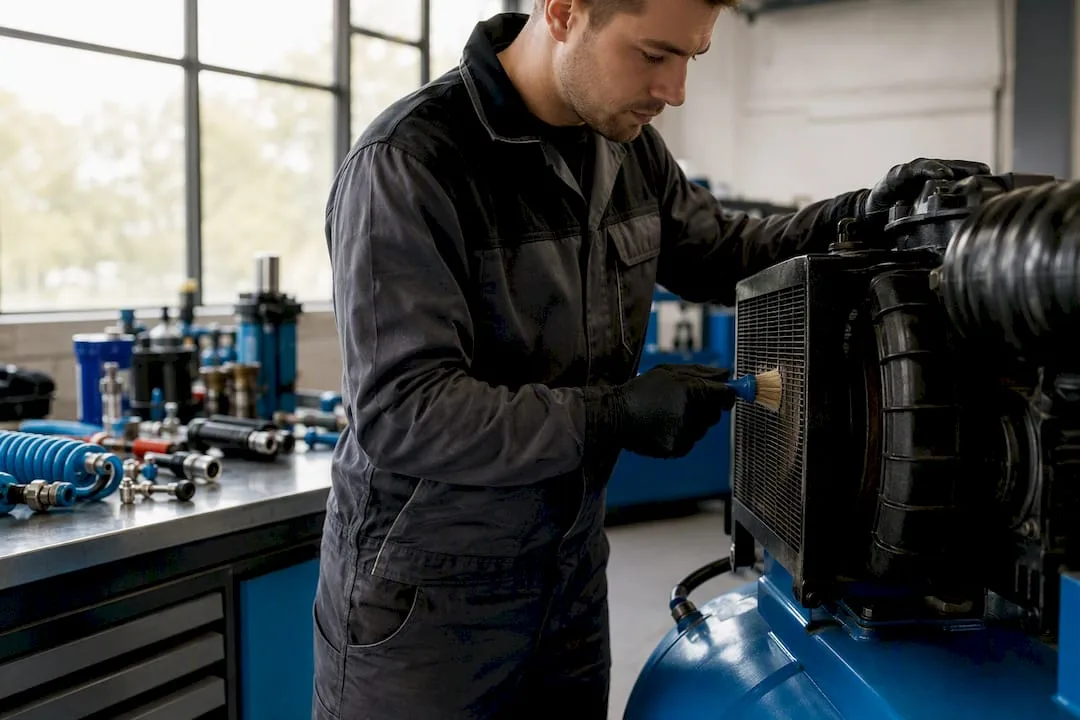
The most common causes of screw compressor overheating are four: a clogged cooler, degraded or insufficient oil, fan failure, and poor compressor room ventilation. A fifth, less obvious culprit is overload beyond the designed output.
As soon as the control unit reports a high temperature, do the following:
- relieve the load or switch to idle,
- check the oil level and colour,
- remove anything obstructing airflow around the cooler.
If the temperature does not drop within a few minutes after these steps, shut down the unit and call service. The risk of damage to the screw block and bearings increases with every minute of operation above the limit temperature.
Key takeaways
Screw compressor overheating is most often caused by a combination of a clogged cooler, degraded oil, and insufficient ventilation, which can largely be detected through regular measurement and cleaning.
| Point | Details |
|---|---|
| Main causes | A clogged cooler, poor oil, fan failure, and insufficient compressor room ventilation account for most cases of overheating. |
| Immediate response | Relieve the load, check the oil, and remove any obstructions to airflow, then monitor whether the temperature decreases. |
| Threshold values | Normal oil temperature is 60–85°C, with safety shutdown typically set at around 95–105°C. |
| Diagnostics before repair | Multi-parameter diagnostics (vibration, thermal mapping, oil analysis) reveal internal faults sooner than visual inspection. |
| Prevention works | Regular oil changes, cooler cleaning, and monitoring of operating data significantly reduce the risk of unplanned downtime. |
| Expert support | Kompresory-vzduchotechnika offers diagnostics, oil analysis, monitoring, and supply of spare parts to address recurring overheating issues. |
Contents
- Immediate checklist when overheating is detected
- Main technical causes of overheating by subsystem
- How to diagnose compressor overheating step by step
- Preventive maintenance that actually reduces the risk of overheating
- When to call service and how to safely wait for intervention
- Frequently asked questions
Immediate checklist when overheating is detected
Before touching anything, disconnect the compressor from the power supply and let it cool down. Hot piping and oil can cause burns even after the motor has been switched off.
Proceed in this order:
- Record the reported alarms and the time they occurred.
- Check the oil level and its color (dark or cloudy oil indicates oxidation).
- Verify that the fan is turning and that the belt is not slipping or broken.
- Inspect the cooler fins for dust or grease buildup.
- Check the temperature and air flow in the compressor room.
During the check, record four values: oil discharge temperature, block housing temperature, oil pressure, and number of operating hours.
Professional tip: Normal oil discharge temperature for most screw compressors ranges between 60 and 85 °C. The factory setting for safety shutdown is usually around 95 to 105 °C – if the unit reports this threshold repeatedly, it is not a coincidence but a systemic fault.
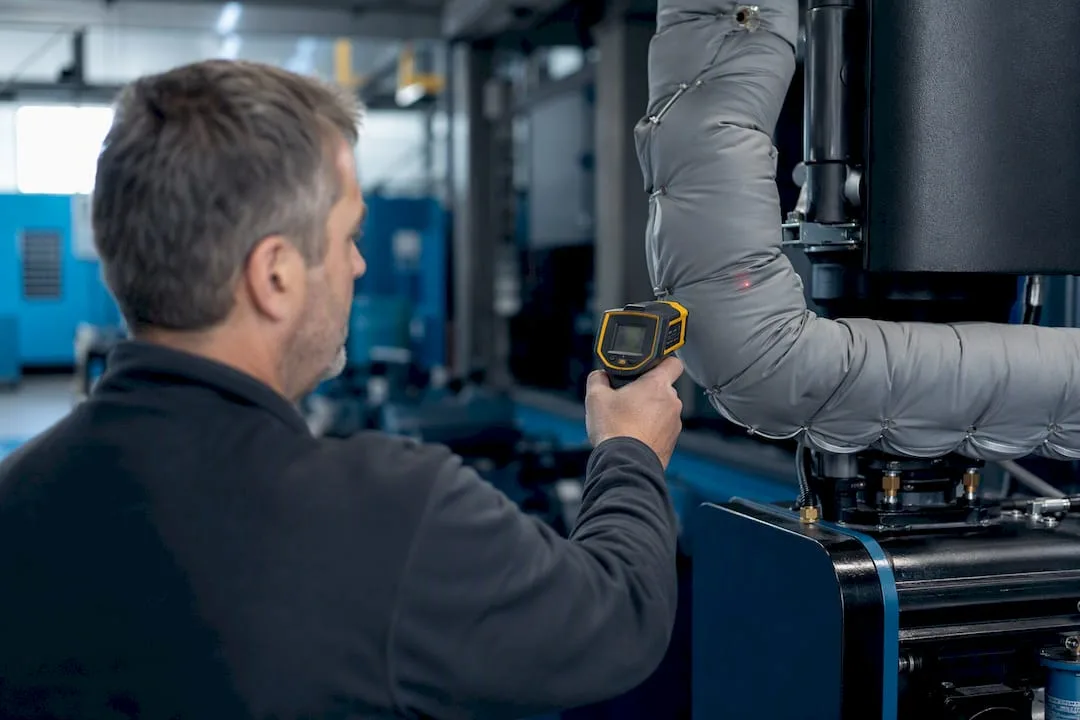
If the measured values exceed the normal range even after cleaning the cooler and topping up the oil, the problem likely lies within the oil circuit or the thermostatic valve.
Main technical causes of overheating by subsystem
Overheating of a screw compressor rarely has a single cause. It is usually a combination of minor deficiencies that add up to one major problem. Breaking it down by subsystem helps identify the culprit faster than a general inspection.

Cooling circuit. Clogged cooler fins block air flow and reduce heat transfer efficiency. For air-cooled units, a layer of dust and grease just a few millimeters thick is enough to raise the temperature by tens of degrees. For water-cooled compressors, the same effect is caused by low cooling water flow or deposits in the water circuit. Typical symptom: the temperature rises gradually, even under normal load.
Lubrication. Low oil level, oxidized oil, or incorrect viscosity increase friction between the rotors and bearings. Degraded oil loses both its lubricating and cooling properties at the same time, because in a screw compressor, the oil does not only lubricate but also dissipates a significant portion of the heat from the screw block. The result is increasing energy consumption and accelerated wear.
Oil and hydraulic components. A stuck thermostatic valve is a deceptive fault because it outwardly looks like a cooling problem. The oil circulates only through a short bypass and does not use the main cooler at all. You can recognize it with a simple test: the piping leading to the cooler remains cold to the touch, even though the control unit reports overheating. A clogged oil filter or a worn oil separator leads to a similar effect, and in addition, oil may enter the discharge air.
Operating conditions. Overloading beyond the designed output, recirculation of hot exhaust air back into the intake, and ambient temperature above the manufacturer's limit can overheat even a technically sound compressor. Improper ventilation of the compressor room is among the causes most often underestimated by field technicians.
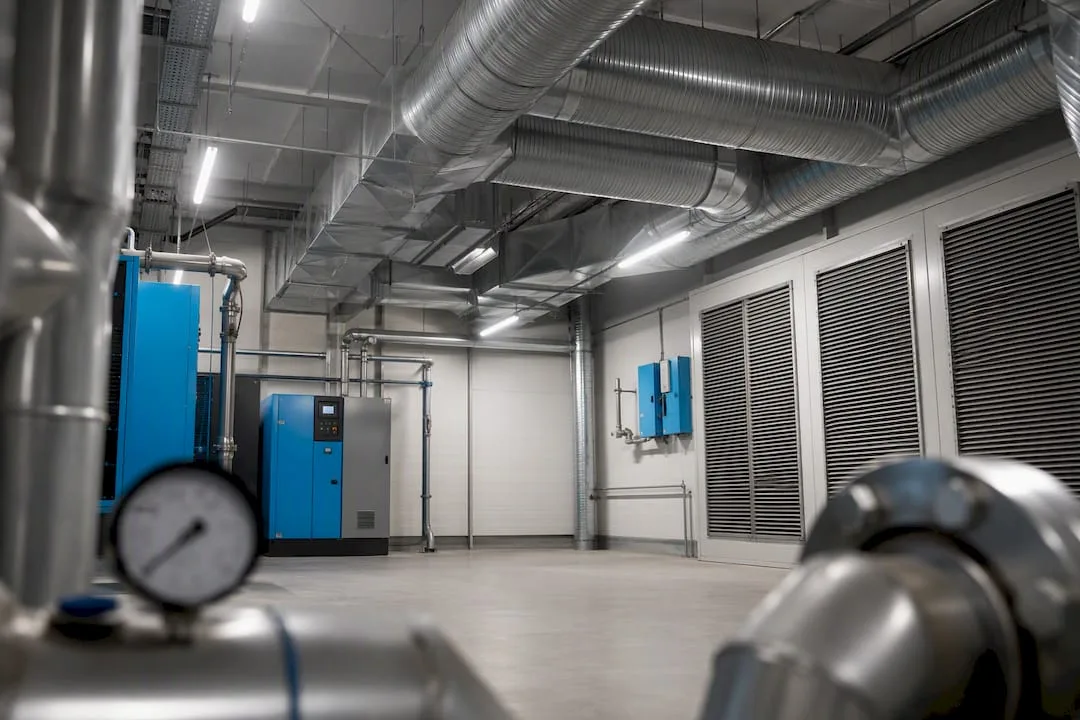
A stuck thermostatic valve or a worn oil separator cannot be repaired in the field. That is where prevention ends and service intervention begins.
How to diagnose compressor overheating step by step
Diagnostics without measurement is just guesswork. Many technicians recommend first ruling out external factors – ventilation, ambient temperature, cooler cleanliness – and only then looking for an internal fault, such as a stuck thermostatic valve or a blocked pipe.
Basic diagnostic equipment:
- a contact or non-contact thermometer, or possibly a thermal camera for quickly mapping hot spots,
- a pressure gauge for measuring oil pressure and differential pressure across the separator,
- an oil sampling kit,
- an ultrasonic probe for checking bearings,
- a vibration analyzer for monitoring the condition of the screw block.
Multiparametric diagnostics combining vibration, thermal mapping, oil analysis, and ultrasound allows quantitative evaluation of the compressor's condition and prediction of faults before they become visible. A study on screw compressor diagnostics describes the application of this combination of methods on several units with a clear benefit for fault prediction.
What specifically to measure and how to read the results:
- Oil outlet temperature – normally 60 to 85 °C; values consistently above 90 °C indicate a problem with cooling or lubrication.
- Block housing temperature – compare with values from previous measurements, not just a one-time limit.
- Differential pressure across the separator – an increasing value indicates a clogged separator.
- Motor voltage and current – deviations may indicate mechanical overload.
If the temperature does not drop after cleaning the cooler and topping up the oil, send an oil sample for laboratory analysis. The result will show the degree of oxidation, the content of metal particles from wear, and any contamination, which provides a more accurate basis for a service decision than visual inspection alone.
Preventive maintenance that actually reduces the risk of overheating
Regular maintenance – oil and filter changes, cooler cleaning, and monitoring of operating parameters – is among the most effective ways to reduce the risk of overheating and unplanned downtime. However, this only works if the schedule has a clear structure.
Approximate schedule of activities:
- Daily – checking the display, alarms, and oil level.
- Weekly – visual inspection of the cooler and the area around the fan.
- Monthly – cleaning the cooler with compressed air and checking belt tension.
- Quarterly – checking the condition of the oil filter and separator.
- Annually – oil change according to the manufacturer's recommendations and sampling for laboratory analysis.
Practical measures with the greatest impact:
- Cleaning air-cooled coolers by blowing against the direction of the cooling air flow, at a pressure of approximately 0.4 MPa – the opposite direction would push dirt deeper into the fins instead of removing it.
- Oil and filter changes according to actual operating hours, not the calendar.
- Check the area behind the fan and inside the enclosure, which field technicians often overlook, even though it significantly affects heat dissipation.
Where it makes sense to invest in modernization: fan speed control based on actual temperature, improved ventilation of the compressor room, additional hot air extraction, or remote monitoring of key parameters. For a more detailed overview of benefits and technical parameters, see the overview of benefits of screw compressors for industry.
Professional tip: Choose oil viscosity based on the actual operating temperature in the compressor room, not according to the recommendations in a manual from a different climate zone. In hot and dusty operations, it is worth shortening the oil change interval compared to the manufacturer's recommendation.
When to call service and how to safely wait for intervention
Some signals indicate that the situation goes beyond routine on-site maintenance. These include repeated automatic shutdowns due to overheating, elevated levels of metal particles in oil analysis, or unusual vibrations and noise indicating rotor or bearing wear.
Before the service technician arrives:
- Shut down the compressor safely – do not disconnect it under load; let it run idle for 5 to 10 minutes and only then stop it.
- Secure the location against unauthorized manipulation and mark the unit as out of service.
- Prepare a record of alarms, measured values, and maintenance history.
For the service team, this means faster diagnostics:
- record of operating hours since the last oil change,
- oil sample, if one was taken,
- description of the circumstances under which the overheating occurred.
Predictive maintenance as the next step
Modern control units today commonly collect temperatures and generate service signals in real time, enabling a shift from reactive repairs to predictive maintenance. Monitor three signals: oil outlet temperature trend, oil quality, and hours under load. For a pilot deployment, a basic sensor set and data collection over three to six months is sufficient before you set precise alarm thresholds.
What I take away from my own experience
Companies that keep a simple paper or digital checklist by the control panel deal with overheating significantly less often than those that rely solely on the operator's memory. I recommend introducing regular operator training to recognize early warning signs and replacing parts according to operating hours, not only after a failure occurs. Schedule preventive service at the point when measured values start to slowly rise, not only once the alarm sounds.
How Kompresory-vzduchotechnika can help you
Repeated overheating of a screw compressor is rarely solved by a single repair. Kompresory-vzduchotechnika offers a combination that a standalone service intervention cannot: on-site expert diagnostics, oil analysis, supply of original filters and spare parts, and installation of operating parameter monitoring, all under one roof.

If overheating keeps recurring on your unit even after basic maintenance, we offer consultation and diagnostics directly at your site, so you can identify the real cause before the screw block is damaged. A full overview of our service and consulting offerings can be found on the services page. If the problem stems from a worn-out separator or your unit is beyond economical repair, take a look at the range of SCR screw compressors and see how modernization affects the energy consumption of the operation. Get in touch via the contact form to arrange a diagnostic appointment.
Frequently asked questions
What is the normal operating temperature of a screw compressor?
Oil outlet temperature in most screw compressors ranges between 60 and 85 °C; the safety shutdown is typically factory-set to around 95 to 105 °C.
What should you do first when the compressor overheats?
Relieve the load, check the oil level and colour, and remove anything obstructing airflow around the cooler, then monitor whether the temperature drops.
How do I recognise a stuck thermostatic valve?
The piping leading to the main cooler remains cold to the touch even though the control unit reports a high temperature, because the oil is circulating only in a short bypass.
How often should the cooler of a screw compressor be cleaned?
Perform a visual inspection weekly, and carry out thorough cleaning with compressed air against the direction of cooling air flow at least once a month, or more often depending on the dustiness of the operation.
When is it necessary to call in service instead of carrying out your own repair?
Call service in case of repeated automatic shutdowns, elevated levels of metal particles in oil analysis, or unusual vibrations indicating wear of bearings or the rotor. In such cases, Kompresory-vzduchotechnika offers diagnostics directly on site.